The Eggshell Paradox: Why True Material Performance Starts with the Right Shake
Oct 11, 2026
The Moment of Unease
You’ve milled the eggshells into a fine white powder. It looks uniform. It feels silky between your fingers. But you haven’t yet measured the one property that will decide whether it reinforces a polymer or collapse under stress. The real question isn’t whether the powder is fine. It’s whether the powder is defined.
Raw ground eggshell crosses a psychological threshold when it ceases to be waste and becomes a technical filler. That threshold is not a look or a feel. It’s a number: particle size distribution, determined with relentless repeatability. And the tool that delivers that number, with a kind of mechanical honesty, is the vibratory sieve shaker.
Particles Lie to the Naked Eye
Humans trust what they can see. A smooth heap of powder signals quality to the visual cortex. But in material science, smoothness is a dangerous illusion. Within that heap, a hidden population of oversized grains lurks — outliers that will become failure points later.
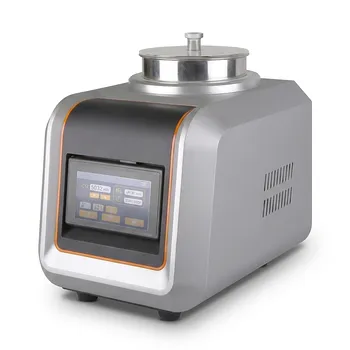
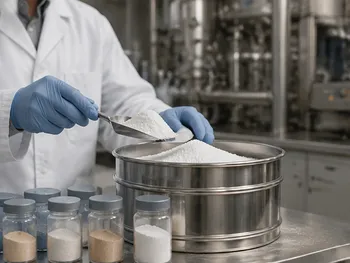
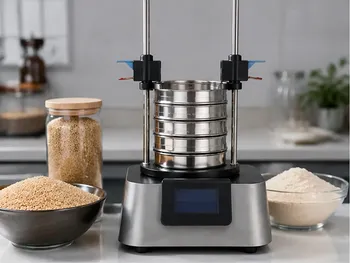
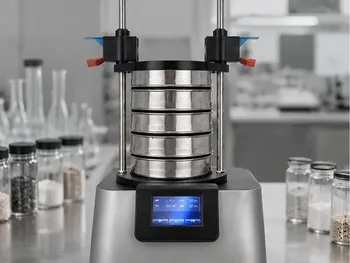
A vibratory sieve shaker does what the eye cannot. It imposes a regime of high-frequency vibration across a stack of precision test sieves. An 80-micron mesh or a 0.1 μm microporous screen doesn't negotiate. Particles that belong pass. Particles that don't, stay behind. This separation isn't a suggestion. It's a certification of physical consistency.
The Specifics That Matter Most
- Particle Size Distribution (PSD) – The shaker reveals exactly what percentage of powder falls within each size band. That’s the difference between a filler and a gamble.
- Coarse Fraction Removal – Oversized grains become stress concentrators. The shaker eliminates them before they can embed failure into a composite part.
- Standardized Compliance – Sieves traceable to ASTM or ISO standards turn internal quality into external trust. Each batch earns a repeatable benchmark, not a subjective nod.
Where the Shake Turns Into Strength
Consider a polylactic acid composite destined for biodegradable packaging. If eggshell powder clumps inside the matrix, the packaging tears under trivial load. Uniform dispersion is non-negotiable.
The vibratory sieve shaker guarantees that dispersion before mixing even begins. By guaranteeing particle ceilings, it removes the physical obstacles to homogeneity. The powder flows into the polymer like a calibrated ingredient, not a wild variable.
Three Hidden Consequences of Sieve Precision
- Stress Concentration Vanishes – Remove large, irregular particles, and you remove the sharp corners where mechanical stress amplifies. Tensile strength rises without changing the chemistry.
- Surface Area Rises – Finer, well-graded particles offer more reactive surface per gram. In adsorption applications — think waste oil purification — that extra area means faster free fatty acid removal.
- Nozzle Safety in Additive Manufacturing – A 3D printer’s tip is unforgiving. Sieving through a 25 μm mesh ensures eggshell filler won’t clog a print head mid-job.
Psychology of the Sieve: Certainty as a Service
Operators often obsess over the “perfect” vibration time. Too short, and fine particles never fully separate. Too long, and mechanical attrition creates artificial fines — a distortion of the material’s true character. This tension reveals something deeper: the shaker isn’t just a measurement device. It’s a negotiator between truth and process.
Sieve blinding is another quiet adversary. Fine grains lodge in mesh openings, blocking passage, inflating coarse fraction readings. Managing blinding through proper interval settings or ultrasonic cleaning isn’t maintenance trivia. It’s an act of preserving data integrity.
And then there’s shape. Two particles can pass the same mesh yet behave entirely differently in a matrix — one spherical, the other elongated. A vibratory sieve shaker cannot fully characterize shape. But paired with the right upstream grinding and downstream compaction, shape variability can be controlled at the system level.
The Workflow Beyond the Shake
Defining eggshell powder specifications is never a standalone act. It sits inside a larger sample preparation sequence that, if broken anywhere, breaks the final number.
- Before Sieving: Cryogenic grinding or planetary ball milling brings the brittle eggshell to its initial size range. Poor grinding leaves shards that no sieve can rescue.
- During Sieving: Vibratory or air-jet sieve shakers with certified test sieves deliver the PSD anchor.
- After Sieving: Cold or warm isostatic pressing (CIP/WIP) consolidates the graded filler into dense billets for further testing, or vacuum hot pressing creates composite discs for mechanical evaluation.
The Machine That Keeps Its Promise
A laboratory built around this sequence doesn’t just analyze eggshell. It transforms it. Every stage — from jaw crushers and disc mills to the final hydraulic press cycle — reinforces the same truth: material performance is not discovered. It is manufactured, starting with the most honest shake.
When you define eggshell powder with a vibratory sieve shaker, you’re not simply checking a box. You’re converting biological variability into engineering certainty. That is the quiet romance of sample preparation.
A Closer Look: How Sieving Defines the Specification
| Sieving Function | What It Solves | Industrial Impact |
|---|---|---|
| PSD Determination | Maps exact particle size ranges (e.g., <80 μm, 20–25 μm) | Consistent filler grading across batches |
| Coarse Fraction Removal | Eliminates oversized grains and agglomerates | Prevents stress concentration in composites |
| Standardized Mesh Compliance | Validates against ASTM / ISO sieving standards | Repeatable quality metrics and audit trails |
| Surface Area Optimization | Controls the proportion of ultra-fines for maximum specific surface area | Enhanced adsorption and chemical reactivity |
| Dispersion Readiness | Provides size ceilings that ensure uniform matrix integration | Improved tensile strength and flaw-free 3D printing |
The Invitation to Certainty
You can mill eggshell all day. But the moment you need a specification, you need a shake. And behind that shake, you need a system that grinds soberly, sieves honestly, and presses firmly — the complete chain of custody from brittle waste to high-performance technical filler.
We engineer that system. Our laboratories bring together cryogenic grinders, planetary ball mills, air-jet and vibratory sieve shakers with ISO-standard test sieves, and a full spectrum of hydraulic presses — including Cold/Warm Isostatic Presses (CIP/WIP), hot presses, and vacuum hot presses. Whether your target is a polymer-grade filler, an adsorption medium, or a 3D printing powder, the workflow starts with precision you can trust.
Quick Links
Suggested Products
Vibratory Sieve Shaker Electromagnetic 3D Motion Powder Particle Size Analyzer for Dry and Wet Sieving Laboratory Dry and Wet Three Dimensional Vibratory Sieve Shaker for Particle Analysis Stainless Steel Laboratory Vibratory Test Sieve Shaker Heavy Duty Dry Three Dimensional Vibratory Sieve Shaker for Particle Separation Dry Three Dimensional Vibratory Sieve ShakerFurther Reading
The Hidden Economics of Particle Size: Why the Most Overlooked Variable in Material Science Controls Everything The Invisible Architecture of Powder: How a Vibratory Sieve Shaker Decides What Your Amaranth Bread Becomes The Particle-Size Lever: Why the Most Overlooked Step in Catalyst Design Determines Everything Else When Glass Melts Fail, It Was Never the Furnace: The Hidden Economics of Sand Gradation The Quarter-Millimeter Margin: Why Vibratory Sieve Precision Determines Artificial Stone Profitability
PowderPreparation
Last updated on May 14, 2026
Related Products
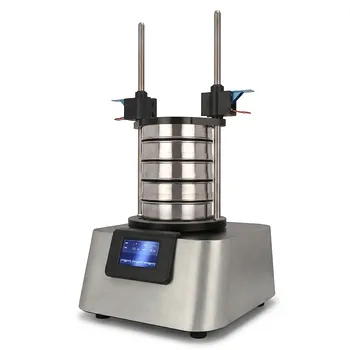
Vibratory Sieve Shaker Electromagnetic 3D Motion Powder Particle Size Analyzer for Dry and Wet Sieving
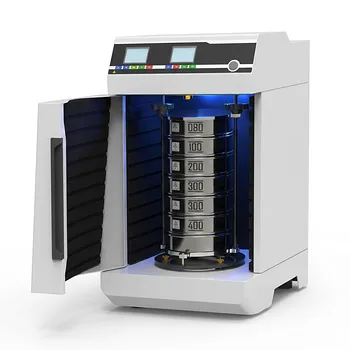
Laboratory Dry and Wet Three Dimensional Vibratory Sieve Shaker for Particle Analysis
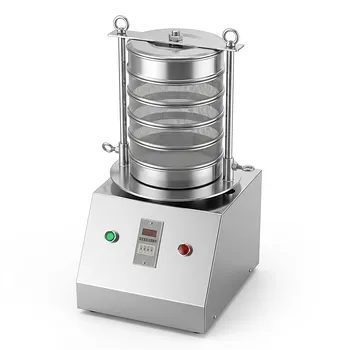
Stainless Steel Laboratory Vibratory Test Sieve Shaker
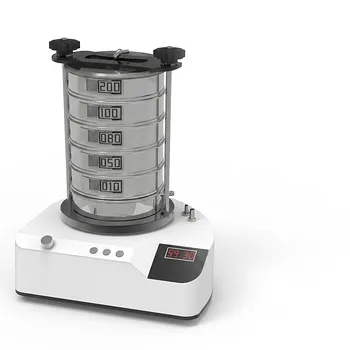
Heavy Duty Dry Three Dimensional Vibratory Sieve Shaker for Particle Separation
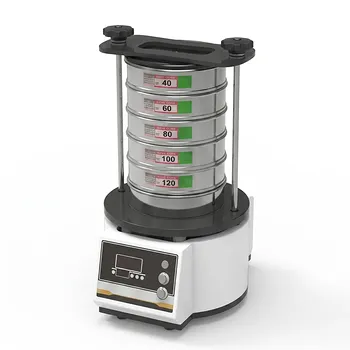
Dry Three Dimensional Vibratory Sieve Shaker
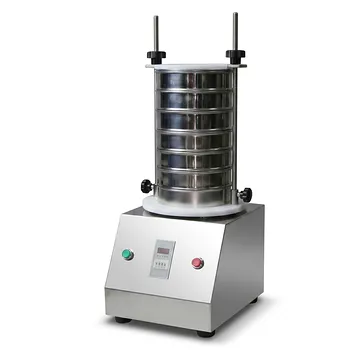
Small Laboratory Vibratory Sieve Shaker for Powder Gradation and Particle Size Analysis
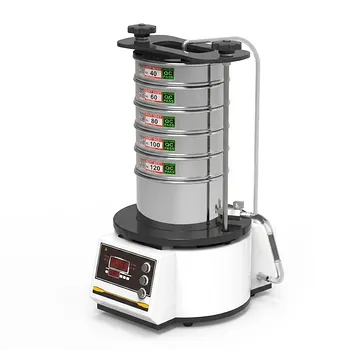
High Frequency Wet Three-Dimensional Vibrating Sieve Shaker for Dry and Wet Particle Size Analysis
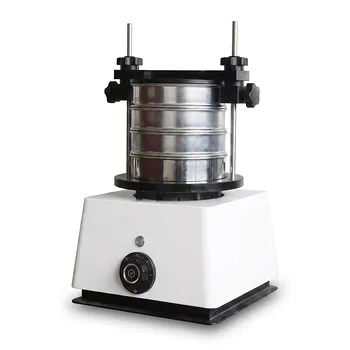
Small Laboratory Vibrating Sieve Shaker for Precise Particle Size Analysis
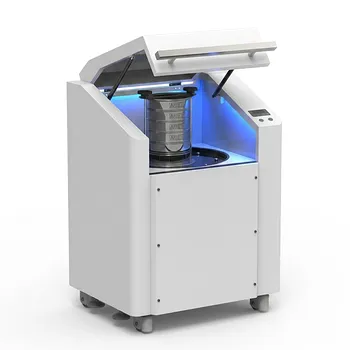
High Frequency Cabinet Type Three-Dimensional Rotary Vibrating Sieve Shaker for Dry Sieving and Particle Classification
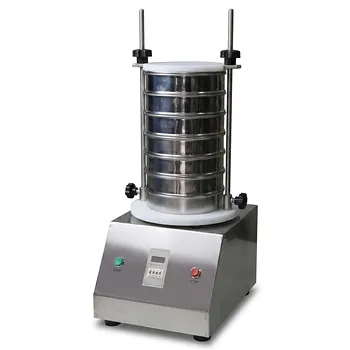
Laboratory Vibratory Test Sieve Shaker for Precision Particle Size Analysis and Powder Grading
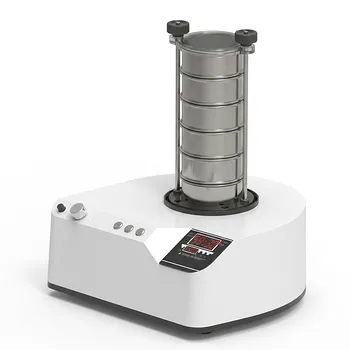
三维电磁微量振动筛分仪
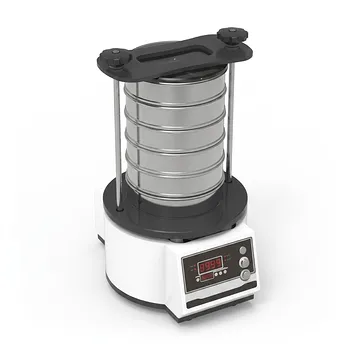
Tapping Oscillating Sieve Shaker for Dry and Wet Particle Size Analysis
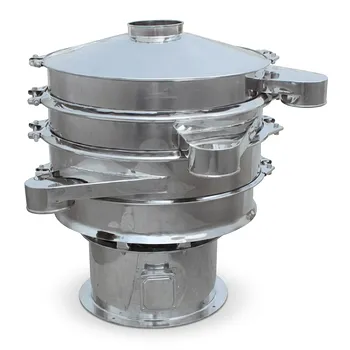
Stainless Steel Rotary Vibrating Sieve High Precision Circular Vibratory Separator Industrial Powder Grading Machine Multi Layer Sifting Equipment
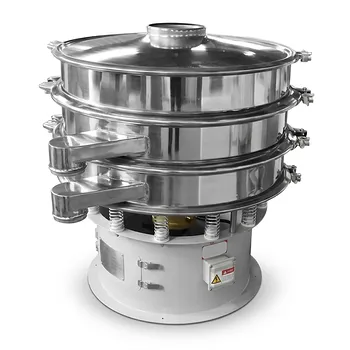
Three Dimensional Rotary Vibrating Sieve
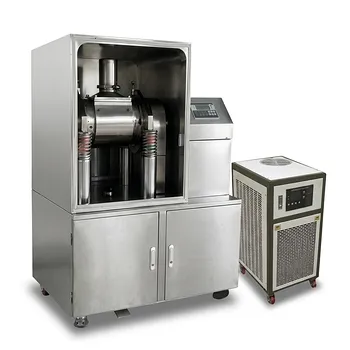
Small Vibrating Ultrafine Grinder for Traditional Chinese Medicine
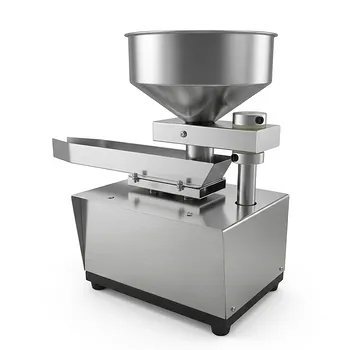
Automatic Vibrating Powder Feeder for Laboratory Material Processing Precision Vibratory Hopper Feeder for Granular and Powder Material Handling Industrial Grade Vibrating Tray Feeder for Consistent Material Sample Preparation
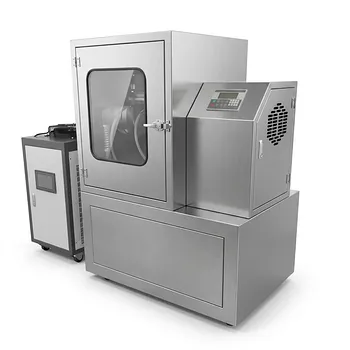
Vibratory Superfine Grinder for Ultra Fine Laboratory Powder Milling
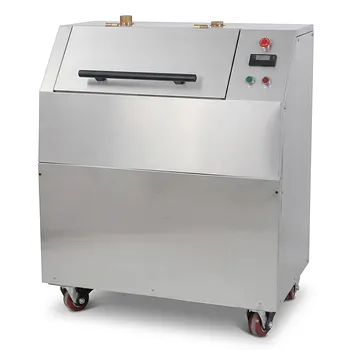
Vibratory Disc Mill for Rapid Fine Grinding and High Throughput Sample Preparation of Hard and Brittle Materials