The Micron and the Megapascal: How a Laboratory Hydraulic Press Anchors Truth in Coating Adhesion
Sep 22, 2026
The Specimen’s Secret Life
Everyone stares at the universal testing machine. The gleaming load cell. The crosshead speed. The real-time graph climbing toward failure.
Meanwhile, the most dangerous variable sits unnoticed on a workbench thirty meters away. A steel loading block. A coated specimen. A squeeze bottle of adhesive.
I’ve watched labs obsess over tensile test parameters while ignoring the five-minute assembly step that determines whether any of that data means anything. It’s not laziness. It’s a very human blind spot. We trust what we can measure, and we measure force beautifully. We don’t measure the thickness of a glue line. And so we miss the whole story.
ASTM C633 is the standard for testing the bond strength of thermal spray coatings. The procedure sounds simple: glue a coated specimen to a loading block, pull it apart, record the failure load. But the standard hides a brutal truth in its fine print. The adhesive bond must be uniform, void-free, and precisely aligned. If it isn’t, the number on the screen doesn’t describe the coating. It describes your assembly error.
A laboratory hydraulic press doesn’t just push two parts together. It protects the meaning of every megapascal you’ll later record.
Why Adhesive Is Not Glue
Adhesive is a fluid that wants to become a solid. During that transition, it’s vulnerable. It can pool unevenly. It can trap air. It can cure at different rates across the interface because one side of the fixture is slightly warmer than the other.
The adhesive layer becomes the weakest link—not because the chemistry is wrong, but because physics turned it into a lottery.
A hydraulic press takes control of that physics. It applies a precise, programmable tonnage that squeezes the adhesive into a defined film thickness. Not “hand-tight.” Not “clamp until it feels right.” A number. Repeatable. Documentable.
When that force is consistent across every specimen, the adhesive stops being a variable. It becomes infrastructure.
Pressure as a Surgical Tool
Creating a Uniform Interface
Imagine an adhesive bond under a microscope. Without pressure, the layer thickness might vary from 20 microns at one edge to 80 microns at another. Under tensile loading, that eccentricity introduces bending moments. The stress field is no longer pure tension. The specimen fails early. The coating gets blamed.
A hydraulic press with a digital gauge lets you apply the exact tonnage specified by ASTM C633. The adhesive film reaches an even, microscopic thickness. Force lines flow straight through the interface. The tensile test measures what it’s supposed to measure.
Chasing Out the Invisible
Air bubbles are the gremlins of bond testing. They’re invisible to the naked eye—maybe 50 microns across—but they’re stress concentrators. In a high-strength coating test, the stress at the edge of a void can be three times the average stress. Failure nucleates there.
The high-force capacity of a press drives these bubbles out before the adhesive cures. The result is a fully dense bond. No hidden crack initiation sites. No mysterious low outliers in your dataset.
The Geometry Trap
A loading block and a specimen are two flat surfaces that must remain perfectly parallel. If they tilt by even a fraction of a degree, the pull becomes a peel. Peel strength isn’t tensile strength. You’re now running a different test.
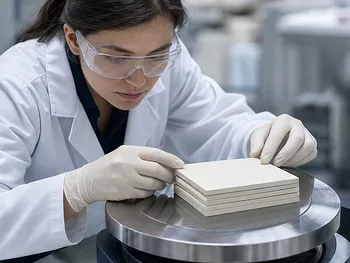
Hydraulic press platens enforce flat, parallel alignment. The machine doesn’t care if the operator is tired or in a hurry. It constrains the assembly physically so that every specimen in a batch shares the same geometry. This is the kind of standardization that separates publishable data from internal confusion.
The Thermal Variable We Forget
Many high-strength adhesives require heat to cure. So you place the assembly in an oven, and you wait. But ovens don’t apply pressure. The adhesive can expand, outgas, or develop residual stresses as it cools.
A press with heated platens solves this. Pressure and temperature work together, holding the film thickness constant while the adhesive cures under controlled heat. The result is a bond with lower internal stress and higher structural integrity.
If your protocol requires rapid turnaround, programmable cycle control lets you preset the entire pressure-temperature profile and walk away. One button. No variability between shifts.
How to Choose a Press for Bond Strength Testing
Not every hydraulic press is designed for this job. Here’s how to match the machine to your real priority.
- If ASTM C633 compliance is non-negotiable: Choose a press with a digital pressure gauge and precise force adjustability. You’ll need to document the exact tonnage for every specimen. A standard lab press with a fine-control hydraulic system gives you that traceability.
- If you’re running high-throughput quality control: Look for programmable cycles, heated platens, and rapid cooling capability. This slashes cycle time without sacrificing uniformity.
- If you’re developing new coating formulations: You need a press that can also handle powder compaction or cold isostatic pressing for your raw materials, so the entire chain from powder to coating pellet shares the same standard of control.
The press is no longer just a tool. It’s part of your measurement system.
Specimen Assembly as a System
| Key Role | Technical Mechanism | Testing Outcome |
|---|---|---|
| Controlled Compression | Uniform adhesive film thickness via precise tonnage | Eliminates eccentric loading and bending moments |
| Void Elimination | High pressure expels entrapped air | Bond fails at coating, not at adhesive defects |
| Geometric Alignment | Parallel platens constrain assembly geometry | Pure tensile stress without peel components |
| Thermal Management | Heated platens cure adhesive under constant pressure | Reduced internal stress, accelerated workflows |
The Machine Behind the Result
The most expensive tensile tester in the world can’t rescue a poorly prepared specimen. But a properly chosen hydraulic press builds data integrity from the ground up. It removes the invisible variables that cause scatter, confusion, and wasted test runs.
That’s why we engineer complete sample preparation solutions for material science labs. Our hydraulic press range covers every demand profile: standard lab presses for routine ASTM C633 work, Cold and Warm Isostatic Presses for advanced powder and part consolidation, XRF pellet presses for compositional analysis, and vacuum hot presses for temperature-sensitive materials.
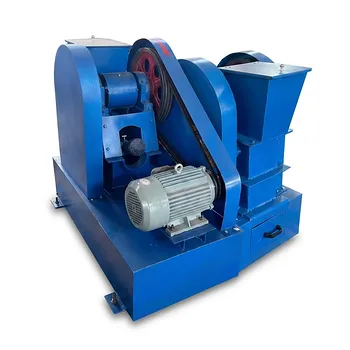
But a press doesn’t work alone. The powder that becomes a coating begins its journey in a crusher or a jet mill. The particle size distribution that determines sprayability emerges from a vibratory sieve shaker. The homogeneity of a blend comes from a powder mixer designed for the task. When every instrument in the chain is built for precision, the data at the end of that chain is data you can trust.
Engineer your testing protocol from the first step, not the last.
Quick Links
Suggested Products
6-Ton Small Single-Punch Tablet Press — Laboratory Powder & Granule Tableting Equipment / Tablet Forming Machine 5 Ton Single Punch Tablet Press Laboratory Small Batch Production Manual Tablet Press with Dual Scale Pressure Gauge for Pharmaceutical Food Chemical Laboratory Sample Preparation 6 Ton Variable Frequency Single Punch Tablet Press High Shear Laboratory Emulsifier for Mixing and HomogenizationFurther Reading
From Dust to Data: How Precision Laboratory Presses Forge Truth in Mineral Testing The Layers That Wouldn’t Lie Flat: Why Nine Sheets of Ceramic Demand a Laboratory Press That Thinks in Microns The Hidden Fracture: Why Ceramic Feed Rods Fail Before the First Melt The Invisible Architect: How Compaction Psychology Shapes Your LSM Ceramic’s Fate The Invisible Architect of Powder: How a Single Additive Saves Ductile Metals from Themselves
PowderPreparation
Last updated on May 14, 2026
Related Products
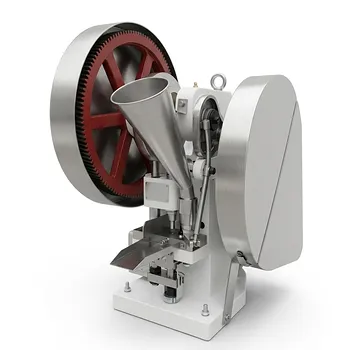
6-Ton Small Single-Punch Tablet Press — Laboratory Powder & Granule Tableting Equipment / Tablet Forming Machine
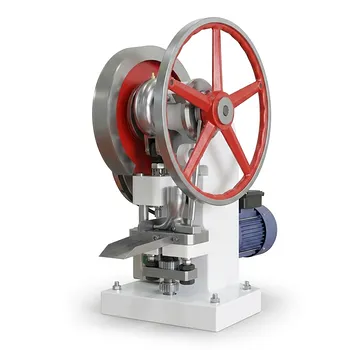
5 Ton Single Punch Tablet Press Laboratory Small Batch Production
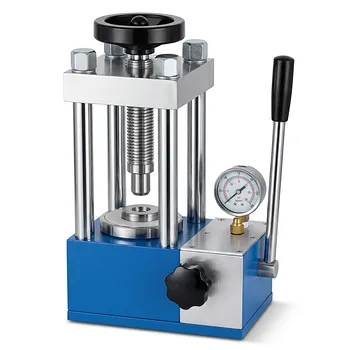
Manual Tablet Press with Dual Scale Pressure Gauge for Pharmaceutical Food Chemical Laboratory Sample Preparation
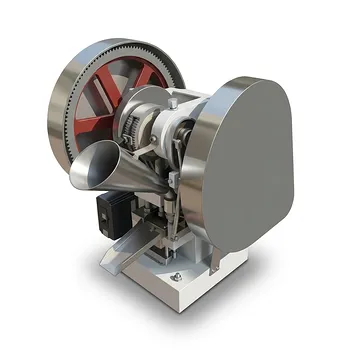
6 Ton Variable Frequency Single Punch Tablet Press
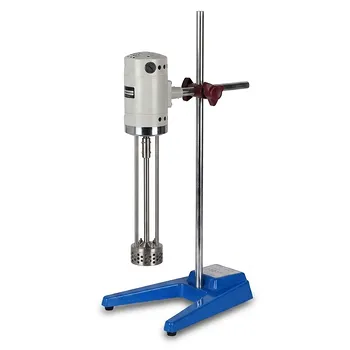
High Shear Laboratory Emulsifier for Mixing and Homogenization
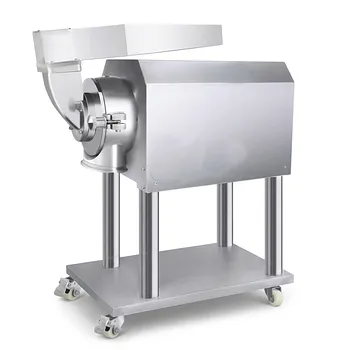
High Speed Small Laboratory Crusher for Dry Material Sample Preparation
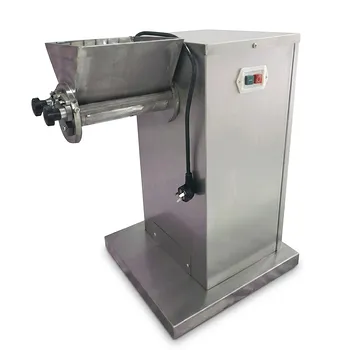
Small Laboratory Oscillating Granulator for Wet and Dry Granulation Processing
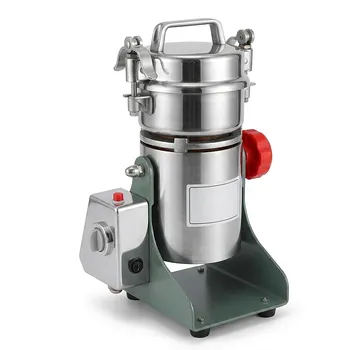
High Speed Swing Type Laboratory Pulverizer for Fine Powder Grinding and Sample Preparation