The Invisible Variable: Why Your Soil Test Data Is Lying to You
Jul 23, 2026
The Morning a 3% Error Derailed a Project
It was a standard proctor test. The technician weighed the soil, added the prescribed 5% bentonite, and mixed it by hand in a steel bowl exactly as the protocol required. The compacted specimens looked fine. The density curves looked fine. But when the shear strength numbers came back, they were 3% lower than expected — enough to fail a specification, enough to trigger a redesign meeting that burned two weeks.
No one questioned the mix.
That is the quiet tragedy of laboratory soil mechanics. We calibrate load cells to the newton. We control displacement rates to the micron. And then we place the entire analytical chain on a foundation of manual mixing – a process that relies on human attention spans, forearm fatigue, and the optimistic belief that our eyes can detect segregation at the grain scale.
They can’t.
The error was not in the soil. It was in the assumption that the materials had truly become one.
The Human Bias in Manual Mixing
There is a psychological blind spot at the center of every soil lab. It is the belief that because we can see mixing happening, we have achieved homogeneity. This is a cousin of the illusion of control. Stirring a spoon through a beaker of sand and clay feels thorough. The visual feedback — plumes of powder swirling, dark streaks fading — tricks the brain into declaring the job complete.
But granular physics does not care about human perception.
A manual mix is a stochastic accident, not a deliberate equilibrium. What you see as “uniform” is a mosaic of local concentrations separated by only half a millimeter. When you extract a 100-gram specimen from that mosaic, you are gambling. The shear box does not know it received a clay-lean patch; it just reports a lower cohesion. The permeability cell does not care that it got the pocket of fines; it just reports a hydraulic conductivity that does not represent the design blend.
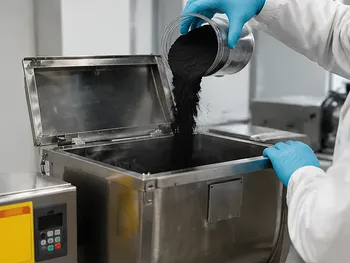
High-efficiency powder mixers remove that gamble. They replace the optimistic eye with controlled, repeatable mechanical energy that forces every particle to find its statistically correct neighbor.
Where Microscopic Inhomogeneity Hides
The problem is not that sand and soil refuse to mix. It is that they refuse to stay mixed.
The Clay That Floats
Dry clay powder carries electrostatic charges that make it cling to sand grains temporarily, then release during handling to drift toward the top of a container. You think you have a uniform blend because you mixed it five minutes ago. You don’t. The clay has already begun migrating, silently sorting itself by density and particle charge.
This segregation happens in seconds. It escalates every time the sample is scooped, transferred, or vibrated.
The Bentonite Clump That Became a Shear Plane
High-plasticity materials like bentonite absorb atmospheric moisture during storage. When introduced into a manual mix, they do not disperse — they nucleate. They form millimeter-scale clumps that survive stirring and even light tamping. In a triaxial cell, those clumps become internal defects. During shearing, stress concentrates around them. The specimen fails prematurely along a plane that was never designed to exist.
The mixing process did not eliminate the clumps. It merely hid them.
The Mixer as a Truth-Telling Machine
An Atul Gawande insight applies here: complex systems rarely fail from a single catastrophic error. They fail from small, tolerated imperfections that compound under load. A soil specimen is a complex system. A high-efficiency mixer is the tool that refuses to tolerate those imperfections.
Forced Shear Over Statistical Wishful Thinking
Manual mixing relies on randomization. The hope is that enough tumbling will eventually produce a Poisson distribution of particles across the volume. This is statistically naive. Randomization in fine powders requires energy barriers to be broken — van der Waals forces, capillary bridges from residual moisture, mechanical interlocking of irregular grains.
A high-efficiency mixer does not randomize. It engineers an equilibrium. Mechanical shear forces exceed the interparticle forces that cause segregation. Strong agitation suspends particles of different densities in a dynamic state where density-driven settling is continuously counteracted. The result is not a mixture that looks homogeneous. It is a mixture that is statistically indistinguishable at every sampling point.
That distinction — between visual appearance and mathematical certainty — is what separates publishable data from anecdote.
Coating Every Grain: The Bonding Bridge Principle
In chemically stabilized soils, performance lives at the interface. A lime particle that touches a clay platelet starts a pozzolanic reaction. One that sits in a dry pocket does nothing. The difference between a strong specimen and a weak one is not the total mass of stabilizer added; it is the percentage of grain surfaces coated.
High-efficiency mixing transforms binder distribution from a bulk metric into a surface phenomenon. The agitation spreads bonding agents across grain boundaries, creating the microscopic bridges that deliver strength. This is why well-mixed foundry sands can hold intricate shapes with minimal binder — the chemistry is used, not wasted.
The Trade-off We Must Respect
Every tool has a physics, and a responsible lab engineer respects the boundary conditions.
- Particle attrition. High shear can grind friable sands, altering the very grain size distribution you intended to test. Modern mixers with variable speed control let you dial in the energy just below the fracture threshold of your weakest grain species.
- Moisture migration. Friction generates heat. Heat evaporates water. In cement-stabilized soils, lost moisture means lost hydration potential. Closed mixing vessels and controlled dwell times prevent the sample from baking during preparation.
The goal is not maximum intensity. The goal is minimum energy to reach statistical homogeneity. Choosing the right protocol is a deliberate act of engineering judgment — one that respects both the material and the question being asked.
Our Response: A System to End the Guesswork
We spent years watching brilliant research get ambushed by sample preparation. The realization was uncomfortable: you cannot calibrate out upstream chaos.
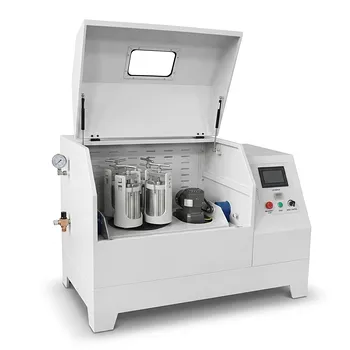
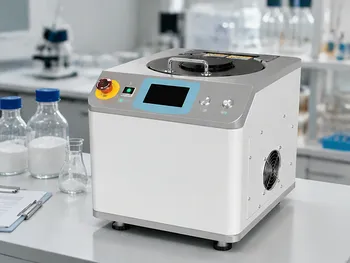
That is why we built a complete laboratory sample preparation platform that treats mixing not as a step, but as the foundation of analytical truth. Our high-efficiency powder mixers and defoaming mixers deliver the controlled shear environments that turn heterogeneous raw materials into uniform matrices — whether you are blending river sand with bentonite, dispersing HDPE fibers into clay, or coating aggregate grains with stabilization binders.
The system does not stop at mixing:
| Key Laboratory Challenge | Our Equipment Solution | Outcome |
|---|---|---|
| Physical disparities between grains | High-efficiency powder mixers with adjustable shear | Cross-specimen homogeneity |
| Density-driven segregation | Strong agitation and forced suspension | Statistically uniform sampling |
| Binder agglomeration and weak zones | High-shear defoaming mixers | Full binder coating and bonding bridges |
| Particle attrition risk | Variable-speed milling and mixing | Preserved grain size integrity |
| Post-mixing grading verification | Vibratory and air-jet sieve shakers | Validated aggregate grading curves |
This is where the technical narrative meets the business value. For distributors and wholesalers, our complete range — from jaw crushers and liquid nitrogen cryogenic grinders to planetary ball mills, Cold/Warm Isostatic Presses, XRF pellet presses, and vacuum hot presses — represents a single-vendor reliability proposition. We provide certification support, OEM/ODM flexibility, and supply-chain stability that helps you deliver complete lab setups without multiple sourcing headaches.
The Romanticism of Perfect Homogeneity
There is something quietly magnificent about standing at the discharge of a powder mixer and knowing that a scoop from the left edge and a scoop from the right edge will yield the same Atterberg limits, the same maximum dry density, the same unconfined compressive strength. The machine has done what no amount of human patience could achieve: it has erased the geometry of chaos and left behind a material that is, for all practical purposes, a single substance.
That is the engineer’s version of romance. Order wrestled from entropy. A question asked, and a sample prepared with such rigor that the answer means something.
When your data finally reflects only the truth of the material — and not the flaws of its preparation — you stop troubleshooting machines and start understanding soils. That transition begins the moment you treat mixing as a science.
Quick Links
Suggested Products
Multi Dimensional Universal Mixer for High Uniformity Powder Blending V-Type Powder Mixer for Uniform Blending of Dry Powders and Granules Inclined Mixer for Homogeneous Powder Blending and Grinding Horizontal Trough Mixer for Uniform Powder and Paste Blending Industrial Double Cone Mixer for Powder Blending and Homogeneous MixingFurther Reading
The Mixing Fallacy: Why Your Composite Flour’s Uniform Color Is a Costly Illusion The 81:19 Gamble: Why Imperfect Mixing Silently Kills Your Optical Ceramic The Micrometer Trigger: Why a Laboratory Powder Mixer Defines Effervescent Tablet Success When Two Extra Minutes Define a Skyscraper: The Precision Mixing Protocol That Nanomaterials Demand The Hidden Variable: Why Your Composite’s Fate is Decided Before the Sintering Furnace Even Warms Up
PowderPreparation
Last updated on May 14, 2026
Related Products
Multi Dimensional Universal Mixer for High Uniformity Powder Blending
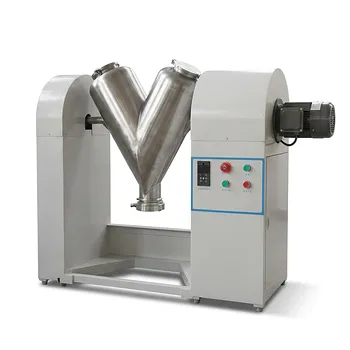
V-Type Powder Mixer for Uniform Blending of Dry Powders and Granules
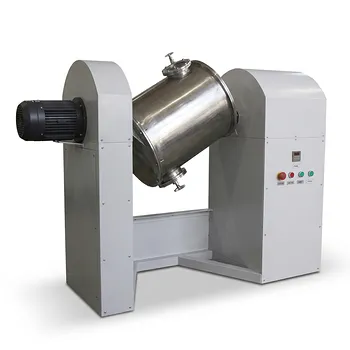
Inclined Mixer for Homogeneous Powder Blending and Grinding
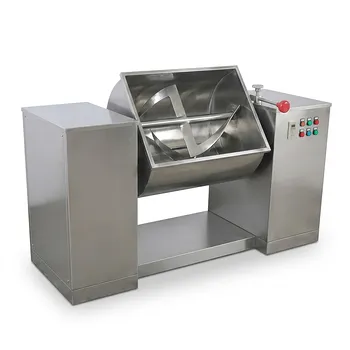
Horizontal Trough Mixer for Uniform Powder and Paste Blending
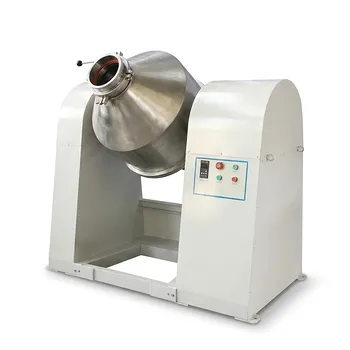
Industrial Double Cone Mixer for Powder Blending and Homogeneous Mixing
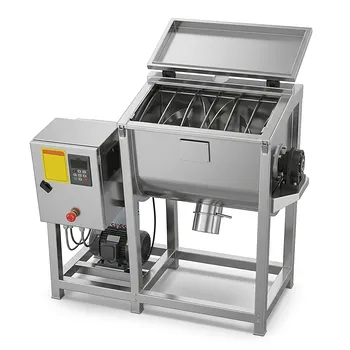
Horizontal Ribbon Mixer for Uniform Powder and Slurry Mixing
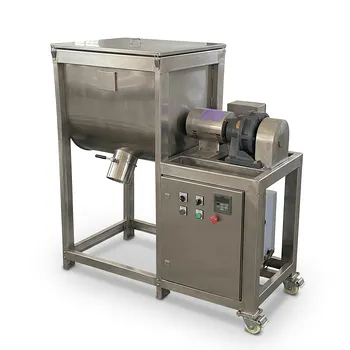
Horizontal Ribbon Mixer for Dry Powder and Slurry Blending
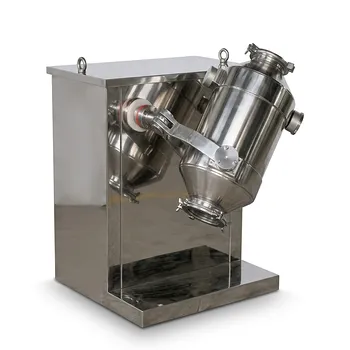
Three-Dimensional Motion Mixer for Laboratory Powder and Granule Blending
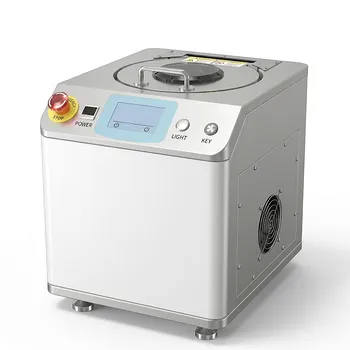
High Efficiency Vacuum Planetary Centrifugal Mixer and Defoaming Machine for Industrial Material Research and Precise Laboratory Powder Dispersion
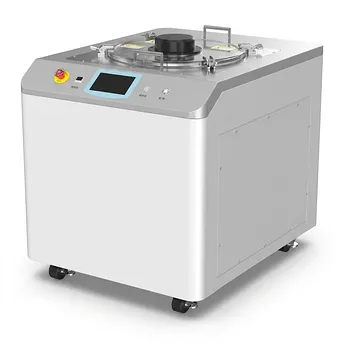
Industrial Planetary Centrifugal Vacuum Defoaming Mixer for High Viscosity Paste and Powder Homogenization
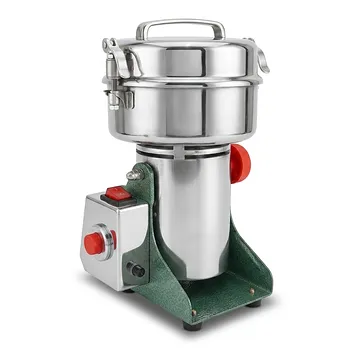
Small High-Speed Laboratory Grinder for Powder Processing
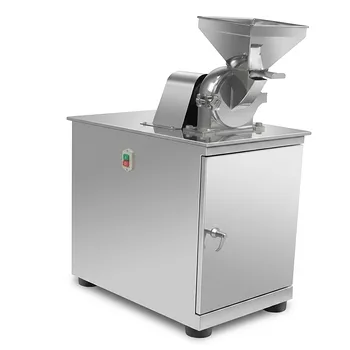
Universal Laboratory Pulverizer Grinder for Small Batch Powder Processing and Material Science Research
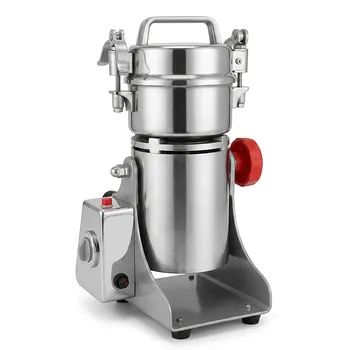
Industrial High Speed Small Sample Pulverizer Swing Type Laboratory Grinder for Powder Processing
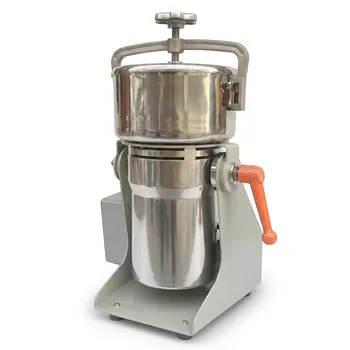
High Speed Laboratory Grinder Efficient Stainless Steel Powder Pulverizer Universal Material Science Mill for Sample Preparation
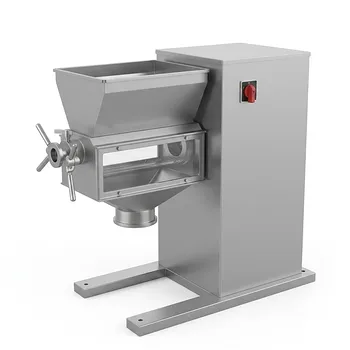
Industrial Swing Granulator for Powder Processing in Pharma Food and Chemical Industries
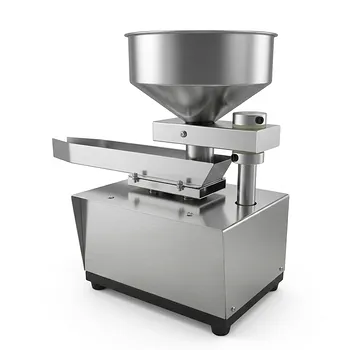
Automatic Vibrating Powder Feeder for Laboratory Material Processing Precision Vibratory Hopper Feeder for Granular and Powder Material Handling Industrial Grade Vibrating Tray Feeder for Consistent Material Sample Preparation
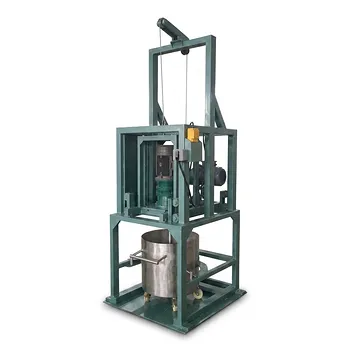
High-Speed Simple Disperser for Efficient Mixing, Dispersion, and Emulsification
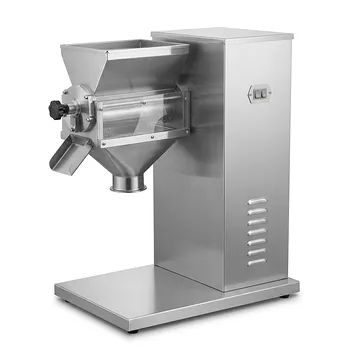
Small Swing Granulator Efficient Powder Granulation for Pharmaceutical Chemical Food Industries
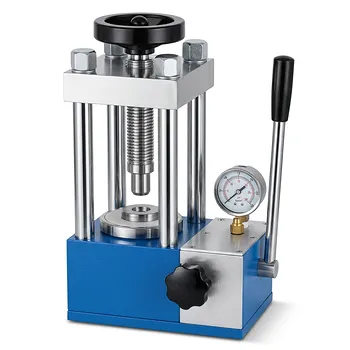
Manual Tablet Press with Dual Scale Pressure Gauge for Pharmaceutical Food Chemical Laboratory Sample Preparation