The Silent Choreographer: How 3D Powder Mixing Dictates the Purity of Ti₂SnC MAX Phases
Sep 10, 2026
The Assumption That Costs You Phase Purity
Your SEM images are flawless. Your sintering curve looks textbook. Yet your XRD plot screams of unwanted SnO₂ and TiC phases.
For months, you’ve been tweaking ramp rates and dwell times, assuming the mystery lies in the furnace.
It doesn’t.
The most common failure point in synthesizing Ti₂SnC MAX phases isn’t thermal management—it’s physical intimacy. If a single grain of titanium sits isolated from carbon, that local stoichiometry drifts, and an impurity phase is born. The furnace merely amplifies what the mixer failed to accomplish.
This is the powder paradox: heat can accelerate a reaction, but it cannot initiate one where physical contact doesn’t exist.
The elegance of a 3D mixer lies in its refusal to leave these encounters to chance.
The Physics of Proximity
Solid-state reactions are a game of diffusion. Atoms must travel across grain boundaries to find their partners. The mean diffusion distance dictates reaction speed and completeness. When tin and carbon are poorly distributed, some titanium grains remain isolated—doomed to form binary carbides rather than the layered MAX structure.
We consistently overweight the power of temperature (visible, controllable) and underweight the power of arrangement (invisible, probabilistic). The 2:1:1 ratio on a weigh scale means nothing if it doesn’t translate to the micro-scale.
Titanium, tin, and carbon are an uneasy trio:
- Density mismatch: Ti (4.5 g/cm³), Sn (7.3 g/cm³), and graphite (2.2 g/cm³).
- Morphology contrast: Irregular, ductile Ti versus lubricious graphite flakes.
In a rotating drum, these materials separate like a shaken jar of mixed nuts. Larger or denser particles settle; fine carbon floats. The furnace will not re-mix them.
Why a Single Axis Isn’t Enough
Conventional mixers rotate on one axis. The powder bed tumbling inside quickly reaches a flow steady-state, creating “dead zones” that receive no shear or redistribution.
These zones become statistical islands of titanium surplus or carbon deficit—precursors to TiC peaks on your diffractogram.
A 3D mixer rejects this compromise. Through compound multi-axial motion, it subjects the powder to a continuous, chaotic trajectory across three planes. No region remains stagnant. Every particle experiences a perpetually changing acceleration vector.
It’s not mixing; it’s a three-dimensional negotiation of space.
The Engineering of Absolute Contact
The magic of Ti₂SnC synthesis depends on the M₂AX stoichiometry being respected at the near-atomic level. A 3D mixer’s multi-axial tumble breaks down agglomerates without fracturing primary particles, preserving original grain morphology while distributing every ingredient with statistical thoroughness.
- Micro-scale stoichiometric precision: The 2:1:1 ratio holds true even when sampling micrograms.
- Interface area maximized: Every carbon flake contacts titanium, drastically shortening diffusion paths.
- Segregation prevention: The continuous reorientation counteracts density-driven settling.
The result is a precursor powder where reactions proceed according to plan, not probability.
The Table of Transformation
| Feature | Benefit for Ti₂SnC Synthesis | Advantage Over Single-Axis Mixers |
|---|---|---|
| Multi-Axial Motion | Eliminates dead zones for total volume blending | Prevents stratification and unreacted core formation |
| Micro-Scale Precision | Ensures 2:1:1 stoichiometry in every micro-region | Reduces impurity phases (TiC, SnO₂) from local segregation |
| Low-Impact Homogenization | Preserves particle size and morphology | Avoids oxidation and work‑hardening common in ball mills |
| Interface Optimization | Maximizes Ti–C contact area | Accelerates atomic diffusion, lowering required sintering time |
The Psychology of Over-Mixing and the Preservation of Identity
A common engineer’s instinct is to push for more: higher speed, longer duration, more energy. But in MAX phase preparation, patience is a competitive advantage.
Extended low-speed mixing (up to 30 hours in some protocols) using a 3D mixer achieves homogeneity without the mechanical activation that ball milling introduces.
Why does that matter? Because mechanical alloying changes the game. Particle size reduction, cold welding, and amorphization can shift the reaction pathway, potentially creating unwanted nanoscale oxides. The 3D mixer offers a different philosophy: organize the powders, but don’t rewrite them.
This preservation of identity ensures your diffusion couples remain clean, your particle surfaces reactive but not hysteretic, and your sintering kinetics predictable.
From Precursor to Solid Body: Completing the System
A perfectly mixed precursor powder is a promise. To convert that promise into a dense, phase-pure ceramic, you need pressure and temperature—applied intelligently.
Segregation can reoccur during die filling if not careful, but the architecture of your pressing system holds equal weight. In our laboratory, the journey from Ti, Sn, and C to a monolithic Ti₂SnC MAX phase flows through an integrated ecosystem:
- 3D Powder Mixer → Homogeneous precursor.
- Hydraulic Press / CIP → Green body formation with uniform density.
- Vacuum Hot Press → Simultaneous pressure and heat under a controlled atmosphere, preserving phase purity while achieving near-theoretical density.
By cascading the 3D mixer with downstream vacuum hot presses or warm isostatic presses, researchers close the loop—from micro-scale chemical intimacy to macro-scale structural integrity.
The Precision Portfolio for Material Scientists
Achieving high-purity MAX phases demands a complete suite of sample preparation tools. Beyond our advanced 3D mixers, we equip laboratories with:
- Size Reduction: Jaw crushers, liquid nitrogen cryogenic grinders, and planetary ball mills for initial comminution when particle sizes must be precisely adjusted.
- Classification: Vibratory and air-jet sieve shakers that deliver exact cut sizes and tight distributions.
- Compaction: Cold/Warm Isostatic Presses (CIP/WIP) for complex shapes and uniform density, XRF pellet presses for rapid analysis, and advanced vacuum hot presses for reactive sintering.
This integrated suite ensures that from raw ingot to sintered ceramic, every process parameter remains under your control—no hidden variables, no unexplained phases.
When your synthesis fails, it’s often not a failure of chemistry but of choreography. The atoms will follow the paths we set for them—if we give them the right partners, in the right places, at the right time. A 3D mixer builds that foundation, particle by particle.
Stop troubleshooting the furnace. Start orchestrating the powder. Contact Our Experts
Quick Links
Suggested Products
Three-Dimensional Motion Mixer for Laboratory Powder and Granule Blending Multi Dimensional Universal Mixer for High Uniformity Powder Blending Horizontal Trough Mixer for Uniform Powder and Paste Blending Inclined Mixer for Homogeneous Powder Blending and Grinding V-Type Powder Mixer for Uniform Blending of Dry Powders and GranulesFurther Reading
The Hidden Variable: Why Your Composite’s Fate is Decided Before the Sintering Furnace Even Warms Up The Micrometer Trigger: Why a Laboratory Powder Mixer Defines Effervescent Tablet Success When Two Extra Minutes Define a Skyscraper: The Precision Mixing Protocol That Nanomaterials Demand The Invisible Variable: Why Your Soil Test Data Is Lying to You The Mixing Fallacy: Why Your Composite Flour’s Uniform Color Is a Costly Illusion
PowderPreparation
Last updated on May 14, 2026
Related Products
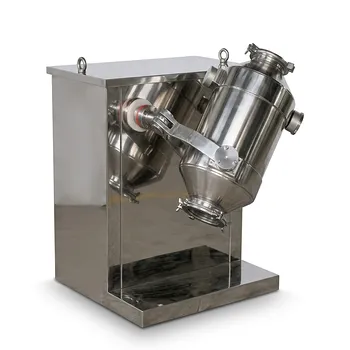
Three-Dimensional Motion Mixer for Laboratory Powder and Granule Blending
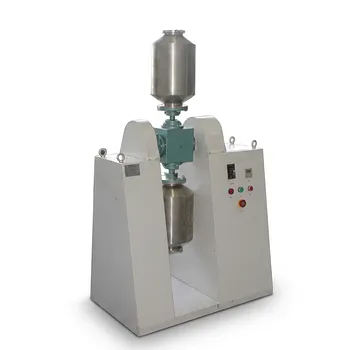
Multi Dimensional Universal Mixer for High Uniformity Powder Blending
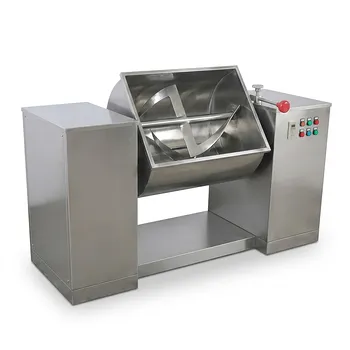
Horizontal Trough Mixer for Uniform Powder and Paste Blending
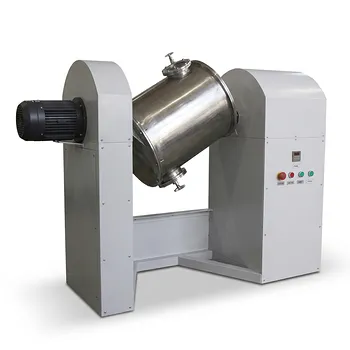
Inclined Mixer for Homogeneous Powder Blending and Grinding
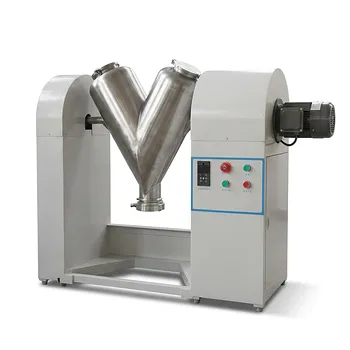
V-Type Powder Mixer for Uniform Blending of Dry Powders and Granules
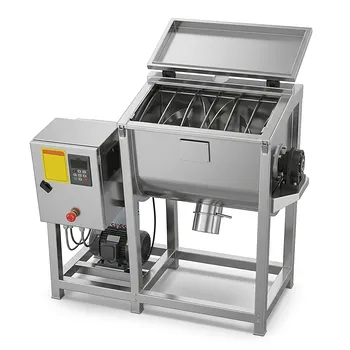
Horizontal Ribbon Mixer for Uniform Powder and Slurry Mixing
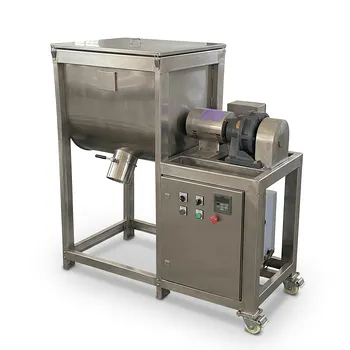
Horizontal Ribbon Mixer for Dry Powder and Slurry Blending
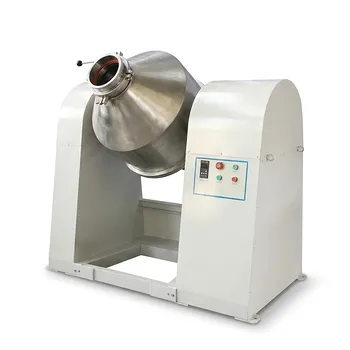
Industrial Double Cone Mixer for Powder Blending and Homogeneous Mixing
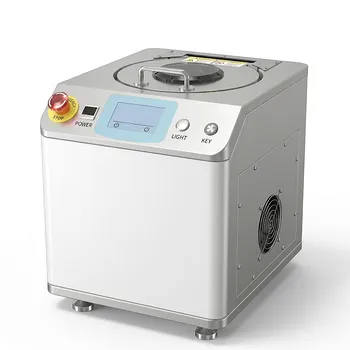
High Efficiency Vacuum Planetary Centrifugal Mixer and Defoaming Machine for Industrial Material Research and Precise Laboratory Powder Dispersion
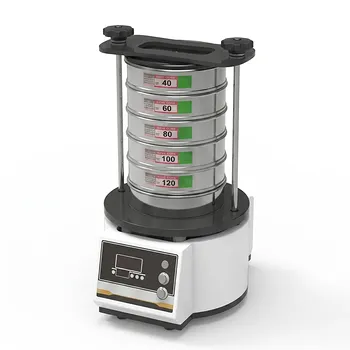
Dry Three Dimensional Vibratory Sieve Shaker
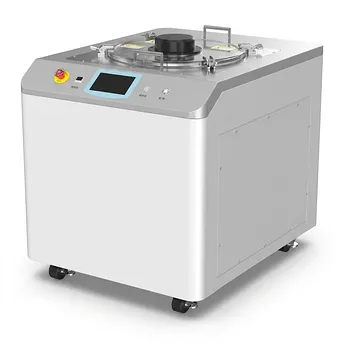
Industrial Planetary Centrifugal Vacuum Defoaming Mixer for High Viscosity Paste and Powder Homogenization
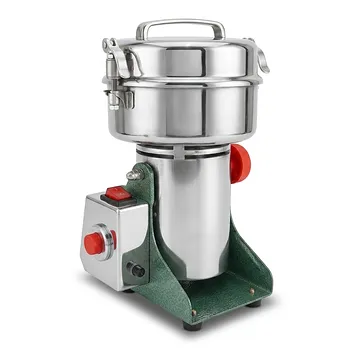
Small High-Speed Laboratory Grinder for Powder Processing
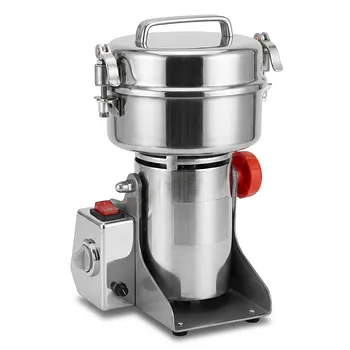
High Speed Laboratory Powder Grinder Small Batch Sample Preparation Mill
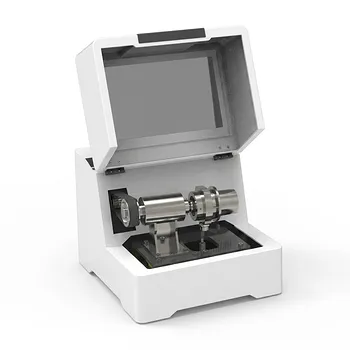
Single Tank High Energy Vibratory Ball Mill for Laboratory Grinding and Mixing
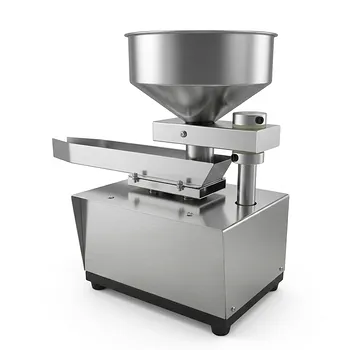
Automatic Vibrating Powder Feeder for Laboratory Material Processing Precision Vibratory Hopper Feeder for Granular and Powder Material Handling Industrial Grade Vibrating Tray Feeder for Consistent Material Sample Preparation
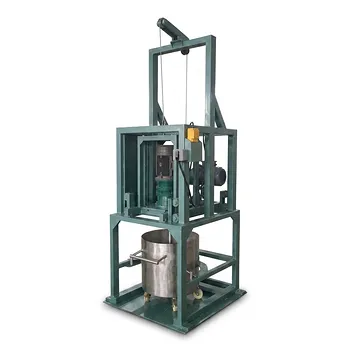
High-Speed Simple Disperser for Efficient Mixing, Dispersion, and Emulsification
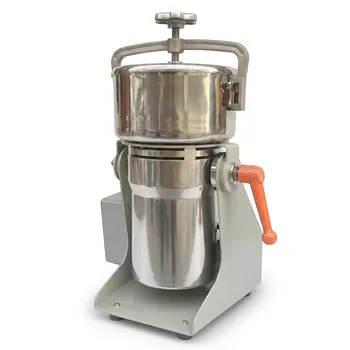
High Speed Laboratory Grinder Efficient Stainless Steel Powder Pulverizer Universal Material Science Mill for Sample Preparation
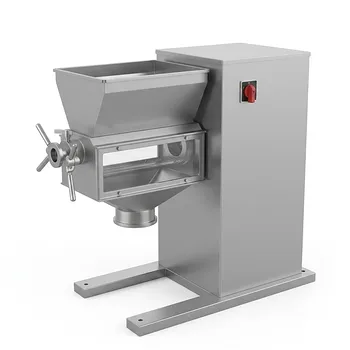
Industrial Swing Granulator for Powder Processing in Pharma Food and Chemical Industries
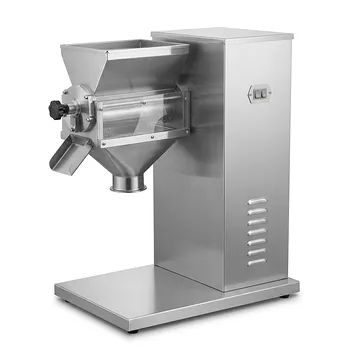
Small Swing Granulator Efficient Powder Granulation for Pharmaceutical Chemical Food Industries