The Mixing Fallacy: Why Your Composite Flour’s Uniform Color Is a Costly Illusion
Aug 20, 2026
The Quiet Panic in the Test Bakery
A food scientist stares at two loaves from the same batch. One has risen beautifully. The other looks like a failed geology experiment—dense, with a strange purple streak from an unmixed pocket of sweet potato flour. The formulation is identical. The oven temperature is identical. The hydration is identical.
The variable is the powder. Not the ingredients themselves—the mixture of them.
This is the fundamental crisis of composite flour development. When you replace 15% of wheat with amaranth or fermented sorghum, you are not just changing a recipe. You are creating a complex, multi-particle system with conflicting densities, surface energies, and size distributions.
And here is the uncomfortable truth that no one discusses: your mixer is lying to you.
A powder can look perfectly homogeneous to the naked eye while being catastrophically segregated at the microscopic level. The color is uniform. The texture feels consistent. But chemically? It is a mosaic of local compositional biases, and every test sample you take is pulling from a different statistical universe.
This is not a failure of chemistry. It is a failure of physics—and it is entirely solvable with the right instrumentation.
The Statistical Definition of Mixed
It Is Math, Not Appearance
Mixing is not a culinary art. It is a thermodynamic and mechanical operation with a cold, mathematical endpoint: statistical homogeneity.
A laboratory powder mixer has one brutal, non-negotiable job: eliminating local compositional bias. This means that if you take a 1-gram sample from any corner of your batch, its composition must match the bulk formulation within a defined variance—typically less than 1%.
Without this, your experiment is broken before it begins.
Consider a common development scenario. You are blending 12% amaranth seed powder into a wheat flour base. The amaranth has a different particle morphology and a higher oil content. If your mixer relies on a simple tumbling action, these particles will not distribute—they will cluster. Gravity and surface adhesion will create pockets of high amaranth concentration that are invisible to the eye but devastating to your data.
The Three Scales of Disaster
Component segregation operates on three scales, and most researchers only look for the first:
- Macro-scale (visible clumps): The purple streak in the bread. Easy to spot. Rarely the real problem because it is too obvious.
- Meso-scale (statistical clusters): A subtle non-random distribution. The flour looks uniform, but a 1-gram sample might contain 18% amaranth while the next contains 6%. This is the primary source of unexplained variance in rheological testing.
- Micro-scale (surface coating): Functional additives like monoglycerides or olive oil do not just “mix in.” They must mechanically coat the surface of host particles to improve flowability. If the mixer lacks sufficient shear, these additives remain as separate, tacky islands that cause blockages and segregation during storage.
A true mixing solution must conquer all three scales. Your data depends on it.
The Hidden Variable in Your Rheometer Data
Water Absorption Is a Mixing Test in Disguise
When you run a farinograph or mixolab test, you believe you are measuring dough properties. You are partially right. You are also measuring the quality of your upstream powder mixing—whether you intended to or not.
If your composite flour is not statistically homogeneous, water absorption measurements become a random walk. An amaranth-rich sample will greedily bind water differently than a wheat-rich sample. Two tests from the same batch will yield different stability curves.
The researcher, unaware of the mixing defect, concludes that the formulation is unstable. They adjust the recipe. They add more gluten. They change the proofing time.
This is the critical misdiagnosis: they are fixing a problem that does not exist, while the real culprit—the mixing process—silently corrupts every subsequent experiment.
Consistency Is the Only Valid Output
The goal of a laboratory mixer is not to make the “best” mixture. It is to make the same mixture, every time, with a narrow variance envelope.
This allows you to finally isolate the true effects of your additives. When you change the sweet potato powder from 10% to 15%, any difference in dough extensibility is now a real signal—not an artifact of inconsistent blending. The mixer becomes the foundation of scientific validity, the silent guarantor that your variable is what you think it is.
The Shear Trap and the Temperature Lie
When Mixing Destroys What It Touches
Powerful mixing is not always better. There is a dark side to mechanical shear that manifests as a subtle sabotage of your ingredients.
High-shear rotors or prolonged mixing times generate friction. Friction generates heat. Heat can be catastrophic for sensitive composite flours:
- Starch granules can pre-gelatinize on a microscopic level, altering their water-binding behavior before the baking process even begins.
- Heat-sensitive nutrients, present in many functional plant powders, can begin thermal degradation.
- Fats or oils in the formulation can soften or melt slightly, leading to transient stickiness that promotes post-mixing agglomeration.
You remove the powder from the mixer. It looks perfect. It flows well. But the damage is done—the thermal history of the material has been altered, and your experimental baseline is now contaminated by the very instrument meant to prepare it.
The Density De-mixing Paradox
Another cruel physical law: mixing identical-looking particles is not the same as keeping them mixed.
If your base flour and additive have a significant density difference, a standard V-blender or tumbling mixer can actually un-mix the powder during discharge or gentle vibration. The denser particles settle into a gradient. What was statistically homogeneous in the mixing vessel becomes segregated in the storage container.
This is the de-mixing paradox. The mixer worked, but the material failed upon handling. A solution that provides gentle, three-dimensional spatial motion can achieve macroscopic distribution without this fatal settling behavior, and crucially, without the thermal damage of high-shear alternatives.
Engineering Repeatability into Your Formulation
Selecting a Mixing Principle
Your choice of mixing technology is a strategic decision about what you prioritize in your research. There is no universal “best” mixer—only an optimal interface between your material’s physics and your experimental goals.
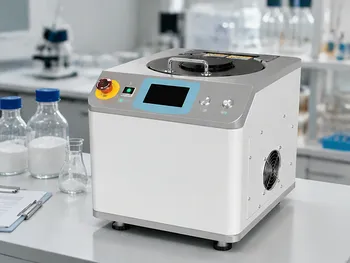
When rheological accuracy is your core focus: An electronic mixer providing controlled, continuous shear ensures that functional ingredients are distributed intimately enough to deliver uniform water absorption profiles. This is essential when dough stability is your primary response variable.
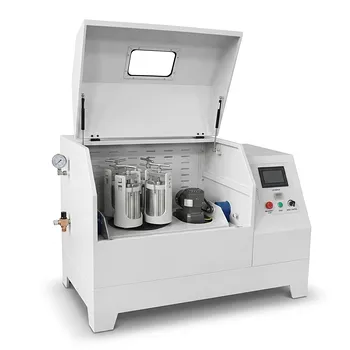
When ingredient integrity is non-negotiable: A three-dimensional rocking mixer becomes the instrument of choice. Its complex spatial motion achieves statistical homogeneity without generating the shear forces that can alter grain size, morphology, or thermal properties. You preserve the native characteristics of your raw materials.
When functional additive performance must be controlled: If your work involves coating particles with lubricants or processing aids, you need a mixer capable of microscopic homogenization. This is not about blending coarse particles—it is about mechanically distributing a thin film across a large surface area to transform flow behavior.
The Problem of Small-Batch Loss
In composite flour research, your functional additives are often expensive or available in limited quantities. A mixer that works beautifully but retains 8% of the material in dead zones is not just inefficient—it actively falsifies your formulation.
That 8% loss is not evenly distributed across all ingredients. It will be biased towards the finer, stickier, or electrostatically charged fraction. Your 15% sorghum formulation has now become, effectively, a 13% formulation with an unknown confidence interval.
Precision engineering with high material recovery is not a convenience feature. It is a requirement for analytical truth.
Summary: The Architecture of a True Mixture
| Critical Function | The Physics It Solves | Downstream Consequence of Failure |
|---|---|---|
| **Statistical Homogenization** | Eliminates positional concentration gradients | Unexplained variance in proximate analysis and baking performance |
| **Microscopic Distribution** | Prevents surface-energy-driven segregation | Powder flow blockages; component separation during storage or transfer |
| **Thermal Neutrality** | Avoids friction-induced starch damage or nutrient loss | Altered water absorption baselines; degraded functional ingredient efficacy |
| **High Material Recovery** | Maintains intended mass ratios with no selective retention | Systematic drift of the formulation away from its target composition |
The Instrument as the Foundation
There is a quiet discipline to materials science that transcends the excitement of novel recipes and exotic plant proteins. It is the discipline of sample preparation—the understanding that the most brilliant formulation is worthless if it cannot be rendered homogeneous, testable, and repeatable.
The laboratory powder mixer is not a peripheral device. It is the first analytical instrument in your workflow. Before you measure rheology, before you evaluate crumb structure, before you calculate nutritional profiles, the mixer determines whether your sample is a faithful representative of your intention.
This is the convergence point where engineering meets epistemology—the place where precise mechanical design becomes the foundation for scientific truth.
Mixing is not about moving powders around. It is, in its most essential form, the systematic destruction of uncertainty. And when every subsequent decision depends on the integrity of that initial mixture, the choice of instrumentation is not a procurement detail—it is the single most important methodological commitment you will make.
A complete laboratory solution for material science requires this integrated philosophy. From crushers and cryogenic mills that preserve the chemical integrity of your raw materials, to planetary ball mills and sieve shakers that define particle size with analytical precision, to the full spectrum of hydraulic presses—Cold and Warm Isostatic Presses, XRF pellet presses, and vacuum hot presses—that transform your homogeneous powder into a test-ready solid form. The workflow is a chain, and the chain is only as strong as its mixing link.
Your formulation deserves a foundation of physical truth.
Quick Links
Suggested Products
Multi Dimensional Universal Mixer for High Uniformity Powder Blending V-Type Powder Mixer for Uniform Blending of Dry Powders and Granules Inclined Mixer for Homogeneous Powder Blending and Grinding Horizontal Trough Mixer for Uniform Powder and Paste Blending Industrial Double Cone Mixer for Powder Blending and Homogeneous MixingFurther Reading
The Invisible Variable: Why Your Soil Test Data Is Lying to You The 81:19 Gamble: Why Imperfect Mixing Silently Kills Your Optical Ceramic The Micrometer Trigger: Why a Laboratory Powder Mixer Defines Effervescent Tablet Success When Two Extra Minutes Define a Skyscraper: The Precision Mixing Protocol That Nanomaterials Demand The Hidden Variable: Why Your Composite’s Fate is Decided Before the Sintering Furnace Even Warms Up
PowderPreparation
Last updated on May 14, 2026
Related Products
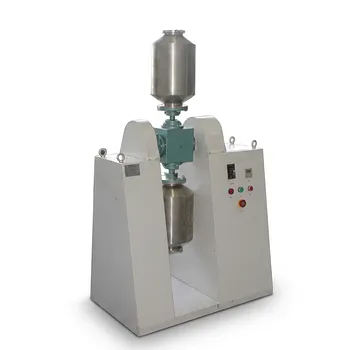
Multi Dimensional Universal Mixer for High Uniformity Powder Blending
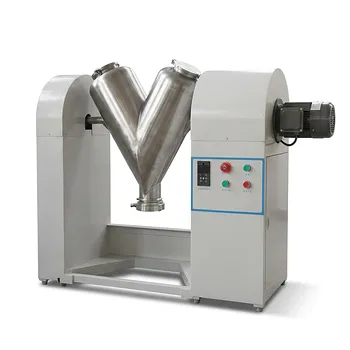
V-Type Powder Mixer for Uniform Blending of Dry Powders and Granules
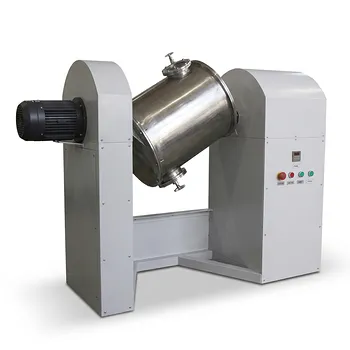
Inclined Mixer for Homogeneous Powder Blending and Grinding
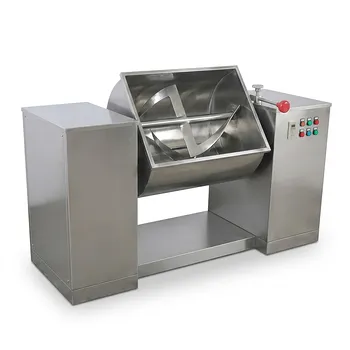
Horizontal Trough Mixer for Uniform Powder and Paste Blending
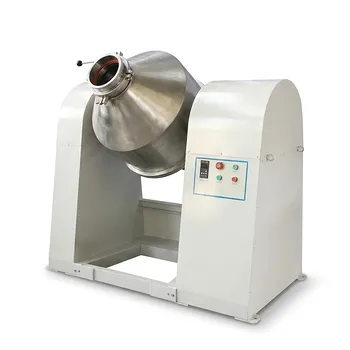
Industrial Double Cone Mixer for Powder Blending and Homogeneous Mixing
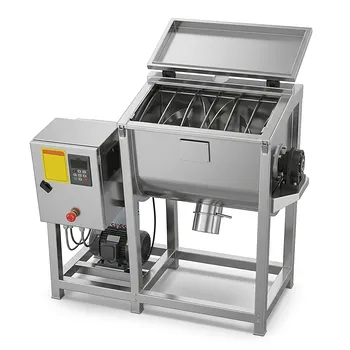
Horizontal Ribbon Mixer for Uniform Powder and Slurry Mixing
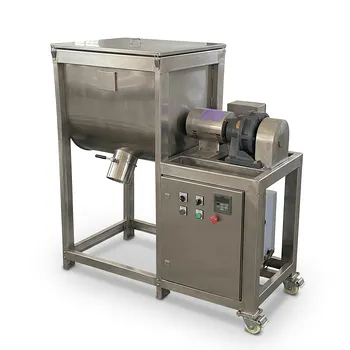
Horizontal Ribbon Mixer for Dry Powder and Slurry Blending
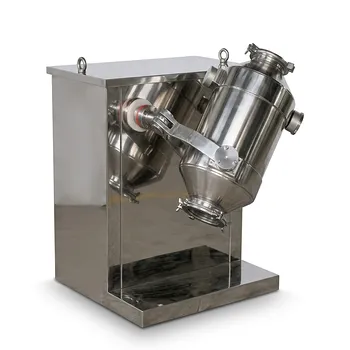
Three-Dimensional Motion Mixer for Laboratory Powder and Granule Blending
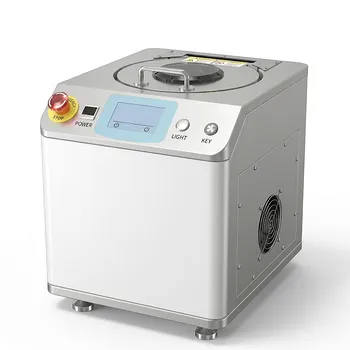
High Efficiency Vacuum Planetary Centrifugal Mixer and Defoaming Machine for Industrial Material Research and Precise Laboratory Powder Dispersion
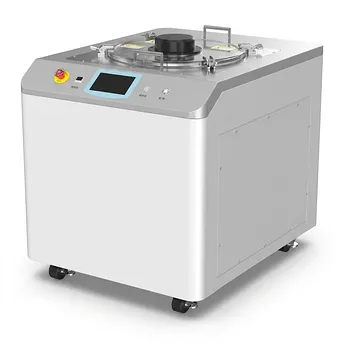
Industrial Planetary Centrifugal Vacuum Defoaming Mixer for High Viscosity Paste and Powder Homogenization
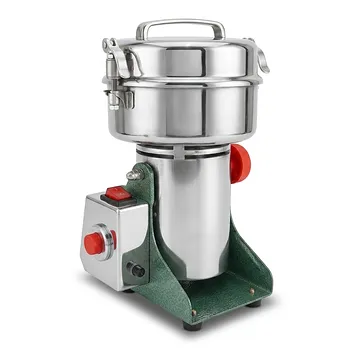
Small High-Speed Laboratory Grinder for Powder Processing
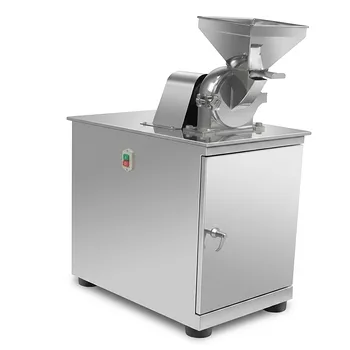
Universal Laboratory Pulverizer Grinder for Small Batch Powder Processing and Material Science Research
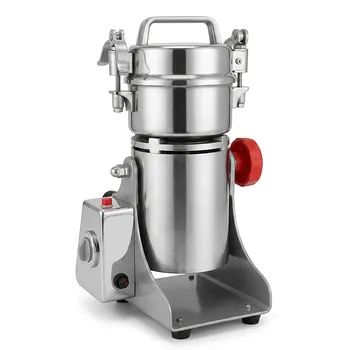
Industrial High Speed Small Sample Pulverizer Swing Type Laboratory Grinder for Powder Processing
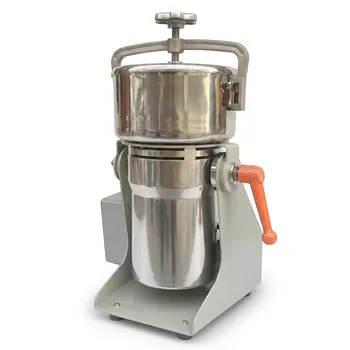
High Speed Laboratory Grinder Efficient Stainless Steel Powder Pulverizer Universal Material Science Mill for Sample Preparation
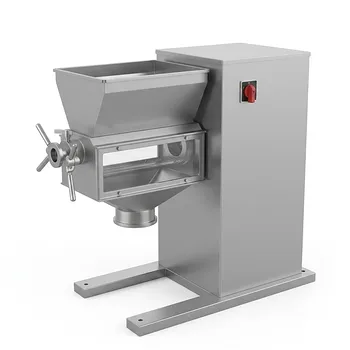
Industrial Swing Granulator for Powder Processing in Pharma Food and Chemical Industries

Automatic Vibrating Powder Feeder for Laboratory Material Processing Precision Vibratory Hopper Feeder for Granular and Powder Material Handling Industrial Grade Vibrating Tray Feeder for Consistent Material Sample Preparation
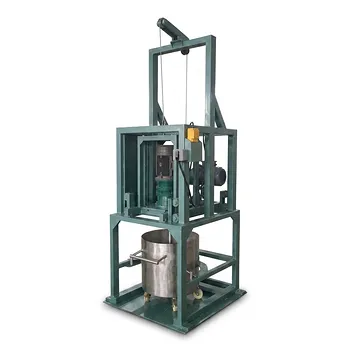
High-Speed Simple Disperser for Efficient Mixing, Dispersion, and Emulsification
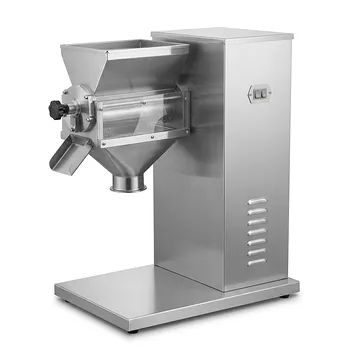
Small Swing Granulator Efficient Powder Granulation for Pharmaceutical Chemical Food Industries
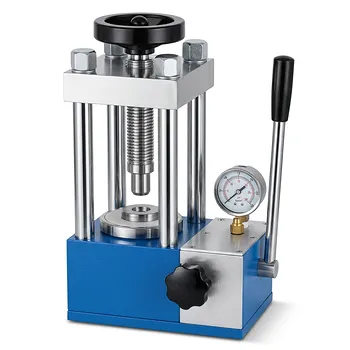
Manual Tablet Press with Dual Scale Pressure Gauge for Pharmaceutical Food Chemical Laboratory Sample Preparation