The Hidden Lever in Biomass Pelletization: Why a Programmable Sieve Shaker Turns Variable Waste into Precision Fuel
Oct 12, 2026
A Load of Cherry Stones, a Mountain of Problems
The truck dumps another thirty tonnes of cherry stones at the biomass plant gate. They look uniform from a distance. Up close, they are anything but. Fine dust clings to whole stones, splinters the size of a thumbnail hide among mealy fragments, and the moisture content varies across every square meter.
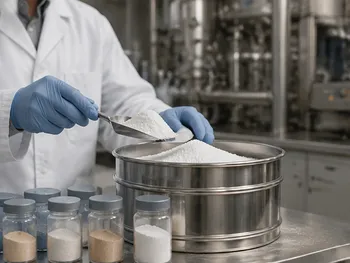
An operator takes a grab sample, walks to the lab, and loads a programmable vibratory sieve shaker. In minutes, the machine reveals what the naked eye cannot: the 1.00 mm fraction dominates, but 14% of the mass sits above 2.00 mm, and 8% is dust passing a 0.25 mm screen. When that raw mix feeds directly into the pellet press, the results are predictable—uneven density, cracked pellets, jammed dies, and energy bills that make the CFO wince.
Every plant manager knows biomass is variable. Far fewer grasp that the cheapest, most reliable lever for controlling pellet quality isn’t inside the press—it sits on the lab bench.
This is the story of a seemingly humble technology that transforms stochastic, organic feedstock into engineering-grade fuel. It’s a story about particle size, about the human craving for control in a messy world, and about why a programmable sieve shaker isn’t just a quality check—it’s a production optimization engine.
The Physics Nobody Sees: Why Particle Size Distribution Rules the Pellet Press
Pellets are survival structures. They must hold together through transport, resist crumbling during handling, and burn consistently inside a boiler. All three properties trace back to a single hidden variable: particle size distribution (PSD).
The Packing Problem Inside Every Die
When you pour mixed particles into a press die, nature doesn’t pack them efficiently unless you give her the right recipe. Large cherry stone fragments create a skeleton. If you put only large fragments, air voids dominate. If you add only dust, the mass collapses under vibration but lacks bridging strength.
The ideal scenario is what materials scientists call a “continuous grading curve”—a deliberate mix where mid-sized and fine particles fill the interstices between larger ones. This doesn’t happen by accident. It requires knowing exactly what fractions exist in your incoming stream.
A vibratory sieve shaker separates that load into discrete size bands. For cherry stones, you might discover that the 1.00 mm fraction alone makes up 40–55% of the mass. For sawdust, the 0.50 mm fraction often dominates. Once you know that, you can engineer the feedstock, blending, screening, or adjusting grinding parameters until the distribution consistently creates a high packing density.
Mechanical Interlocking: When Particles Learn to Hold Hands
A pellet that survives a five-meter drop doesn’t rely on glue alone. Mechanical interlocking between irregular particles contributes more to green strength than most operators realize. Under compression, large cherry stone shards form a load-bearing skeleton. Fine particles (<0.5 mm) migrate into the gaps, wedging tightly and creating thousands of micro-locks.
If your sieve shaker tells you the fine fraction is too low, the pellet’s internal architecture fails. Micro-cracks propagate. You get “short” pellets that shear at the die exit. If the coarse fraction is excessive, bridging defects leave the core hollow. Both problems vanish when you dial in a scientific particle size distribution—and you can’t dial in what you can’t measure.
The Binder Economics Nobody Talks About
Binding agents cost money. They also alter the combustion profile. Every operator dreams of using less. Yet when fines are over-abundant, the specific surface area explodes, and the binder demand spikes because there’s more particle surface to coat.
Oversized particles create the opposite problem: the binder coats the outer shell but fails to penetrate, creating a laminated structure that delaminates under stress. A sieve shaker lets you find the midpoint where surface area is sufficient for interlocking but not so excessive that the binder bill eats your margin. That sweet spot is unique to each biomass—cherry stones, sawdust, coffee husks, olive pits—and it shifts seasonally. You need the data.
What a Programmable Vibratory Sieve Shaker Actually Does
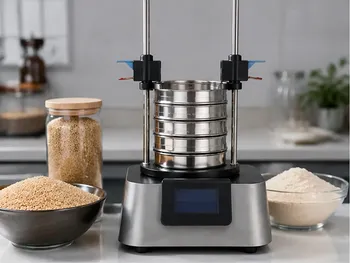
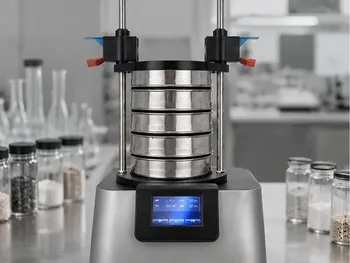
It’s easy to dismiss a sieve shaker as a glorified shaking table. The “programmable” part is what transforms it into a process control instrument.
Amplitude, Time, and the Repeatability Miracle
Manual sieving is operator-dependent. Hands tire. Rhythms vary. A programmable unit applies exactly the same three-dimensional vibratory motion, at exactly the same amplitude and frequency, for exactly the same duration, every single run. This repeatability means the particle size distribution you measure in July matches the one you measure in December.
Why the 3D Motion Matters
Vibratory sieve shakers use a combination of vertical and horizontal impulses. Particles rotate continuously, presenting every face to the mesh openings. Without this, elongated cherry stone splinters might always orient parallel to the screen surface and never pass through, biasing your results toward coarser readings. Programmable units let you adjust the throwing motion for your specific material’s shape factor—an underappreciated advantage when working with fibrous biomass.
From Grab Sample to Actionable Decision in 8 Minutes
- Step one: Load the sieve stack with mesh sizes chosen to bracket your target (e.g., 2.00 mm, 1.00 mm, 0.50 mm, 0.25 mm, pan).
- Step two: Pour in the dried sample.
- Step three: Set the program—amplitude 1.2 mm, time 5 minutes, interval operation to prevent blinding.
- Step four: Weigh each fraction, plot the cumulative curve.
In under ten minutes, you know whether the mill needs adjustment, whether today’s material can run at standard press pressure, or whether you need to blend with a coarser batch to hit specifications. This feedback loop is what separates a plant that reacts to problems from one that prevents them.
The Energy Equation: Shaking to Save Kilowatts
Biomass pelletization is an energy-intensive business. Compression forces typically exceed 100 MPa in the die. Reducing that number by even 15% changes the economics of an entire production line.
Fine Particles Achieve Partial Densification Sooner
When the PSD is well-graded, fine particles begin filling voids at very low pressures—what researchers call “rearrangement-stage densification.” By the time the press reaches peak pressure, the die is already 70–80% packed. The machine doesn’t have to work as hard to close the remaining air gaps.
A programmable sieve shaker lets you target the precise fines content that maximizes this pre-densification effect without overshooting into the zone where grinding energy costs outstrip pressing savings.
The Oversized Particle Penalty
Every oversized cherry stone fragment acts like a tiny bridge pier in the die cavity. Under pressure, load concentrates around these large particles instead of distributing evenly. The press must push harder to crush or reorient them. This not only spikes peak power draw but also accelerates die wear.
Sieve data reveals the oversize fraction instantly. A plant that sieves out material above 2.00 mm and recirculates it for re-grinding can drop average press amperage by a measurable margin—often 5–12%. Run the numbers on a 500 kW motor operating 6,000 hours a year, and the savings rapidly justify investment in proper laboratory classification equipment.
Thermal Stability: The Combustion Connection
Buyers of biomass pellets don’t just care about density. They care about how consistently the pellet burns. A load that flames erratically, producing hot spots or excessive ash, creates boiler control headaches.
Why Uniform Size Translates to Predictable Heat Transfer
A pellet is a thermal system. Heat transfers from the surface inward at a rate governed by the pellet’s characteristic dimension. If every pellet in a batch is effectively the same size—because it was formed from particles graded through the same sieve mesh—then every pellet follows the same heating curve inside the combustion chamber. Control algorithms can tune for this. Emissions stay stable. Ash fusion temperatures stay within range.
The Localized Over-Reaction Problem
Mix a 3 mm pellet formed from 1.00 mm cherry stone particles with one that contains a 2.5 mm unground hull fragment, and you get two different thermochemical response rates. The inhomogeneous pellet may experience localized exothermal spikes, charring its binder faster at the weak point and causing it to break apart mid-burn.
A programmable vibratory sieve shaker can’t alter the laws of reaction kinetics. But it can ensure that your press never forms those structurally unpredictable pellets in the first place. That’s process control at the most fundamental level.
The Trade-Offs: You Can’t Optimize Everything at Once
Skeptics will say: “Just grind everything to dust and press it.” That path leads to bankruptcy.
The Grinding Paradox
Producing sub-100 µm powders from cherry stones demands energy-intensive milling—cryogenic grinding in extreme cases, or prolonged planetary ball milling. The finer you go, the more energy you spend before the pellet press even sees the material. A sieve shaker lets you quantify the point of diminishing returns. Often, you’ll find that eliminating the 5% coarsest fraction delivers 80% of the benefit, while chasing perfect uniformity costs more than it’s worth.
Yield vs. Perfection
Every percentage point of material rejected by the top sieve or lost as dust in the pan is material you paid for but can’t directly sell as fuel. Plants that serve industrial boiler clients may have different tolerance bands than plants selling premium barbecue pellets. The economic optimum varies. The sieve shaker doesn’t tell you what to optimize—it gives you the numbers you need to have the conversation with your accounting department on solid scientific ground.
How to Implement a Sieve-Led Pelletization Strategy
Not every operation needs the same particle size profile. Use your programmable vibratory sieve shaker to build a decision matrix aligned to your primary production target:
If density is your mandate
Aim for a continuous grading curve with 25–35% fine particles (<0.5 mm). These fill voids between the dominant 1.00 mm fraction, maximizing interlocking strength. Monitor the pan fraction weekly. If it dips, check your mill screens for wear.
If energy cost drives your P&L
Focus on eliminating every particle above a defined oversize threshold—typically 2.00 mm for cherry stones, 1.00 mm for softwood sawdust. Adjust the top sieve mesh accordingly. The shaker will show you exactly how much material needs re-processing. Use this data to negotiate mill maintenance schedules, not hunches.
If thermal consistency is the sales pitch
Enforce a narrow particle size window. Run a sieve analysis daily and reject or rework batches where the dominant fraction deviates more than ±5% from the target. For many biomass materials, an 18-mesh (1.00 mm) spec provides excellent combustion uniformity without grinding penalties.
| Optimization Factor | Role of Sieve Shaker | Impact on Final Pellet |
|---|---|---|
| Particle Size Distribution | Maps dominant fractions (e.g., 1.0 mm for cherry stones) | Consistent feedstock, predictable press behavior |
| Filling Density | Identifies fines to fill voids between larger fibers | Higher mechanical interlocking and structural integrity |
| Energy Efficiency | Eliminates oversized particles that resist compression | Reduced electricity consumption and machinery wear |
| Thermal Stability | Ensures uniform dimensions for even heat transfer | Predictable combustion rates, stable boiler control |
| Binder Optimization | Controls surface area to prevent agent over-consumption | Stabilized physical properties, lower additive costs |
From Cherry Stones to Sawdust: A Universal Logic
The same programmable sieve shaker that optimizes cherry stone pellets handles sawdust, olive cake, coffee grounds, and even industrial-grade polymers. The material changes. The physics doesn’t. You still need a measured, repeatable way to know your particle size distribution before the press closes its die.
That’s the quiet profundity of this instrument. It doesn’t care what you feed it. It simply delivers a distribution curve that replaces guesswork with engineering. In a field where raw materials are cheap but consistent quality commands a premium, that capability is a competitive moat.
The Engineer’s Romanticism of Control
There’s something deeply satisfying about turning a chaotic pile of biological debris into perfectly formed, high-density fuel cylinders. It’s a defiant act against entropy. A programmable vibratory sieve shaker is the first decision point in that transformation—the point where variability meets measurement, and measurement enables mastery.
Engineers who fall in love with this technology don’t love shaking screens. They love the confidence that comes from knowing that tomorrow’s pellets will be as good as today’s, not because the feedstock got lucky, but because the process left nothing to chance.
Building Your Precision Pelletization Toolkit
Precision pelletization doesn’t end with sieving. A complete laboratory sample preparation workflow connects particle size analysis to the grinding and compaction steps that come before and after. That’s where an integrated equipment ecosystem pays for itself.
- Sizing & Analysis: Programmable vibratory sieve shakers, air-jet sieve shakers for fine powders, and high-precision test sieves with certified mesh sizes give you the particle size data you need to make real-time grinding adjustments.
- Milling & Crushing: Jaw crushers and roll crushers for primary size reduction, liquid nitrogen cryogenic grinders for heat-sensitive biomass, and planetary ball mills for achieving the exact fine fraction your density curve demands.
- Compaction Solutions: A full spectrum of hydraulic presses—Cold Isostatic Presses (CIP) for ultra-uniform green compacts, vacuum hot presses for specialty densification, and XRF pellet presses for analytical sample preparation—ensures your powders transform into high-density, high-integrity pellets.
- Mixing: Advanced powder and defoaming mixers for uniform binder distribution, eliminating the localized over-concentration that undermines pellet consistency.
Whether you are scaling a cherry stone fuel line or developing next-generation sawdust composites, the principle remains the same: measure the particles, master the process, monetize the consistency.
Ready to move from reactive troubleshooting to proactive process optimization? Contact Our Experts
Quick Links
Suggested Products
Vibratory Sieve Shaker Electromagnetic 3D Motion Powder Particle Size Analyzer for Dry and Wet Sieving Small Laboratory Vibratory Sieve Shaker for Powder Gradation and Particle Size Analysis Laboratory Dry and Wet Three Dimensional Vibratory Sieve Shaker for Particle Analysis Small Laboratory Vibrating Sieve Shaker for Precise Particle Size Analysis High Frequency Cabinet Type Three-Dimensional Rotary Vibrating Sieve Shaker for Dry Sieving and Particle ClassificationFurther Reading
The Hidden Economics of Particle Size: Why the Most Overlooked Variable in Material Science Controls Everything The Invisible Architecture of Powder: How a Vibratory Sieve Shaker Decides What Your Amaranth Bread Becomes The Particle-Size Lever: Why the Most Overlooked Step in Catalyst Design Determines Everything Else When Glass Melts Fail, It Was Never the Furnace: The Hidden Economics of Sand Gradation The Quarter-Millimeter Margin: Why Vibratory Sieve Precision Determines Artificial Stone Profitability
PowderPreparation
Last updated on May 14, 2026
Related Products
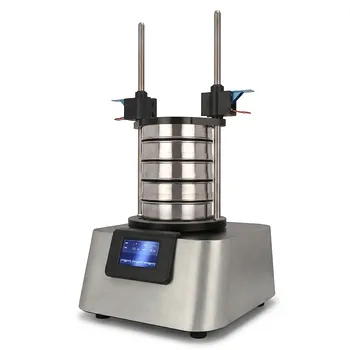
Vibratory Sieve Shaker Electromagnetic 3D Motion Powder Particle Size Analyzer for Dry and Wet Sieving
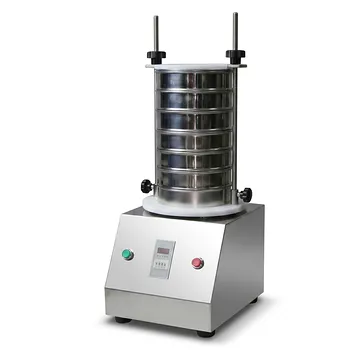
Small Laboratory Vibratory Sieve Shaker for Powder Gradation and Particle Size Analysis
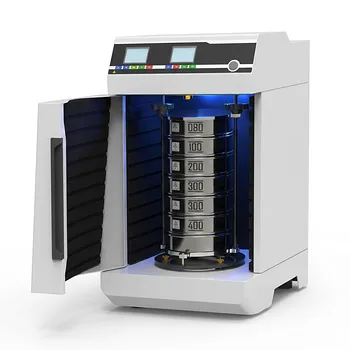
Laboratory Dry and Wet Three Dimensional Vibratory Sieve Shaker for Particle Analysis
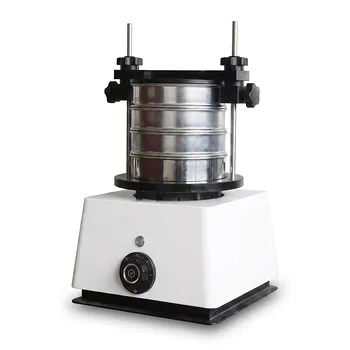
Small Laboratory Vibrating Sieve Shaker for Precise Particle Size Analysis
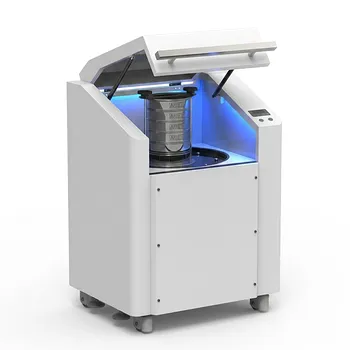
High Frequency Cabinet Type Three-Dimensional Rotary Vibrating Sieve Shaker for Dry Sieving and Particle Classification
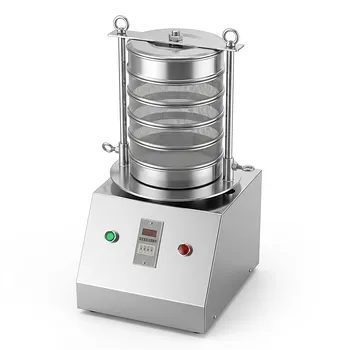
Stainless Steel Laboratory Vibratory Test Sieve Shaker
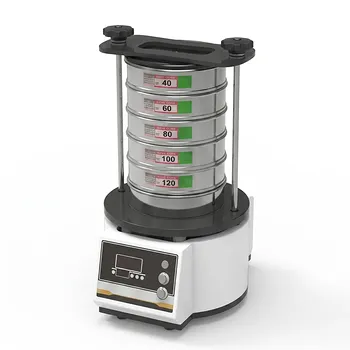
Dry Three Dimensional Vibratory Sieve Shaker
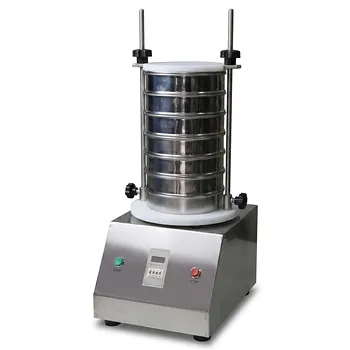
Laboratory Vibratory Test Sieve Shaker for Precision Particle Size Analysis and Powder Grading
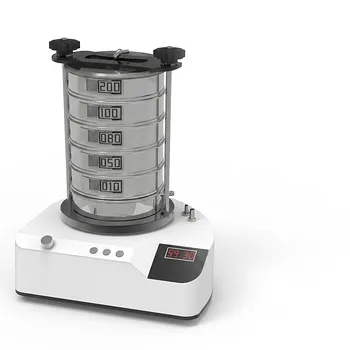
Heavy Duty Dry Three Dimensional Vibratory Sieve Shaker for Particle Separation
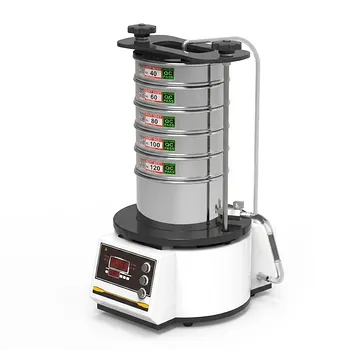
High Frequency Wet Three-Dimensional Vibrating Sieve Shaker for Dry and Wet Particle Size Analysis
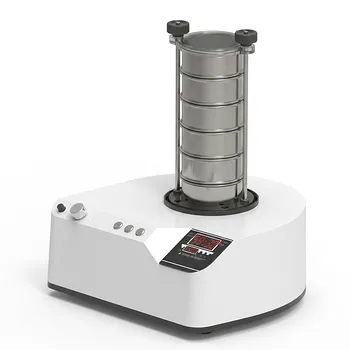
三维电磁微量振动筛分仪
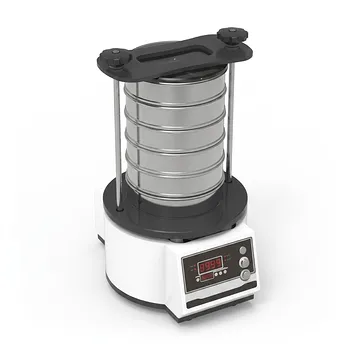
Tapping Oscillating Sieve Shaker for Dry and Wet Particle Size Analysis
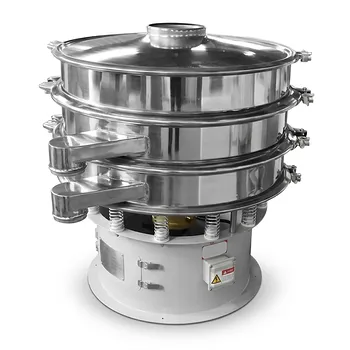
Three Dimensional Rotary Vibrating Sieve
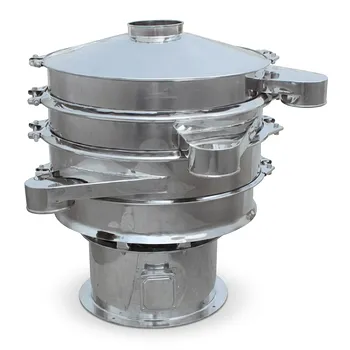
Stainless Steel Rotary Vibrating Sieve High Precision Circular Vibratory Separator Industrial Powder Grading Machine Multi Layer Sifting Equipment
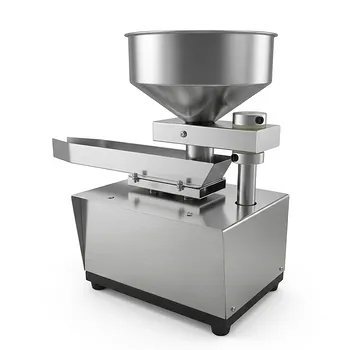
Automatic Vibrating Powder Feeder for Laboratory Material Processing Precision Vibratory Hopper Feeder for Granular and Powder Material Handling Industrial Grade Vibrating Tray Feeder for Consistent Material Sample Preparation
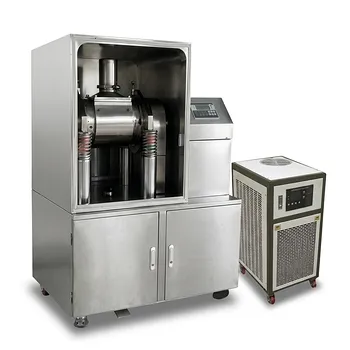
Small Vibrating Ultrafine Grinder for Traditional Chinese Medicine
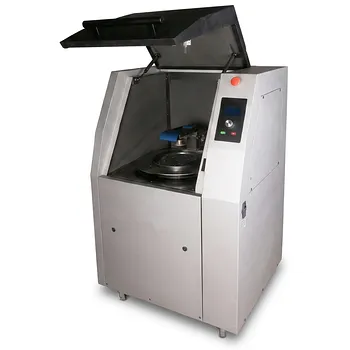
High Speed Vibratory Disc Mill for Spectral Analysis Sample Preparation and Rapid Powder Grinding