The Hidden Geometry of Strength: Why 20 MPa Really Begins With a Sieve
Aug 04, 2026
The 5 a.m. Test That Was Destined to Fail
The concrete slump looked acceptable. The mix ratio was 1:2:4, exactly what the spec demanded. And yet the cylinder breaks six months later would tell a different story—19 MPa, just shy of the M20 target. Not a catastrophe, but a quiet, expensive embarrassment.
The engineer on site blamed the cement. The contractor blamed the water. But the real culprit was invisible.
The sand wasn’t Zone II. It was slightly too coarse, and nobody noticed because nobody sieved it.
We like to believe that strength is born from binders and chemistry. But in materials science, strength is a geometric problem. It’s about how particles pack together, and you can’t understand packing until you shake them through a precise stack of mesh.
Strength Isn’t a Chemical Reaction. It’s a Parking Lot.
If you pour a bucket of rocks, you get big voids. If you add sand, it fills the gaps. If you then add micro-fines, they nestle into the remaining spaces. At every scale, you’re minimizing nothingness.
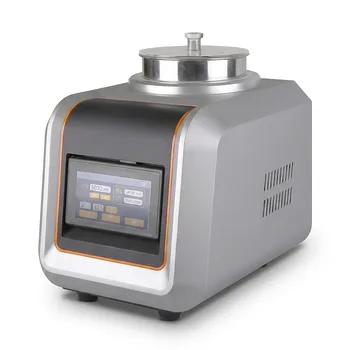
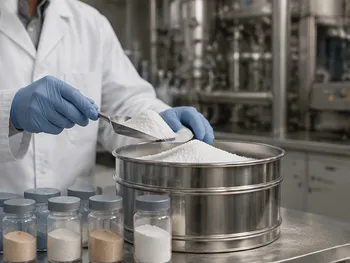
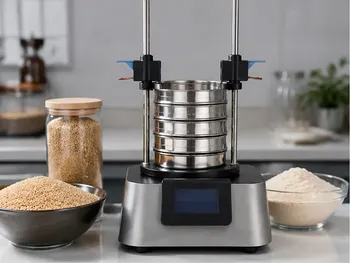
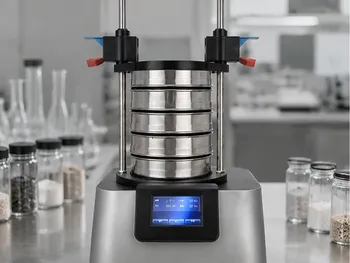
That’s what a vibratory sieve shaker and standard test sieves actually reveal: not just particle size, but the parking logic of your raw materials. The shaker forces particles to stratify through descending apertures—from 1 inch down to a 200 mesh—and the resulting gradation curve becomes a blueprint for how well your aggregate will interlock.
In M20 concrete, this interlocking geometry is what hits the 20 MPa mark. The cement paste doesn’t need to be stronger; it just needs to fill less empty space. Precise sieving lets you reduce paste demand, lower cost, and actually increase structural integrity. The psychology is counterintuitive: you gain strength by subtracting expensive material.
The 20mm Rule and the Shape That Lies
Standard test sieves verify that your coarse aggregate stays near the 20mm nominal size. It sounds trivial. It is absolutely not.
A particle that measures 22mm along its long axis and only 18mm across its second smallest dimension will pass a 20mm sieve. It’s a flaky grain. It thinks it belongs. It doesn’t. When concrete hardens, those flat stones create stress concentrations—microscopic fault lines that no amount of curing can fix.
The vibratory shaker exposes this deception mechanically, but the interpretation demands something from the human mind: humility. Sieve analysis gives you numbers. You still have to look at particle shape. You still have to account for blending. The most dangerous phrase in a lab is “the data says it’s fine.”
A Morgan Housel-like truth lurks here: the biggest risks aren’t in what you can’t measure—they’re in what you measure but misunderstand.
From Concrete to the Cosmos of Powder Processing
The lesson of the sieve doesn’t stop at aggregate. Every powdered material—ceramics, pharmaceuticals, battery cathode precursors, cement itself—has a particle size distribution that dictates how it flows, how it compacts, and how it performs under heat and pressure.
A poorly graded metal powder won’t sinter uniformly. A filler with a skewed distribution will ruin viscosity. In every case, the same geometric logic governs the outcome.
This is where the lab becomes a miniature factory of truth. You don’t just need sieves; you need the full ecosystem of sample preparation:
- Crushing and grinding (jaw crushers, roll crushers, planetary ball mills, jet mills) to bring raw chunks down to a measurable scale without destroying crystalline structure.
- Cryogenic grinders when heat-sensitive materials can’t tolerate ambient milling—imagine rubber or polymers turning brittle under liquid nitrogen, then shattering into pristine, un-degraded particles.
- Precision sieving (vibratory and air-jet shakers with certified test meshes) that separates truth from wishful thinking.
- Mixing and defoaming to homogenize and eliminate trapped air before pressing.
- Hydraulic presses—from cold isostatic presses that apply uniform pressure from all directions, to vacuum hot presses that consolidate advanced composites—to turn analytically perfect powder into physically strong compacts.
If the sieve gives you the diagnosis, the entire preparation chain delivers the therapy.
The Romance of a Gradation Curve
An engineer once told me he found gradation curves beautiful. Not because they meet a spec, but because they tell a story of interlocking scales—a fractal-like continuity where 20mm, 4.75mm, 600 micron, and 75 micron particles cooperate to eliminate emptiness.
That’s the romance. It’s a quiet obsession with packing efficiency that most people never see. It’s knowing that strength isn’t a property you add—it’s a void you remove.
When you look at a vibratory sieve shaker and standard test sieves, you’re not just seeing quality control equipment. You’re looking at the instrument that prevents a 19 MPa disappointment at 5 a.m. You’re looking at the first domino in a chain that ends with a Cold Isostatic Press consolidating a blemish-free ceramic blank, or an XRF pellet press producing a perfectly flat analytical sample for spectroscopic precision.
The same geometric discipline connects them all. Whether it’s M20 concrete or next-generation battery material, the particle size distribution is your material’s personality. Understand it, and you can predict its behavior. Ignore it, and you’re just mixing with your eyes closed.
The right equipment doesn’t give you answers; it forces you to ask the right questions about voids, about interlocking, about the difference between what passes a sieve and what actually works. And when you finally achieve that well-graded curve, you’ve engineered something more valuable than strength alone: you’ve engineered certainty.
From aggregate grading to advanced powder compaction, the instruments you choose define the limits of your precision. If you are ready to stop guessing and start measuring, Contact Our Experts.
Quick Links
Suggested Products
Vibratory Sieve Shaker Electromagnetic 3D Motion Powder Particle Size Analyzer for Dry and Wet Sieving Laboratory Dry and Wet Three Dimensional Vibratory Sieve Shaker for Particle Analysis Stainless Steel Laboratory Vibratory Test Sieve Shaker Heavy Duty Dry Three Dimensional Vibratory Sieve Shaker for Particle Separation Dry Three Dimensional Vibratory Sieve ShakerFurther Reading
The Hidden Economics of Particle Size: Why the Most Overlooked Variable in Material Science Controls Everything The Invisible Architecture of Powder: How a Vibratory Sieve Shaker Decides What Your Amaranth Bread Becomes The Particle-Size Lever: Why the Most Overlooked Step in Catalyst Design Determines Everything Else When Glass Melts Fail, It Was Never the Furnace: The Hidden Economics of Sand Gradation The Quarter-Millimeter Margin: Why Vibratory Sieve Precision Determines Artificial Stone Profitability
PowderPreparation
Last updated on May 14, 2026
Related Products
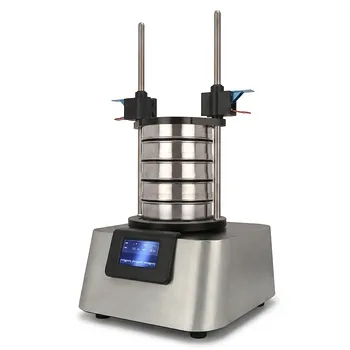
Vibratory Sieve Shaker Electromagnetic 3D Motion Powder Particle Size Analyzer for Dry and Wet Sieving
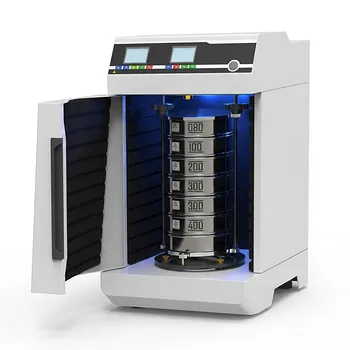
Laboratory Dry and Wet Three Dimensional Vibratory Sieve Shaker for Particle Analysis
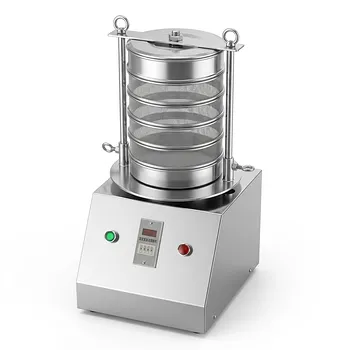
Stainless Steel Laboratory Vibratory Test Sieve Shaker
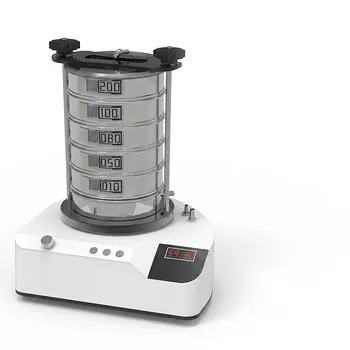
Heavy Duty Dry Three Dimensional Vibratory Sieve Shaker for Particle Separation
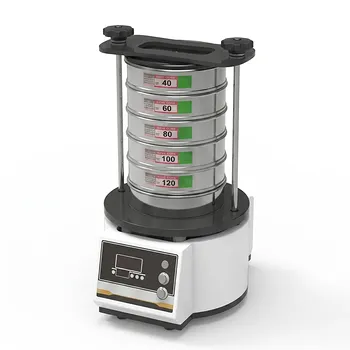
Dry Three Dimensional Vibratory Sieve Shaker
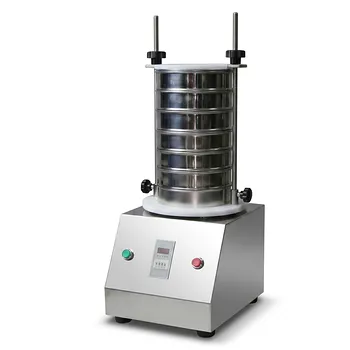
Small Laboratory Vibratory Sieve Shaker for Powder Gradation and Particle Size Analysis
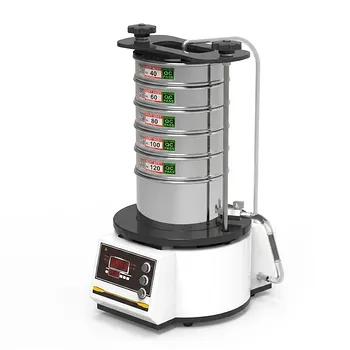
High Frequency Wet Three-Dimensional Vibrating Sieve Shaker for Dry and Wet Particle Size Analysis
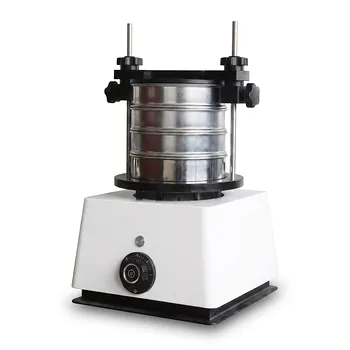
Small Laboratory Vibrating Sieve Shaker for Precise Particle Size Analysis
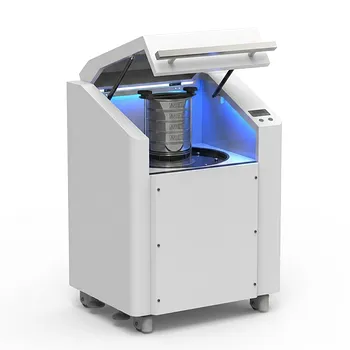
High Frequency Cabinet Type Three-Dimensional Rotary Vibrating Sieve Shaker for Dry Sieving and Particle Classification
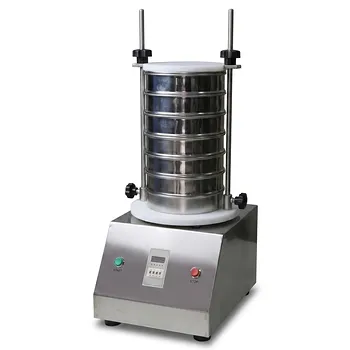
Laboratory Vibratory Test Sieve Shaker for Precision Particle Size Analysis and Powder Grading
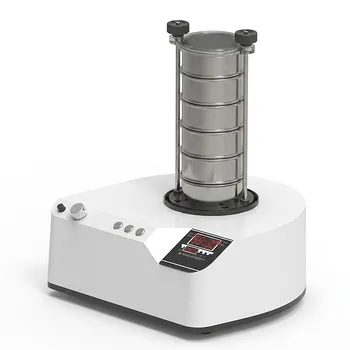
三维电磁微量振动筛分仪
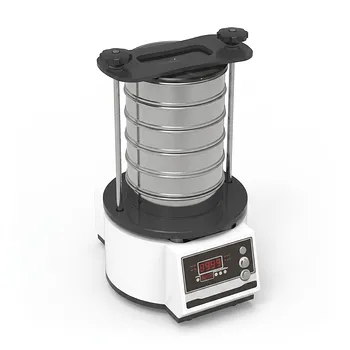
Tapping Oscillating Sieve Shaker for Dry and Wet Particle Size Analysis
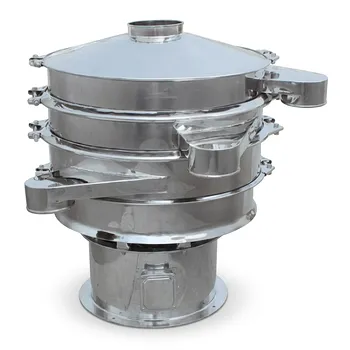
Stainless Steel Rotary Vibrating Sieve High Precision Circular Vibratory Separator Industrial Powder Grading Machine Multi Layer Sifting Equipment
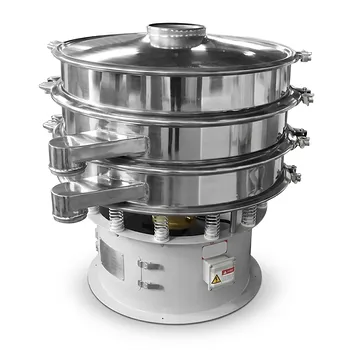
Three Dimensional Rotary Vibrating Sieve
Small Vibrating Ultrafine Grinder for Traditional Chinese Medicine
Automatic Vibrating Powder Feeder for Laboratory Material Processing Precision Vibratory Hopper Feeder for Granular and Powder Material Handling Industrial Grade Vibrating Tray Feeder for Consistent Material Sample Preparation
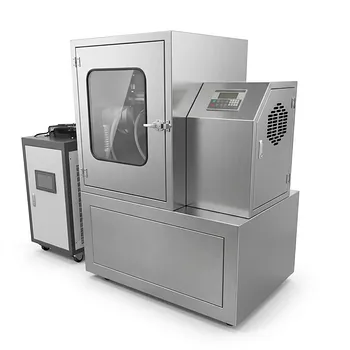
Vibratory Superfine Grinder for Ultra Fine Laboratory Powder Milling
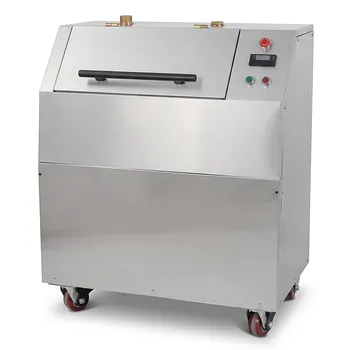
Vibratory Disc Mill for Rapid Fine Grinding and High Throughput Sample Preparation of Hard and Brittle Materials