The Hidden Geometry of Biomass Carbonization: Why Particle Size Uniformity Determines Your Material’s Destiny
Jun 25, 2026
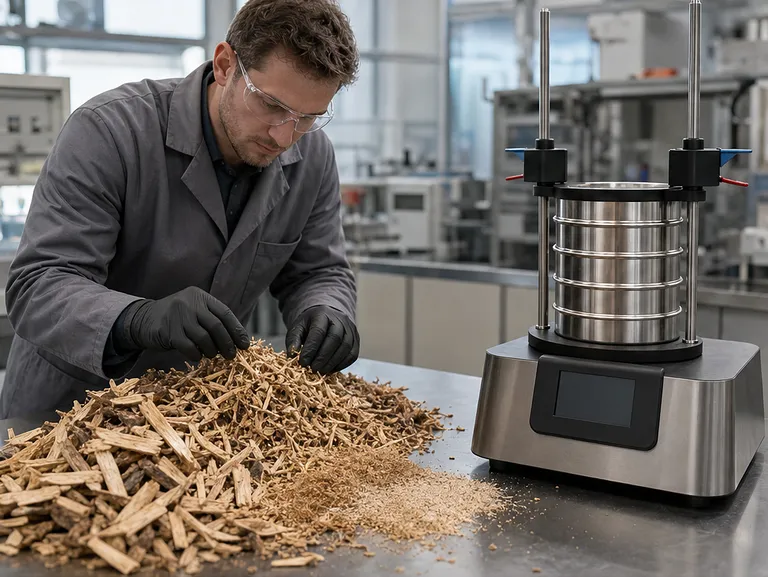
We like to believe that breakthroughs happen in the flame. A sample enters the furnace, the temperature rises, and something new emerges. But in materials science, the real decision is made upstream—in the quiet geometry of particle beds, where a few microns of variation can silently sabotage an entire experiment.
Imagine a pile of crushed walnut shells destined to become activated carbon. To the naked eye, it looks homogeneous. But inside that pile, some fragments are half a millimeter wide. Others are invisible fine dust. When the heat arrives, the tiny particles carbonize almost instantly, their surfaces glazing over before the activator can reach them. The larger chunks resist, their cores remaining unreacted. By the time the cycle ends, you have not one material, but a statistical mixture of several—each with its own porosity, its own adsorption kinetics, its own mechanical story.
This is not a furnace problem. It is a geometry problem.
The Activation Lottery
Chemical activation is a surface phenomenon. An activator like KOH or phosphoric acid does not magically penetrate a char particle; it meets the external boundary and slowly etches inward. If your particle diameter is a moving target, the time required for full activation becomes a moving target too.
At this scale, over-reaction is just as dangerous as under-reaction. The smallest particles, exhausted early, develop burn-through pores that compromise structural integrity. The largest particles remain inert at their center. Only when every particle enters the furnace with nearly identical size can the activation chemistry behave predictably—turning a wild statistical process into a precision manufacturing step.
Heat Moves Differently Through Chaos
Thermal decomposition is a wave, and particle size defines how fast that wave travels. A bed of uniformly small particles conducts heat with almost electrical smoothness, each grain reaching its volatile release temperature in lockstep. A polydisperse bed behaves like a badly tuned orchestra, some sections flaming while others are still warming up.
For gasification researchers, this is the difference between a repeatable H2/CO ratio and a scatterplot. Gas yield depends on local heating rates, and local heating rates depend on contact geometry. Keep the geometry constant, and the chemistry follows. Let it vary, and even the most sophisticated reactor becomes no more reliable than a lottery.
Think of it this way: a furnace full of uniform particles is a controlled experiment. A furnace full of mixed sizes is a natural phenomenon—something closer to a forest floor than an engineering process.
The Mechanical Secret Hidden in Fines
When you press biomass powders into pellets or briquettes, you are not just squashing fragments together. You are building a granular architecture where smaller particles fill the interstices between larger ones, creating a dense, interlocking structure that maximizes van der Waals contacts and mechanical entanglement.
But this only works if you control the ratio. Too many fines, and the pellet becomes brittle, riddled with stress concentrators. Too few, and residual porosity keeps the density low. The sweet spot—often something like 10% fines in a medium-particle matrix—is discoverable only if you can reliably separate those fractions first. Guessing is not engineering. Sieving is.
The same logic applies to the carbonized product. Post-carbonization, oversized shards act as built-in defects, nucleation points for cracks. A material with a precisely bounded upper grain size shows higher Young’s modulus not because the carbon itself is different, but because the flaws are systematically capped. That insight changes how you design the entire production chain.
The Real Trade-off Nobody Talks About
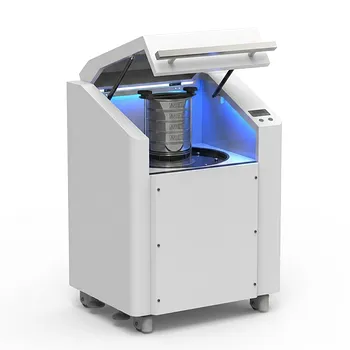
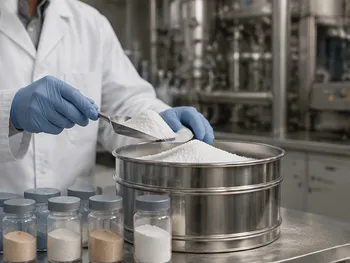
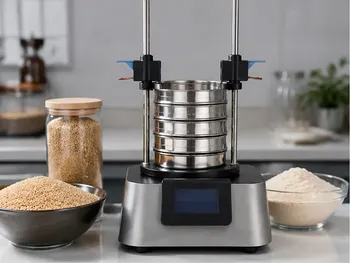
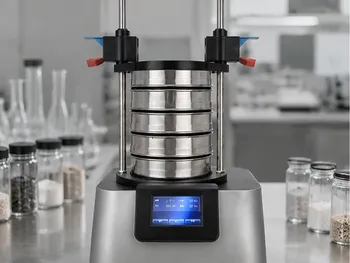
Precision sieving is a test of patience and process discipline. The machine gives you a number—a fraction retained on a 150-micron mesh—and that number tempts you to trust it completely. But biomass is a tricky, biological material. It carries residual moisture that can blind a fine mesh within seconds. It can be oily, sticky, electrostatically charged. In a laboratory vibratory sieve shaker, a blinded screen does not announce itself loudly; it just slowly distorts the distribution.
Then there is the fragility paradox. High-frequency vibration is the very mechanism that separates your material, but it is also a mill. If you sieve carbonized biomass too long, you are not measuring its size distribution—you are creating a new one through attrition. The protocol must specify not just mesh size and amplitude, but duration and even inter-deck cleaning intervals.
This is the moment when a precision laboratory device stops being a commodity shaker and starts being a scientific instrument. The difference is in the adjustable oscillation modes, the reproducibility of the amplitude control, the ability to integrate air-jet cleaning to overcome blinding on fine meshes. These are not luxury features. They are the difference between data and noise.
Building a Workflow That Respects the Particle
To make a reliable carbon material, you must treat particle size as a product specification, not an afterthought. That means integrating the sieve shaker into a larger sample preparation ecosystem—a chain of custody for geometry.
The workflow begins earlier than most researchers admit. Your crushing and milling stages set an initial size envelope; a jaw crusher delivers coarse fragments, a planetary ball mill or a liquid nitrogen cryogenic grinder reduces them further without thermal degradation. Only then does the vibratory sieve shaker become a classification tool, not a salvage operation. If the mill output is uncontrolled, the shaker can only document the chaos, not resolve it.
At this point, table stakes include long-running amplitude stability, compatibility with a wide range of test sieve meshes, and the ability to switch between vibratory and air-jet modes depending on whether your powder is free-flowing or cohesive. Without these, the laboratory is flying blind.
But classification is only one half of the cycle. The other half is consolidation. Once you have your precious narrow size fractions, you need to recombine them deliberately—mixing fine and medium cuts in mathematically defined ratios to maximize packing density—then compact them under controlled pressure. A hydraulic press designed for powdered materials, whether a standard lab press, a hot press, or even a cold isostatic press for complex green bodies, closes the loop. The result is a pellet or compact whose density and pore structure were designed at the granular level, not left to chance.
When Your Material Questions Demand Total Process Control
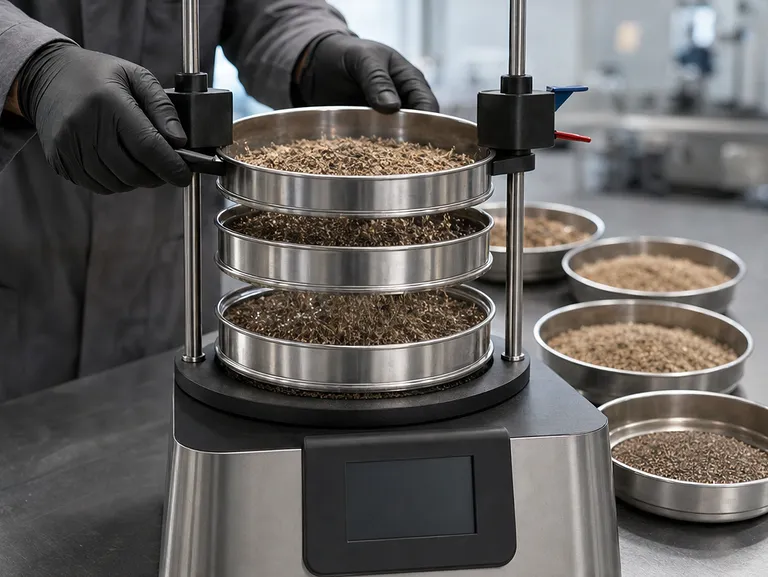
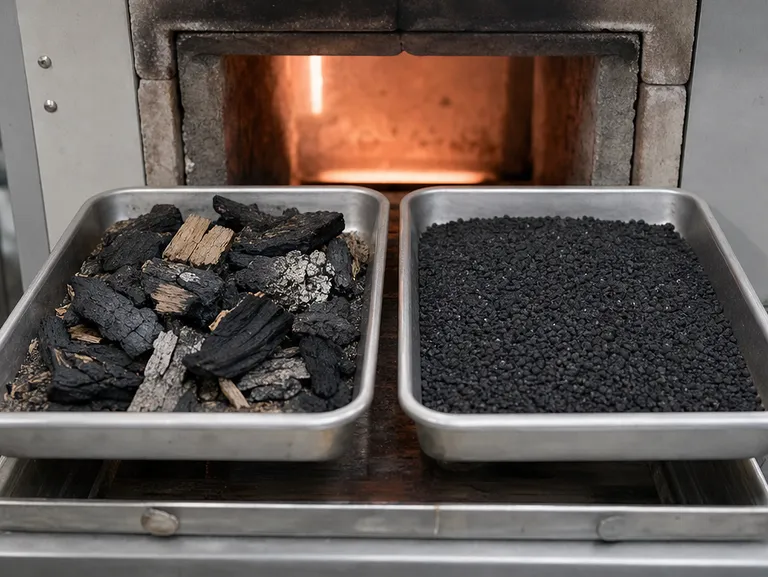
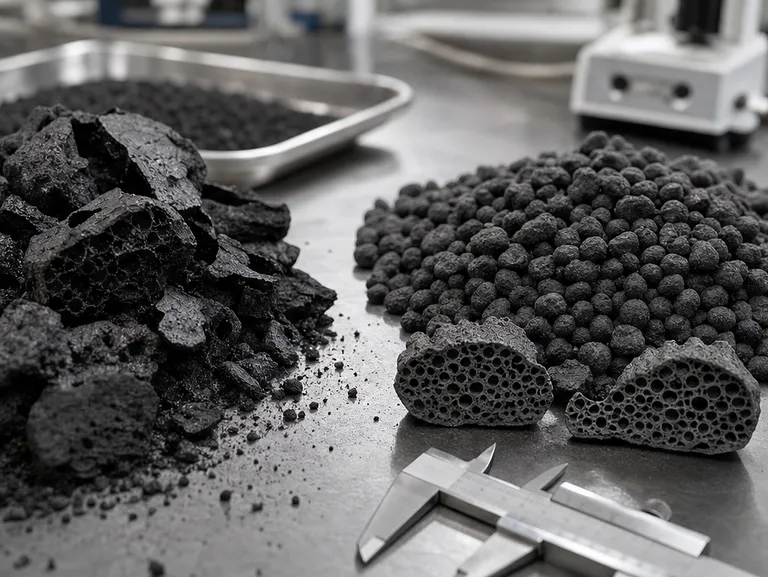
We often think of carbonization as a chemical step. But as we have seen, it is a geometric story from the very beginning. Surface area, pore hierarchy, mechanical integrity, gasification yield—all of these emerge from the size of the pieces you start with. A precision vibratory sieve shaker is the instrument that lets you read that story and rewrite it.
This is why we build complete laboratory sample preparation workflows around geometry. Our vibratory and air-jet sieve shakers work alongside crushers, liquid nitrogen cryogenic grinders, planetary ball mills, and jet mills to set the stage. Our powder mixers and defoaming mixers guarantee that when you blend, you blend. And our full range of hydraulic presses—from XRF pellet presses and standard lab presses to cold isostatic presses and vacuum hot presses—turn your precise powder into a solid engineering material with predictable, repeatable properties.
The scientific instrument is not just the furnace. It is the whole preparation chain that precedes it, guarding geometry from the first crush to the final compact. That is the engineer’s romance: not waiting for the fire to reveal the material’s character, but defining it long before the heat ever touches the sample.
Quick Links
Suggested Products
Vibratory Sieve Shaker Electromagnetic 3D Motion Powder Particle Size Analyzer for Dry and Wet Sieving Small Laboratory Vibrating Sieve Shaker for Precise Particle Size Analysis Stainless Steel Laboratory Vibratory Test Sieve Shaker Small Laboratory Vibratory Sieve Shaker for Powder Gradation and Particle Size Analysis Laboratory Dry and Wet Three Dimensional Vibratory Sieve Shaker for Particle AnalysisFurther Reading
The Hidden Economics of Particle Size: Why the Most Overlooked Variable in Material Science Controls Everything The Invisible Architecture of Powder: How a Vibratory Sieve Shaker Decides What Your Amaranth Bread Becomes The Particle-Size Lever: Why the Most Overlooked Step in Catalyst Design Determines Everything Else When Glass Melts Fail, It Was Never the Furnace: The Hidden Economics of Sand Gradation The Quarter-Millimeter Margin: Why Vibratory Sieve Precision Determines Artificial Stone Profitability
PowderPreparation
Last updated on May 15, 2026
Related Products
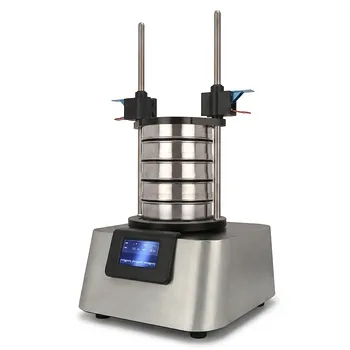
Vibratory Sieve Shaker Electromagnetic 3D Motion Powder Particle Size Analyzer for Dry and Wet Sieving
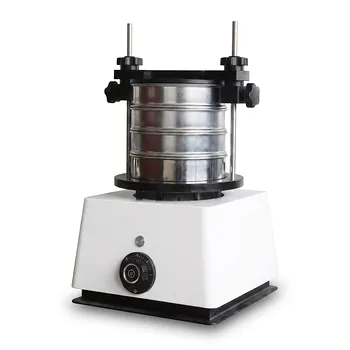
Small Laboratory Vibrating Sieve Shaker for Precise Particle Size Analysis
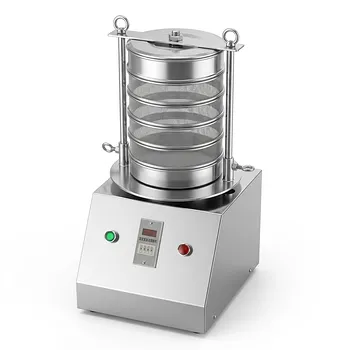
Stainless Steel Laboratory Vibratory Test Sieve Shaker
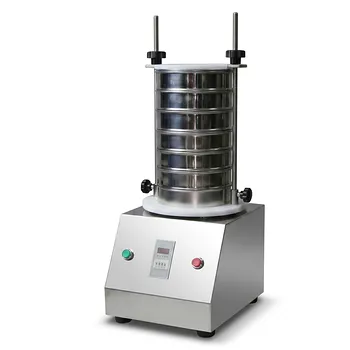
Small Laboratory Vibratory Sieve Shaker for Powder Gradation and Particle Size Analysis
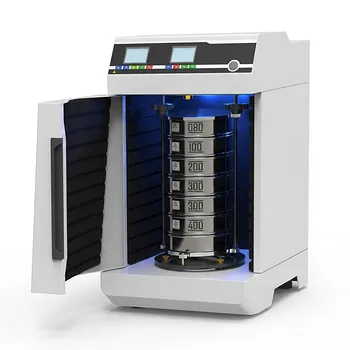
Laboratory Dry and Wet Three Dimensional Vibratory Sieve Shaker for Particle Analysis
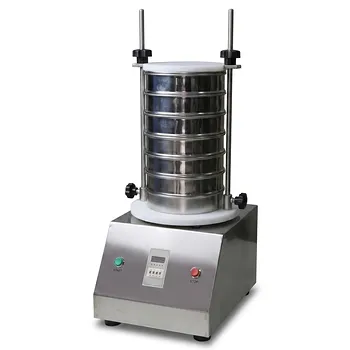
Laboratory Vibratory Test Sieve Shaker for Precision Particle Size Analysis and Powder Grading
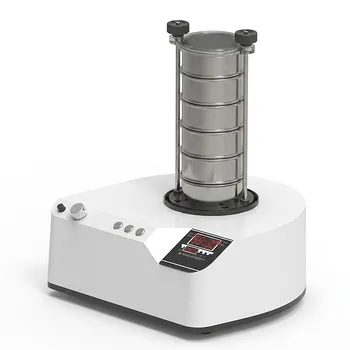
三维电磁微量振动筛分仪
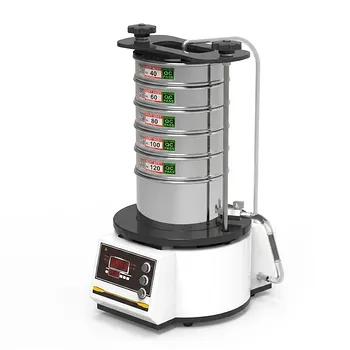
High Frequency Wet Three-Dimensional Vibrating Sieve Shaker for Dry and Wet Particle Size Analysis
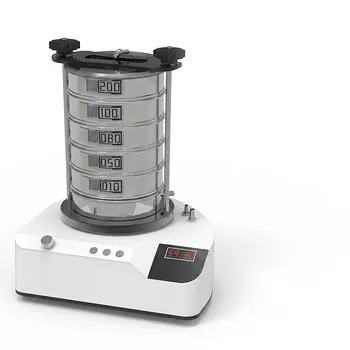
Heavy Duty Dry Three Dimensional Vibratory Sieve Shaker for Particle Separation
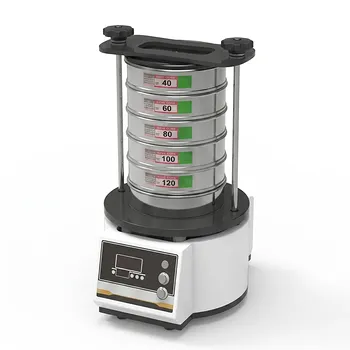
Dry Three Dimensional Vibratory Sieve Shaker
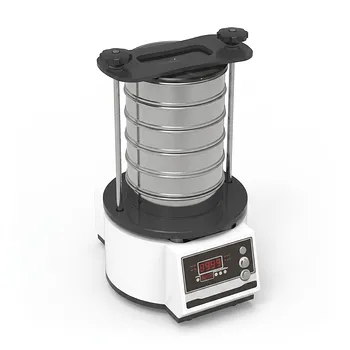
Tapping Oscillating Sieve Shaker for Dry and Wet Particle Size Analysis