The Structure of Trust: Why What You Can’t See Determines the Strength of Your Composite
Jun 28, 2026
The Danger That Hides in Plain Sight
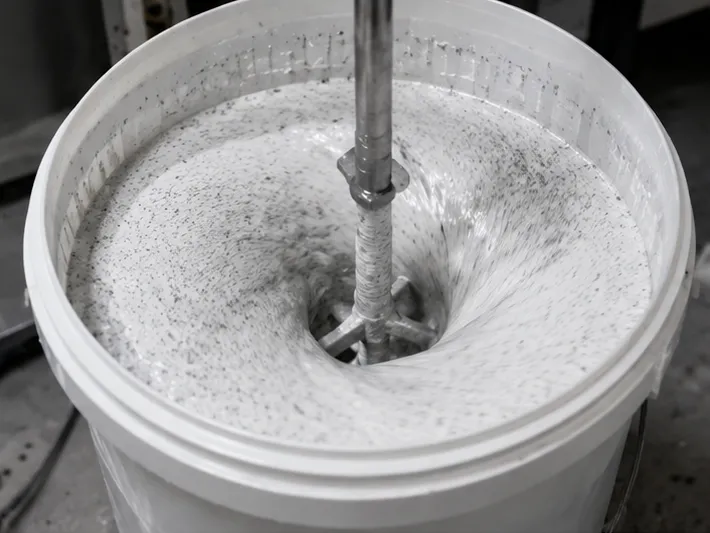
You have mixed your resin. You have added your quartz filler. The slurry looks perfect in the bucket—smooth, viscous, ready to mold.
But inside that mixture, a quiet catastrophe is already coded.
Every turn of the mixing blade has folded air into the matrix. Not as obvious bubbles you can see, but as an invisible architecture of microscopic voids. These tiny empty spaces are not just harmless gaps. They are the architects of future failure.
The problem with internal porosity is that it is a liar. It tells you the material is solid, homogeneous, and ready to bear weight. And then, under load, it proves otherwise. A crack forms exactly where you never looked.
How a Void Thinks
Understanding mechanical failure requires us to see the world from the perspective of a stress concentrator.
When a load hits a fully dense material, the force spreads out. Every quartz grain and every polymer chain shares the burden. But introduce a single air bubble, and the physics changes. The force no longer distributes evenly. It funnels into the edges of that void, multiplying the local stress.
The Invisible Knife
A void acts like a pre-existing crack. The material is not failing at its theoretical maximum strength—it is failing at the tip of an air pocket. The resin-to-quartz bond never forms there, creating a "dead zone" of zero adhesion.
The core issue:
- Visible bubbles rise and escape.
- Micro-bubbles remain suspended.
- Adsorbed gases cling to quartz particles.
- All create stress concentrators smaller than a human hair.
The Surface Chemistry You Don’t See
There is another layer to this problem, one deeper than visible bubbles.
Gases do not just float freely in the resin. They adsorb onto the surfaces of your quartz particles. A microscopic film of air clings to every grain. When you pour the resin, it never truly touches the quartz. It touches the gas first. The chemical bond—the very thing that turns powder into rock—never fully establishes.
Vacuum degassing solves this at the molecular level. By pulling the environment down to a high vacuum state, you strip that adsorbed gas away. The resin then wets the quartz directly. Every. Single. Grain.
The Bridge Between Mixture and Performance
Vacuum degassing is the essential bridge between a raw mixture and a high-performance composite.
You should think of it not as an "extra step" in production, but as the step that converts potential failure into predictable strength. Without it, you are molding a material with built-in defects. With it, you are engineering a solid.
What Degassing Actually Builds
The transformation is measurable:
| Property | Without Degassing | With Degassing |
|---|---|---|
| Internal Structure | Scattered voids, stress concentrators | Uniform density matrix |
| Resin-to-Filler Bond | Partial, disrupted by adsorbed gas | Complete chemical wetting |
| Compressive Strength | Reduced, unpredictable | Maximized, approaching theoretical limit |
| Flexural Strength | Compromised by internal gaps | Significantly boosted |
| Aesthetic Finish | Cloudiness, micro-pits | Clarity, smooth surface |
The Oxidation Shield
If your process involves heat—like hot press molding—the vacuum plays a second, equally critical role. It removes oxygen from the environment.
Polyester resins, at elevated temperatures, are vulnerable to oxidation. The chemical backbone degrades. By creating an oxygen-free vacuum environment, you protect the material's integrity during the compression phase. You are not just removing air; you are preserving chemistry.
The Trade-offs Worth Calculating
Honesty matters when we talk about process design. Degassing is not free, and it is not instant.
Time
Achieving the necessary vacuum level takes time. Highly viscous mixtures resist gas migration. You must hold the vacuum long enough for bubbles to nucleate, rise, and collapse. This adds to your cycle time.
Equipment
You need chambers that seal perfectly, pumps that reach 10⁻⁴ Pa, and systems designed to handle potentially volatile resin components. The initial capital investment is higher. Maintenance becomes a non-negotiable discipline.
Calibration
A note of caution: extremely high vacuum can occasionally boil the volatile components in your resin. You want to remove trapped air, not strip the additives that give your polyester its specific properties. Calibration is key.
But here is the trade-off that matters most: Do you want a material you can trust, or a material that looks good right up until it fails?
Building the Complete Workflow
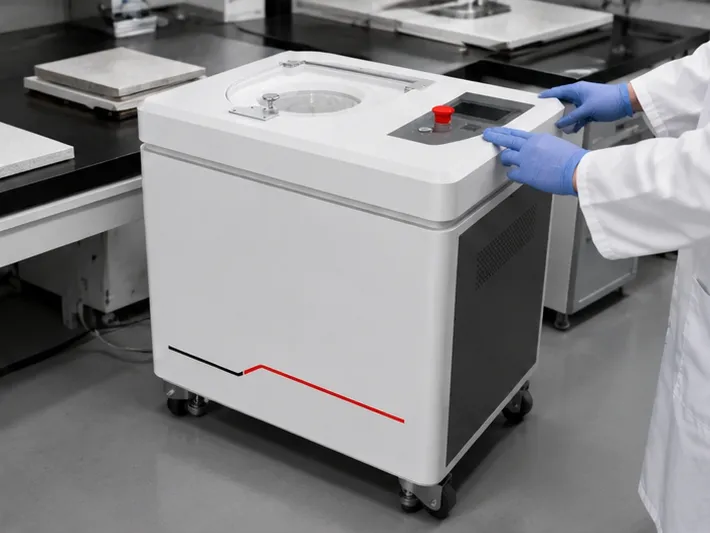
The degassing system does not work alone. It sits inside a chain of processes, all of which determine final quality.
Before Degassing: Preparation
The quartz must be precisely sized. Oversized particles resist packing; undersized particles create excessive surface area that traps gas by default. This is where powder processing defines your downstream success.
Recommended equipment for optimal feedstock:
- Jaw Crushers and Roll Crushers: For primary size reduction of raw quartz to manageable fractions.
- Planetary Ball Mills: For achieving fine, narrow particle size distributions essential for high packing density.
- Air-Jet Sieve Shakers: For verifying that your particle distribution meets the exact specification before mixing.
During Degassing: The Critical Hold
Once the quartz meets the resin, the mixture goes under vacuum. The goal here is simple in concept, complex in execution: remove all gases, leave all solids and liquids.
A vacuum hot press integrates this step with the molding cycle. You degas, and then you apply heat and pressure—all without ever breaking the oxygen-free environment. This is precision compaction, and it turns a degassed mixture into a cured, fully dense composite plate.
After Degassing: The Final Fixation
The material must be molded before gas has time to re-dissolve or re-adsorb. Workflow timing between the vacuum chamber and the press is part of the quality equation.
The Psychology of Material Trust
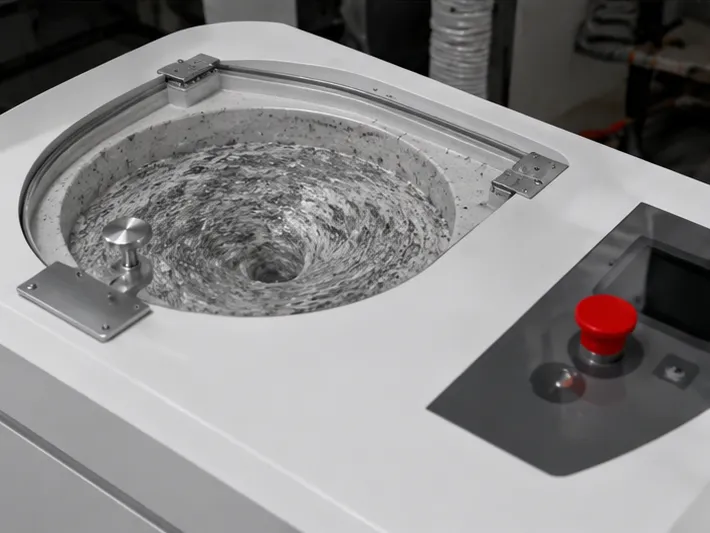
Why do we cut corners on steps we cannot see? Because the defect is invisible. You cannot look at a cured quartz-polyester block and see the micro-porosity. You only see it when the bathroom vanity cracks under thermal shock, or the industrial component shatters below its rated load.
Engineers who spec degassing equipment are not just buying a pump and a chamber. They are buying certainty. They are removing the hidden variables that turn a calculated safety factor into a gamble.
In materials science, trust is not abstract. It is measured in megapascals of flexural strength. It is proven in the absence of catastrophic failure. Degassing is the method by which you transfer physical integrity from the realm of hope into the realm of calculation.
Your Process, Perfected from Particle to Press

A void is a choice. It is the choice to skip a step because it adds time, or it costs capital, or the naked eye cannot see the difference.
But the material knows. The load knows. The crack knows exactly where to go.
Complete laboratory sample preparation means controlling every variable, from the initial crushing of raw material to the final compaction under heat and vacuum. We provide the full spectrum of that control—Crushers, liquid nitrogen cryogenic grinders, planetary ball mills, jet mills, air-jet sieve shakers, defoaming mixers, and the full range of hydraulic presses including Cold and Warm Isostatic Presses (CIP/WIP), XRF pellet presses, standard lab presses, and vacuum hot presses. Whether you are maximizing the load-bearing capacity of quartz-polyester or protecting the clarity of an aesthetic surface, the solution is in the vacuum and the process that supports it.
Quick Links
Suggested Products
非介入式材料均质机真空脱泡行星搅拌高粘度混合设备 High Viscosity Planetary Centrifugal Mixing and Vacuum Defoaming Machine for Laboratory Material Preparation High Viscosity Planetary Centrifugal Vacuum Mixer for Material Defoaming and Uniform Mixing Industrial Planetary Centrifugal Vacuum Defoaming Mixer for High Viscosity Paste and Powder Homogenization Industrial Planetary Centrifugal Vacuum Defoaming Mixer for High Viscosity Paste and Advanced Material ScienceFurther Reading
The 3-Minute Transformation: How Mixing Speed Reveals the Hidden Architecture of Next-Gen Batteries The Hidden Disorder in Your Battery Slurry—and the Precision Tool That Destroys It The Most Important Mixer in Your Lab Isn’t a Mixer. It’s an Insurance Policy Against Defects. The Invisible Architect of Failure: Why a Bubble in Your Resin-GelMA Mix Casts a Shadow on Your Entire Print The One-Inch Port That Decides Whether Your Lab Wins or Loses a Batch
PowderPreparation
Last updated on May 15, 2026
Related Products
非介入式材料均质机真空脱泡行星搅拌高粘度混合设备
High Viscosity Planetary Centrifugal Mixing and Vacuum Defoaming Machine for Laboratory Material Preparation
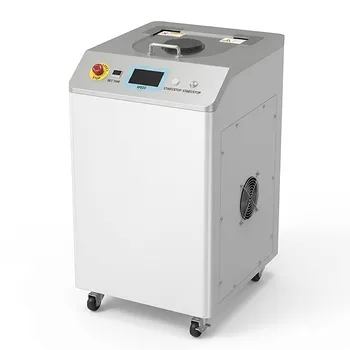
High Viscosity Planetary Centrifugal Vacuum Mixer for Material Defoaming and Uniform Mixing
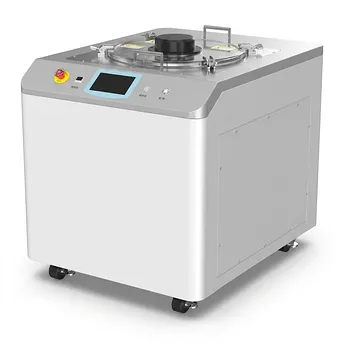
Industrial Planetary Centrifugal Vacuum Defoaming Mixer for High Viscosity Paste and Powder Homogenization
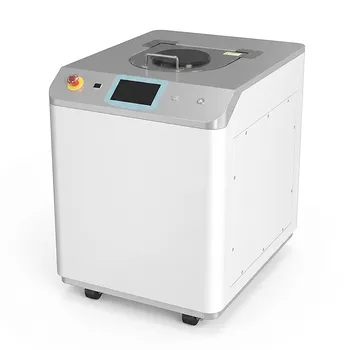
Industrial Planetary Centrifugal Vacuum Defoaming Mixer for High Viscosity Paste and Advanced Material Science
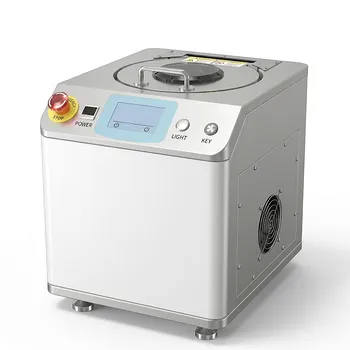
High Efficiency Vacuum Planetary Centrifugal Mixer and Defoaming Machine for Industrial Material Research and Precise Laboratory Powder Dispersion
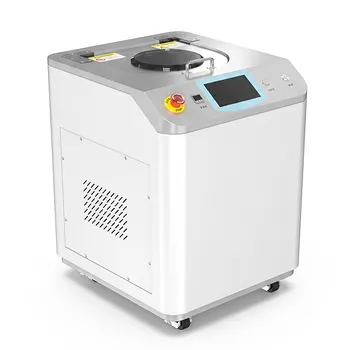
High Speed Vacuum Planetary Centrifugal Mixer and Defoamer for Industrial Paste Processing
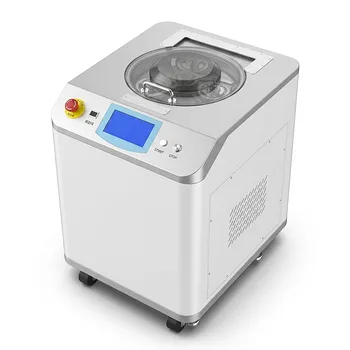
Dual Cup Vacuum Centrifugal Mixer Planetary Paste Defoaming Machine Industrial Material Processor
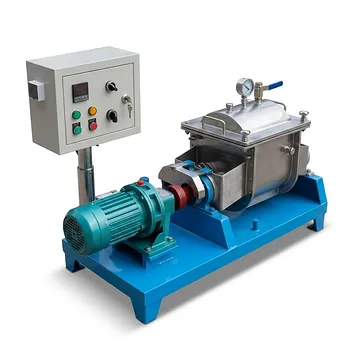
Industrial Vacuum Kneader for High-Viscosity Silicone, Rubber, and Compound Mixing