The Grain Size That Held Up Cathedrals: A Sieve Analysis Story
Oct 20, 2026
The Mortar That Remembered Too Much
The first crack appeared in the north transept after a heavy spring rain. To most visitors, it was a thin, almost delicate line racing through a medieval wall. To the restoration team, it was a language they had forgotten how to read.
Old buildings don’t fail silently. Their mortars speak through crumbling joints, through the slow dust settling on pews. The problem is never the stone. It’s almost always the binder holding the stone.
Every restoration project begins with a form of humility that modern construction rarely demands: we must admit the ancient builders knew something we don’t.
The only way to learn it is to take a handful of their mortar, separate it grain by grain, and listen.
Powder Doesn’t Lie
This is where the romance of engineering meets the cold honesty of a test sieve.
Mortar from a 14th-century castle wall isn’t just “sand and lime.” It’s a time capsule of decisions. Which pit did the sand come from? Did the craftsman sift it? Did he add crushed brick for pozzolanic reaction before the word existed?
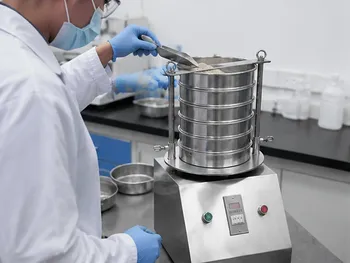
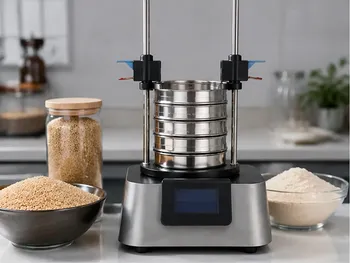
A laboratory test sieve answers these questions with no ego, no assumptions. The researcher removes a sample, gently crumbles the binder, and sends particles down a stack of precision-meshed frames—each aperture a gatekeeper allowing only a narrow range of sizes to pass.
What emerges isn’t just powder. It’s a fingerprint.
The Aggregate-to-Binder Ratio: The Hidden Recipe
Sieve analysis first reveals the most guarded secret of historic masonry: the A/B ratio.
By physically separating the mineral grains from the hardened lime paste, you can measure exactly how much sand the builder folded into his mix.
- A 1:3 ratio suggests a structural mortar meant to bear weight.
- A 1:1 ratio with fine angular particles hints at a decorative finish coat.
- An unexpected spike of clay in the fines might explain why the wall has been breathing unevenly for six centuries.
Without this data, a conservator is only guessing. And guessing with modern Portland cement—a material far too rigid for old, soft stone—can destroy a wall within a decade.
What the Coefficients Tell Us
Once the fractions are weighed, two numbers unlock the builder’s intent: Cu (coefficient of uniformity) and Cc (coefficient of curvature).
- A Cu value above 6 means the sand was well-graded, deliberately chosen so smaller particles fill the gaps between larger ones.
- A Cc close to 1 suggests a smooth, continuous curve—the hallmark of a craftsman who understood packing density, even if he never plotted a grain-size chart.
- A low Cu and jagged Cc? That tells a story of haste, or scarcity, or a repair done generations later by a less skilled hand.
These numbers aren’t academic. They predict whether a restored joint will crack in five winters or hold for another hundred years.
The Fragility of Evidence
Here the engineer faces a psychological hurdle that Atul Gawande would recognize: the temptation to force the sample to behave.
High-frequency vibratory sieve shakers deliver fast, repeatable results. But historical mortars often contain soft, friable aggregates—low-fired brick dust, degraded limestone, charcoal inclusions. Over-shaking can crush these ghosts, turning a coarse sand into a misleading fine powder.
The operator must choose restraint over speed. Sometimes an air-jet sieve, with its gentler dispersion, is the better tool. Sometimes the data must be interpreted with a conservator’s patience, not a production manager’s urgency.
Modern sieving standards like ISO 3310 give us a common language. But the old mortars remind us that the map is not the territory.
Non-Standard Irregularities
Historical aggregates rarely behave like the ideal spheres of modern sand. Crushed construction waste, slag, or even crushed seashells create flat, elongated particles that lock on sieve meshes differently. The D80 value tells you a diameter, but the shape tells you the story of a river versus a quarry versus a beach.
This is the part of materials science that feels closest to detective work. Every anomaly is a clue.
From a Single Sieve to a Complete Laboratory
To truly understand an ancient mortar—and then to replicate it—a sieve is only the starting point.
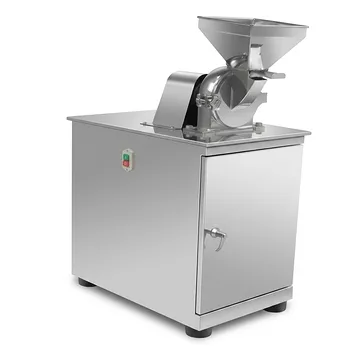
The sample must first be liberated from the stone. A jaw crusher carefully breaks down the bulk without introducing modern contaminants. If the binder is stubborn, a liquid nitrogen cryogenic grinder can embrittle and fracture it cleanly, preserving the delicate aggregate boundaries.
Once sieving has given you the exact particle size distribution, the real art of replication begins. This is where a full-spectrum sample preparation workflow transforms forensic data into a compatible restoration mortar:
- Planetary ball mills produce the precise fineness of binder required.
- Powder mixers recombine the graded aggregate and binder into a homogenous blend.
- Cold Isostatic Presses (CIP) can consolidate test specimens for strength evaluation without introducing the heat history of modern kilns, simulating the natural curing of historic limes.
Our line of laboratory equipment—from roll crushers and jet mills to air-jet sieve shakers and vacuum hot presses—exists for exactly this continuity. It gives the conservation engineer the ability to walk the entire path, from a chunk of historic wall to a validated, compatible replacement mortar.
The psychological payoff: When you pour a new mortar knowing its every grain size mimics the original within 1%, you’re not restoring a wall. You’re continuing a conversation that began in 1200 AD.
The Engineer’s Romanticism
Morgan Housel often writes that the best investors respect the unpredictable nature of history. The same is true in materials science.
A sieve stack is a series of binary decisions: pass or be retained. Yet from those yes/no choices emerges a continuous curve that maps the wisdom of a long-dead mason. There is something profound in reducing a cathedral’s survival to a D80 value, to a Cu coefficient, to a perfectly clean set of woven wire meshes.
It’s not the machine that’s romantic. It’s the humility it enforces.
When your air-jet sieve shaker finally settles and you weigh the pan fraction to four decimal places, you are holding not just dust, but the decision-making of another age. The grains reflect a winter sand harvest, a batch mixed by hand on a cool morning, a worker who knew that a slightly coarser grit would let the wall breathe.
Restoration fails when modern arrogance overrides that knowledge. It succeeds when we let sieve data speak, and when we build our laboratory workflows to honor, not erase, the original.
Your next historic project deserves a partner that understands both the precision of modern instrumentation and the fragility of ancient evidence. From the first crush to the final particle size report, the right equipment keeps you humble—and that humility is what saves buildings.
Quick Links
Suggested Products
Laboratory Vibratory Test Sieve Shaker for Precision Particle Size Analysis and Powder Grading Stainless Steel Laboratory Vibratory Test Sieve Shaker Small Laboratory Vibrating Sieve Shaker for Precise Particle Size Analysis Laboratory Dry and Wet Three Dimensional Vibratory Sieve Shaker for Particle Analysis Small Laboratory Vibratory Sieve Shaker for Powder Gradation and Particle Size AnalysisFurther Reading
The Sieve Never Lies: How a Simple Stack of Mesh Became the Lab’s Ultimate Truth-Teller The Sieve and the Mind: Why Your Soil Test Results Depend on Replacing Human Fatigue with Engineered Consistency The Quiet Gravity of a Perfect Mix: How Sieves and 3D Tumblers Engineer Certainty in Drug Formulation The Experiment That Refused to Repeat: How a Vibratory Sieve Shaker Removes the Physical Noise from Adsorption Science The Invisible Architecture of Powder: How a Vibratory Sieve Shaker Decides What Your Amaranth Bread Becomes
PowderPreparation
Last updated on May 14, 2026
Related Products
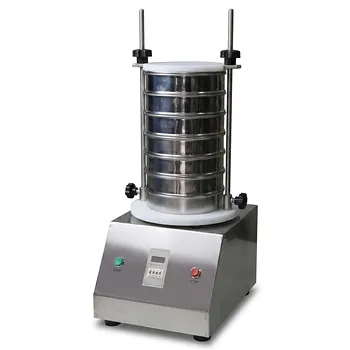
Laboratory Vibratory Test Sieve Shaker for Precision Particle Size Analysis and Powder Grading
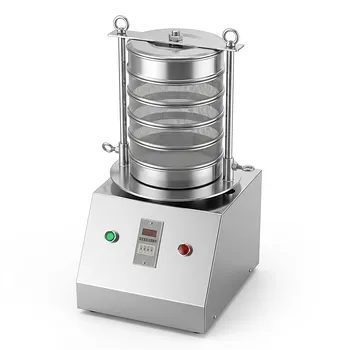
Stainless Steel Laboratory Vibratory Test Sieve Shaker
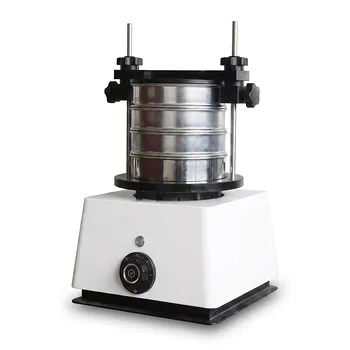
Small Laboratory Vibrating Sieve Shaker for Precise Particle Size Analysis
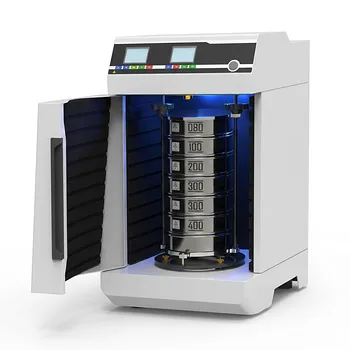
Laboratory Dry and Wet Three Dimensional Vibratory Sieve Shaker for Particle Analysis
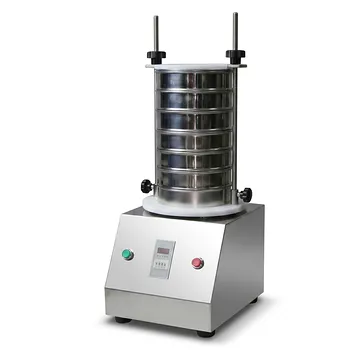
Small Laboratory Vibratory Sieve Shaker for Powder Gradation and Particle Size Analysis
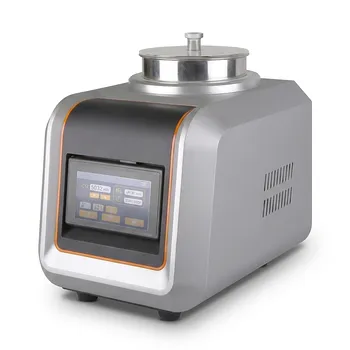
Laboratory Air Jet Sieving Machine for Fine Powder Particle Size Analysis and Deagglomeration
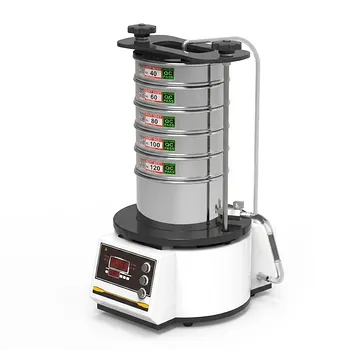
High Frequency Wet Three-Dimensional Vibrating Sieve Shaker for Dry and Wet Particle Size Analysis
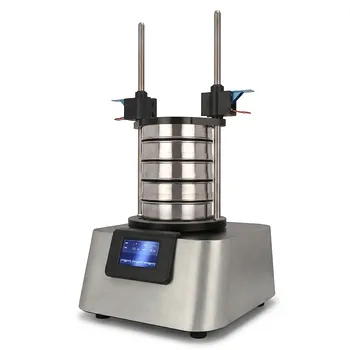
Vibratory Sieve Shaker Electromagnetic 3D Motion Powder Particle Size Analyzer for Dry and Wet Sieving
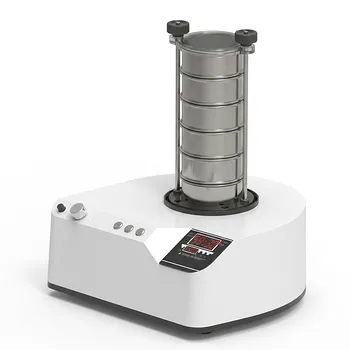
三维电磁微量振动筛分仪
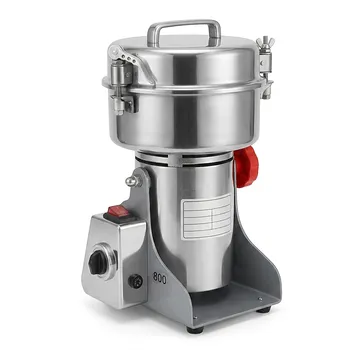
Small High-Speed Laboratory Grinder for Rapid Sample Preparation
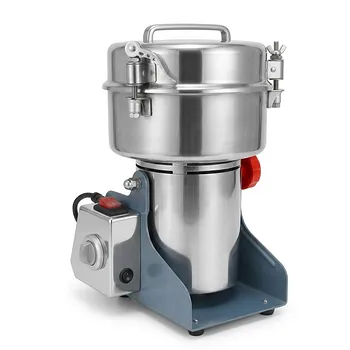
Small High-Speed Grinder for Efficient Laboratory Sample Preparation
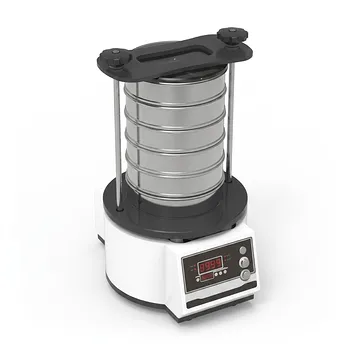
Tapping Oscillating Sieve Shaker for Dry and Wet Particle Size Analysis
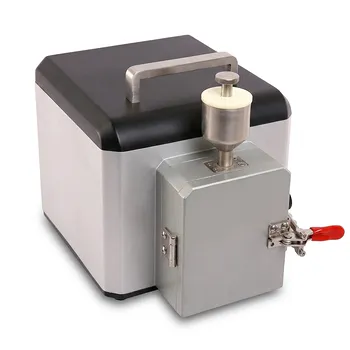
Portable Cutting Mill for Laboratory Sample Preparation and RoHS WEEE Compliance Testing
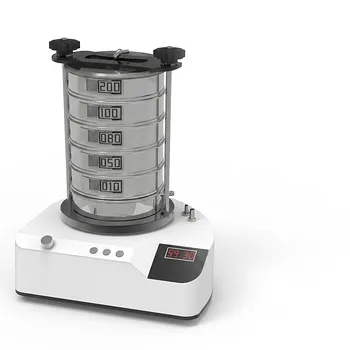
Heavy Duty Dry Three Dimensional Vibratory Sieve Shaker for Particle Separation
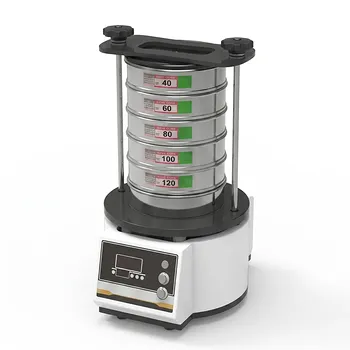
Dry Three Dimensional Vibratory Sieve Shaker
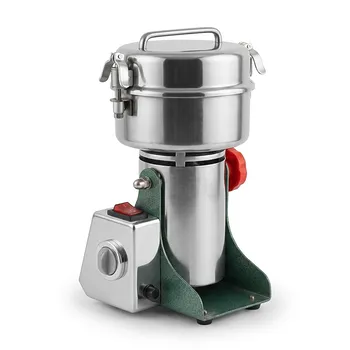
Small High-Speed Swing Grinder for Laboratory Sample Preparation
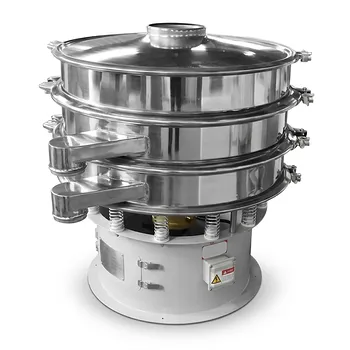
Three Dimensional Rotary Vibrating Sieve
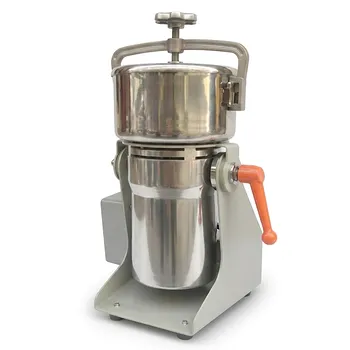
High Speed Laboratory Grinder Efficient Stainless Steel Powder Pulverizer Universal Material Science Mill for Sample Preparation
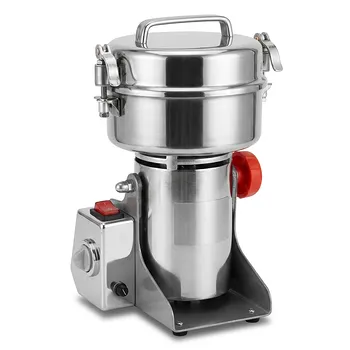
High Speed Laboratory Powder Grinder Small Batch Sample Preparation Mill