The Experiment That Refused to Repeat: How a Vibratory Sieve Shaker Removes the Physical Noise from Adsorption Science
Aug 12, 2026
The Experiment That Refused to Repeat
At 2 a.m., a materials scientist stares at two adsorption curves. Same carbon precursor. Same activation protocol. Wildly different breakthrough times. The error bars swallow any real conclusion.
This is the moment when many researchers blame their chemistry. They revisit functional groups, pore structures, and surface modifications. But often, the culprit is something far more mundane — and far more controllable.
The particles were not the same size.
And no amount of mathematical correction can truly fix that.
The Physics of Certainty
When particles vary in diameter, they introduce what physicists might call a systemic perturbation and what psychologists would recognize as pure noise.
Think of it like a crowded subway platform. If every passenger walks at a slightly different speed, the flow becomes turbulent, unpredictable. But if they all move in unison, the throughput becomes measurable, stable, even beautiful.
A vibratory sieve shaker orchestrates that unison for granular materials. It imposes an order that transforms a heap of crushed adsorbent into a disciplined population with a known size distribution.
Surface Area Is a Story of Contact
Adsorption happens at interfaces. The specific surface area available to a target molecule directly controls capacity. But surface area is not just a material property — it is a geometric one.
When you use a nest of standard test sieves — 100 mesh, 150 mesh, 200 mesh — you are not just sorting. You are selecting the population of particles that will present the highest density of active sites. Fine fractions below 0.1 mm can multiply reactive surfaces, but only if they remain discrete and not compacted into inaccessible aggregates.
A precisely set amplitude on a vibratory shaker finds that balance. It separates without crushing. It reveals the size window where maximum capacity lives.
Controlling the Clock of Diffusion
Diffusion is a race between a molecule and the mazes inside each particle. If particles differ in radius by a factor of two, the time to reach the internal pore network can differ by a factor of four.
Imagine trying to model that with a single kinetic equation. You cannot. The result is a statistical blur.
Mechanical sieving standardizes the path length. Every particle in the bed then tells the same time story. The pseudo-second-order model fits not because you forced it, but because the physical reality finally aligns with the math.
The Bed That Breathes Evenly
In a fixed‑bed reactor, the adsorbent does not work as individual grains. It works as a collective. A packed bed has to distribute flow, resist compaction, and allow molecules to find every pore without short‑circuiting.
Non‑uniform beds develop preferential channels. Fluid finds the path of least resistance and rushes past the majority of the adsorbent. Pressure drop spikes unpredictably. Breakthrough curves soften into a gradual, ambiguous smear, offering no clear endpoint for service life.
A vibratory sieve shaker eliminates the fines that clog interparticle voids and rejects the oversized chips that create isolated highways. The result is a bed that saturates like a coherent unit, with a sharp breakthrough point you can bet your process design on.
The Quiet Cost of Blinding and Wear
But even a tool of clarity has its own fragility. Sieves are consumable instruments of precision.
Some adsorbents are dusty, charged, or slightly hygroscopic. They cling to the mesh, plugging apertures in a phenomenon known as blinding. The shaker keeps vibrating, but the classification silently stops.
Over months, wire meshes stretch and corrode. A 200‑mesh sieve might no longer be a 200‑mesh sieve. Without regular calibration, the data you trust begins to drift, reintroducing exactly the invisible variance you sought to remove.
A good engineer treats test sieves the way a watchmaker treats calipers: with periodic validation, cleaning, and replacement. The romance here is not in the machine itself, but in the discipline of maintaining a standard that makes reproducible science possible.
A Psychologist’s Guide to Particle Distribution
There is a concept in behavioral finance: when randomness is high, we invent narratives. We see patterns in noise. We attribute causation to the wrong variable.
In materials science, inconsistent particle sizing is that randomness. It generates phantom trends. Labs waste months optimizing surface chemistry that was never the problem.
Sieving is the act of removing the physical equivalent of psychological noise. It forces the material to reveal its true chemical character. And once the particles are uniform, the data finally speaks with a single, unambiguous voice.
How to Match Sieving to Your Adsorption Goal
Choose your sieve strategy based on the question you are really asking.
- If you need maximum adsorption capacity: Go fine. Isolate fractions below 0.1 mm with high‑precision meshes to expose every possible reactive site.
- If you are building kinetic or isotherm models: Go narrow. Select a tight band (e.g., 125–150 μm) to eliminate diffusion variability and achieve statistical confidence in your rate constants.
- If you are designing a fixed‑bed reactor: Go uniform. Remove all fines and oversize grains to prevent fluid channeling and ensure the breakthrough curve is sharp enough for industrial prediction.
Summary: What Sieving Gives You
| Mechanical Function | Psychological Analogy | Impact on Adsorbent Performance |
|---|---|---|
| Particle Grading | Removing distraction | Maximizes surface area and reaction activity |
| Diffusion Control | Synchronizing the clock | Makes kinetic behavior predictable and models fit |
| Reactor Uniformity | Aligning a team | Prevents channeling, lowers pressure drop, sharpens breakthrough |
| Model Validation | Silencing statistical noise | Converts scattered data into reproducible findings |
| Batch Consistency | Maintaining standards | Guarantees that every run tells the same truth |
From Sieving to Scientific Certainty — The Full Workflow
Mastering particle classification is the moment your adsorbent becomes a truly knowable system. But the sieve does not work alone. It sits at the center of a complete preparation chain — from the first crush to the final pellet.
To feed your sieves with properly liberated grains, you might use a jaw crusher or a liquid nitrogen cryogenic grinder for temperature‑sensitive solids. Before classification, high‑energy planetary ball mills or jet mills can bring particles into the optimal size range without contamination. After you have isolated the perfect fraction, powder mixers homogenize multi‑component formulations, and hydraulic presses — including Cold/Warm Isostatic Presses (CIP/WIP), XRF pellet presses, hot presses, and vacuum hot presses — compact the powder into test specimens or functional shapes.
Every instrument in this chain is a guardian against variability. Together, they form a system that produces not just data, but knowledge you can reproduce on Monday morning and trust on Friday afternoon.
If you are ready to move from fighting physical noise to measuring true chemical performance, we engineer the complete laboratory sample preparation solutions that make that shift permanent.
Quick Links
Suggested Products
Vibratory Sieve Shaker Electromagnetic 3D Motion Powder Particle Size Analyzer for Dry and Wet Sieving Laboratory Dry and Wet Three Dimensional Vibratory Sieve Shaker for Particle Analysis Stainless Steel Laboratory Vibratory Test Sieve Shaker Heavy Duty Dry Three Dimensional Vibratory Sieve Shaker for Particle Separation Dry Three Dimensional Vibratory Sieve ShakerFurther Reading
The Hidden Economics of Particle Size: Why the Most Overlooked Variable in Material Science Controls Everything The Invisible Architecture of Powder: How a Vibratory Sieve Shaker Decides What Your Amaranth Bread Becomes The Particle-Size Lever: Why the Most Overlooked Step in Catalyst Design Determines Everything Else When Glass Melts Fail, It Was Never the Furnace: The Hidden Economics of Sand Gradation The Quarter-Millimeter Margin: Why Vibratory Sieve Precision Determines Artificial Stone Profitability
PowderPreparation
Last updated on May 14, 2026
Related Products
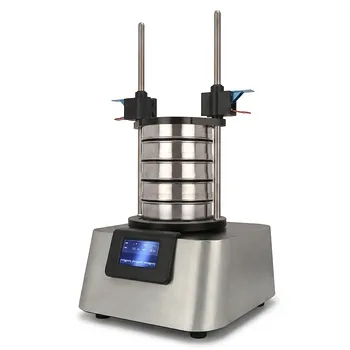
Vibratory Sieve Shaker Electromagnetic 3D Motion Powder Particle Size Analyzer for Dry and Wet Sieving
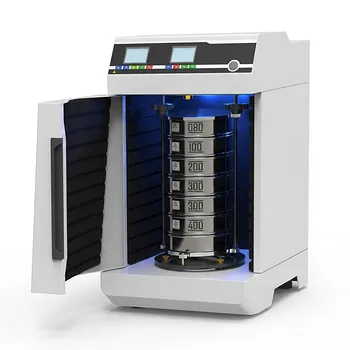
Laboratory Dry and Wet Three Dimensional Vibratory Sieve Shaker for Particle Analysis
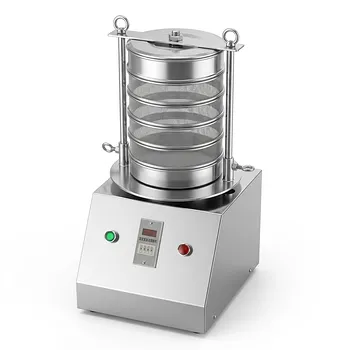
Stainless Steel Laboratory Vibratory Test Sieve Shaker
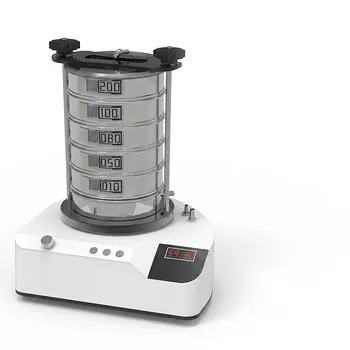
Heavy Duty Dry Three Dimensional Vibratory Sieve Shaker for Particle Separation

Dry Three Dimensional Vibratory Sieve Shaker

Small Laboratory Vibratory Sieve Shaker for Powder Gradation and Particle Size Analysis
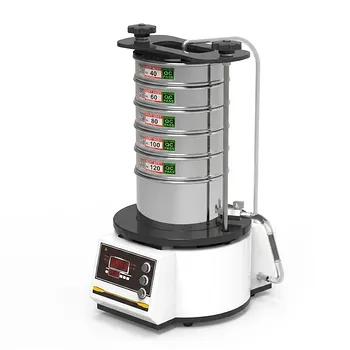
High Frequency Wet Three-Dimensional Vibrating Sieve Shaker for Dry and Wet Particle Size Analysis

Small Laboratory Vibrating Sieve Shaker for Precise Particle Size Analysis
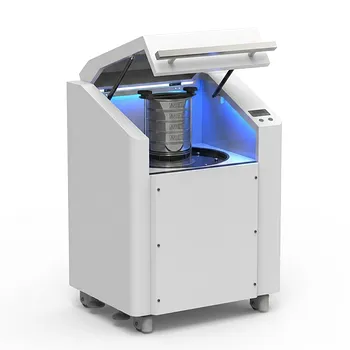
High Frequency Cabinet Type Three-Dimensional Rotary Vibrating Sieve Shaker for Dry Sieving and Particle Classification

Laboratory Vibratory Test Sieve Shaker for Precision Particle Size Analysis and Powder Grading
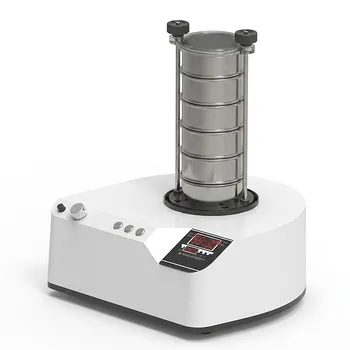
三维电磁微量振动筛分仪
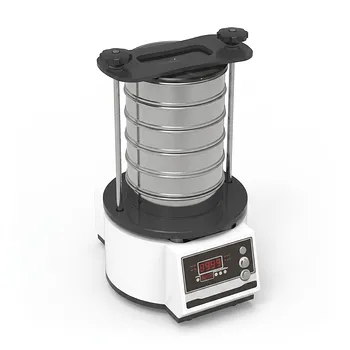
Tapping Oscillating Sieve Shaker for Dry and Wet Particle Size Analysis
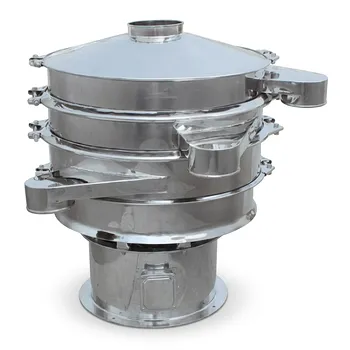
Stainless Steel Rotary Vibrating Sieve High Precision Circular Vibratory Separator Industrial Powder Grading Machine Multi Layer Sifting Equipment
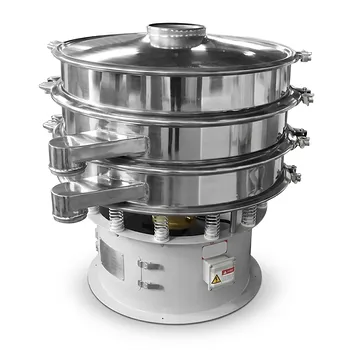
Three Dimensional Rotary Vibrating Sieve
Small Vibrating Ultrafine Grinder for Traditional Chinese Medicine
Automatic Vibrating Powder Feeder for Laboratory Material Processing Precision Vibratory Hopper Feeder for Granular and Powder Material Handling Industrial Grade Vibrating Tray Feeder for Consistent Material Sample Preparation
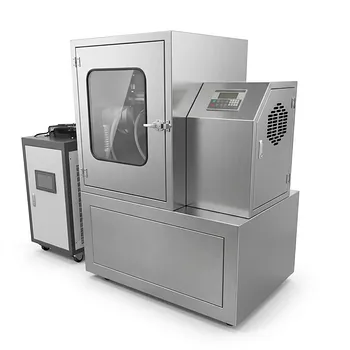
Vibratory Superfine Grinder for Ultra Fine Laboratory Powder Milling
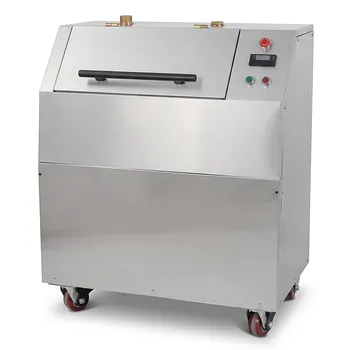
Vibratory Disc Mill for Rapid Fine Grinding and High Throughput Sample Preparation of Hard and Brittle Materials