The Geometry of Performance: Why Your PLA Composite Lives and Dies by Particle Size
Oct 21, 2026
The Scene of a Silent Failure
The dog bone specimen slides into the tensile tester’s grips. The engineer expects 70 MPa. At 38, it snaps. The fracture surface, under the microscope, doesn't show a uniform landscape. It shows a moon crater – a single oversized particle that acted as an origin of catastrophe.
In material science, we obsess over formulas. We debate the merits of maleic anhydride grafting, the perfect melt temperature, the ideal screw speed. But often, the difference between a breakthrough and a brittle failure is decided long before the polymer ever meets the barrel.
It's decided in a crusher. And on a sieve shaker.
The Unspoken Hierarchy of Composite Design
When formulating a Polylactic Acid (PLA) binary mixture, the intellectual thrill lies in the chemistry. But the physical reality of dimensional compatibility between the matrix and the modifier is the true gatekeeper of performance.
Think of it as a social gathering. If everyone speaks the same language, ideas flow. If one person shouts incoherently, the whole room fragments. In biocomposites, particle size is that language.
Bulk modifiers – rosin esters, plant fibers, mineral fillers – rarely arrive speaking the same dialect as PLA resin pellets. They are too large, too irregular, too unpredictable. The act of crushing and sieving is an act of translation.
Why "Good Enough" Isn't
The industry often treats sample preparation as a pre-science chore. Something you do to get to the "real work." But this psychological blind spot is expensive.
- The sifting effect: Pour different-sized particles into a hopper. The fines settle, the coarse ones roll to the edges. Without dimensional parity, your extruder feeds an ever-changing recipe.
- The melting lag: A 2 mm granule of modifier melts differently than a 200 µm particle. In the high-shear, short-residence-time world of twin-screw extrusion, that difference creates islands of unblended chemistry in your final product.
Crushing: The Art of Reduction
Bulk rosin esters arrive looking like geological specimens. They are magnificent in their irregularity. And useless for engineering.
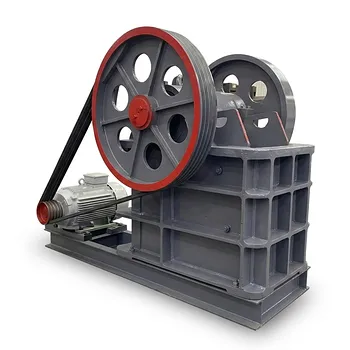
The jaw or roll crusher is the first translator. It takes the "geology" and reduces it to a manageable conversation size – typically 3 to 5 millimeters. This is not merely making things smaller.
It is about creating a feedstock that can physically mingle with PLA chips. A dry blend where every scoop from the bin contains roughly the same proportion of modifier. Without this step, you are not making a mixture. You are hoping for a statistical miracle.
The Cryogenic Edge
Some materials are stubborn at room temperature. They flex, smear, or degrade. A liquid nitrogen cryogenic grinder embrittles them before crushing. It turns a sticky, elastic nightmare into a clean, brittle powder. This is not just cooling; it is a temporary change of material personality, allowing geometry to be imposed where it was previously rejected.
The Sieve: A Gatekeeper, Not a Filter
If crushing is the art of reduction, then the vibratory sieve shaker is the science of exclusion.
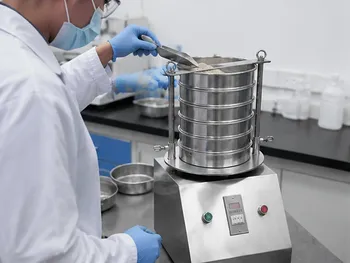
A sieve shaker does not simply "sort." It enforces a standard. A 250 µm mesh is a border. Particles above it are denied entry into the final composition. This is a profoundly powerful act of quality control.
The Physics of Uniformity
During melt extrusion, dispersion is governed by shear. Shear acts predictably on particles of a known size range. Introduce an oversized particle, and the physics breaks down.
- Stress Concentration: An ingot of un-dispersed modifier inside a PLA filament acts exactly like a void. When load is applied, stress lines converge on it. It is the first and only place a crack will start.
- Crystallization Sabotage: PLA's crystallinity is sensitive to nucleating surfaces. A fine, well-dispersed powder provides millions of consistent nucleation sites. One big chunk creates a massive, localized crystalline region with different shrinkage, different modulus, and internal stress.
- The Optical Sacrifice: For films or injection-molded aesthetic parts, anything over 40-100 µm is a visible blemish. A single "fish-eye" can downgrade a high-value product to scrap.
To sieve is to say: “I will not allow geometry to dictate my mechanical destiny.”
The Psychology of "Over-Processing"
Here's the counter-intuitive trap. The engineer, having learned that fine is good, pushes for absolute fineness. They reach for the planetary ball mill or the jet mill and aim for the micron-scale.
And suddenly, the material stops cooperating.
Ultra-fine powders develop a persona. They become cliquey. Static electricity pulls them into agglomerates. Moisture binds them. They no longer disperse individually; they flow as soft, stubborn clumps that refuse to break apart in the mixer.
This is the risk of ignoring a material's psychology. Pushing a powder into a finer state does not guarantee finer dispersion. It often guarantees the opposite. The goal is not minimum size; it is maximum consistent separation.
Purity as a Metric
There is another ghost in the machine: contamination. Abrasive bio-fillers – think silica-rich plant fibers – grind down the very equipment meant to process them. The crusher’s wear metals can leach into the PLA mixture, acting as unwanted catalysts for degradation.
Precision sieves, built with wear-resistant, non-contaminating meshes, protect the composite's chemical identity. A high-quality vibratory sieve shaker with stainless steel frames is not just a tool; it is a pledge of purity.
The Toolkit for Talking to Materials
To truly speak the language of particle size, you need a suite of translators. It starts with rugged size reduction for the raw chaos of bulk modifiers. It demands the precision of liquid nitrogen cryogenic grinding for stubborn substances. It relies on the unyielding standard of vibratory and air-jet sieve shakers, with meshes that define the borders of your material’s universe.
And it extends further. Once the perfect powder is created, it must be handled without segregation – that requires specialized powder mixers. For the final solid-state analysis, an XRF pellet press or a compact lab press turns that well-sieved powder into a disc capable of telling its elemental story.
The logic of sample preparation is a continuous thread. From the jaw crusher’s first bite to the sieve shaker’s final decree, you are not just processing material. You are writing the physical laws that will govern your composite’s behavior.
Where Geometry Meets Destiny
There is a romantic precision in all of this. The idea that by controlling something as simple, as tangible, as the size of a grain, we can decide whether a bioplastic part shatters or holds. We can decide if a surface is a mirror or a mess.
This is the forgotten elegance of materials engineering. It's not always found in new exotic monomers. It's often found in the discipline of a sieve, shaking patiently on a lab bench, ensuring that every particle that passes through its mesh has earned the right to be part of something stronger.
Ready to Engineer with Precision?
The difference between a failed batch and a repeatable, high-performance composite often comes down to the particle size distribution you allow into your process. We provide complete laboratory sample preparation solutions that turn this physics into a controllable, consistent practice. From crushers that handle bulk materials to vibratory sieve shakers that set precise dimensional boundaries, and from cryogenic grinders for the most difficult modifiers to a full spectrum of hydraulic presses for pelletizing, the tools exist to ensure your material's performance is not left to chance.
Quick Links
Suggested Products
Laboratory Vibratory Test Sieve Shaker for Precision Particle Size Analysis and Powder Grading Laboratory Air Jet Sieving Machine for Fine Powder Particle Size Analysis and Deagglomeration Small Laboratory Knife Crusher for Plastic Sample Preparation and Material Grinding Stainless Steel Coarse Crusher for Pharmaceutical Food and Plastic Material Processing Heavy Duty Dry Three Dimensional Vibratory Sieve Shaker for Particle SeparationFurther Reading
The Sieve Never Lies: How a Simple Stack of Mesh Became the Lab’s Ultimate Truth-Teller The Grain Size That Held Up Cathedrals: A Sieve Analysis Story The Quiet Gravity of a Perfect Mix: How Sieves and 3D Tumblers Engineer Certainty in Drug Formulation The Sieve and the Mind: Why Your Soil Test Results Depend on Replacing Human Fatigue with Engineered Consistency The Experiment That Refused to Repeat: How a Vibratory Sieve Shaker Removes the Physical Noise from Adsorption Science
PowderPreparation
Last updated on May 14, 2026
Related Products
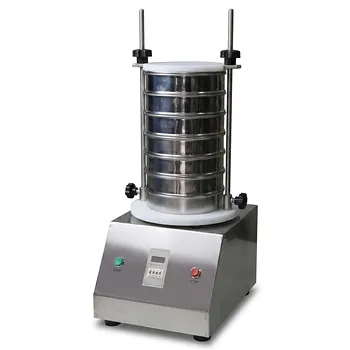
Laboratory Vibratory Test Sieve Shaker for Precision Particle Size Analysis and Powder Grading
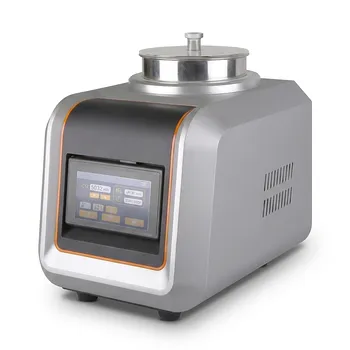
Laboratory Air Jet Sieving Machine for Fine Powder Particle Size Analysis and Deagglomeration
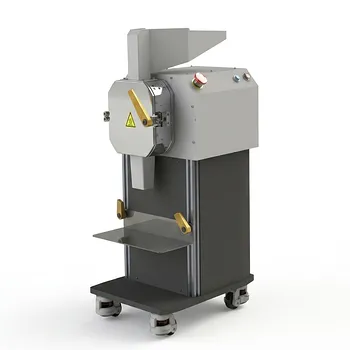
Small Laboratory Knife Crusher for Plastic Sample Preparation and Material Grinding
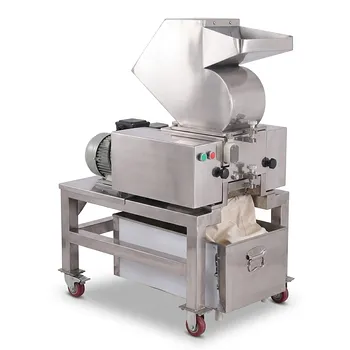
Stainless Steel Coarse Crusher for Pharmaceutical Food and Plastic Material Processing
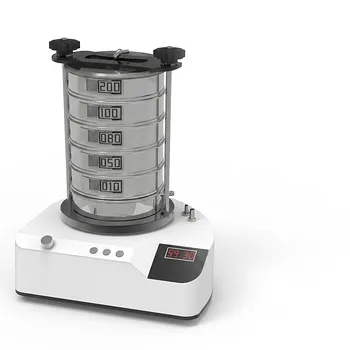
Heavy Duty Dry Three Dimensional Vibratory Sieve Shaker for Particle Separation
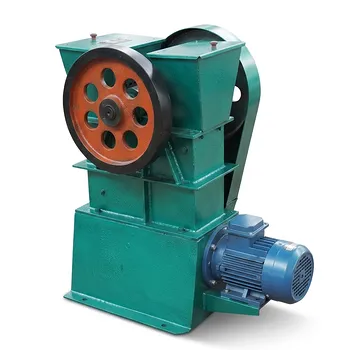
150×125mm Laboratory Jaw Crusher for Medium and Fine Crushing of Brittle Materials
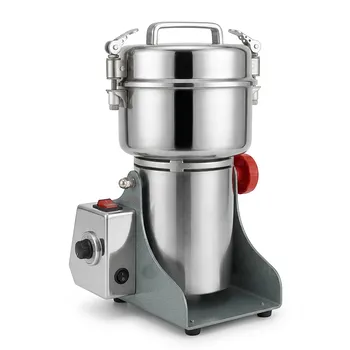
Versatile Industrial Crusher for Laboratory Crushing and Material Processing
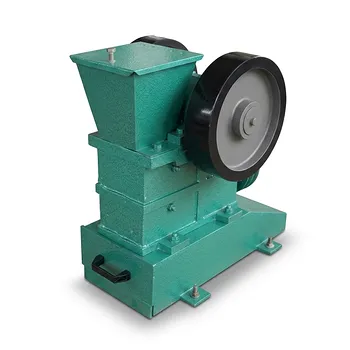
Laboratory Small Jaw Crusher 100x60mm
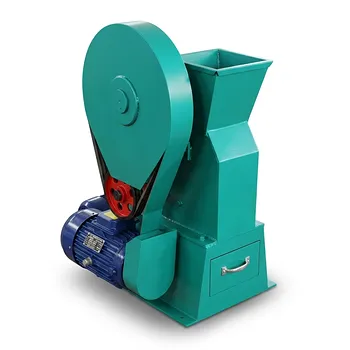
Small Laboratory Jaw Crusher 125x100mm Feed Opening for Sample Preparation
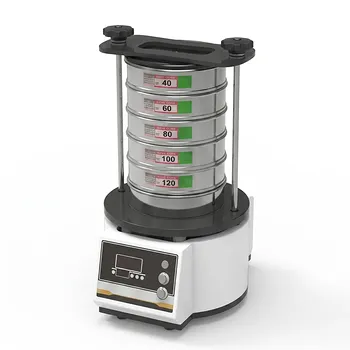
Dry Three Dimensional Vibratory Sieve Shaker
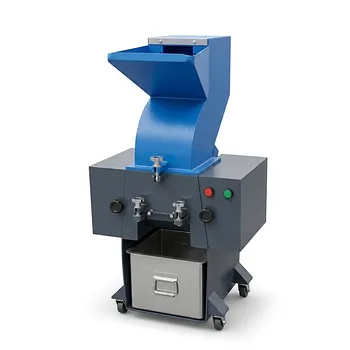
Heavy-Duty Crusher for Laboratory and Industrial Material Size Reduction
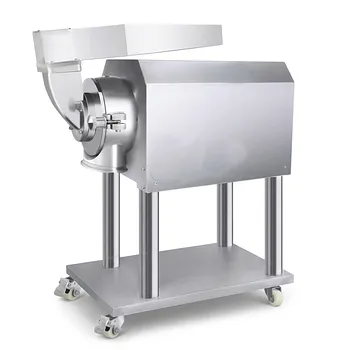
High Speed Small Laboratory Crusher for Dry Material Sample Preparation
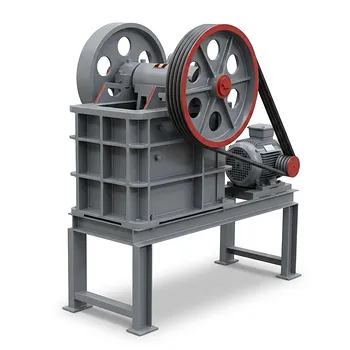
Laboratory Jaw Crusher 200x300mm Opening for Primary Crushing of Ores and Aggregates
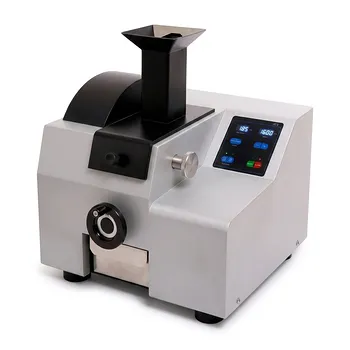
Laboratory Benchtop Jaw Crusher for Hard Brittle Materials Primary Size Reduction and Sample Preparation
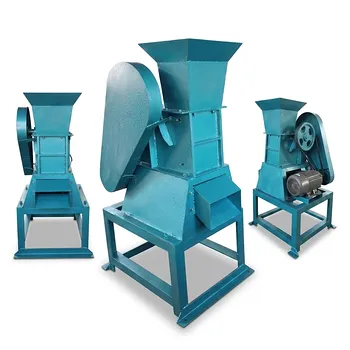
Custom Raised Height Laboratory Jaw Crusher for Precision Sample Preparation in Material Science
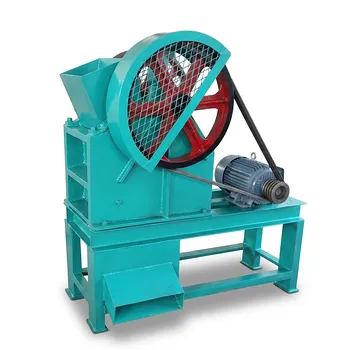
150x250mm Custom Laboratory Jaw Crusher for Coal Ore Mineral Crushing
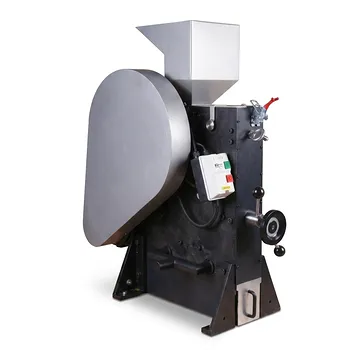
Heavy Duty Industrial Laboratory Jaw Crusher for Primary Sample Preparation and Hard Material Size Reduction