The Forgotten Press: How a Hydraulic Tablet Transforms Hesperidin from Molecular Miracle to Medicine
Sep 21, 2026
The Quiet Crisis in the Lab
A formulation scientist holds a vial of Hesperidin amorphous dispersion. Under the electron microscope, it is perfect—a molecular scaffold locking the drug in its high-energy, soluble state. The dissolution curves sing. The X-ray pattern shows nothing but a halo.
Then someone tries to make a tablet. The press comes down, 200 MPa of pressure, a crisp ejection click. The compact looks fine. But six days later, a DSC trace reveals a crystalline peak. The bioavailability advantage is gone. The batch is lost.
No one blames the press. We blame the polymer. We blame the drug load. We rarely ask whether our compaction step itself became the stress that broke the system. Yet for amorphous dispersions, the hydraulic press is not just a shaping tool. It is an interrogator, and what it asks can change the entire development timeline.
The story of Hesperidin—a flavonoid with poor water solubility now finding new life in oral antiviral and anti-inflammatory therapies—is a perfect case study in why the tableting step is never just mechanical. It is thermodynamic.
The Psychology of Forgetting the Obvious
We overcomplicate early-stage research. A team spends months tuning spray-dried dispersions, mapping glass transition temperatures, and calculating Flory–Huggins interaction parameters. Then, as an afterthought, they scoop powder into a die, pump the handle, and call the resulting disc “a compact.” They treat the hydraulic press like a blacksmith’s anvil—primitive, unchanging, unworthy of scrutiny.
Morgan Housel would call this a classic case of focusing on what’s additive and ignoring what’s determinant. We love solving the chemical puzzle because it feels like invention. Squeezing powder into a solid feels like administration. Yet in pharmaceutical development, the press is the first real model of manufacturing stress. Ignore it, and you build your cathedral on untested ground.
A hydraulic press, when used deliberately, is a time machine. With 30 seconds of dwell and precisely controlled force, it simulates months of shelf-life stresses and seconds of high-speed industrial compaction—all at a benchtop scale.
What the Press Actually Does to an Amorphous Dispersion
It Collapses Memory
A spray-dried particle is a frozen snapshot of rapid solvent evaporation. Its internal structure holds residual porosity, surface energy, and a delicate hydrogen-bond network between drug and stabilizer. When you apply even 50 MPa, you force particles to flow, shear, and form new interfaces. That process can heal some defects—or trigger nucleation.
The hydraulic press allows you to observe this transition frame by frame: different pressures, different dwell times. Each compact becomes a fossil record of the force that made it.
It Rearranges Free Volume
Amorphous solids are glasses. They contain excess free volume—the empty space between polymer chains. Compression reduces that volume. For some systems, this densification stabilizes the glass by lowering molecular mobility. For others, it brings drug molecules close enough to nucleate into crystals.
Researchers working with Hesperidin dispersions quickly discover that finding the “sweet spot” is not about aiming for maximum density. It is about mapping the pressure-stability landscape until you find the plateau where mechanical integrity and physical stability coexist.
It Reveals the True Signal
When you prepare a sample for XRD or FTIR, you are not just making it flat. You are eliminating the air gaps that scatter light and X-rays like fog. A poorly pressed pellet gives a noisy baseline. A densely compacted, mirror-smooth surface can reveal subtle amorphous phase shifts that were invisible before. In one Hesperidin study, researchers discovered a small amount of residual crystallinity only after pressing a thin, high-density disc—a detail that would have been missed with loose powder measurements.
It Predicts Failure Before Failure Becomes Expensive
Industrial roll compactors do not forgive. A formulation that produces acceptable tablets at 10-second dwell in the lab may laminate or cap at the millisecond speeds of production. Pressing across a range of dwell times—from 5 seconds to 60 seconds—gives you a Bond number perspective on interparticulate strength. It tells you whether your formulation relies on slow plastic flow or can survive rapid elastic compression. That single dataset, generated in an afternoon, can save a pilot batch.
A Pressure-Mapping Protocol for Hesperidin Dispersions
Good science does not just press and pray. A methodical approach uses the hydraulic press as a diagnostic tool. Based on the experience of labs that have successfully scaled amorphous dispersions, here is a logical sequence:
1. The Stability Scouting Run
At minimum, prepare compacts at 4–5 pressure levels (50, 100, 150, 200, 250 MPa) with fixed dwell (15 s). Store at accelerated conditions. Sample at 1, 2, 4, and 8 weeks. XRD every time. You are looking for the pressure threshold where crystallinity appears. This threshold becomes your upper process limit.
2. The Dwell-Time Optimization
Choose the highest pressure that did not induce crystallization. Now vary dwell time: 3 s, 10 s, 30 s, 60 s. Measure breaking force (hardness). Plot hardness against dwell time. You will often see a logarithmic plateau. That is your minimum dwell for mechanical robustness.
3. The Analytical Surface Generation
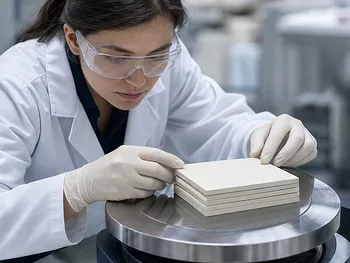
For spectroscopic mapping, press a thin disc at your optimized parameters. Use polished dies. The goal is a surface with RMS roughness below 1 μm if possible. This preparation turns your bench press into a critical sample-prep station for Raman mapping, micro-XRD, or AFM-based modulus measurements.
4. The Green Strength Baseline
Before moving to more exotic manufacturing (e.g., 3D-printed dispersions), press reference compacts. Measure tensile strength via diametrical compression (Brazilian test). These numbers become your baseline for comparing novel processing methods. Without them, you are guessing whether a new process is “better.”
| Application | What It Tests | Key Observation |
|---|---|---|
| Pressure Crystallization Scouting | Stability under compaction stress | Appearance of Bragg peaks in XRD |
| Dwell-Time Mapping | Interparticle bond formation | Breaking force vs. dwell time curve |
| Analytical Pellet Prep | Signal-to-noise in spectroscopy | Baseline flatness and peak resolution |
| Reference Compact Creation | Green strength baseline | Tensile strength and elastic modulus |
The Subtle Art of Not Crushing the Advantage
There is a psychological quirk here. When testing a new material, we often apply more pressure than necessary, thinking “denser is better.” For crystalline drugs, that is often true. But for amorphous dispersions, excessive force is a gamble with your solubility advantage.
A laboratory hydraulic press with fine pressure control and a readable gauge—digital or analog—lets you resist the temptation to “just a little more.” Instead, you treat pressure like a formulation variable, one recorded and optimized alongside drug load and polymer ratio.
And then there is dwell time. In manual presses, dwell is often counted silently and inconsistently: a hurried five Mississippi versus a patient ten. That variability translates into batch-to-batch noise in your mechanical data. A simple protocol, and a press that allows smooth pressure holding, removes this hidden error and makes your results reproducible.
From Hesperidin to Your Own Amorphous System
The lessons here generalize far beyond a single flavonoid. Any amorphous solid dispersion intended for oral solid dosage faces the same three questions:
- Will it stay amorphous under compression?
- Can the particles form a mechanically sound compact at realistic dwell times?
- Can we make analytical samples with the right density and surface quality for reliable data?
These questions are not answered by rheology alone. They require a hydraulic press treated not as a peripheral tool but as a central measurement platform. Whether your lab works on antiviral drugs, nutraceutical polyphenols, or poorly soluble oncology compounds, the press is where material science meets pharmaceutics.
At a deeper level, this approach reflects how Atul Gawande would see the challenge. Systems succeed not because the big decisions are right, but because the small, unglamorous steps—like pressing a pellet correctly—are reliable. The hydraulic press is a check. It forces you to confront physical reality before it confronts you at scale.
Building a Complete Sample Preparation Workflow
A tableting hydraulic press never works in isolation. Before you can press a Hesperidin dispersion, the powder must be ground, sized, and often mixed. After pressing, the compact must be characterized. The most efficient labs treat sample preparation as a continuous chain, where each step influences the next.
- Powder conditioning: Cryogenic grinding preserves amorphous structure when particle size reduction is needed. Jet milling can control particle size without thermal damage. Planetary ball mills provide energy for mechanochemical co-amorphization if that is your preparation route.
- Size classification: Vibratory or air-jet sieving ensures you are pressing a consistent particle fraction. This removes fines that over-compact and coarse particles that create weak spots.
- Mixing and deaeration: A defoaming mixer before pressing reduces trapped air, leading to compacts with fewer internal cracks and more uniform density distributions.
- Compaction under controlled environments: For oxygen- or moisture-sensitive dispersions, a press capable of operation in a glovebox or with vacuum/hot pressing capability adds a protective dimension to your stability work.
- Isostatic pressing for complex shapes: If your dosage form evolves beyond simple flat-faced tablets, cold isostatic pressing (CIP) offers a way to create uniform density in larger preforms before machining or final shaping.
When these pieces work together, the hydraulic press becomes the heart of a sample preparation system capable of answering not just “can it be compressed?” but “how robust is this formulation across realistic manufacturing conditions?”
The Press as an Engineer’s Resolution
Here is the romantic part, the part that engineers feel but rarely say.
Every compact you press contains a story of force, time, and material response. A 13 mm disc of Hesperidin dispersion, ejected from the die with a soft click, is a record of thousands of particle-to-particle interactions, of polymer chains entangling, of drug molecules held in suspended, glassy chaos—waiting perhaps for the right gastric fluid to release them.
That disc is not just a sample. It is a promise. It says: we tested this. We stressed it. We looked inside with X-rays and infrared light. And we found it still holds.
A well-designed hydraulic press makes that promise possible. It gives you the consistency to repeat the test, the control to map the boundaries, and the silence in the moment of compression when only the oil moves and the material decides its fate.
The best formulations are not just designed. They are pressed, measured, and pressed again.
Contact Our Experts to discuss how an integrated sample preparation system—from cryogenic grinding and sieving to precise hydraulic pressing—can bring this level of confidence to your amorphous dispersion development.
Quick Links
Suggested Products
6-Ton Small Single-Punch Tablet Press — Laboratory Powder & Granule Tableting Equipment / Tablet Forming Machine 5 Ton Single Punch Tablet Press Laboratory Small Batch Production Manual Tablet Press with Dual Scale Pressure Gauge for Pharmaceutical Food Chemical Laboratory Sample Preparation 6 Ton Variable Frequency Single Punch Tablet Press High Shear Laboratory Emulsifier for Mixing and HomogenizationFurther Reading
From Dust to Data: How Precision Laboratory Presses Forge Truth in Mineral Testing The Layers That Wouldn’t Lie Flat: Why Nine Sheets of Ceramic Demand a Laboratory Press That Thinks in Microns The Hidden Fracture: Why Ceramic Feed Rods Fail Before the First Melt The Invisible Architect: How Compaction Psychology Shapes Your LSM Ceramic’s Fate The Invisible Architect of Powder: How a Single Additive Saves Ductile Metals from Themselves
PowderPreparation
Last updated on May 14, 2026
Related Products
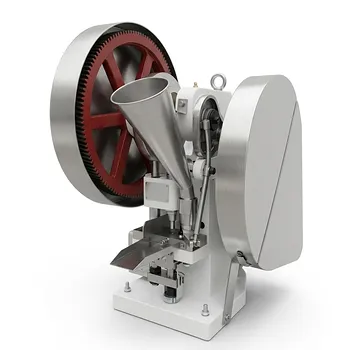
6-Ton Small Single-Punch Tablet Press — Laboratory Powder & Granule Tableting Equipment / Tablet Forming Machine
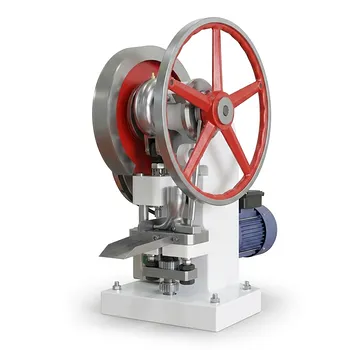
5 Ton Single Punch Tablet Press Laboratory Small Batch Production
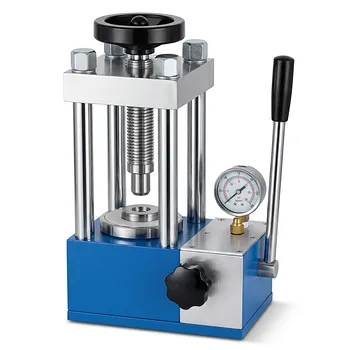
Manual Tablet Press with Dual Scale Pressure Gauge for Pharmaceutical Food Chemical Laboratory Sample Preparation
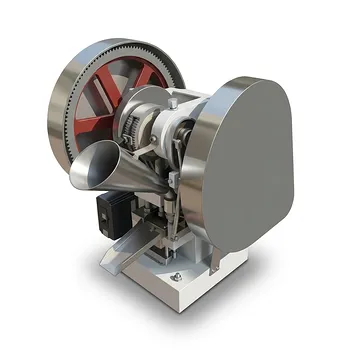
6 Ton Variable Frequency Single Punch Tablet Press
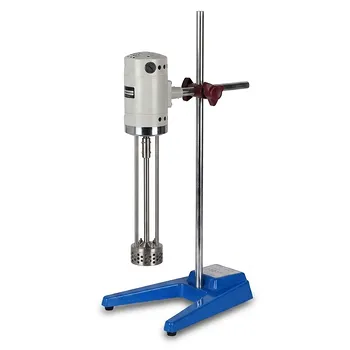
High Shear Laboratory Emulsifier for Mixing and Homogenization
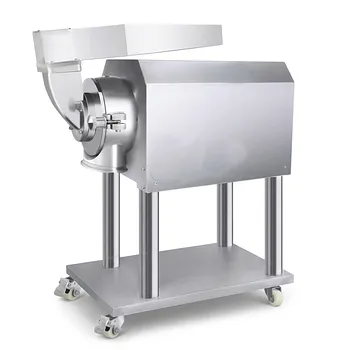
High Speed Small Laboratory Crusher for Dry Material Sample Preparation
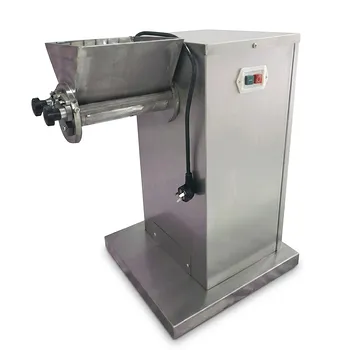
Small Laboratory Oscillating Granulator for Wet and Dry Granulation Processing
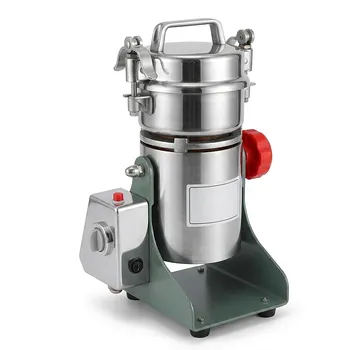
High Speed Swing Type Laboratory Pulverizer for Fine Powder Grinding and Sample Preparation
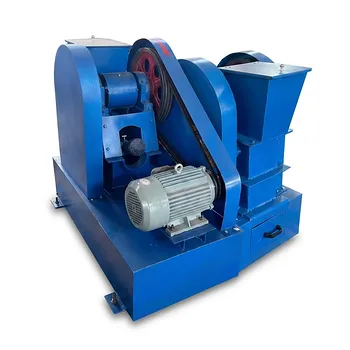
Horizontal Jaw Crusher Medium Hard Material Crushing Laboratory Sample Preparation Equipment