The Alchemy of Impact: Rewriting Silica’s Atomic Memory with a Planetary Ball Mill
Aug 07, 2026
The Sand on Your Bench
A materials scientist takes a pinch of beach-white sand. It is inert, crystalline, stubbornly stable. The assignment is to turn that ordinary silica into a powder that bursts with chemical potential.
The first instinct is often to grind it by hand. A mortar and pestle. After an hour of labor, the grains look finer. But under a microscope, the story is different. The particles are simply broken shards, micro-cracks still holding together. The crystal lattice remains intact.
This is where intuition fails. Shrinking a particle is not just physical abuse; it is a conversation with physics at the atomic level. You need a machine that does not just crush, but rewrites the material’s inner order.
When Grinding Becomes Engineering
Top-down size reduction is a battle against chemical bond energy. A stable silica crystal does not want to shatter into nanometer-sized fragments. It has a lattice periodicity that demands a specific energy budget to disrupt.
A planetary ball mill is not a simple grinder. It is a high-energy mechanical reactor. It transforms the rotational energy of a motor into a complex field of impact, shear, and friction. Those forces exceed what the silica can bear, and the crystal yields.
The process moves particles from the micrometer scale down to the sub-micron or even truly nano range. But the real magic is not just in the size. It is in the structural amnesia that the crystal develops along the way.
The Solar System Inside a Jar
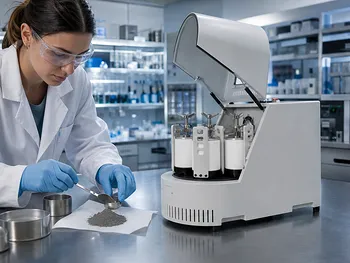
The efficiency of a planetary ball mill comes from a design that mimics celestial motion: the sun wheel. Grinding jars are mounted on a rotating base and spin on their own axes while simultaneously revolving around a central point.
This dual-axis motion is not a gimmick.
Inside the jar, a centrifugal field accelerates the grinding balls to extremely high velocities. They become projectiles. They crash against the jar wall and each other, transmitting kinetic energy directly into the silica particles. This is where the romance of mechanical engineering meets the brutality of size reduction—each jar becomes a tiny, violent universe of colliding worlds.
The Strike That Shatters
High-energy impact is the primary force that cracks the coarse silica sand.
When a grinding ball slams into a particle at speed, it creates a localized stress field. That stress exceeds the innate structural strength of the silica. The result is a clean fracture, breaking micrometer-sized parents into much smaller, irregular fragments.
Think of it as the first cut. Impact does the heavy lifting, pulverizing the bulk of the crystalline lattice. But impact alone creates a mess of sharp edges and a wide particle size distribution. It needs a partner.
The Scrape That Sculpts
Shear and friction finish the work that impact began.
As the balls roll and slide against each other and the jar lining, they generate attrition forces. This is a grinding, sandpaper-like action that wears down the surfaces of the fractured particles. It strips away the roughness, producing a much finer, nanoscale dispersion.
Frictional attrition is what gives you control over the final particle morphology. Impact breaks the skeleton; shear polishes the bones. This synergy ensures you can achieve a precisely tailored distribution, often needed for high-density packing in advanced materials.
The Material’s Hidden Transformation
This is where the process becomes intellectually thrilling. You are not just making smaller sand. You are making a fundamentally different material.
Erasing the Crystal’s Memory
Intense mechanical action does something uncanny to silica: it destroys its long-range atomic order. This is mechanical amorphization.
The crystalline lattice, once a pristine, repeating geometric pattern, loses its periodicity. The atoms get jumbled into a disordered, glassy state. The mill provides the energy to break those rigid silicon-oxygen bonds and prevents them from reforming neatly.
A crystal remembers its structure. Amorphous silica has forgotten. And that forgetfulness makes it far more chemically reactive.
The Gift of Surface Area
Every fracture event creates new faces. As the particle size plummets, the specific surface area rises exponentially.
Internal adsorption sites, once buried inside dense aggregates, are exposed to the environment. Chemical bonds become accessible. In practical terms, you unlock a material that can adsorb, catalyze, or bond at rates its bulky crystalline ancestor could never achieve. It is the difference between a closed book and a library with every page laid bare.
The Painful Lessons of High Energy
Energy is never free. The same mechanical forces that break silica also introduce hazards that can destroy a batch if you ignore them.
When Friction Becomes a Furnace
A large portion of the kinetic energy in the mill converts directly into heat. The local temperature at a collision point can spike dramatically.
Without managed cooling cycles or “rest” periods, this heat accumulates. Hot particles become sticky. They agglomerate, welding themselves back together into larger clusters. In the worst case, the heat can trigger unintended phase transformations, reversing weeks of research progress in minutes. The engineer’s job is to be the thermal guardian—scheduling intervals that let the system breathe.
The Purity Paradox
The grinding media and jar lining are also caught in the crossfire. To grind silica to a range of 0.2–0.6 μm, you must choose extremely hard materials like agate or zirconia.
A softer stainless-steel jar will slowly donate its atoms to your sample. Iron or chromium contamination can render the powder useless for high-purity applications like electronics or optical precision manufacturing. The psychology of an experienced operator is one of vigilance: you are constantly trading off grinding speed against the invisible threat of wear debris.
A Smarter Path Through the Particle Size Labyrinth
There is no universal setting. You optimize based on the precise outcome you value most. The table below captures the decision psychology of a skilled powder processor.
| Your Primary Goal | The Dominant Mechanism | The Process Strategy |
|---|---|---|
| Nanoscale Precision | Shear & Attrition | Long cycles with small, high-density balls (e.g., zirconia). Maximize the rolling, polishing action. |
| Maximal Chemical Reactivity | Impact & Amorphization | Higher speed, moderate ball-to-powder ratio. Prioritize lattice disruption over particle uniformity. |
| Uncompromised Purity | Controlled Wear | Shorten residence time. Use agate or zirconia jars and media. For certain cases, consider cryogenic grinding to reduce heat and chemical activity. |
| Tight Particle Uniformity | Multi-stage Impact & Sieving | A stepwise reduction in speed. Follow milling with air-jet or vibratory sieve shakers to enforce a strict cut. |
Beyond the Mill: A Complete Workflow for a Fragile Powder
The journey of silica does not end when the mill stops. The fragile, high-energy amorphous powder you have created is vulnerable. It needs handling that matches the sophistication of its grinding.
A truly integrated sample preparation laboratory thinks in workflows, not isolated machines. You may need a jaw or roll crusher to pre-process the raw sand. After milling, a vibratory or air-jet sieve shaker validates the size distribution. If the powder needs to be analyzed by XRF, an automatic pellet press turns it into a stable, uniform disc for the spectrometer. For research into advanced ceramics, a cold isostatic press (CIP) can compact the nano-powder into a green body with uniform density, free of the pressure gradients of uniaxial pressing.
This is where a complete equipment ecosystem becomes critical. When you have the planetary ball mill, the crusher, the jet mill for contamination-free grinding, the defoaming mixer for slurries, and the full spectrum of hydraulic presses—from standard lab presses to vacuum hot presses—you stop being a mere operator. You become a material architect.
Embracing the Engineering Romance
A handful of sand does not want to become a nano-powder. It resists with every chemical bond, every crystal plane, every fold of its ancient geology. The planetary ball mill is the instrument that persuades it, through a language of pure, controlled violence, to wake up reactive and new.
When you see that fine, white powder slip through your fingers, you are not looking at crushed rock. You are looking at a lattice that has been taught to forget, a surface full of promise. That is the engineering romance—not the machine itself, but the hidden potential it unlocks in the silent world of atoms.
Whether you are optimizing silica for a high-performance catalyst or developing a next-generation composite, mastering these mechanical truths is what separates a failed batch from a scientific breakthrough. Talk to our team about building a complete workflow that protects your material’s integrity from crusher to pellet press. Contact Our Experts
Quick Links
Suggested Products
Vertical Semi Circular Planetary Ball Mill for Laboratory Precision Grinding High Energy Planetary Ball Mill for Nano Scale Grinding and Mechanical Alloying Vertical Production Planetary Ball Mill for High Throughput Powder Processing Heavy Duty Horizontal Planetary Ball Mill for Efficient Industrial Grinding and Sample Preparation 360° Rotating Omnidirectional Laboratory Planetary Ball Mill for Homogeneous Ultra-Fine Grinding and MixingFurther Reading
The 65-Micron Gate: Unlocking the True Isotopic Fingerprint of Portland Cement The Energy Budget of a Single Impact: How the Ball-to-Powder Ratio Shapes Nanocrystalline Reality The High-Energy Gamble: What SiBCN-rGO Fibers Teach Us About Perfect Homogenization The Gentle Violence of a Planetary Mill: Why the Most Critical Moment in SiC–VC Composites Happens Before Any Heat The Forge at 10,000 g: How a Planetary Ball Mill Designs Self-Lubricating Composites Atom by Atom
PowderPreparation
Last updated on May 14, 2026
Related Products
Vertical Semi Circular Planetary Ball Mill for Laboratory Precision Grinding
High Energy Planetary Ball Mill for Nano Scale Grinding and Mechanical Alloying
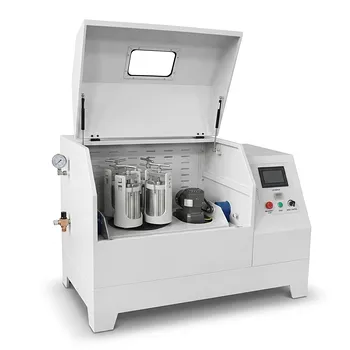
Vertical Production Planetary Ball Mill for High Throughput Powder Processing
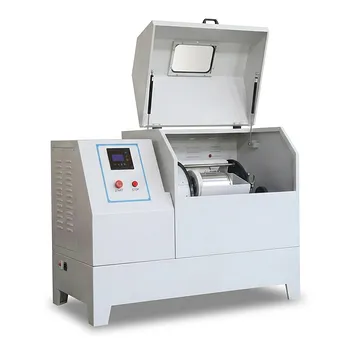
Heavy Duty Horizontal Planetary Ball Mill for Efficient Industrial Grinding and Sample Preparation
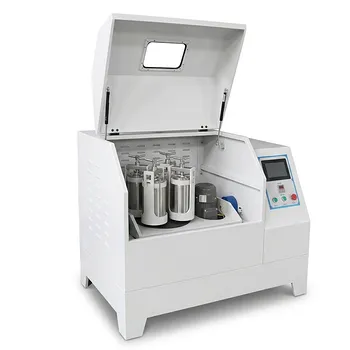
360° Rotating Omnidirectional Laboratory Planetary Ball Mill for Homogeneous Ultra-Fine Grinding and Mixing
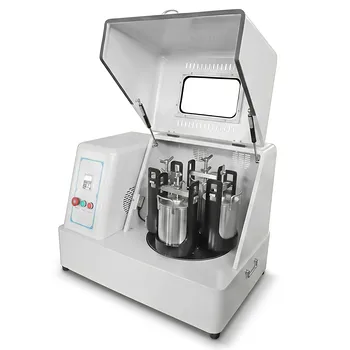
Vertical Square Planetary Ball Mill for Laboratory Sample Preparation and Nanoscale Grinding
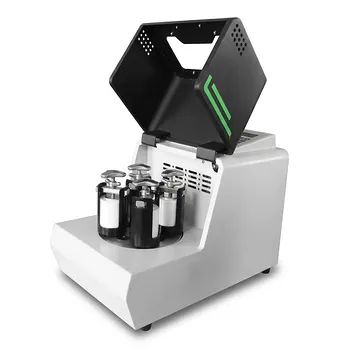
Miniature Planetary Ball Mill with Vacuum Grinding and High Efficiency for Laboratory Sample Preparation
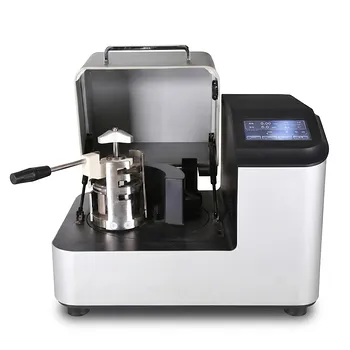
High Energy Laboratory Planetary Ball Mill for Nano Grinding and Material Science Sample Preparation
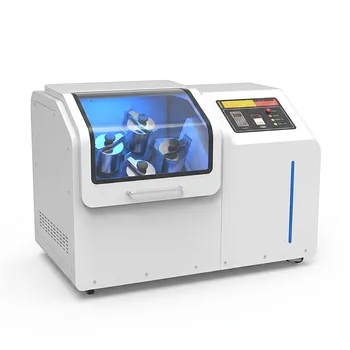
High Energy Omnidirectional Planetary Ball Mill 16L
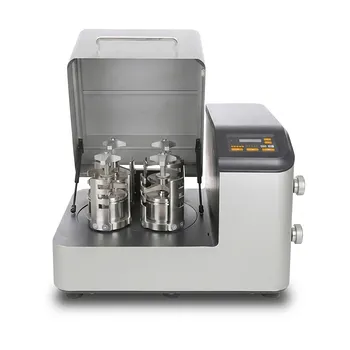
High Energy Planetary Ball Mill for Nano Scale Grinding and Colloidal Mixing in Material Science Research
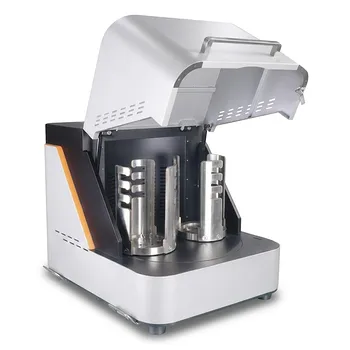
High Energy Laboratory Planetary Ball Mill for Nano Grinding and Colloidal Mixing of Hard and Brittle Materials
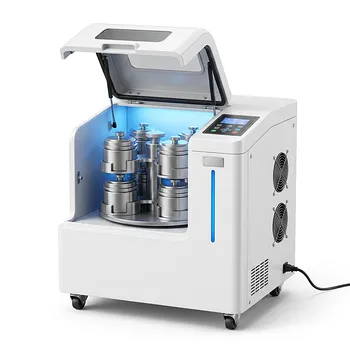
High Energy Omnidirectional Planetary Ball Mill 20L
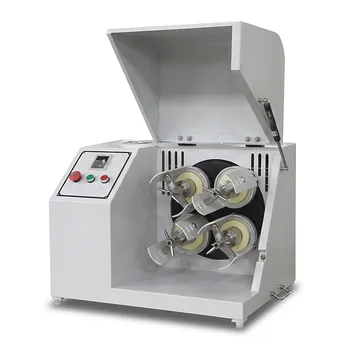
Horizontal Light Duty Planetary Ball Mill for Laboratory Sample Preparation
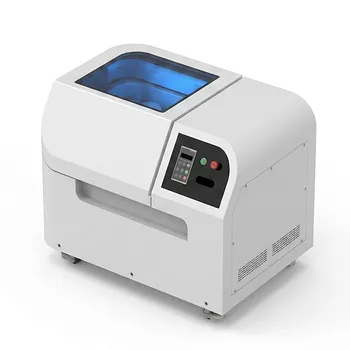
8L Planetary Ball Mill for Laboratory Grinding and Sample Preparation
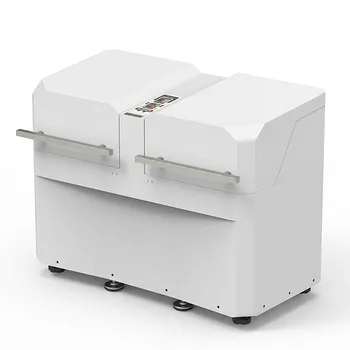
Dual Station Planetary Ball Mill 24L
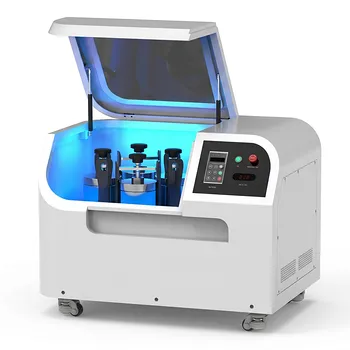
Planetary Ball Mill 12L

Nano High Energy Vibratory Ball Mill for Laboratory Sample Preparation
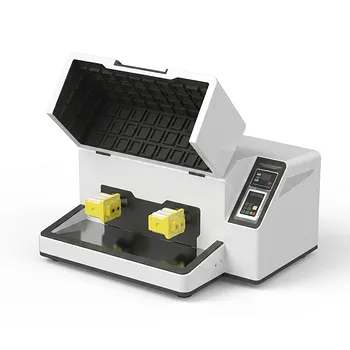
Multi-Platform Nanoscale High-Energy Vibratory Ball Mill
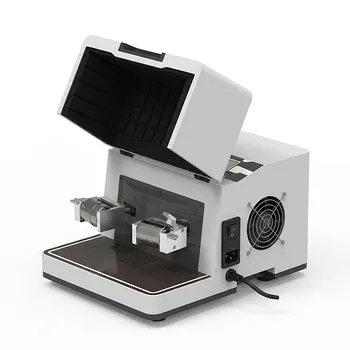
High Energy Hybrid Vibratory Ball Mill for Grinding Mixing and Cell Disruption