The Brittle Truth: Why Making PET Microplastics Demands Extremes, Not Effort
Sep 09, 2026
One Textile, Two Degrees, a Universe Apart
At room temperature, a polyester shirt is forgiving. You pull a thread, it stretches. You try to snap it, it deforms. This ductility is a marvel of polymer engineering—until the day a research team needs that fabric turned into a bucket of realistic microplastic particles.
The standard instinct is mechanical: grind it. But most grinders fail spectacularly. They don't shatter PET; they cook it, smear it, and change it. The sample that emerges from a conventional mill bears no relation to the fibrous shards that fleece jackets shed into wastewater. The morphology is wrong. The chemical signature is compromised. The entire experiment is built on a ghost.
This is not an instrument problem. It is a state of matter problem. And the solution is to take the material somewhere physics works differently.
The Glass Transition: A Thermal Cliff, Not a Gradual Slope
Polymers don't “get cold.” They fall off a cliff.
At the molecular level, PET consists of chains that slide past one another under stress. That sliding absorbs energy, creating the ductility we feel. Drop the temperature below a specific point—the glass transition temperature (Tg)—and those chains lock into a rigid, disordered glass. The material becomes brittle. It won't stretch. It will crack.
This is the psychological pivot of cryogenic grinding: you are not trying to break a fabric. You are trying to freeze a liquid into a temporary glass, then shatter it.
Why Liquid Nitrogen Changes the Game
Liquid nitrogen doesn't just “cool things.” It takes PET into a thermodynamic state where the rules of mechanical failure invert. At -196°C:
- The polymer's energy absorption capacity collapses
- Stress concentrates at flaws instead of distributing along chains
- Cracks propagate the way they do in glass, not dough
The machine isn't doing harder work. It's working on an entirely different material.
The Violence That Creates Realism
Once the material is embrittled, the grinder applies high-frequency impact and shear forces. This isn't abrasion. It's controlled, repeated fracture.
The irregular, sharp-edged fragments that result are not a processing flaw. They are the goal.
The Morphology Mandate
Environmental microplastics don't arrive as perfect spheres. They are jagged. They have high aspect ratios. They catch light in ways that matter for organism ingestion studies. A cryogenic high-capacity grinder produces exactly this morphology because:
- Fracture initiates at multiple points simultaneously
- No liquid phase forms to round edges
- The material cools faster than heat can build from impact
If the shape is wrong, the biological interaction model is wrong. Researchers aren't just buying a size distribution; they're buying fidelity to a real-world weathering process.
What Heat Steals From You
Conventional grinding generates enough frictional heat to cross the PET glass transition in seconds. At that point:
- Polymer chains regain mobility
- Surfaces smear instead of fracturing
- Localized melting creates oxidized species that were never in the original polymer
The chemical denaturation is silent but catastrophic. A researcher performing artificial aging experiments needs to know that every carbonyl group she measures came from environmental exposure, not from the sample preparation step. Cryogenic grinding, because the liquid nitrogen immediately absorbs heat, preserves the polymer's starting chemical “purity” with an almost archaeological fidelity.
A Note on Preservation Psychology
There's a mental model here borrowed from surgery: you don't want the trauma of access to be bigger than the disease you're studying. A poor grinding process is an iatrogenic injury to your sample. You cure the dryness by giving the polymer stiffness.
The Subtle Trade-offs Nobody Discusses
A Morgan Housel truth applies: there is no perfect solution, only intelligent trade-offs. Cryogenic grinding asks for things:
| Trade-off | What It Means in Practice | When It Still Wins |
|---|---|---|
| Liquid Nitrogen Logistics | Continuous supply, storage dewars, venting precautions | When chemical or morphological fidelity is non-negotiable |
| Energy Input | High-frequency impact systems draw significant power to break glass-hard solids | When targeting the critical 63–200μm environmental range |
| Material Suitability | Not all polymers embrittle identically; highly plasticized formulas may still yield | When the research question is PET, PE, or similar semicrystalline materials |
| Cost per Gram | Cryogen consumption and high-wear impact components increase per-sample cost over dry milling | When publishing in journals that will reject thermally degraded reference particles |
The decision isn't “is it expensive?” It's “is the absence of this precision more expensive in terms of retracted conclusions?”
Designing the Chain of Integrity: From Crusher to Pellet
An often-overlooked truth in materials research is that the grinder never exists in isolation. The cryogenic step is a point on a continuum:
- Initial size reduction via jaw crushers handles bulk fabric or post-consumer waste
- Embrittlement and impact pulverization in a liquid nitrogen-immersed mill produces the target fiber size
- Sieve analysis on vibratory or air-jet shakers verifies the 63–200μm distribution
- Pellet pressing into uniform discs for XRF or FTIR analysis
Every piece of equipment that touches the sample between bag and instrument adds or subtracts meaning. That's why a complete laboratory sample preparation ecosystem—cryogenic grinders integrated with mills, sieve shakers, and hydraulic presses—is not a catalog convenience. It's a chain of custody for physical truth.
When Precision Is Also a Business Case
For contract laboratories and testing facilities, the argument translates elegantly:
- Method defensibility reduces client disputes. A cryogenically prepared microplastic sample carries the paper trail of temperature, time, and impact frequency.
- Instrument uptime matters. Purpose-built cold-cycle components resist the fatigue that turns consumer-grade equipment into scrap after 50 thermal cycles.
- Certification pathways become shorter when the sample preparation standard can be documented as not introducing thermal artifacts.
Distributors and wholesalers take note: the trend in environmental testing and polymer science is toward method-driven purchasing. Researchers and labs buy the protocol, not just the machine. A supplier who can offer the crusher, the cryogenic mill, the sieve shaker, and the XRF pellet press as a documented workflow captures more value than one selling isolated boxes.
The Engineer's Romance
There is a quiet beauty in watching a flexible, room-temperature swatch of PET transform into a brittle solid under nitrogen vapor, then fracture into a hundred-thousand sharp pieces in half a second. It is the same force that forms frost on a window—but harnessed to replicate one of the 21st century's most vexing pollution fingerprints.
The high-capacity cryogenic grinder is not a brute-force tool. It's a device that uses physics to preserve chemistry. It works with the glass transition, not against it. And in a world where microplastic research is increasingly under regulatory and public scrutiny, the difference between a sample that is nearly right and one that is thermally adulterated is the difference between a finding that stands and a finding that's retracted.
For teams that need to build their own microplastic reference libraries—whether for toxicity assays, aging studies, or filtration development—the starting point is always the same: freeze it, don't heat it. Then grind with the kind of force that respects the cold.
Quick Links
Suggested Products
Small Liquid Nitrogen Cryogenic Grinder for Ultrafine Grinding of Heat-Sensitive Materials in Laboratories Laboratory Cryogenic Grinder Liquid Nitrogen Low Temperature Ultrafine Grinding Cryogenic Liquid Nitrogen Grinder for DNA Analysis and Polymer Pulverization with Automatic Cooling and Electromagnetic Impact Technology Cryogenic Liquid Nitrogen Grinder for Ultrafine Heat-Sensitive Powder Processing Liquid Nitrogen Cryogenic Grinder for Plastic and Heat-Sensitive MaterialsFurther Reading
At 77 Kelvin, a Polymer Tells the Truth: The Cryogenic Key to Degradation Studies The Brittle Truth: Why Extreme Cold Delivers the Most Honest Zinc Sulfide Powders Engineered Brittleness: Why Cryogenic Grinding Decides Your Activated Carbon’s Future The Surfactant That Teaches Powder Not to Stick: Stearic Acid and the Psychology of Cryogenic Milling Frozen Defects, Unbreakable Metal: The Cryogenic Secret to Nanostructured Titanium Powder
PowderPreparation
Last updated on May 14, 2026
Related Products
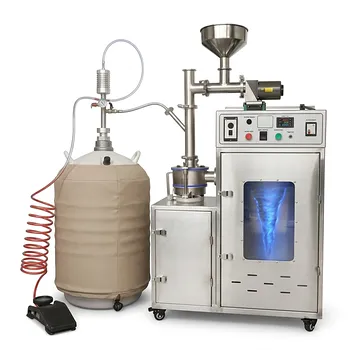
Small Liquid Nitrogen Cryogenic Grinder for Ultrafine Grinding of Heat-Sensitive Materials in Laboratories
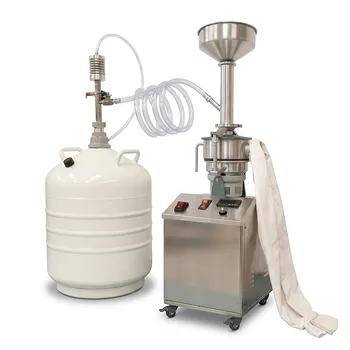
Laboratory Cryogenic Grinder Liquid Nitrogen Low Temperature Ultrafine Grinding
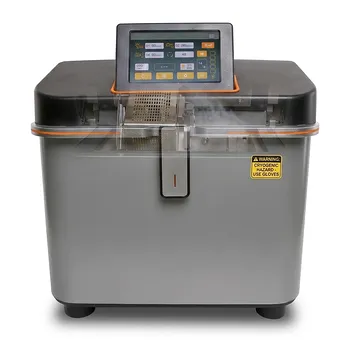
Cryogenic Liquid Nitrogen Grinder for DNA Analysis and Polymer Pulverization with Automatic Cooling and Electromagnetic Impact Technology
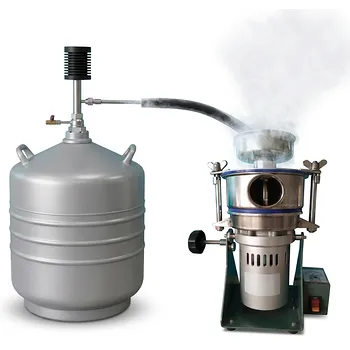
Cryogenic Liquid Nitrogen Grinder for Ultrafine Heat-Sensitive Powder Processing
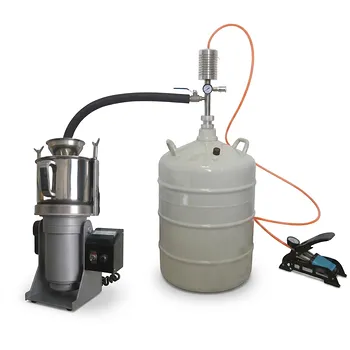
Liquid Nitrogen Cryogenic Grinder for Plastic and Heat-Sensitive Materials
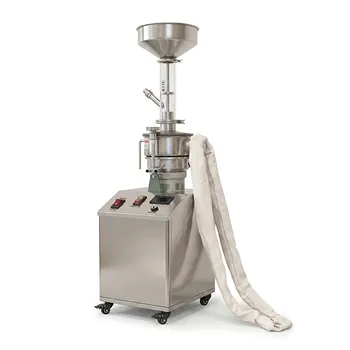
Small Liquid Nitrogen Cryogenic Grinder for Plastic and Heat-Sensitive Material Sample Preparation
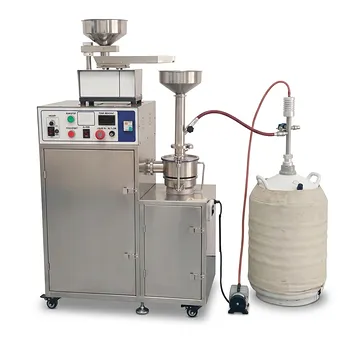
Small Liquid Nitrogen Cryogenic Grinder with Vibratory Feeder for Laboratory Sample Preparation
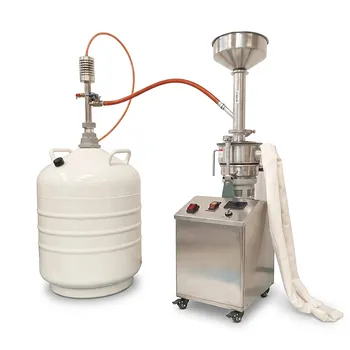
Laboratory Liquid Nitrogen Cryogenic Grinder for Polymer and Elastomer Materials
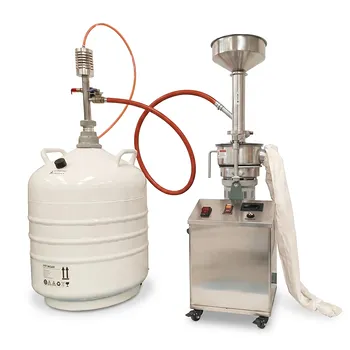
Laboratory Liquid Nitrogen Cryogenic Grinder Polymer Sample Preparation Pulverizer
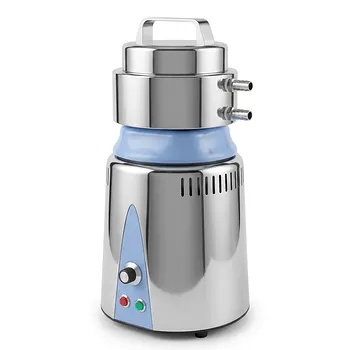
Low Temperature Laboratory Knife Mill Cryogenic Sample Grinder Material Science Powder Processing
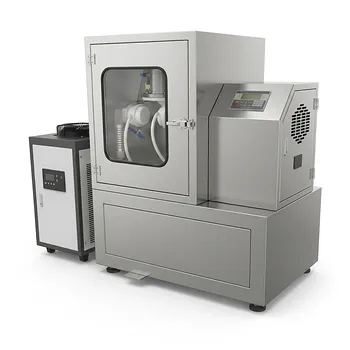
Vibratory Ultra-Low Temperature Ultrafine Grinder for Cryogenic Powder Processing
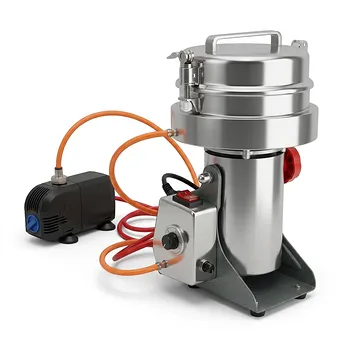
Water Cooled High Speed Grinder with Cryogenic Option for Laboratory Sample Preparation
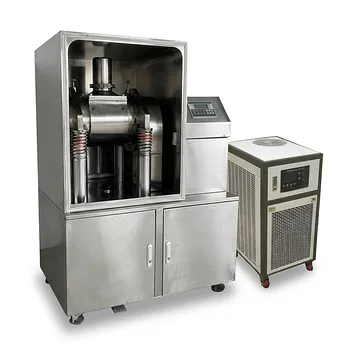
Water Cooled Cryogenic Ultra Fine Cell Wall Breaking Mill
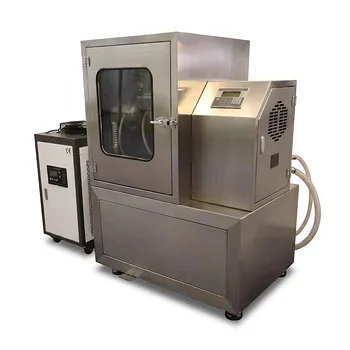
Ultra-Low Temperature Vibratory Mill for Ultrafine Grinding
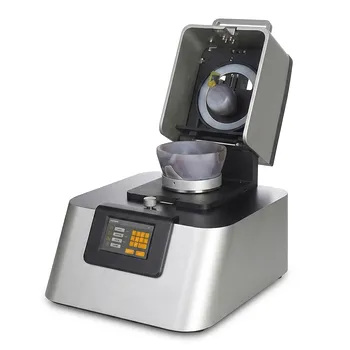
Laboratory Mortar Grinder for Sample Preparation and Cryogenic Powder Homogenization
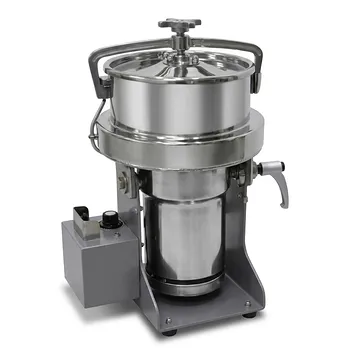
500g Capacity Water Cooled Low Temperature Grinder with Variable Speed and Safety Cover
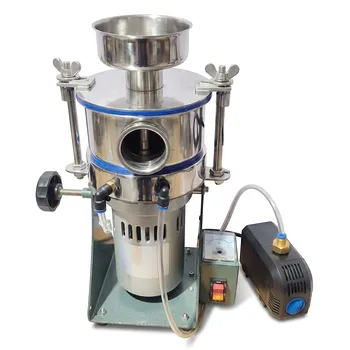
Water Cooled Airflow Ultra Fine Grinder for Low Temperature Material Processing
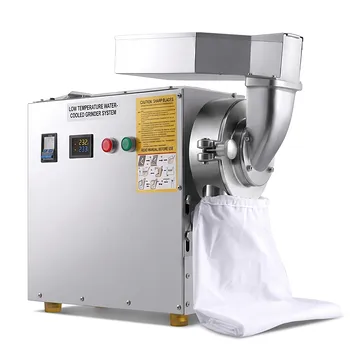
Low Temperature Water Cooled Continuous Feed Grinder Two Stage Coarse and Fine Grinding System
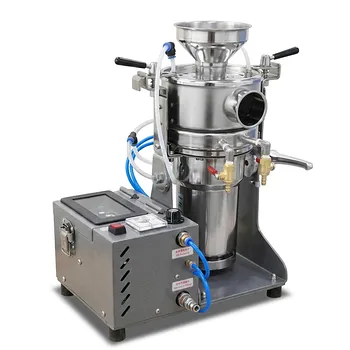
Water Cooled Pulse Jet Ultrafine Grinder