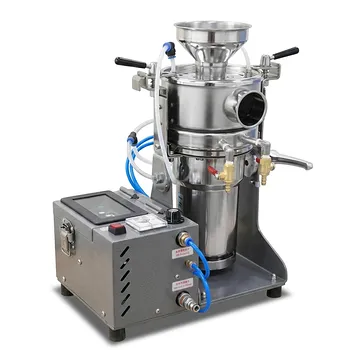
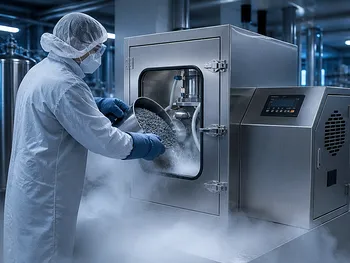
The Brittle Truth: Why Extreme Cold Delivers the Most Honest Zinc Sulfide Powders
Sep 19, 2026
The Problem with Forcing Fragility
Every material scientist knows the frustration. You set out to grind Zinc Sulfide to an ultra-fine powder, and the material seems to fight back. It warms up, softens, sticks to the media, and agglomerates into a mess.
You were aiming for a precise, nanoscale powder. Instead, you got a thermally damaged compromise.
The root issue isn't your mill. It's physics. The very act of grinding generates frictional heat—enough heat to fundamentally alter ZnS right at the moment of fracture. The material "heals" as fast as you can damage it.
This is the silent bottleneck in powder processing. But there is a way to bypass it entirely by fundamentally changing the material's mood before you even touch it.
The Psychology of a Material Under Stress
Room Temperature: A State of Accommodation
Under ambient conditions, ZnS exhibits a degree of ductility. Strike it with a ball mill, and it absorbs some of that energy. It plastically deforms. It bends before it breaks. This is a material negotiating with the force applied to it.
And that negotiation generates heat. Heat drives thermal recovery. Dislocations—the tiny structural defects you are trying to multiply—annihilate each other before they can accumulate.
The result is a coarse powder. Microns, not nanometers. You worked hard, but the material worked harder to maintain its integrity.
-196°C: A State of Radical Honesty
Immerse ZnS in liquid nitrogen, and the negotiation ends. At cryogenic temperatures, the material loses its ductility completely. It becomes brutally brittle.
There is no bending. There is no softening. Fracture becomes the only available response to impact.
This is the core psychological shift that a cryogenic grinder exploits. It doesn't simply chill the sample; it transforms its mechanical personality. High-frequency impacts now fragment the lattice with startling efficiency because there is zero energy wasted on plastic flow.
Why Your Conventional Mill is Betraying You
The Trap of Thermal Recovery
Think of a standard planetary ball mill. It’s a furnace disguised as a grinder. The repeated impacts trap heat inside the jar.
For a material like ZnS, this heat triggers dislocation annihilation. The crystal lattice repairs itself. You grind for hours, watching the clock, but the particle size curve flattens. You’ve hit a floor defined by physics, not by effort.
You can’t outwork thermal recovery with more time. You have to remove the heat.
The Agglomeration Paradox
There is a second, more insidious betrayal. Conventional grinding doesn't just stop refining—it often reverses it.
The surface of freshly fractured ZnS is chemically active. Frictional heat provides the activation energy for secondary agglomeration. Particles weld themselves together into larger clusters. You are simultaneously breaking the material down, and watching it rebuild itself into something coarser.
A cryogenic grinder sidesteps this paradox entirely. The immediate heat removal quenches the particle surfaces, keeping them kinetically passive. What you break, stays broken.
How Cryogenics Changes the Scale of Failure
A Nanoscale Harvest of Defects
The magic of the liquid nitrogen cryogenic grinder lies in dislocation density. At room temperature, dislocations are mobile. They glide, they climb, and they vanish at free surfaces. The crystal purges its defects as fast as you create them.
At -196°C, this mobility freezes solid.
Every impact creates a storm of dislocations that remain locked in the lattice. The density skyrockets, creating a cellular substructure within each grain. Eventually, the strain is so severe that the grain simply shatters into fragments.
This isn't grinding. It's a controlled, low-temperature explosion from the inside out. And it reliably takes ZnS below the 100-nanometer threshold where conventional mills plateau.
A Narrower Distribution of Reality
Ambient grinding is a messy statistical event. Some particles get hit ten times; others get hit once. The heat distorts the fracture mechanics.
Cryogenic embrittlement standardizes the experience. Every particle, regardless of its position in the bowl, is below its brittle-ductile transition temperature. The fracture behavior becomes uniform. The output reflects this precision: a significantly narrower particle size distribution with a higher specific surface area.
A Sanctuary for Chemistry
The Inert Blanket
There is an added gift of working at -196°C with liquid nitrogen. The process generates a self-purifying atmosphere. The boiling nitrogen continuously displaces oxygen, wrapping your ZnS in an inert cocoon.
Thermal oxidation? Suppressed. You preserve the exact stoichiometry you started with.
The Unnecessary Additive
This inert, cold environment solves a secondary problem. Many conventional protocols require process control agents (PCAs)—surfactants, stearic acid—to prevent cold welding and agglomeration. These additives compromise the purity of your final powder, introducing organic contamination that must be burned off later.
In the cryogenic regime, the material is too brittle to weld. The inert gas prevents oxidation. Suddenly, you don’t need the additive. You get a chemically pristine surface straight from the mill.
The Cost of This Precision
Nothing comes for free. Acknowledging the shadow side of cryogenic milling is an engineering responsibility.
The Obvious Cost: Liquid Nitrogen
The LN2 consumption is continuous. It requires vacuum-insulated lines and safety protocols. It’s an operational expense you don't have with a standard lab press or a simple ball mill.
If you need 2-micron powder by the ton, this expense is hard to justify.
The Hidden Risk: Condensation
You must respect the cold. When the milling cycle ends, you have a batch of nanoscale ZnS sitting at -50°C or lower. Remove it immediately into a humid lab, and it will act as a powerful desiccant. Moisture condenses aggressively on the ultra-fine surfaces, potentially forming hydroxides that ruin your work.
A controlled purge or a vacuum transfer becomes part of the process protocol.
Choosing Your Path: A Decision Logic
Not every project needs the cryogenic hammer. The choice depends entirely on what you value most.
If your goal is absolute minimum particle size… – Go cryogenic. The sub-100nm domain belongs to the brittle, cold state.
If your goal is maximum optical or electronic purity… – Go cryogenic. The inert, PCA-free environment safeguards your chemistry.
If your material is sticky, waxy, or softens under heat… – Go cryogenic. Freeze the ductility out, and watch it flow like fine sand.
If your goal is high-throughput, low-cost coarse powder… – Stay ambient. The thermodynamic compromise is an acceptable trade-off at the micron scale.
A Side-by-Side View of the Outcome
| Feature | Cryogenic Grinding (-196°C) | Conventional Grinding (Ambient) |
|---|---|---|
| Particle Size Regime | Nanoscale (<100nm) | Micron-scale |
| Dislocation Behavior | Locked; massive accumulation | Mobile; thermal recovery and annihilation |
| Chemical Purity | High (inert, no PCAs required) | Compromised (oxidation risk, PCA residues) |
| Material Disposition | Radically brittle; fractures cleanly | Ductile/sticky; clogs media and screens |
| Energy Utilization | Fracture-only, high efficiency | Lost to heat and plastic deformation |
The Engineering Romance of the Cold
There is something deeply satisfying about using a liquid nitrogen cryogenic grinder. It strips a material back to its essentials. The grain boundaries, the crystal lattice, the thermal vibrations—all frozen solid, waiting for a single, clean impulse to fall into a new, finer arrangement.
You aren't fighting the heat anymore. You aren't negotiating with plasticity. You've stepped outside the thermal regime where zinc sulfide can lie to you—where it can gum up, oxidize, and agglomerate.
What you get is a powder that reflects the true resolution of your process. Nothing more. Nothing less.
Finding the right configuration for brittle, temperature-sensitive materials requires matching your throughput needs to the right milling platform. Whether you are exploring sub-100nm ZnS purity or scaling up, precise equipment defines the outcome. Contact Our Experts
Quick Links
Suggested Products
Small Liquid Nitrogen Cryogenic Grinder for Ultrafine Grinding of Heat-Sensitive Materials in Laboratories Cryogenic Liquid Nitrogen Grinder for DNA Analysis and Polymer Pulverization with Automatic Cooling and Electromagnetic Impact Technology Cryogenic Liquid Nitrogen Grinder for Ultrafine Heat-Sensitive Powder Processing Laboratory Cryogenic Grinder Liquid Nitrogen Low Temperature Ultrafine Grinding Liquid Nitrogen Cryogenic Grinder for Plastic and Heat-Sensitive MaterialsFurther Reading
At 77 Kelvin, a Polymer Tells the Truth: The Cryogenic Key to Degradation Studies The Brittle Truth: Why Making PET Microplastics Demands Extremes, Not Effort Engineered Brittleness: Why Cryogenic Grinding Decides Your Activated Carbon’s Future The Surfactant That Teaches Powder Not to Stick: Stearic Acid and the Psychology of Cryogenic Milling Frozen Defects, Unbreakable Metal: The Cryogenic Secret to Nanostructured Titanium Powder
PowderPreparation
Last updated on May 14, 2026
Related Products
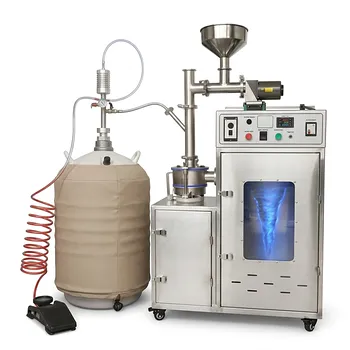
Small Liquid Nitrogen Cryogenic Grinder for Ultrafine Grinding of Heat-Sensitive Materials in Laboratories
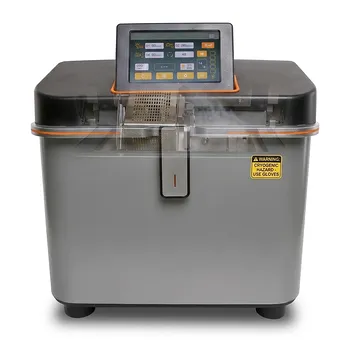
Cryogenic Liquid Nitrogen Grinder for DNA Analysis and Polymer Pulverization with Automatic Cooling and Electromagnetic Impact Technology
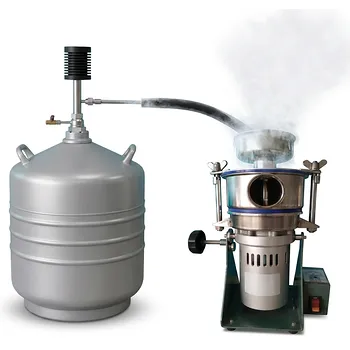
Cryogenic Liquid Nitrogen Grinder for Ultrafine Heat-Sensitive Powder Processing
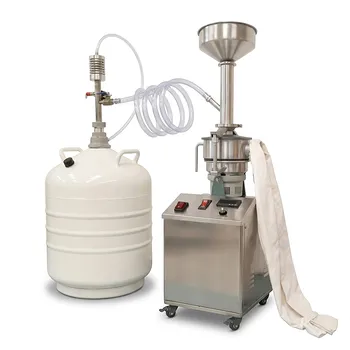
Laboratory Cryogenic Grinder Liquid Nitrogen Low Temperature Ultrafine Grinding
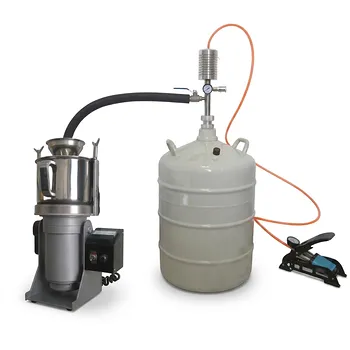
Liquid Nitrogen Cryogenic Grinder for Plastic and Heat-Sensitive Materials
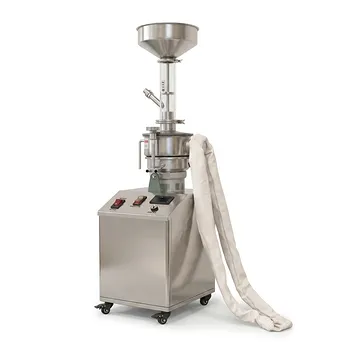
Small Liquid Nitrogen Cryogenic Grinder for Plastic and Heat-Sensitive Material Sample Preparation
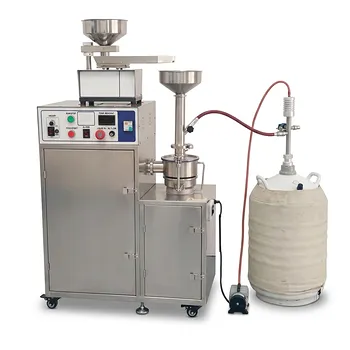
Small Liquid Nitrogen Cryogenic Grinder with Vibratory Feeder for Laboratory Sample Preparation
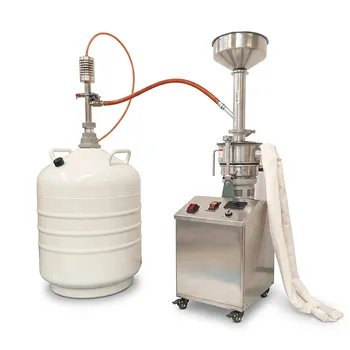
Laboratory Liquid Nitrogen Cryogenic Grinder for Polymer and Elastomer Materials
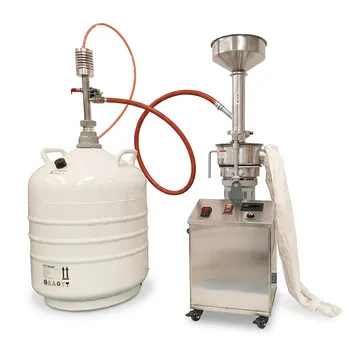
Laboratory Liquid Nitrogen Cryogenic Grinder Polymer Sample Preparation Pulverizer
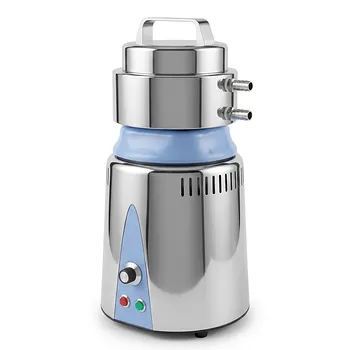
Low Temperature Laboratory Knife Mill Cryogenic Sample Grinder Material Science Powder Processing
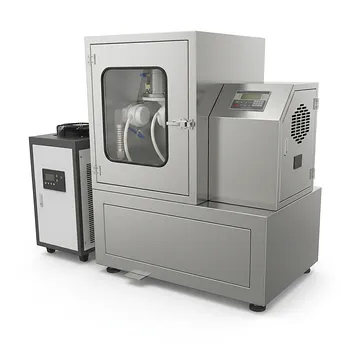
Vibratory Ultra-Low Temperature Ultrafine Grinder for Cryogenic Powder Processing
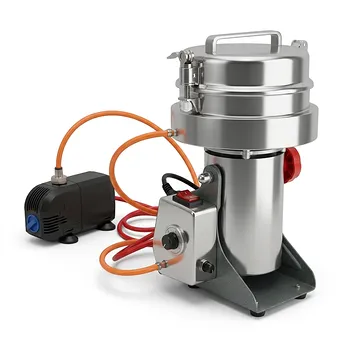
Water Cooled High Speed Grinder with Cryogenic Option for Laboratory Sample Preparation
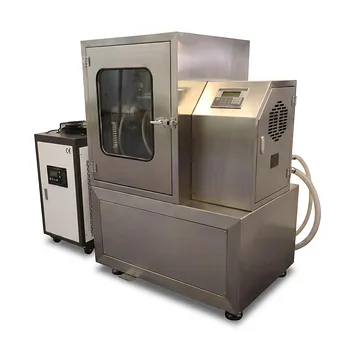
Ultra-Low Temperature Vibratory Mill for Ultrafine Grinding
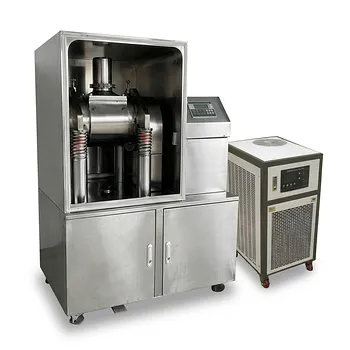
Water Cooled Cryogenic Ultra Fine Cell Wall Breaking Mill
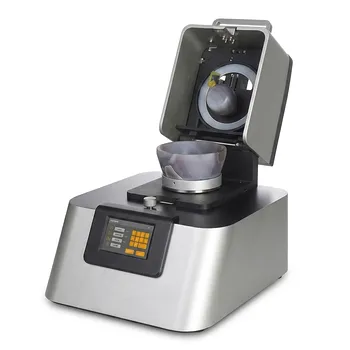
Laboratory Mortar Grinder for Sample Preparation and Cryogenic Powder Homogenization
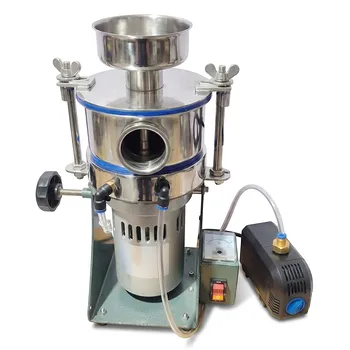
Water Cooled Airflow Ultra Fine Grinder for Low Temperature Material Processing
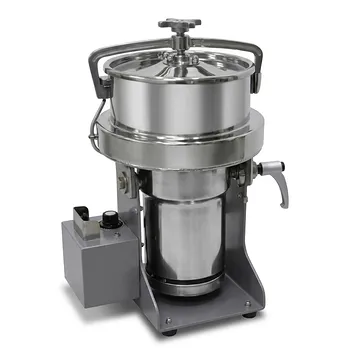
500g Capacity Water Cooled Low Temperature Grinder with Variable Speed and Safety Cover
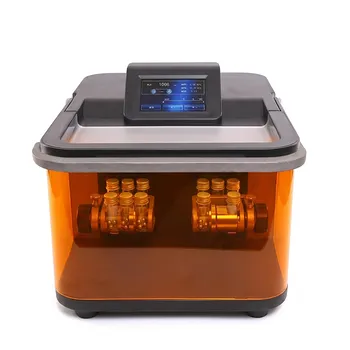
High Throughput Micro Ball Mill for Cryogenic Grinding and Laboratory Cell Disruption
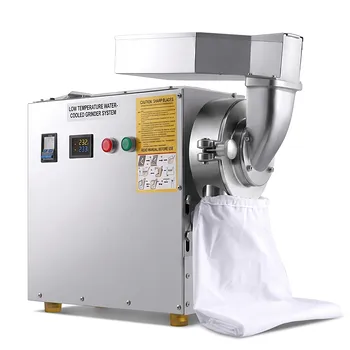
Low Temperature Water Cooled Continuous Feed Grinder Two Stage Coarse and Fine Grinding System