At 77 Kelvin, a Polymer Tells the Truth: The Cryogenic Key to Degradation Studies
Sep 23, 2026
The Powder That Hid a Lie
The polymer looked perfect—a fine, white powder, exactly what the protocol demanded. But the ESR spectrometer kept showing a radical signal that didn’t match the degradation pathway the lab had studied for eighteen months.
What the researcher didn’t know was that the grinding step had already rewritten the sample’s chemical story. The heat of a standard mill had broken backbone bonds, spawned new radicals, and partially melted the amorphous phase. The powder wasn’t a blank slate. It was a crime scene where the evidence had been trampled.
This happens more often than polymer scientists admit. We calibrate our instruments to the angstrom, validate our columns and detectors, and then hand our most sensitive samples to a process that can spike their temperature past the melting point in seconds.
The grinder becomes an unindicted co-author on the data.
The Hidden Thermodynamics of a “Simple” Size Reduction
The Problem Isn’t the Force—It’s the Heat
Polymers are thermal insulators. When mechanical stress fractures a polymer particle, the energy doesn’t just cleave chains. A large fraction converts immediately to frictional heat at the crack tip, and because polymers conduct heat poorly, that energy stays local. Temperatures at the point of fracture can flash high enough to melt polyethylene or initiate oxidation before the particle even looks different to the eye.
Two things happen simultaneously:
- Backbone scission creates highly reactive mechanoradicals.
- Localized melting lets those radicals move, recombine, or react with oxygen.
By the time you transfer the powder to an analyzer, you’re not measuring the degradation you intended to study. You’re measuring the aftermath of a miniature thermal event you created in the prep room.
Viscoelasticity Makes It Worse
Room-temperature polymers are tough. They squish, stretch, and absorb impact instead of fracturing cleanly. A rotor mill ends up smearing the material across grinding tools rather than breaking it. The smearing generates even more heat. The sample heats, softens further, and often gums the entire mechanism.
This is not a trivial inconvenience. Gumming changes the effective residence time of every particle still in the chamber, creating a distribution of thermal histories so messy that no post-hoc correction can untangle it.
What Happens When You Remove the Heat
Liquid nitrogen changes the physics of fracture entirely by dropping the polymer below its glass transition temperature. At 77 K, a material that was viscoelastic and tough becomes glassy and brittle. It no longer deforms; it shatters.
Freezing Radicals in Place
Mechanoradicals form at the instant of bond cleavage. At room temperature, they’re mobile. They abstract hydrogen, transfer to adjacent chains, and initiate cascades that look like degradation signatures but aren’t.
The cold of a liquid-nitrogen bath immobilizes these species almost instantly—a literal radical quench at the molecular scale. For researchers running Electron Paramagnetic Resonance (ESR) spectroscopy, this is the difference between seeing the primary radical population and studying a secondary soup.
When you need to identify the earliest species in a degradation cascade, 77 K is not optional. It is the only temperature that holds them still long enough to see.
Stopping Thermal History Erasure
A polymer’s thermal history determines its crystallinity, relaxation state, and internal stress distribution. These aren’t just materials-science footnotes; they control degradation kinetics. Grind the sample hot, and you partially anneal it. Some of the amorphous chains relax; some crystallites grow. The very process of reducing particle size can change the material’s thermodynamic state.
Cryogenic grinding avoids this trap because the brittle fracture occurs at a temperature so low that molecular mobility is effectively zero. The polymer’s physical memory stays intact. The powder that enters your DSC pan represents the material as it actually existed—not a thermally annealed version of it.
The Data Quality That Emerges from Cold Fracture
Uniform Particles Aren’t a Luxury
When you study microbial assimilation of microplastics or quantize drug-release kinetics from a degradable matrix, particle size distribution is a parameter, not a variable you want uncontrolled. Brittle fracture at cryogenic temperatures produces sharp edges and narrow size distributions—micron-scale powders that flow freely and wet uniformly.
This uniformity shrinks diffusion distances inside particles, which directly reduces the time needed to reach equilibrium in thermal analysis. A 2-micron particle with a narrow distribution yields a faster, more reproducible DSC run than a 20-micron particle with a tail extending to 100 microns. The math is simple. Achieving it is not—unless the grinding mode is cold.
Crystallinity That Survives the Prep Room
X-ray diffraction and DSC can spot subtle changes in crystalline order. A room-temperature mill can create enough localized stress to shift the ratio of amorphous to crystalline content, or even induce a polymorphic transition. These changes are small in absolute terms but large enough to invalidate a degradation study designed to detect sub-5% shifts.
Cryogenic processing preserves the original crystalline lattice because fracture occurs before plastic deformation accumulates. The sample you analyze retains the same phase composition it had before it met the mill.
A Reference Table for the Experimental Skeptic
| Feature | Mechanism (At 77 K) | What It Protects |
|---|---|---|
| Radical quenching | Immobilizes mechanoradicals at formation | ESR fingerprints, primary species identification |
| Embrittlement | Drops polymer below glass transition | Clean fracture, no smear or gumming |
| Thermal neutrality | Removes frictional heat instantly | No accidental oxidation or melt-bonding |
| Size uniformity | High-frequency brittle impact | Consistent micron-scale powders for DSC/GC-MS |
| Structural memory | No plastic flow or annealing | Preserves original crystallinity and morphology |
The Psychology of Ignoring Sample Preparation
One of the most underappreciated truths in polymer degradation research is that scientists systematically overtrust their instruments and underestimate their prep steps. An LC-MS/MS or a high-field NMR spectrometer commands respect; a grinder does not.
This is a cognitive bias with expensive consequences. Researchers will spend thousands of dollars to boost signal-to-noise by five percent through better columns or cryoprobes, but accept a grinding process that introduces uncontrolled thermo-mechanical noise an order of magnitude larger.
Cost is the usual justification. Liquid nitrogen isn’t free. Cryogenic mills have higher capital and operational costs. Safety around cryogens requires training and PPE. These are real trade-offs, and acknowledging them is the honest starting point for any decision.
But the cost of not cooling the sample is hidden: experiments that fail to reproduce, degradation pathways that look different in every lab, and months of work spent chasing ghosts that were only ever artifacts of a hot mill.
When Cryogenic Grinding Is the Default Choice
Your analytical goal determines whether the operational cost of liquid nitrogen is an investment or an extravagance. Here is a decision logic that respects both the budget and the science:
- Primary goal is radical identification (ESR): Cryogenic grinding is non-negotiable. Without a 77 K quench, the initial radical population will be lost to secondary reactions before you ever record a spectrum.
- Primary goal is microplastic standardization: Use liquid nitrogen to prevent melt-bonding of polyolefins and to achieve narrow particle-size bins that enable repeatable ecotoxicity experiments.
- Primary goal is thermal analysis (DSC/GC-MS): Cryogenic methods ensure the grinding step does not alter crystallinity or introduce a premature thermal history—allowing your programmed heating ramp to reflect only the degradation you designed.
- Primary goal is mechanical recycling feasibility: Here the calculation may tilt toward room-temperature grinding if you’re intentionally simulating process-induced degradation. But even then, you need a baseline produced under cold conditions to know what the starting material truly looks like.
The Equipment That Makes This Possible, and What Surrounds It
A cryogenic grinder that can hold a 77 K environment during impact is not a commodity. It requires thermal insulation matched to the mill’s energy input, materials capable of staying ductile at cryogenic temperatures, and safety systems that prevent oxygen condensation and manage nitrogen boil-off.
Beyond the grinder, polymer degradation studies rarely stop at size reduction. The workflow tends to spiral outward:
- Pre-crushing of larger polymer parts with jaw or roll crushers before cryogenic milling.
- Secondary milling in planetary ball mills or air-jet mills when ultra-fine or oxide-free powders are required.
- Classification through vibratory or air-jet sieve shakers to isolate precise particle size fractions for specific analytical protocols.
- Powder compaction into pellets for XRF or spectroscopy, using hydraulic presses that can reproduce density without introducing shear artifacts.
- Isostatic pressing (cold or warm) when researchers need homogeneously compacted polymer specimens for mechanical or barrier-property testing.
Designing a cryogenic sample-prep workflow means thinking not just about one piece of equipment but about how every subsequent step respects the cold truth you’ve preserved in the powder. A perfect grind undone by a hot-pressing step gambles away the very integrity you cooled the sample to protect.
The Truth Freezes at 77 K
A polymer that enters the analytical instrument still carrying the frozen signature of its original state is a rare thing—and a precious one. It lets you separate what the environment did from what your sample preparation did. It turns degradation studies from educated guesswork into controlled experiments.
The liquid nitrogen in a cryogenic grinder is not merely a consumable. It is a statement that the data matter enough to be protected at every stage, starting long before the first detector switches on.
To explore a cryogenic grinding configuration matched to your specific polymer system—and to see how it integrates with crushers, air-jet mills, sieve shakers, or hydraulic presses that complete your sample preparation chain—Contact Our Experts.
Quick Links
Suggested Products
Liquid Nitrogen Cryogenic Grinder for Plastic and Heat-Sensitive Materials Small Liquid Nitrogen Cryogenic Grinder for Ultrafine Grinding of Heat-Sensitive Materials in Laboratories Cryogenic Liquid Nitrogen Grinder for DNA Analysis and Polymer Pulverization with Automatic Cooling and Electromagnetic Impact Technology Cryogenic Liquid Nitrogen Grinder for Ultrafine Heat-Sensitive Powder Processing Small Liquid Nitrogen Cryogenic Grinder with Vibratory Feeder for Laboratory Sample PreparationFurther Reading
The Brittle Truth: Why Extreme Cold Delivers the Most Honest Zinc Sulfide Powders The Brittle Truth: Why Making PET Microplastics Demands Extremes, Not Effort Engineered Brittleness: Why Cryogenic Grinding Decides Your Activated Carbon’s Future Frozen Defects, Unbreakable Metal: The Cryogenic Secret to Nanostructured Titanium Powder
PowderPreparation
Last updated on May 14, 2026
Related Products
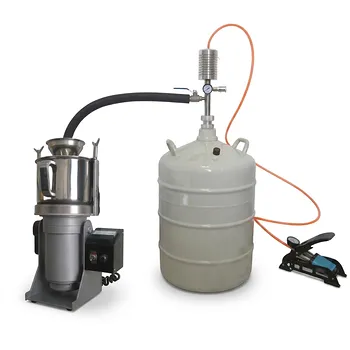
Liquid Nitrogen Cryogenic Grinder for Plastic and Heat-Sensitive Materials
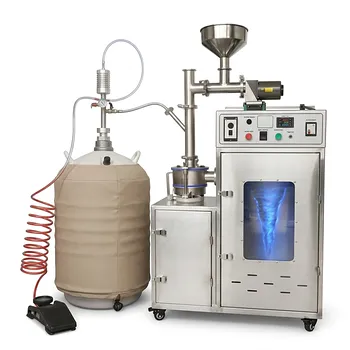
Small Liquid Nitrogen Cryogenic Grinder for Ultrafine Grinding of Heat-Sensitive Materials in Laboratories
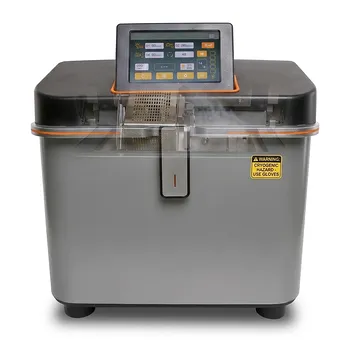
Cryogenic Liquid Nitrogen Grinder for DNA Analysis and Polymer Pulverization with Automatic Cooling and Electromagnetic Impact Technology
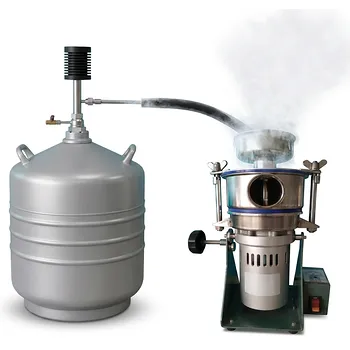
Cryogenic Liquid Nitrogen Grinder for Ultrafine Heat-Sensitive Powder Processing
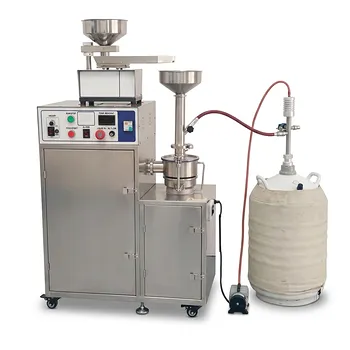
Small Liquid Nitrogen Cryogenic Grinder with Vibratory Feeder for Laboratory Sample Preparation
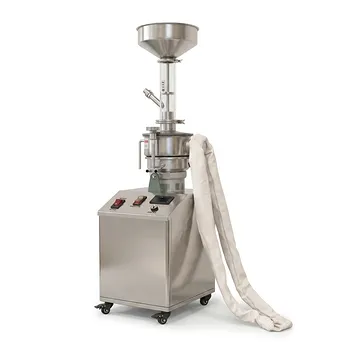
Small Liquid Nitrogen Cryogenic Grinder for Plastic and Heat-Sensitive Material Sample Preparation
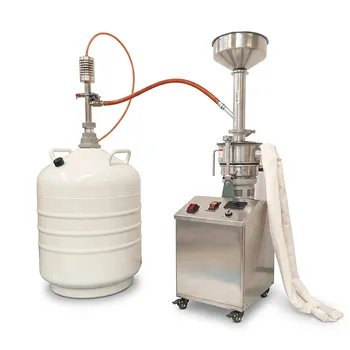
Laboratory Liquid Nitrogen Cryogenic Grinder for Polymer and Elastomer Materials
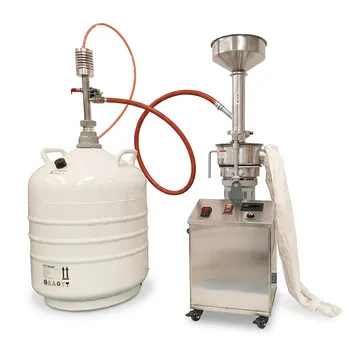
Laboratory Liquid Nitrogen Cryogenic Grinder Polymer Sample Preparation Pulverizer
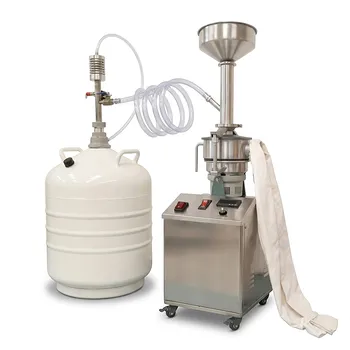
Laboratory Cryogenic Grinder Liquid Nitrogen Low Temperature Ultrafine Grinding
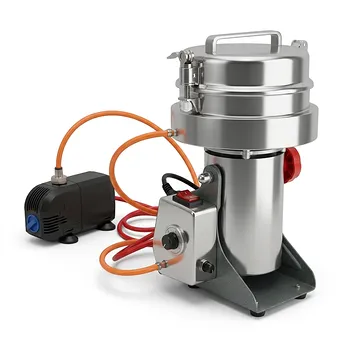
Water Cooled High Speed Grinder with Cryogenic Option for Laboratory Sample Preparation
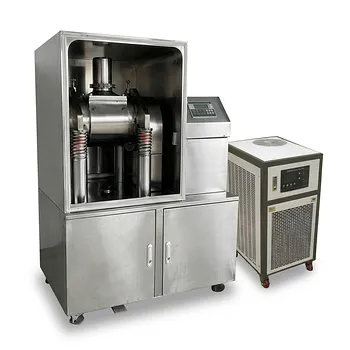
Water Cooled Cryogenic Ultra Fine Cell Wall Breaking Mill
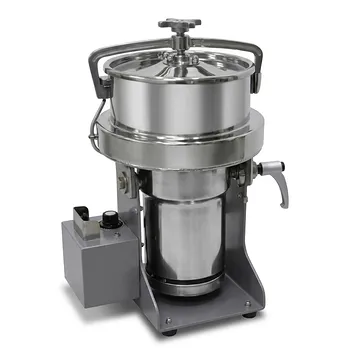
500g Capacity Water Cooled Low Temperature Grinder with Variable Speed and Safety Cover
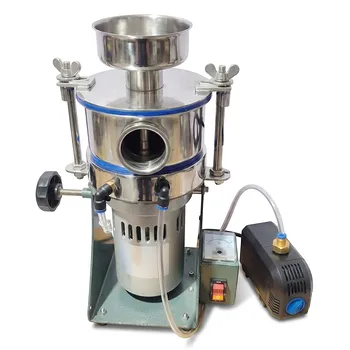
Water Cooled Airflow Ultra Fine Grinder for Low Temperature Material Processing
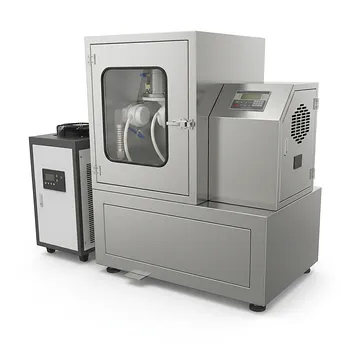
Vibratory Ultra-Low Temperature Ultrafine Grinder for Cryogenic Powder Processing
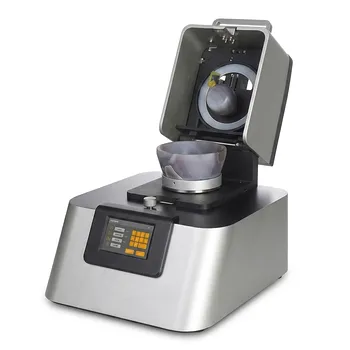
Laboratory Mortar Grinder for Sample Preparation and Cryogenic Powder Homogenization
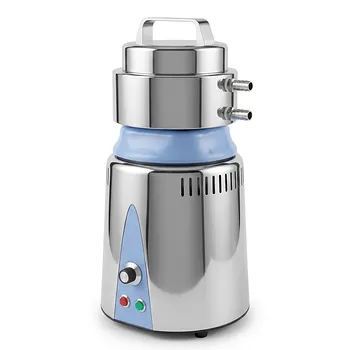
Low Temperature Laboratory Knife Mill Cryogenic Sample Grinder Material Science Powder Processing
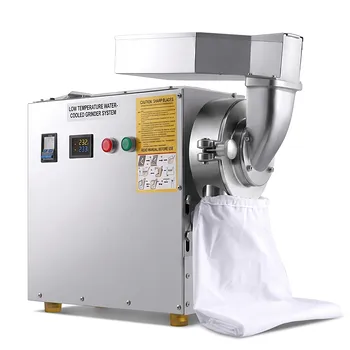
Low Temperature Water Cooled Continuous Feed Grinder Two Stage Coarse and Fine Grinding System
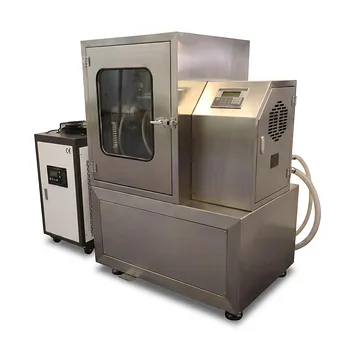
Ultra-Low Temperature Vibratory Mill for Ultrafine Grinding
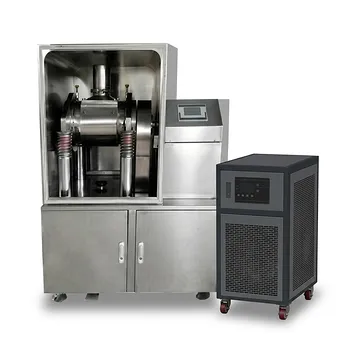
Ultra-low Temperature Vibratory Mill Ultrafine Grinder