Engineered Brittleness: Why Cryogenic Grinding Decides Your Activated Carbon’s Future
Aug 15, 2026
The Silence in the Mill
The lab technician stared at the elemental analyzer’s readout and saw a lie. The hydrogen content was too low. The oxygen-to-carbon ratio made no sense. The biomass—a carefully sourced batch of spent grain—should have produced tight, predictable pores after activation. Instead, the activated carbon came out sluggish, its surface area ordinary.
What failed wasn’t the activation protocol. It wasn’t the furnace profile, the steam rate, or the chemical bath. The failure occurred much earlier, inside a conventional mechanical mill where invisible friction heat had cooked off volatile organics before the real chemistry even began.
Most people obsess over the heat they add. Almost no one obsesses over the heat they accidentally create. That blind spot is where cryogenic grinding enters the story.
The Psychology of Heat Denial
Morgan Housel often writes that risk is what you don’t see. In material processing, the biggest risk is not the 800°C you program into a furnace; it’s the transient 100°C that flashes inside a mill’s grinding chamber for less than a second.
Our brains are wired to trust the setpoint. We design safety margins around controlled heat. But mechanical friction is a silent vandal. It destroys molecular integrity without leaving a scorch mark, making us believe our precursor is chemically faithful when it has already been quietly degraded.
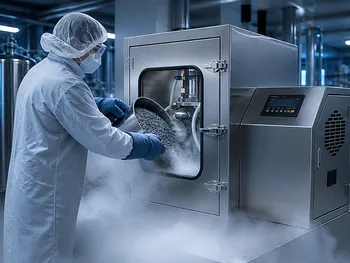
Cryogenic grinding is a behavioral intervention disguised as an engineering tool. It forces honesty onto the material by locking every molecule into place with -196°C liquid nitrogen. If you can’t trust your precursor, you can’t trust your activated carbon. The cold makes the precursor trustworthy.
Inducing the Brittle Point
Biomass is stubborn. Fibrous lignin, cellulose crystallites, and residual moisture turn ordinary grinding into a war of attrition where the material deforms, heats, and degrades rather than fracturing cleanly.
Liquid nitrogen changes the physics entirely.
When you cool a tough biological material below its ductile-to-brittle transition temperature (DBTT), it stops behaving like a sponge and starts behaving like glass. Apply a high-frequency impact, and it doesn’t bend—it shatters into clean, micron-scale fragments.
- No plastic deformation. No energy wasted on stretching or tearing.
- No thermal runaway. The liquid nitrogen continuously absorbs any heat as fast as it appears.
- No selective loss. Every particle, from 10 microns to 200 microns, carries the same chemical fingerprint as the original feedstock.
What emerges is not just “ground biomass.” It is a frozen snapshot of the material’s true chemistry, ready to be developed into activated carbon.
A Powder’s Geometry, Not Just Its Chemistry
A common mistake is to think of grinding as only a size-reduction step. In high-performance activated carbon, particle size is actually a geometry problem that dictates the entire activation timeline.
When a powder is coarse or irregular, heat and activating chemicals penetrate at uneven rates. The outside over-activates while the center remains inert. The resulting porous structure is a statistical mess.
Ultra-fine, uniformly distributed powder—exactly what cryogenic grinding delivers—flattens those gradients.
- The specific surface area climbs before activation even starts.
- Every grain receives the same thermal history.
- Pore size distributions tighten, creating adsorption characteristics that are reproducible batch after batch.
Engineers romanticize precision. There is something deeply elegant about a powder so consistent that the final pore network emerges not from luck, but from geometry.
Keeping Volatiles on a Short Leash
Biomass is chemically chatty. It contains low-molecular-weight volatiles, tars, and functional groups that define how carbonizes and activates. Lose them early, and you lose the recipe.
Conventional grinding lets these molecules escape. The local hotspots inside a ball mill or rotor mill are enough to vaporize what activation experts desperately want to keep.
Cryogenic grinding suppresses molecular mobility so thoroughly that volatiles remain trapped inside the solid matrix. The elemental analysis—CHNSO—actually reflects the real precursor. This isn’t just good science; it’s the difference between designing an activation protocol based on truth versus designing one based on thermal noise.
When you later heat that powder to 300°C, 500°C, and beyond, the reactions proceed from a chemically intact starting point. The activation chemistries happen the way the textbooks predict, not the way a damaged precursor distorts them.
The Activation Equation: Surface Area Is Destiny
Activated carbon lives or dies by its specific surface area. 500 m²/g versus 1500 m²/g isn’t a minor tuning; it’s two completely different materials.
Cryogenic grinding sets the stage for high surface area even before the kiln lights.
- More active sites. A finer powder exposes more edge-plane carbon precursors.
- Faster reaction kinetics. Improved solid-gas contact means activation completes sooner and more uniformly.
- Better composite integration. For engineers blending carbon into polymer membranes or electrodes, cryogenically ground powder disperses without agglomeration, preserving the electrical and mechanical benefits.
There’s a quiet, engineer’s romance in knowing that the ultimate porosity of your material was decided in a -196°C environment, hours before activation ever began. It’s not the heat that built the cathedral; it was the cold that carved the stone.
The Trade-Offs We Must Respect
I’m not here to tell you cryogenic grinding is perfect for everything. It isn’t.
Cost. Liquid nitrogen consumption is continuous. Cryogenic grinding adds an operational expense line that ambient milling avoids. If your biomass is already brittle and thermally stable, the extra cost is wasted.
Safety. -196°C demands respect. Cryogenic burns, oxygen displacement in confined spaces, and specialized Dewar logistics require trained operators and rigorous protocols. There is no romance in a safety incident.
Over-Engineering. Not all biomass needs a cryobath. Dry coconut shell or some hard woods grind fine at room temperature. The rule is simple: if heat damages your specific precursor, you pay for the cold. If it doesn’t, you don’t.
The art lies in matching the tool to the vulnerability. When the precursor is oily, fibrous, or volatile-rich—think spent brewer’s grain, citrus peel, or certain lignocellulosic residues—the cold becomes mandatory.
Matching the Tool to the Mission
How do you decide? Let your primary objective be the compass.
- If your goal is analytical truth: Use cryogenic grinding to ensure every gram sent to the elemental analyzer truly represents the raw biomass. No ghost peaks, no missing hydrogen. What you measure is what you have.
- If your goal is pore-performance: Prioritize achieving the smallest possible uniform particle size. The activation stage will reward you with a narrow pore size distribution and higher total surface area. This is non-negotiable for supercapacitor-grade carbon or precision adsorption media.
- If your goal is cost-efficiency: Reserve cryogenic grinding for the 20% of your feedstocks that are truly thermo-sensitive. Let ambient methods handle the dry, brittle bulk materials. A hybrid approach often returns the best overall economics.
The Complete Sample Preparation Ecosystem
Cryogenic grinding is a critical step—but it’s one node in a larger workflow. The quality of your activated carbon also depends on upstream crushing, downstream sieving, and the precision of any mixing or compaction steps before carbonization.
Our company provides complete laboratory sample preparation solutions engineered to protect material integrity at every stage:
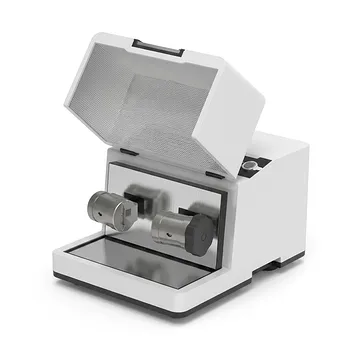
- Cryogenic Grinders: Liquid nitrogen-cooled mills that deliver thermal control and uniform particle distribution for heat-sensitive biomass.
- Mechanical Mills: Planetary ball mills, jet mills, disc mills, and rotor mills for materials that don’t require cryogenic conditions.
- Crushers & Sieve Shakers: Jaw crushers, roll crushers, and vibratory or air-jet sieve shakers to manage particle size from centimeters to microns.
- Mixing & Defoaming: High-efficiency powder mixers and vacuum defoaming mixers to homogenize precursors or blends without introducing air pockets.
- Hydraulic Compaction Presses: Cold/Warm Isostatic Presses (CIP/WIP), XRF pellet presses, hot presses, and vacuum hot presses for forming electrodes, pellets, or green bodies prior to thermal treatment.
When the crushing, grinding, sieving, mixing, and pressing all speak the same language of precision, your activation process inherits that coherence. The final pore structure, mechanical integrity, and chemical consistency are not accidents—they are the logical outcome of a sample preparation chain that refuses to compromise.
Below is a snapshot of how cryogenic grinding integrates into the broader activated carbon precursor workflow:
| Stage | Conventional Risk | Cryogenic Solution |
|---|---|---|
| Particle Size Reduction | Frictional heat degrades volatiles | -196°C embrittlement; no thermal damage |
| Surface Area Development | Irregular particles cause uneven activation | Uniform ultra-fine powder ensures consistent reaction front |
| Chemical Integrity | Loss of low-molecular-weight organics | Molecular mobility suppressed; elemental analysis remains true |
| Powder Handling & Mixing | Agglomeration, poor dispersion | Flowable, micron-sized powder for solid-state mixing |
The Temperature of Integrity
Activated carbon is a high-temperature material. But its soul is forged at low temperature, deep inside a cryogenic mill where chemistry stands still and only physics is allowed to speak.
The grinders don’t just break bonds. They preserve truth. And in material science, truth is the only durable feedstock.
To design a sample preparation workflow that honors the real chemistry of your biomass and fully realizes the potential of your activated carbon, let’s talk specifics. Contact Our Experts and discover how our precision powder processing and compaction equipment can transform your research into reproducible, high-performance reality.
Quick Links
Suggested Products
Small Liquid Nitrogen Cryogenic Grinder for Ultrafine Grinding of Heat-Sensitive Materials in Laboratories Laboratory Cryogenic Grinder Liquid Nitrogen Low Temperature Ultrafine Grinding Cryogenic Liquid Nitrogen Grinder for DNA Analysis and Polymer Pulverization with Automatic Cooling and Electromagnetic Impact Technology Cryogenic Liquid Nitrogen Grinder for Ultrafine Heat-Sensitive Powder Processing Liquid Nitrogen Cryogenic Grinder for Plastic and Heat-Sensitive MaterialsFurther Reading
At 77 Kelvin, a Polymer Tells the Truth: The Cryogenic Key to Degradation Studies The Brittle Truth: Why Extreme Cold Delivers the Most Honest Zinc Sulfide Powders The Brittle Truth: Why Making PET Microplastics Demands Extremes, Not Effort The Surfactant That Teaches Powder Not to Stick: Stearic Acid and the Psychology of Cryogenic Milling Frozen Defects, Unbreakable Metal: The Cryogenic Secret to Nanostructured Titanium Powder
PowderPreparation
Last updated on May 14, 2026
Related Products
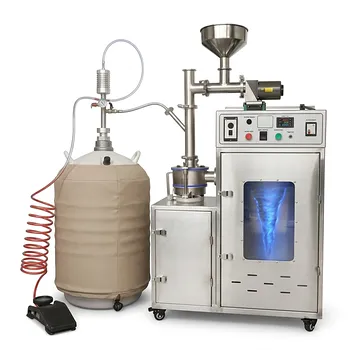
Small Liquid Nitrogen Cryogenic Grinder for Ultrafine Grinding of Heat-Sensitive Materials in Laboratories
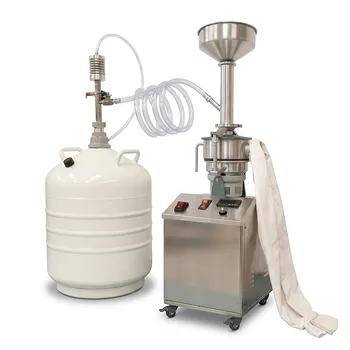
Laboratory Cryogenic Grinder Liquid Nitrogen Low Temperature Ultrafine Grinding
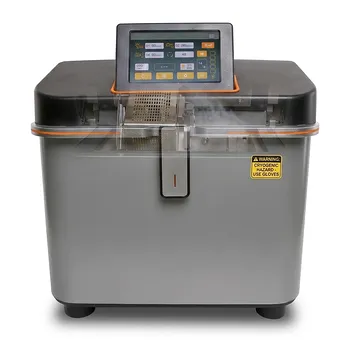
Cryogenic Liquid Nitrogen Grinder for DNA Analysis and Polymer Pulverization with Automatic Cooling and Electromagnetic Impact Technology
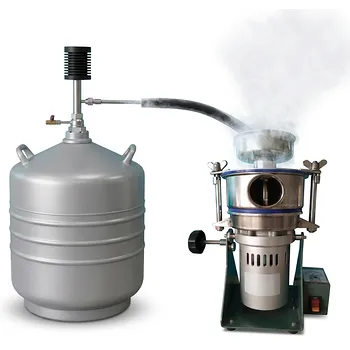
Cryogenic Liquid Nitrogen Grinder for Ultrafine Heat-Sensitive Powder Processing
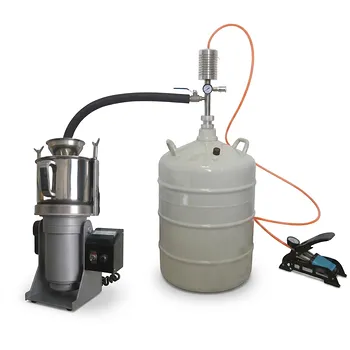
Liquid Nitrogen Cryogenic Grinder for Plastic and Heat-Sensitive Materials
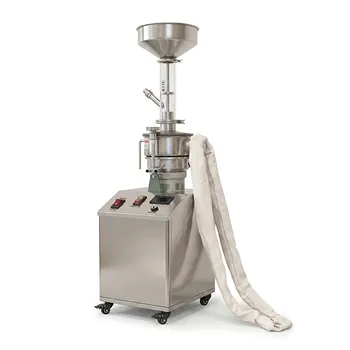
Small Liquid Nitrogen Cryogenic Grinder for Plastic and Heat-Sensitive Material Sample Preparation
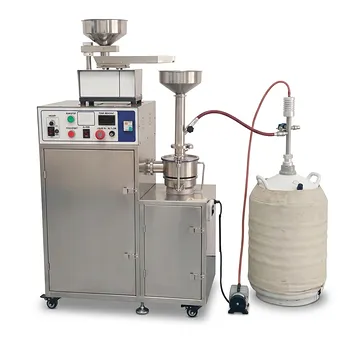
Small Liquid Nitrogen Cryogenic Grinder with Vibratory Feeder for Laboratory Sample Preparation
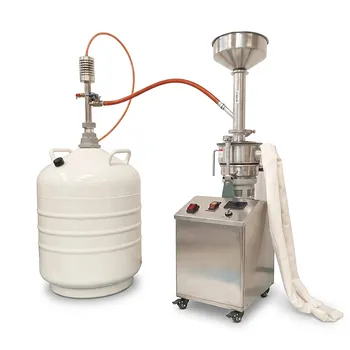
Laboratory Liquid Nitrogen Cryogenic Grinder for Polymer and Elastomer Materials
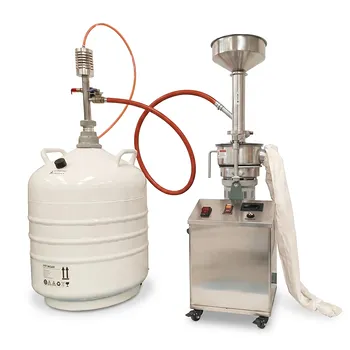
Laboratory Liquid Nitrogen Cryogenic Grinder Polymer Sample Preparation Pulverizer
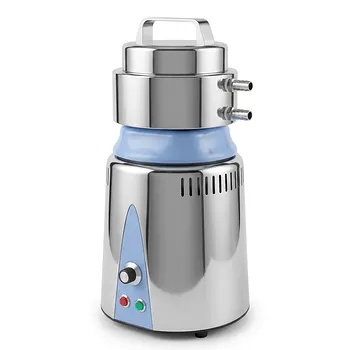
Low Temperature Laboratory Knife Mill Cryogenic Sample Grinder Material Science Powder Processing
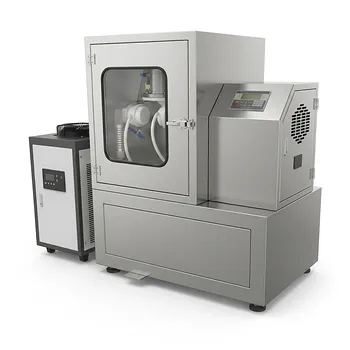
Vibratory Ultra-Low Temperature Ultrafine Grinder for Cryogenic Powder Processing
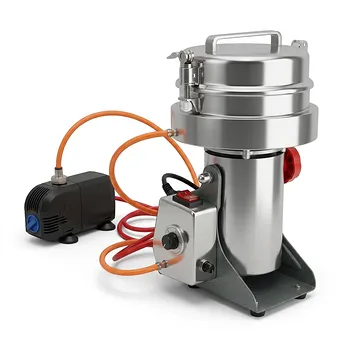
Water Cooled High Speed Grinder with Cryogenic Option for Laboratory Sample Preparation
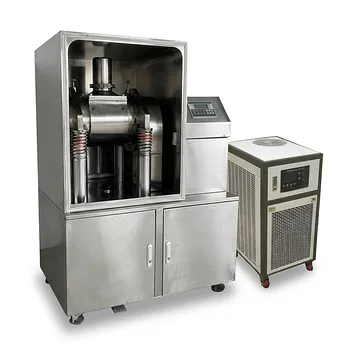
Water Cooled Cryogenic Ultra Fine Cell Wall Breaking Mill
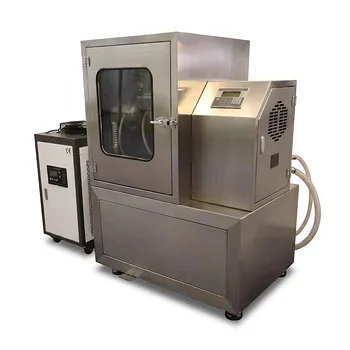
Ultra-Low Temperature Vibratory Mill for Ultrafine Grinding
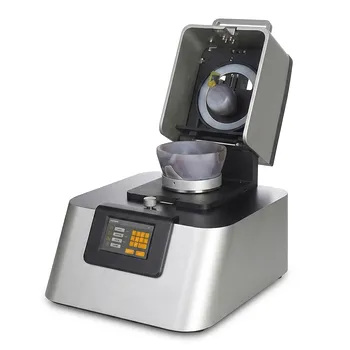
Laboratory Mortar Grinder for Sample Preparation and Cryogenic Powder Homogenization
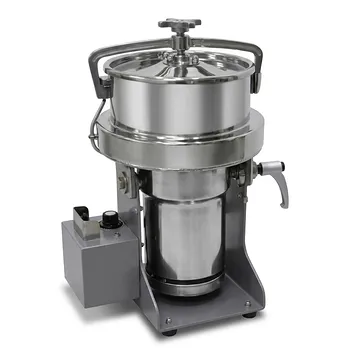
500g Capacity Water Cooled Low Temperature Grinder with Variable Speed and Safety Cover
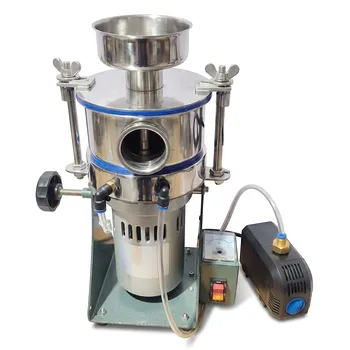
Water Cooled Airflow Ultra Fine Grinder for Low Temperature Material Processing
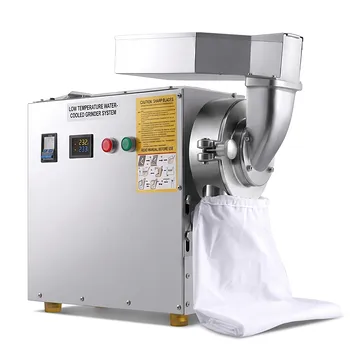
Low Temperature Water Cooled Continuous Feed Grinder Two Stage Coarse and Fine Grinding System
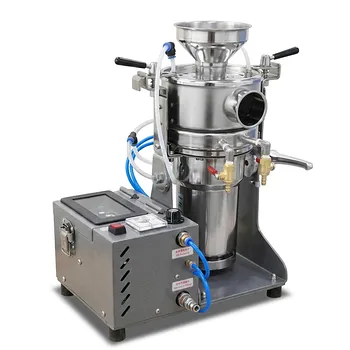
Water Cooled Pulse Jet Ultrafine Grinder