The Architecture of Grit: Building Predictable Performance One Sieve Stack at a Time
Aug 22, 2026
The Morning a Grinding Wheel Forgot Its Purpose
The QC lab was quiet except for the rhythmic hum of the surface profilometer. Then the numbers appeared. Scratch depth variance was double the spec. Surface roughness had drifted so far that the batch would be scrapped. Everyone looked at the bonding formula, the furnace profile, the operator logs. But the true culprit was hiding in plain sight, in a stack of brass frames and wire mesh that hadn’t been calibrated in months.
That moment captures a brutal reality in abrasive tool manufacturing: you can perfect every chemical recipe and sintering curve, and still fail because your particles refused to be classified consistently. The result isn’t just wasted material. It’s time, energy, and trust that vanish into a cloud of uncontrolled grit.
Why Grit Size Is Not a Detail—It’s the Foundation
The Surface Finish Is Decided Before the Wheel Touches Metal
When a grinding wheel meets a workpiece, each abrasive particle cuts its own microscopic groove. The width and depth of that groove are direct functions of particle diameter. If your sieve stack let through a rogue 600-micron fragment into a 250-micron specification, you don’t get a slightly rougher surface. You get unpredictable scratch patterns that destroy precision finishing processes.
This isn’t just about aesthetics. In bearing manufacturing or semiconductor wafer grinding, a single deep scratch can propagate into a fatigue failure. Standard test sieves are the gatekeepers that forbid those oversized particles from ever reaching the bond matrix.
Packing Density: The Silent Multiplier of Wheel Life
Imagine pouring spheres of identical size into a container. No matter how much you vibrate, you’ll never fill more than about 74 percent of the volume. The voids between particles are unavoidable—unless you introduce smaller particles to fill those gaps. This is the logic of optimized particle size distribution (PSD).
In grinding wheels, higher packing density means fewer internal pores. Fewer pores mean the bonding bridges between grains are stronger. The wheel sheds grains only when they are truly dull, not because the structure crumbled prematurely. Standardized screening is what enables you to deliberately engineer that multi-modal distribution. You’re not just removing fines; you’re designing the skeleton that will hold the tool together under extreme load.
Impurities Don’t Announce Themselves
Crushed abrasive raw materials carry flaky fines, un-crushed lumps, and sometimes tramp material from the crusher liners themselves. A single oversized chunk that survives the mixing process will act as a stress concentrator inside the wheel. Mechanical sieving with calibrated meshes catches these anomalies before they become field failures. It creates a clean physical baseline that lets your bonding chemistry perform exactly as designed.
The Operator Effect: Why Manual Sieving Lies to You
Atul Gawande once wrote about the power of checklists to eliminate avoidable failure. Manual sieving is the opposite of a checklist. One technician shakes vigorously for three minutes; another does a gentle circular motion for ninety seconds. Neither can reproduce the other’s result. The data sets drift, the process adjustments chase ghosts, and the real particle size distribution remains unknown.
Vibratory sieve shakers solve this with mechanical honesty. A precisely controlled amplitude and timer deliver identical energy input every single cycle. When you report that a material has a D50 of 180 microns, that number now means something. It becomes a transferable truth, not an artifact of a particular person’s arm strength.
The Three Numbers That Tell the Whole Story
Quality managers often fixate on a single average particle size. The material laughs at averages. A powder with a mean diameter of 100 microns can still contain 10 percent fines below 10 microns—a fraction that will oxidize, clump, and weaken your tool. The real control comes from tracking D10, D50, and D90 values. These three points describe the width of your distribution.
When you add a new bonding resin, does the D90 shift? When you change crusher settings, does the D10 drop? Without repeatable mechanical sieving, you’re answering these questions with noise. With it, you’re performing actual science.
The Rosin-Rammler Moment: When Sieves Talk to Models
There’s a quiet kind of engineer’s romance in seeing physical data fit a mathematical curve. The Rosin-Rammler distribution function takes your sieve results and translates them into parameters that predict how particles will flow, pack, and fracture. Computational fluid dynamics models inside grinding zones rely on this input. Get it wrong, and the simulation is a beautiful fantasy. Get it right, and you can design wheels that manage heat and debris ejection before you ever press a prototype.
This is where vibratory sieve shakers become instruments, not just separators. They generate the primary experimental data that feeds the digital twin of your manufacturing process.
When Particles Refuse to Cooperate
The Needle That Passed Through the Mesh
Sieves measure a particle’s second-smallest dimension. A needle-shaped particle can be 500 microns long but only 100 microns wide—and it will slip through a 106-micron mesh. In abrasive terms, that acicular grain will present a sharp edge that cuts differently than a blocky grain of the same “size.” Sieve analysis alone won’t catch shape anomalies. The manufacturing protocol must pair vibration-assisted classification with periodic microscopy to ensure that what passes through the mesh is what you think it is.
Blinding: The Mesh That Stopped Sieving Mid-Test
As particles near mesh size, they lodge in the openings. Without enough energy to dislodge them, the effective open area shrinks. The test overestimates the coarse fraction and underestimates fines. Vibratory shakers with proper vertical and horizontal motion components are designed specifically to combat this screen blinding. But even the best machine needs regular inspection. Calibrated test sieves are precision instruments; a stretched mesh or cracked frame invalidates everything.
The 45-Micron Wall
Below 45 microns, dry sieving becomes agony. Electrostatic charges cling particles to the mesh; van der Waals forces clump them together. Here, the path forks. Wet sieving suspends particles in liquid and washes them through mesh openings, breaking agglomerates. Alternatively, the lab pivots to laser diffraction. Recognizing this limitation is not weakness—it’s the mark of a mature quality system.
The Sieve Stack as a Process Compass
Consider the technician plotting grinding time versus the percentage of material passing a 75-micron sieve. The curve is linear at first, then plateaus. That plateau tells you exactly when your mill has stopped being effective and started just heating powder. You’ve found the optimal comminution duration—a target that saves energy and prevents over-grinding.
In plant fiber-reinforced grinding tools, sieving controls the filler ratio. A slight shift in the fraction retained on a 150-micron sieve changes the air permeability and bending strength of the final product. The sieve stack is not just inspecting output; it’s directing the recipe.
Choosing a Sieving Strategy That Matches Your Mission
The method you select must align with the problem you’re trying to solve. No single protocol fits every abrasive plant, but the decision tree is mercifully simple:
- If your primary focus is consistent surface finishing: Build multi-layer sieve stacks that produce narrow grit bands. The goal is to eliminate any particle large enough to create a defining scratch.
- If your primary focus is tool durability and mechanical strength: Design your PSD for maximum packing density. Use sieving data to adjust the ratio of coarse to fine fractions, minimizing internal voids in the bonding matrix.
- If your primary focus is process efficiency: Use regular sieve analysis to monitor grinding media wear and adjust comminution times. The moment the D50 stops moving, stop consuming power.
The common thread is vibration-assisted, mesh-certified consistency. Without it, you’re flying blind.
The Complete Laboratory Ecosystem
Sieves don’t work in isolation. The raw abrasive must be crushed to a starting size that makes sieving meaningful. Jaw and roll crushers reduce brittle blocks to a testable range. When extreme toughness is involved, liquid nitrogen cryogenic grinders embrittle materials so they fracture cleanly. Planetary ball mills and jet mills then refine the powder to the target zone. Only then does the sieve shaker step in to classify.
The same principle cascades downstream. After sizing, the powder must be mixed—often under vacuum to remove bubbles that would weaken the tool. Specialized defoaming mixers handle this. Then comes the compaction: cold isostatic presses for uniform density billets, XRF pellet presses for analytical samples, and vacuum hot presses that bond abrasive layers onto backing plates.
This end-to-end logic is why integrated sample preparation solutions deliver more than a collection of instruments. They ensure that the data from every stage connects coherently to the next. When your crusher output changes, your sieve analysis catches it before the press room ever sees a flawed powder.
We specialize in building these precise material science workflows. From vibratory and air-jet sieve shakers with certified test meshes, to planetary ball mills and cryogenic grinders, to a full spectrum of hydraulic presses—including Cold/Warm Isostatic Presses, vacuum hot presses, and XRF pellet presses—our equipment portfolio is designed to give abrasive manufacturers the accuracy and repeatability that modern industry demands. Whether you are optimizing particle packing density or refining surface finish precision, the right tools turn sieving from a quality checkpoint into a strategic advantage.
The most predictable grinding wheels aren’t born from luck. They’re built on the quiet discipline of particles that fit together exactly as designed. Contact Our Experts
Quick Links
Suggested Products
Vibratory Sieve Shaker Electromagnetic 3D Motion Powder Particle Size Analyzer for Dry and Wet Sieving Laboratory Dry and Wet Three Dimensional Vibratory Sieve Shaker for Particle Analysis Stainless Steel Laboratory Vibratory Test Sieve Shaker Heavy Duty Dry Three Dimensional Vibratory Sieve Shaker for Particle Separation Dry Three Dimensional Vibratory Sieve ShakerFurther Reading
The Hidden Economics of Particle Size: Why the Most Overlooked Variable in Material Science Controls Everything The Invisible Architecture of Powder: How a Vibratory Sieve Shaker Decides What Your Amaranth Bread Becomes The Particle-Size Lever: Why the Most Overlooked Step in Catalyst Design Determines Everything Else When Glass Melts Fail, It Was Never the Furnace: The Hidden Economics of Sand Gradation The Quarter-Millimeter Margin: Why Vibratory Sieve Precision Determines Artificial Stone Profitability
PowderPreparation
Last updated on May 14, 2026
Related Products
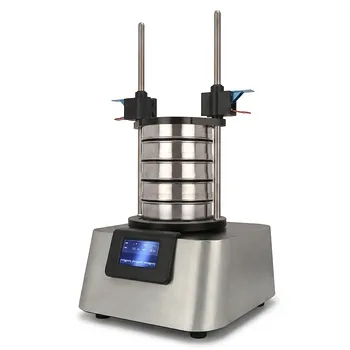
Vibratory Sieve Shaker Electromagnetic 3D Motion Powder Particle Size Analyzer for Dry and Wet Sieving
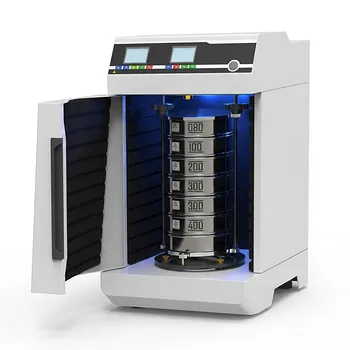
Laboratory Dry and Wet Three Dimensional Vibratory Sieve Shaker for Particle Analysis
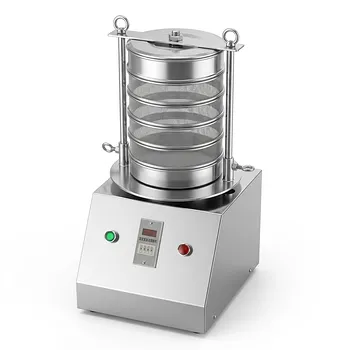
Stainless Steel Laboratory Vibratory Test Sieve Shaker
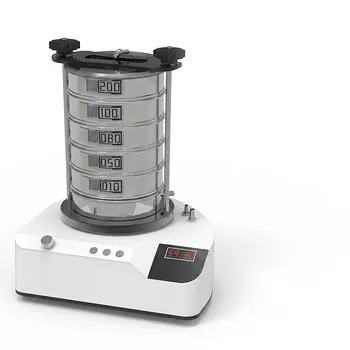
Heavy Duty Dry Three Dimensional Vibratory Sieve Shaker for Particle Separation
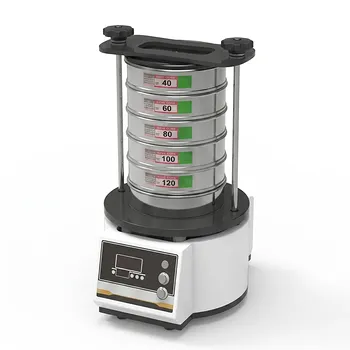
Dry Three Dimensional Vibratory Sieve Shaker
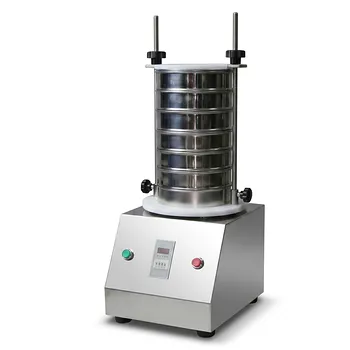
Small Laboratory Vibratory Sieve Shaker for Powder Gradation and Particle Size Analysis
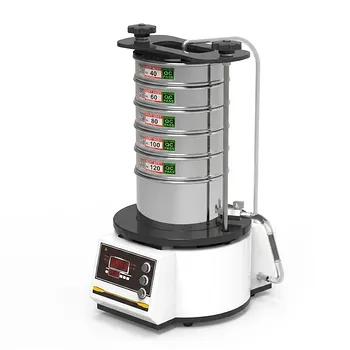
High Frequency Wet Three-Dimensional Vibrating Sieve Shaker for Dry and Wet Particle Size Analysis
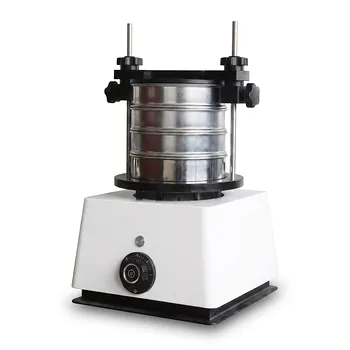
Small Laboratory Vibrating Sieve Shaker for Precise Particle Size Analysis
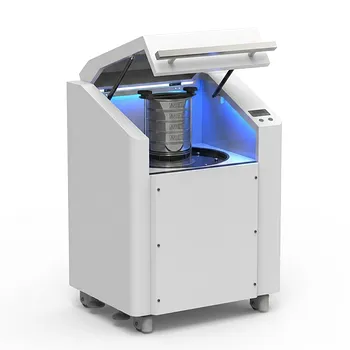
High Frequency Cabinet Type Three-Dimensional Rotary Vibrating Sieve Shaker for Dry Sieving and Particle Classification
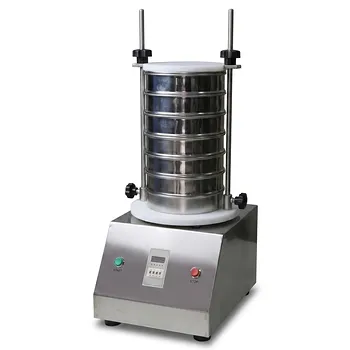
Laboratory Vibratory Test Sieve Shaker for Precision Particle Size Analysis and Powder Grading
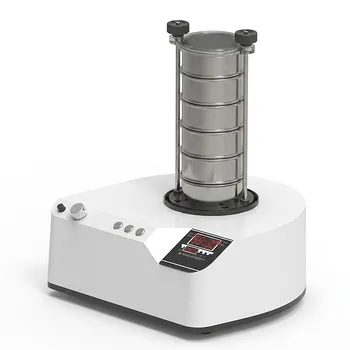
三维电磁微量振动筛分仪
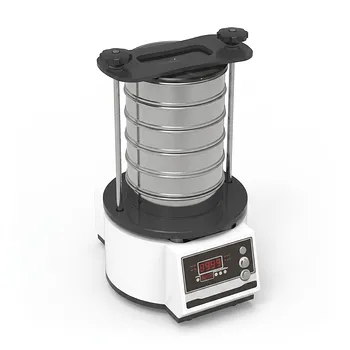
Tapping Oscillating Sieve Shaker for Dry and Wet Particle Size Analysis
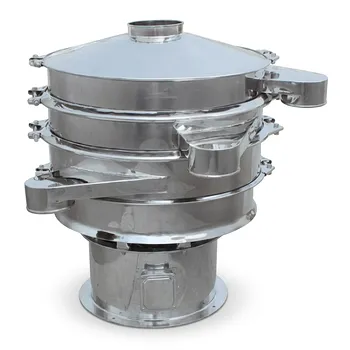
Stainless Steel Rotary Vibrating Sieve High Precision Circular Vibratory Separator Industrial Powder Grading Machine Multi Layer Sifting Equipment
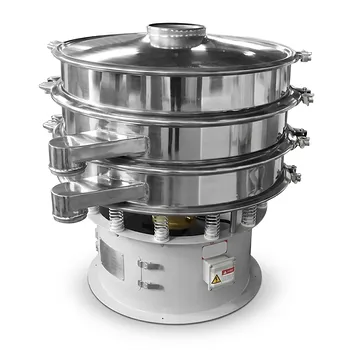
Three Dimensional Rotary Vibrating Sieve
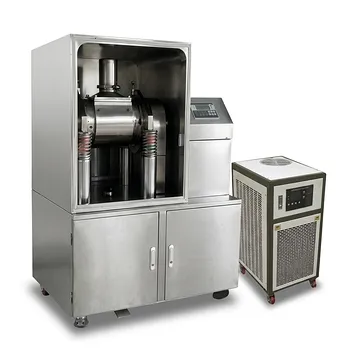
Small Vibrating Ultrafine Grinder for Traditional Chinese Medicine
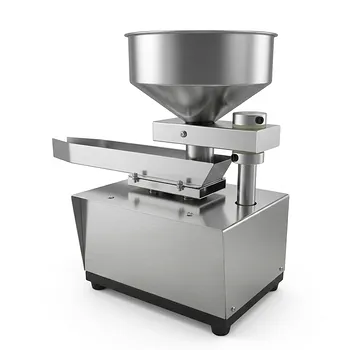
Automatic Vibrating Powder Feeder for Laboratory Material Processing Precision Vibratory Hopper Feeder for Granular and Powder Material Handling Industrial Grade Vibrating Tray Feeder for Consistent Material Sample Preparation
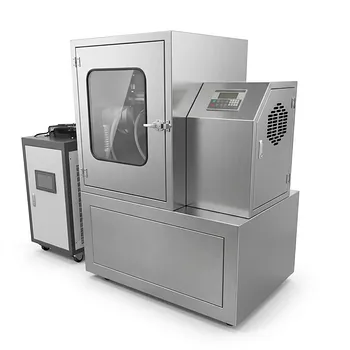
Vibratory Superfine Grinder for Ultra Fine Laboratory Powder Milling
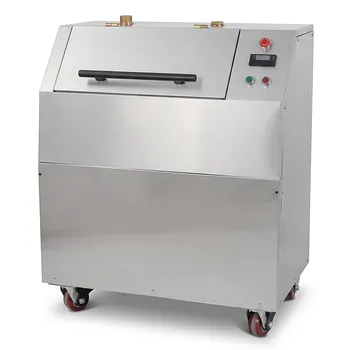
Vibratory Disc Mill for Rapid Fine Grinding and High Throughput Sample Preparation of Hard and Brittle Materials