The Architecture of a Grain: How a Vibratory Sieve Shaker Decodes the Language of Eroded Soil
Oct 02, 2026
The Unread Ruin
A hillside collapses after a storm. As the water recedes, it leaves behind a delicate archive—millions of grains arranged not as solitary particles, but as tiny, fragile clusters. These soil aggregates are the truest witnesses of the erosion event. They carry the history of how the land broke apart.
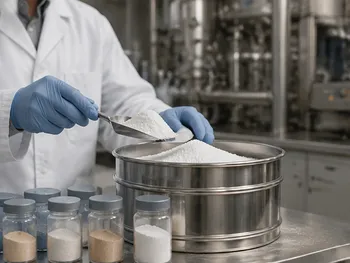
But the moment a researcher picks up a sieve and starts shaking by hand, that archive begins to crumble. The rhythm of a human arm is a blunt instrument. One technician shakes with the vigor of a morning coffee ritual; another applies the weary motion of end-of-shift fatigue. Same soil, two different stories.
Engineers and geoscientists chase truth in the shape of grains. They need to know not just what the sediment is made of, but how it traveled. The difference between a primary sand grain and a soil aggregate is the difference between reading a word and understanding its sentence. Lose that structure, and you lose the narrative of erosion itself.
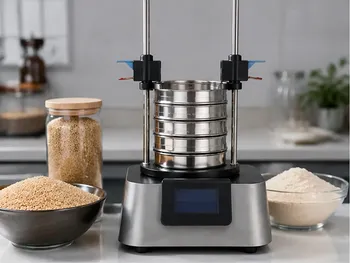
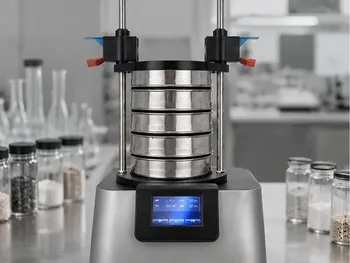
There is a machine that reads this language without rewriting it: the vibratory sieve shaker. Its oscillating platform does more than automate a manual task—it applies a consistent mechanical voice that asks the sediment to sort itself, without shouting it into fragments.
The Forgotten Signal in a Sieve Stack
Human Variability Is a Data Poison
Manual sieving is not a process; it is a performance. Even a single operator changes tempo across a dozen samples. Your brain seeks efficiency, not consistency. It unconsciously shifts angle, force, and patience. When you are building a dataset that will train a deep learning model or validate a geomorphological theory, that drift is catastrophic.
A vibratory sieve shaker replaces human decision with physical law. It imposes a fixed frequency and amplitude, treating every sample as an identical experiment. This standardization is not a luxury for compulsive scientists—it is the prerequisite for ground truth. Without it, your D10, D50, and D90 values are just rough estimates.
Particles Need a Rhythm, Not a Beating
Think of a sieve mesh not as a filter but as a series of gates. For a particle to pass through, it must find the right orientation. An elongated grain must tumble until its long axis aligns with a diagonal across the opening. A cluster of clay must dance just enough to present its smallest profile.
High-frequency mechanical vibration creates a fluidized bed. The grains lift, rotate, and settle hundreds of times per second. This "dance" continues until the mass retained on each sieve stabilizes—a thermodynamic equilibrium between available energy and geometric probability. No human wrist can simulate this. Manual effort tends to either under-separate the fines or pulverize the fragile ones.
Why Soil Aggregates Matter More Than Single Grains
Erosion Travels in Clusters
In a laboratory, we imagine soil as a collection of independent mineral particles. In reality, rain-impacted earth moves as compound particles—clusters of silt, clay, and organic matter bound by electrochemical forces and fungal hyphae. These aggregates have their own size distribution, distinct from the primary particles that form them.
If you break these clusters with aggressive sieving, you erase the erosion fingerprint. You will measure a peak in the clay fraction that did not exist in the field. Your data will suggest the sediment traveled much finer than it actually did, misleading models of transport distance, depositional environment, and even pollutant adhesion.
The Gentle Machinist's Paradox
Here is the psychological trap: researchers fear they are not shaking hard enough. They apply more force to "finish the job," convinced that thoroughness equals accuracy. But the vibratory shaker, calibrated to lower amplitudes when studying aggregates, is disciplined enough to know when enough is enough. It separates by size class without applying the destructive excess energy that turns a 200-micron aggregate into five primary grains.
That restraint is a form of accuracy most manual operators undervalue. It protects the architecture of the soil layer so you can classify what nature actually built, not what you destroyed trying to measure it.
The Beach, the Microplastic, and the Missing Range
Where Laser Diffraction Goes Blind
Laser particle analyzers perform optical magic on the fine fraction. They can resolve clays at sub-micron resolution. But they have a practical upper limit, usually struggling beyond 2 mm. Sediment samples from braided rivers, landslides, or coastal deposits often span four orders of magnitude—from micron-scale clays to centimeter-scale pebbles.
Vibratory sieve shakers dominate the coarse range, typically 2 mm to 32 mm and beyond. They are the only practical, quantitative method to physically separate these larger fractions before the fines move to laser analysis. Ignoring the coarse tail is like judging a novel by ignoring every noun longer than six letters.
Building the Hybrid Master Curve
The gold standard in sedimentology is not one instrument but a mathematically stitched composite. Sieve data for the gravel and sand, laser diffraction data for the silt and clay, all merged into one continuous probability density function.
This is the geometry of grain—a full spectrum that tells you how a beach will respond to storm waves, how a river bar will migrate, or how a landslide deposit will consolidate. When you rely solely on one method, you compress nature into a tool's comfort zone. When you combine them, you let the sample speak across its full vocabulary.
The Cost of Precision That Blinds
Sieve Blinding and the Discipline of Maintenance
Every engineer who operates a vibratory shaker learns about blinding. Fine, slightly cohesive particles wedge into the mesh openings. A 63-micron sieve gradually closes up until it retains what should pass. The instrument still hums at its perfect frequency, but the data silently corrupts.
This is not a flaw; it is a trade-off that demands vigilance. Regular cleaning, ultrasonic baths, and periodic sieve recalibration become part of the ritual. Precision is never a one-time purchase—it is a practice. The best vibratory sieve shaker on the market will lie to you if you neglect the mesh it feeds.
Overloading: The Invisible Dampener
Sample mass matters. Overload a stack of sieves, and you dampen the vibration. The bottom screens get insufficient energy, and material sits static instead of dancing. Your coarse fraction looks correct, but the fines are under-reported.
Effective stratification requires breathing room. Particles must collide, bounce, and redistribute. Experienced lab managers learn to split samples and run multiple stacks rather than force a single overloaded run. Again, the machine rewards those who respect its limits—a very unhuman quality of boundary-keeping.
How to Let the Sediment Tell Its True Story
Choose your settings based on your scientific question, not your default protocol.
- If you are studying soil erodibility and transport state: Use a vibratory shaker at moderate to low amplitude. Your goal is to classify naturally formed soil aggregates without reducing them to primary particles. Protect the cluster; it holds the field condition.
- If you are generating training data for deep learning classification models: Lock down time and frequency. Your "ground truth" labels acquire meaning only when every image you shoot of the retained material comes from a perfectly repeatable sieving history.
- If you are characterizing a sample spanning clay to cobble: Start with the vibratory shaker for the coarse fraction (>2 mm) and then route the fines to laser diffraction. Merge the curves mathematically, and document every step—the hybrid protocol becomes part of your metadata.
The vibratory sieve shaker is not just a separator; it is a translator. It converts the chaotic, contingent reality of a hillside collapse into a statistical distribution that human minds and algorithms can compare, model, and learn from.
The System Behind the Shaker
Precision in particle analysis begins long before you stack a sieve. It starts with how you crush, mill, and prepare the sample. A poorly pre-crushed rock fragment can carry micro-fractures that bias your grinding step. An inconsistent powder feed can ruin your compaction or XRF pellet.
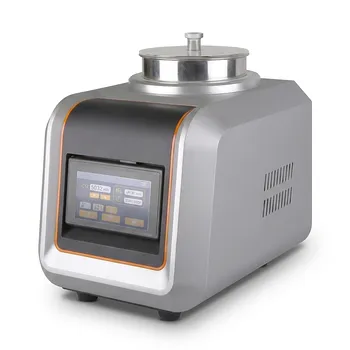
We build complete laboratory sample preparation solutions for material science and geological research. Our vibratory and air-jet sieve shakers pair with high-precision test sieves to deliver the repeatable mechanical energy we have explored. But that is one module in a larger workflow.
From jaw crushers and roll crushers that reduce field cobbles to manageable fractions, to planetary ball mills and jet mills that grind down to analytical fineness, to liquid nitrogen cryogenic grinders for temperature-sensitive materials—each stage is engineered for controlled, reproducible particle size reduction. Our mixers and defoaming mixers homogenize powders before sieving or pressing. Our hydraulic presses, including Cold and Warm Isostatic Presses (CIP/WIP), vacuum hot presses, and XRF pellet presses, then compact those classified powders into stable, analysable forms.
The same philosophy runs through every product: replace human variability with gentle, calibrated mechanical force. Allow the material to reveal its true nature, not the artifact of your process.
Your sediment will always carry the memory of the rain that moved it. Give that memory a machine capable of reading it without distortion.
Quick Links
Suggested Products
Vibratory Sieve Shaker Electromagnetic 3D Motion Powder Particle Size Analyzer for Dry and Wet Sieving Laboratory Dry and Wet Three Dimensional Vibratory Sieve Shaker for Particle Analysis Stainless Steel Laboratory Vibratory Test Sieve Shaker Heavy Duty Dry Three Dimensional Vibratory Sieve Shaker for Particle Separation Dry Three Dimensional Vibratory Sieve ShakerFurther Reading
The Hidden Economics of Particle Size: Why the Most Overlooked Variable in Material Science Controls Everything The Invisible Architecture of Powder: How a Vibratory Sieve Shaker Decides What Your Amaranth Bread Becomes The Particle-Size Lever: Why the Most Overlooked Step in Catalyst Design Determines Everything Else When Glass Melts Fail, It Was Never the Furnace: The Hidden Economics of Sand Gradation The Quarter-Millimeter Margin: Why Vibratory Sieve Precision Determines Artificial Stone Profitability
PowderPreparation
Last updated on May 14, 2026
Related Products
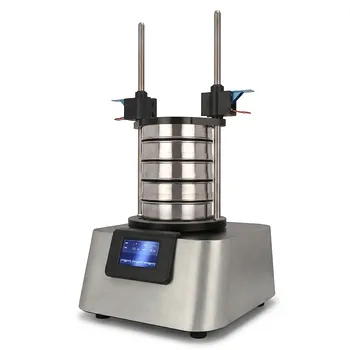
Vibratory Sieve Shaker Electromagnetic 3D Motion Powder Particle Size Analyzer for Dry and Wet Sieving
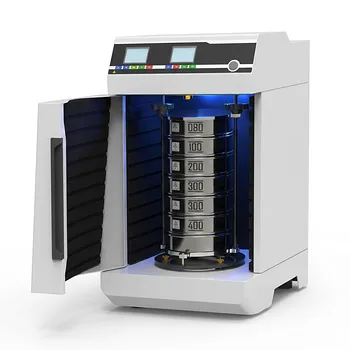
Laboratory Dry and Wet Three Dimensional Vibratory Sieve Shaker for Particle Analysis
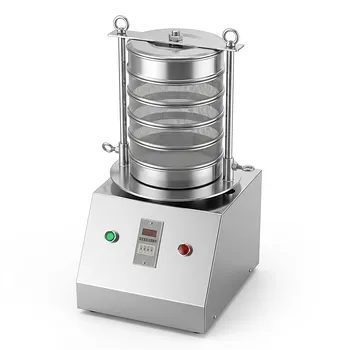
Stainless Steel Laboratory Vibratory Test Sieve Shaker
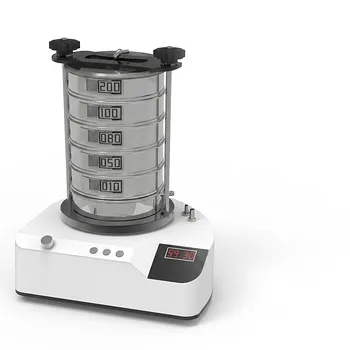
Heavy Duty Dry Three Dimensional Vibratory Sieve Shaker for Particle Separation
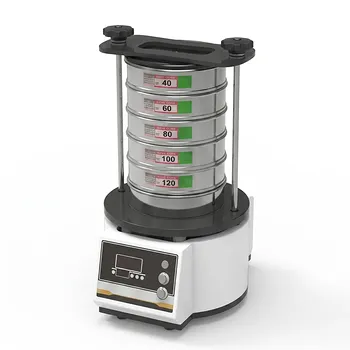
Dry Three Dimensional Vibratory Sieve Shaker
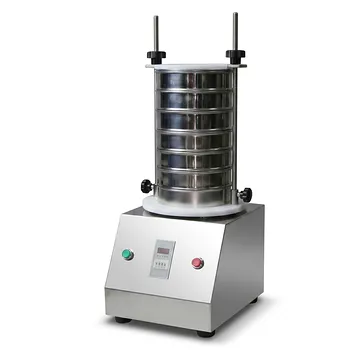
Small Laboratory Vibratory Sieve Shaker for Powder Gradation and Particle Size Analysis
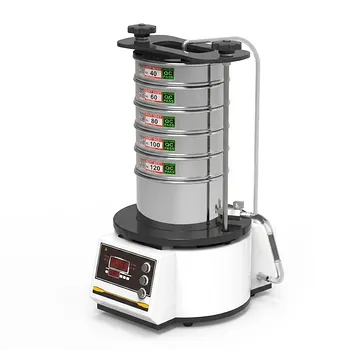
High Frequency Wet Three-Dimensional Vibrating Sieve Shaker for Dry and Wet Particle Size Analysis
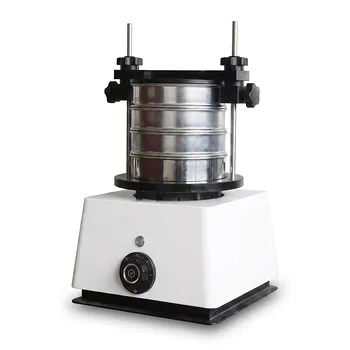
Small Laboratory Vibrating Sieve Shaker for Precise Particle Size Analysis
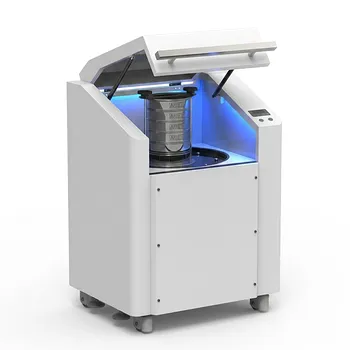
High Frequency Cabinet Type Three-Dimensional Rotary Vibrating Sieve Shaker for Dry Sieving and Particle Classification
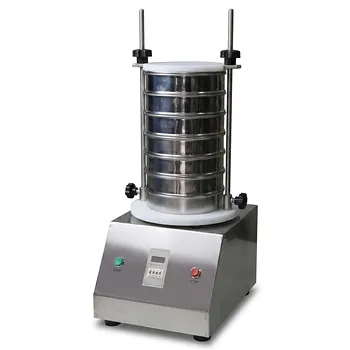
Laboratory Vibratory Test Sieve Shaker for Precision Particle Size Analysis and Powder Grading
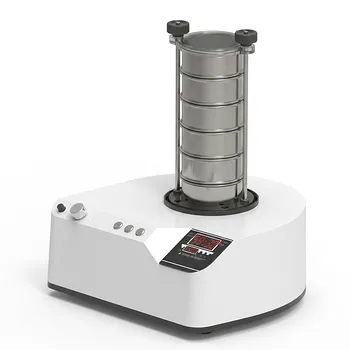
三维电磁微量振动筛分仪
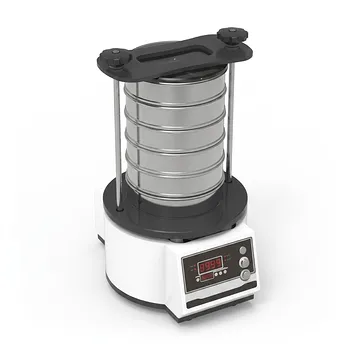
Tapping Oscillating Sieve Shaker for Dry and Wet Particle Size Analysis
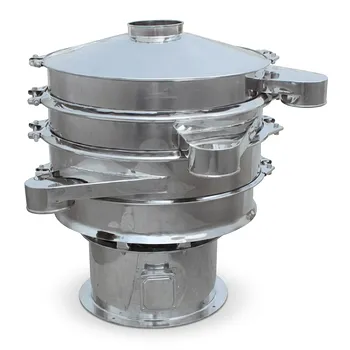
Stainless Steel Rotary Vibrating Sieve High Precision Circular Vibratory Separator Industrial Powder Grading Machine Multi Layer Sifting Equipment
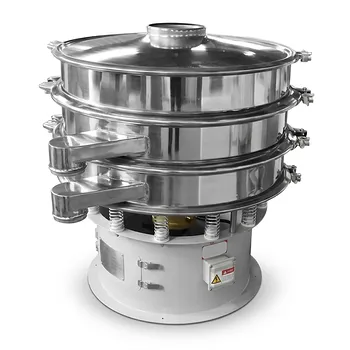
Three Dimensional Rotary Vibrating Sieve
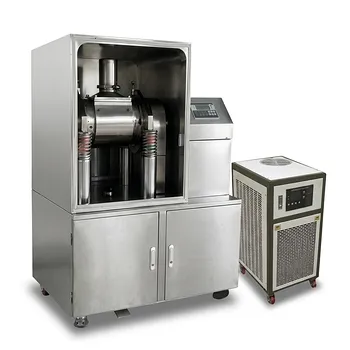
Small Vibrating Ultrafine Grinder for Traditional Chinese Medicine
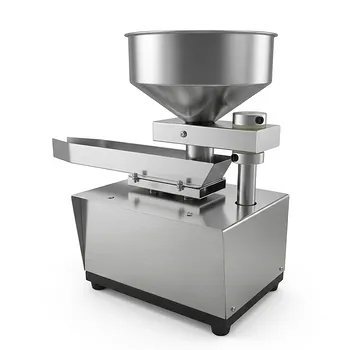
Automatic Vibrating Powder Feeder for Laboratory Material Processing Precision Vibratory Hopper Feeder for Granular and Powder Material Handling Industrial Grade Vibrating Tray Feeder for Consistent Material Sample Preparation
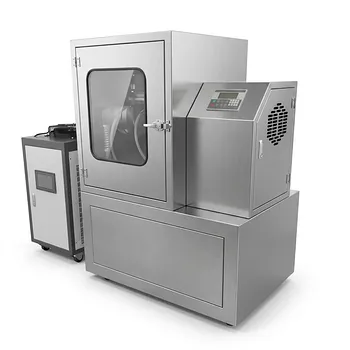
Vibratory Superfine Grinder for Ultra Fine Laboratory Powder Milling
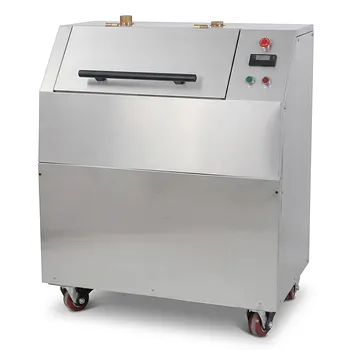
Vibratory Disc Mill for Rapid Fine Grinding and High Throughput Sample Preparation of Hard and Brittle Materials