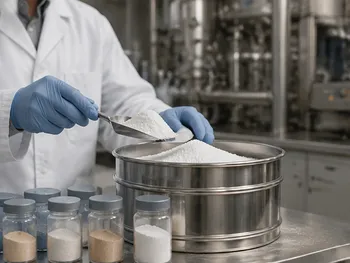
The 71µm Gatekeeper: Why Standard Test Sieves Determine the Fate of Quartz Fillers
Sep 25, 2026
It started with a few square meters of glossy countertop. The manufacturer couldn’t explain why the surface kept showing microscopic pimples. The resin was the same, the press was calibrated, the mineral batch seemed identical. The only difference—discovered after three weeks of frustrated searching—was a 71-micron sieve that had quietly worn to 85 microns.
A sieve is not just a wire basket with holes. It is a boundary between chaos and control, a physical algorithm that sorts granular truth. When you manufacture quartz powder filler, the mesh you trust is the difference between a high-end engineered surface and a customer complaint.
We tend to underestimate simple sieves because they don’t hum with software dashboards or machine learning. Yet the standard test sieve remains the single most revealing tool in the quartz filler quality chain—precisely because it refuses to let anything slip past without permission.
The Fingerprint Your Powder Can’t Hide
Mechanical reinforcement inside a quartz-polyester composite doesn’t come from particles. It comes from gaps between particles. A sieving curve tells you exactly how those gaps are distributed—and whether your filler will behave like a structural skeleton or a random pile of dust.
Particle Size Distribution Is the Invisible Architecture
Run a 200-gram sample through a stack of sieves—71 µm, 63 µm, 45 µm, 32 µm—and you’re not just measuring sizes. You’re reading the powder’s packing potential. A balanced gradation creates a dense network where smaller grains lodge in the voids left by larger ones, leaving less room for resin shrinkage.
Miss the balance, and you embed weak points that become crack initiation sites.
| Sieving Insight | Quality Outcome | Business Translation |
|---|---|---|
| Narrow PSD with controlled residue on 71 µm | High intrinsic mechanical strength | Fewer warranty claims on countertops |
| Absence of particles above 125 µm | No surface defects after polishing | Brand reputation for flawless finish |
| Consistent fines fraction below 32 µm | Uniform sintering shrinkage | Predictable production cost |
Aesthetics Are a Sieving Problem
Surface smoothness isn’t a coating achievement; it’s a sieving promise kept. Every oversized grain that passes the final mesh becomes a visible speck, a polishing flaw, a customer’s raised eyebrow. In quartz fillers, beauty is literally the absence of the out-of-spec.
The Sieve as a Process Doctor
Most manufacturers treat sieving as inspection. The best ones treat it as diagnosis.
Exposing the Agglomerates That Mills Leave Behind
After grinding—especially in high-energy planetary ball mills or jet mills—the powder can clump into fragile agglomerates. These aren’t real particles, but they act like them during mixing. A gentle vibratory sieve shaker separates the myth from the material, removing clusters that would otherwise create resin-rich pockets.
Finding Contaminants Where They Hide
Iron-rich impurities often concentrate in specific size fractions of raw quartz sand. By weighing and analyzing each retained fraction on a sieve stack, you can identify the particle range that carries 80% of the contamination. You then adjust the upstream grinding—perhaps switching to a liquid nitrogen cryogenic mill that fractures mineral boundaries more cleanly—to liberate those impurities before they enter the filler stream.
That’s not sieving. That’s intelligence.
Why We Rewire Our Attention to Sieves
There is a human bias at work. Complex machines get our vigilance; simple meshes get our neglect. And quartz is brutally unforgiving of neglect.
Quartz powder is abrasive enough to slowly open the aperture of a stainless-steel sieve. A 71 µm mesh becomes 78 µm after a few thousand cycles. The lab technician still records “passing 71 µm” because the label says so, not because the sieve still complies. The psychology is seductive: we trust the tool’s label more than the tool’s condition.
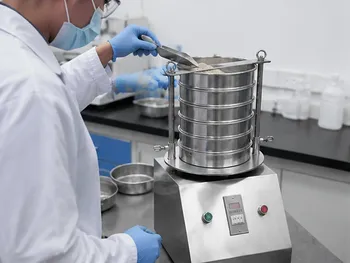
Then there’s blinding. Fine quartz wedges into the openings, effectively shrinking the aperture. Vibratory sieve shakers with intermittent tapping prevent this, but only if the amplitude is tuned for the powder’s electrostatic tendencies. Air-jet sieve shakers go further—a rotating air stream lifts and keeps the mesh clear while sorting, especially critical for powders below 45 µm.
The sieve is a promise made of steel and mesh. But that promise must be verified, cleaned, and recertified—or it becomes a liar.
Building the Certainty Loop: From Crusher to Compact
A standard test sieve doesn’t work alone. Its verdict influences every upstream and downstream decision. That’s why we think of it not as a single instrument, but as the central feedback node in a sample preparation ecosystem:
- Primary Breaking: Jaw crushers and roll crushers reduce raw quartz to a manageable size. The crushed output is sieved to check the coarse fraction entering fine milling.
- Ultra-fine Milling: Planetary ball mills, jet mills, and cryogenic mills grind to target fineness. Sieve analysis tells you when you’ve reached the exact distribution—not a minute before, not a minute after.
- Screening and Classification: Our vibratory sieve shakers and air-jet sieve shakers, fitted with certified test sieves and meshes, deliver the quantitative PSD data that regulate the process.
- Mixing and De-foaming: Powder mixers and defoaming mixers homogenize the filler before forming; only a pre-mix sieve check guarantees no agglomerates survived.
- Compaction and Forming: Hydraulic cold/warm isostatic presses (CIP/WIP), XRF pellet presses, and vacuum hot presses achieve final density. The green body strength you achieve is a direct echo of the powder’s sieve-proven packing uniformity.
This loop replaces hope with evidence. It turns a raw mineral into a high-performance engineering material.
The Sieve’s Edge Is Your Edge
There is an engineer’s romance in this: a woven mesh, unchanged in concept for a century, still defines the frontier of reliability in advanced composites. It doesn’t matter how sophisticated your press or how nano your filler—if the sieve lies, the product fails.
In quartz powder filling, the margin between exceptional and expensive lies often in a handful of microns. Standard test sieves give you the language to measure that margin, and the gate to enforce it.
When you pair rigorous sieving protocols with a seamless sample preparation chain—from cryogenic grinding to isostatic pressing—you stop reacting to quality escapes and start engineering a predictable, profitable material signature.
We help laboratories and production teams build precisely that chain. Contact Our Experts
Quick Links
Suggested Products
Stainless Steel Laboratory Vibratory Test Sieve Shaker Laboratory Vibratory Test Sieve Shaker for Precision Particle Size Analysis and Powder Grading Small Laboratory Vibrating Sieve Shaker for Precise Particle Size Analysis Small Laboratory Vibratory Sieve Shaker for Powder Gradation and Particle Size Analysis 三维电磁微量振动筛分仪Further Reading
The Sieve Never Lies: How a Simple Stack of Mesh Became the Lab’s Ultimate Truth-Teller The Particle Whisperer: How a Vibratory Sieve Shaker Decodes Pine Bark into a Predictable Engineering Material The 75-Micron Mystery: How the Humble Sieve Decides Whether Your Brick Becomes a Wall or Returns to Dust The Hidden Geometry of Strength: Why 20 MPa Really Begins With a Sieve The Hidden Economics of Particle Size: Why the Most Overlooked Variable in Material Science Controls Everything
PowderPreparation
Last updated on May 14, 2026
Related Products
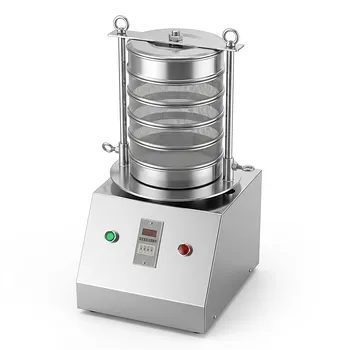
Stainless Steel Laboratory Vibratory Test Sieve Shaker
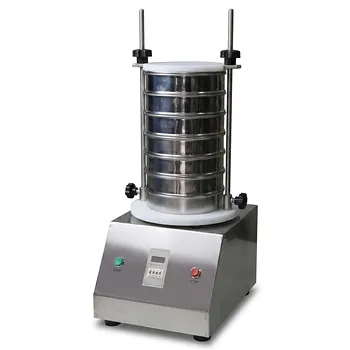
Laboratory Vibratory Test Sieve Shaker for Precision Particle Size Analysis and Powder Grading
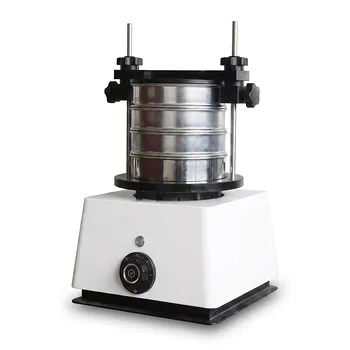
Small Laboratory Vibrating Sieve Shaker for Precise Particle Size Analysis
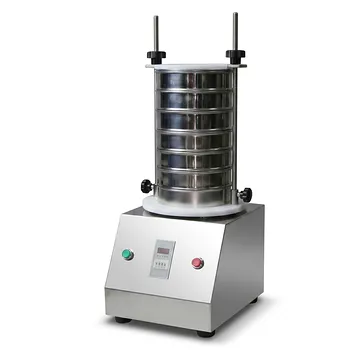
Small Laboratory Vibratory Sieve Shaker for Powder Gradation and Particle Size Analysis
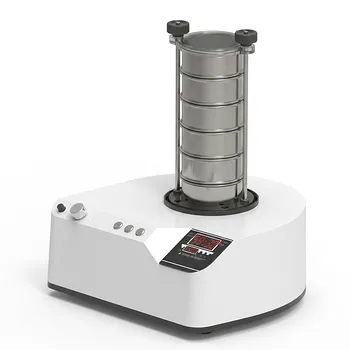
三维电磁微量振动筛分仪
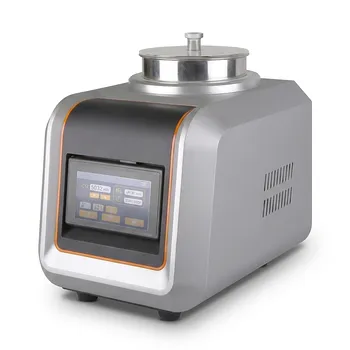
Laboratory Air Jet Sieving Machine for Fine Powder Particle Size Analysis and Deagglomeration
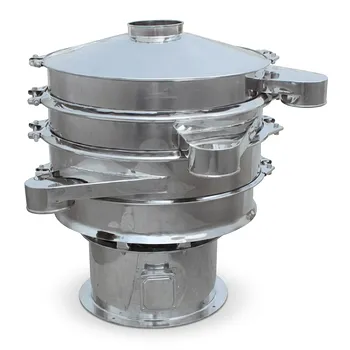
Stainless Steel Rotary Vibrating Sieve High Precision Circular Vibratory Separator Industrial Powder Grading Machine Multi Layer Sifting Equipment
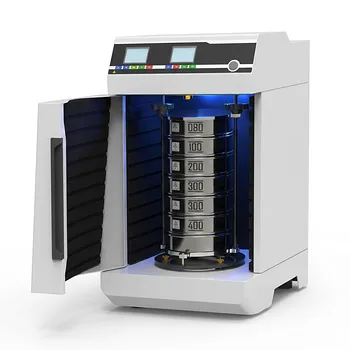
Laboratory Dry and Wet Three Dimensional Vibratory Sieve Shaker for Particle Analysis
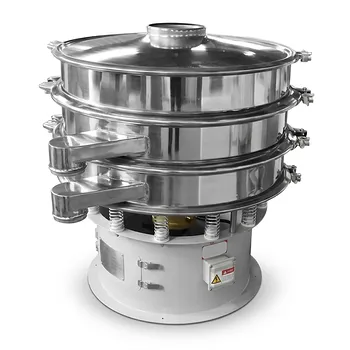
Three Dimensional Rotary Vibrating Sieve
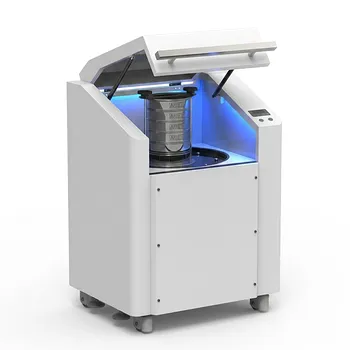
High Frequency Cabinet Type Three-Dimensional Rotary Vibrating Sieve Shaker for Dry Sieving and Particle Classification
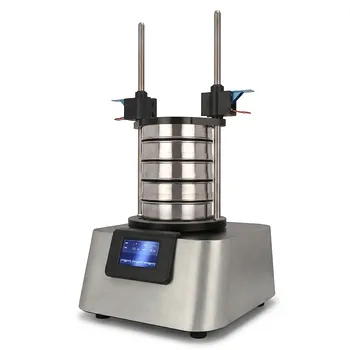
Vibratory Sieve Shaker Electromagnetic 3D Motion Powder Particle Size Analyzer for Dry and Wet Sieving
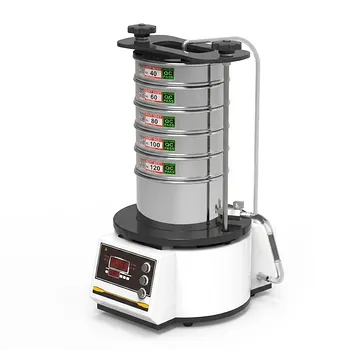
High Frequency Wet Three-Dimensional Vibrating Sieve Shaker for Dry and Wet Particle Size Analysis
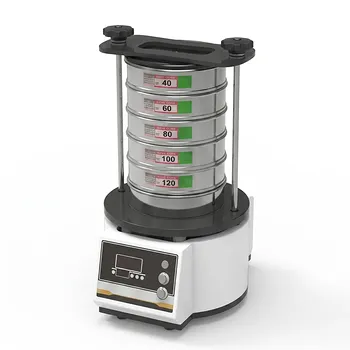
Dry Three Dimensional Vibratory Sieve Shaker
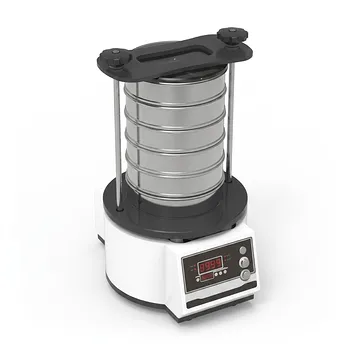
Tapping Oscillating Sieve Shaker for Dry and Wet Particle Size Analysis
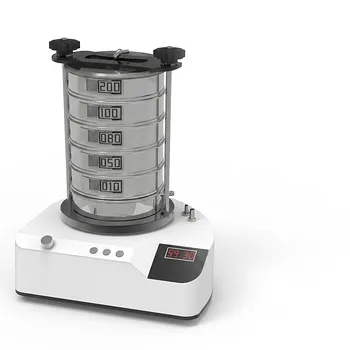
Heavy Duty Dry Three Dimensional Vibratory Sieve Shaker for Particle Separation
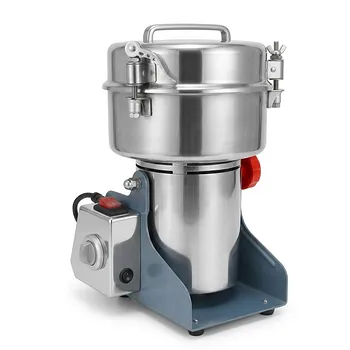
Small High-Speed Grinder for Efficient Laboratory Sample Preparation
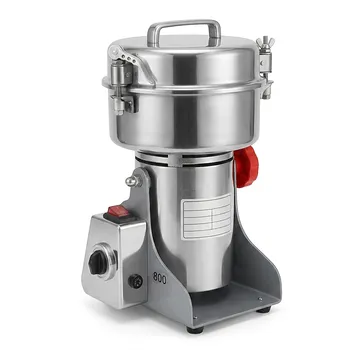
Small High-Speed Laboratory Grinder for Rapid Sample Preparation
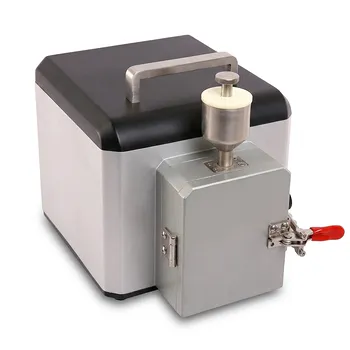
Portable Cutting Mill for Laboratory Sample Preparation and RoHS WEEE Compliance Testing