The 500-Micron Gatekeeper: How an Overlooked Sieve Decides What Your Data Actually Says About Indoor Dust
Aug 18, 2026
The Mystery of the Shifting Numbers
The lab’s new ICP-MS was flawless. Calibration passed with textbook peaks. Yet for the third time that week, the lead levels from the same house dust sample came back with a 40% spread. The technicians checked the acid digestion, the pipettes, the argon flow. Everything was perfect.
The problem wasn’t the machine. It was the story the sample was telling—or rather, not telling.
Before the dust ever entered the instrument, it was a chaotic mix of cat hair, quartz grit, paint flakes, synthetic fibers, and particles you’d need a microscope to name. Running that heterogeneity through a six-figure analyzer wasn’t yielding data. It was yielding noise.
This is where sample preparation stops being a chore and becomes the fulcrum of analytical truth. And at the heart of that preparation sits a piece of equipment so simple it’s almost invisible: the 500-micron test sieve.
The Psychology of What We Ignore
In analytical chemistry, we fetishize instrumentation. We brag about detection limits, mass resolution, and plasma stability. But we rarely talk about what we deliberately throw away before the test starts.
That’s a psychological blind spot. Removing something feels like losing information. But in environmental analysis, selective exclusion is a form of intellectual honesty.
A 500 μm aperture sieve forces you to define what “indoor dust” actually means. It says: we are not analyzing the carpet. We are not analyzing the potato chip crumbs. We are analyzing the fine fraction that adheres to skin, becomes airborne, and enters lungs.
Without that definition, you’re measuring a garbage can with a laser.
Why 500 Microns? The Invisible Consensus
In exposure science, 500 μm became the de facto boundary between “debris” and “dust” not because of a grand committee decision, but because it works. Below this threshold, particles are likely to adhere to hands, resuspend into breathing zones, and interact with the human body in ways that large fibers don’t.
That mechanical cutoff solves five critical problems at once.
1. It Purges the Non-Representative
Indoor dust samples contain “outliers” that aren’t part of the fine matrix: threads, stone fragments, insect parts. These aren’t just irrelevant—they’re actively harmful. A single 2 mm grain of quartz can ruin a sub-sample’s homogeneity and shield analyte-bearing particles from extraction solvents.
The 500 μm sieve is a gatekeeper that says: this far and no further. It filters out the physical noise.
2. It Maximizes Chemical Accessibility
Particle size governs extraction kinetics. A 5 mg chunk of dust dissolves slowly and unevenly; 5 mg of sub-500 μm powder presents a vast reactive surface area. When every particle is small and uniform, acid digestion and solvent extraction attack the sample with equal efficiency.
The result isn’t just faster extraction—it’s consistent extraction across batches. That consistency is the difference between a 3% RSD and a 30% RSD.
3. It Neutralizes Matrix Effects
Matrix interference is a ghost in the machine. When grain size varies wildly, plasma loading, nebulization efficiency, and even X-ray scattering in XRF analysis become unpredictable. By capsizing the particle size distribution to a narrow range, sieving makes the matrix behave predictably.
The plasma torch doesn’t know what a carpet fiber is—it only feels the physical disruption. The sieve removes that disruption before it happens.
4. It Enables True Sub-Sampling
You can’t analyze 50 grams of raw dust. You take 0.5 grams. That act of sub-sampling is an act of faith—faith that the 0.5 grams represents the 50 grams. Without particle size standardization, that faith is broken. A single large chip in the “wrong” aliquot and your lead number spikes.
A 500 μm sieving step ensures every aliquot is a statistical twin of its parent sample. Your faith becomes evidence.
5. It Imposes Process Discipline
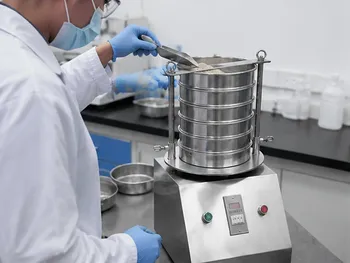
Perhaps the most subtle value: a defined sieve mesh forces the lab to standardize vibration time, amplitude, and cleaning protocols. It turns a fuzzy manual step into a controlled mechanical operation.
When every sample sees the same energy on the same sieve stack, operator variability collapses. Data sets become comparable across days, seasons, and different gloved hands.
The Trade-Offs That Demand Engineering Honesty
No preprocessing step is morally neutral. The 500 μm choice carries assumptions.
Analyte migration risk. Some heavy metals adhere preferentially to larger paint chips or fibers. If your research question is “total lead burden including paint debris,” sieving might remove the very phase you need. You’re not just standardizing—you’re making a value judgment about what constitutes the exposure pathway.
Mechanical alteration. Vigorous vibratory sieving can break fragile particles. A soft agglomerate of gypsum might shatter into fines that never existed in the real world, artificially shifting particle size results. The equipment matters: a poorly controlled shaker is a mill in disguise.
Material contamination. Stainless steel sieves can shed trace chromium and nickel; brass sieves can smear copper and zinc. When analyzing for those specific metals at ultra-trace levels, the sieve itself can become the contaminant source, not the filter.
The 500 μm sieve is not a perfect tool. It’s a deliberate, transparent compromise—and that transparency is what makes good science.
From Dust to Data: A Practical Framework
Whenever I set up a new indoor dust project, I mentally run three questions through the sieve itself:
- Is extraction efficiency my bottleneck? If yes, the 500 μm cut becomes non-negotiable. Remove the inert bulk, expose the fines, and let chemistry do its work.
- Am I chasing long-term reproducibility? Then you must fix vibration time, sieve stack sequence, and cleaning between samples. Automation helps. Inconsistent sieving is worse than no sieving.
- Could the sieve interfere with my target analytes? Match sieve frame material to your analyte list. For ultra-trace work, consider non-metallic mesh or dedicated sets.
Your analytical instrument can only report what it sees. The sieve decides what gets seen.
The Bigger Picture: Sample Preparation Is the Instrument
We tend to think of the mass spectrometer, the XRF, the GC—these are the “real” instruments. The crusher, the mill, the sieve shaker are just grunt work.
That hierarchy is backwards.
A poorly prepared sample sabotages even the world’s finest analyzer. A perfectly prepared sample, standardized and representative, makes an adequate instrument excellent. The physical processing chain—from jaw crushers for bulk materials, to planetary ball mills for nano-grinding, to air-jet sieving for fine fractions—is not a set of accessories. It’s the first and most decisive analytical step.
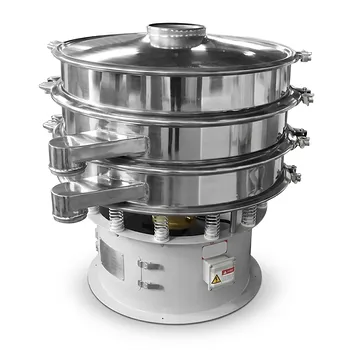
We build our entire product philosophy around this reality. High-energy vibratory sieve shakers that deliver consistent, programmable agitation. A complete range of test sieves in mesh configurations precisely calibrated for environmental standards. And for labs that need everything before the sieve—the cryogenic grinders that reduce difficult samples without chemistry alteration, the planetary ball mills that achieve sub-micron homogeneity, the cold and warm isostatic presses that compact powders into robust geometries for further testing.
Each piece connects. The crusher feeds the mill. The mill feeds the sieve. The sieve feeds the press. And the press feeds the analytical instrument with a sample that isn’t lying.
A Table to Carry With You
| Challenge | How a 500 μm Sieve Responds | The Analytical Payoff |
|---|---|---|
| Non-representative debris | Excludes hair, fibers, grit >500 μm | Prevents random large outliers; stabilizes sub-sampling |
| Slow digestion / extraction | Creates uniform fine-particle bed | Increased surface area means rapid, reproducible recovery |
| Matrix interference in analysis | Narrows particle size distribution | Reduces plasma flicker, X-ray scatter, weighing variations |
| Operator-to-operator variability | Imposes fixed mechanical sieving step | Turns sample prep into a calibrated protocol, not a habit |
| Cross-contamination risk | Choice of sieve material (stainless, brass, non-metallic) | Preserves trace integrity for metals of interest |
The Silence Before the Signal
There’s an engineer’s romance in a 500 μm aperture—a humble wire mesh that doesn’t compute, doesn’t ionize, doesn’t graph. It sits between chaos and clarity, quietly doing what no algorithm can: physically separating what matters from what misleads.
That separation is the act of defining your data before you collect it. When your blanks run clean, your replicates tighten, and your control charts flatten, thank the instrument if you like. But remember the sieve.
Because before you measure anything, you must decide what to ignore. That decision is the truest signal in your whole dataset.
Quick Links
Suggested Products
Laboratory Vibratory Test Sieve Shaker for Precision Particle Size Analysis and Powder Grading Small Laboratory Vibrating Sieve Shaker for Precise Particle Size Analysis 三维电磁微量振动筛分仪 Small Laboratory Vibratory Sieve Shaker for Powder Gradation and Particle Size Analysis Vibratory Sieve Shaker Electromagnetic 3D Motion Powder Particle Size Analyzer for Dry and Wet SievingFurther Reading
The Sieve Never Lies: How a Simple Stack of Mesh Became the Lab’s Ultimate Truth-Teller The Grain Size That Held Up Cathedrals: A Sieve Analysis Story The Quiet Gravity of a Perfect Mix: How Sieves and 3D Tumblers Engineer Certainty in Drug Formulation The Sieve and the Mind: Why Your Soil Test Results Depend on Replacing Human Fatigue with Engineered Consistency The Experiment That Refused to Repeat: How a Vibratory Sieve Shaker Removes the Physical Noise from Adsorption Science
PowderPreparation
Last updated on May 14, 2026
Related Products
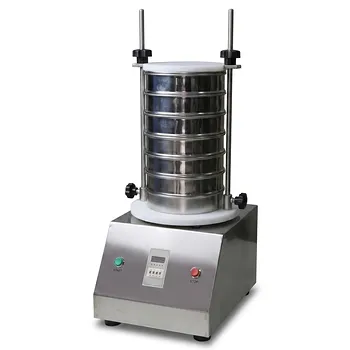
Laboratory Vibratory Test Sieve Shaker for Precision Particle Size Analysis and Powder Grading
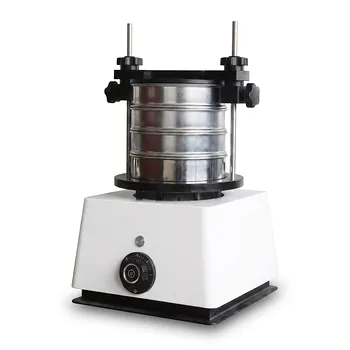
Small Laboratory Vibrating Sieve Shaker for Precise Particle Size Analysis
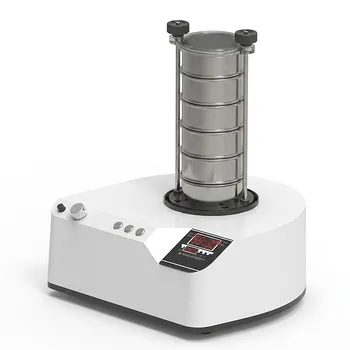
三维电磁微量振动筛分仪
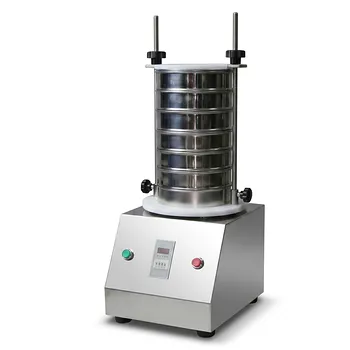
Small Laboratory Vibratory Sieve Shaker for Powder Gradation and Particle Size Analysis
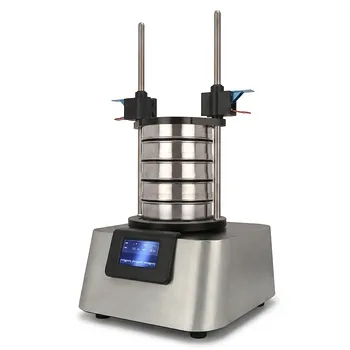
Vibratory Sieve Shaker Electromagnetic 3D Motion Powder Particle Size Analyzer for Dry and Wet Sieving
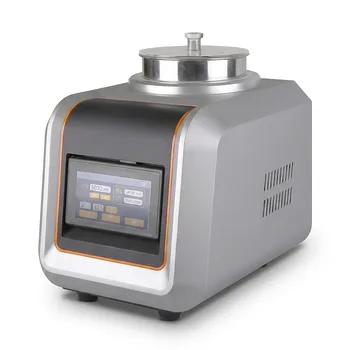
Laboratory Air Jet Sieving Machine for Fine Powder Particle Size Analysis and Deagglomeration
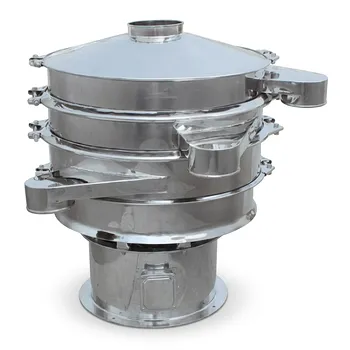
Stainless Steel Rotary Vibrating Sieve High Precision Circular Vibratory Separator Industrial Powder Grading Machine Multi Layer Sifting Equipment
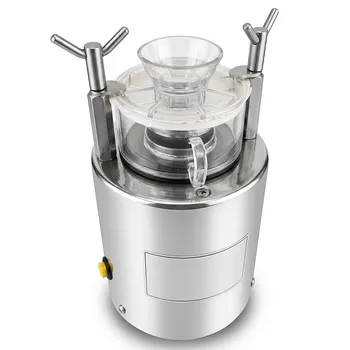
Laboratory Desktop Ultra Fine Powder Grinder High Speed Micronizing Pulverizer
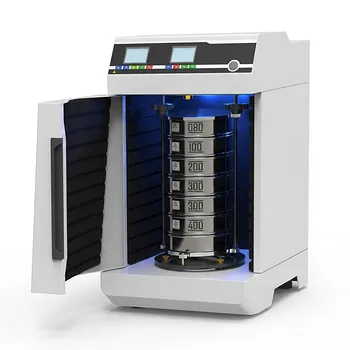
Laboratory Dry and Wet Three Dimensional Vibratory Sieve Shaker for Particle Analysis
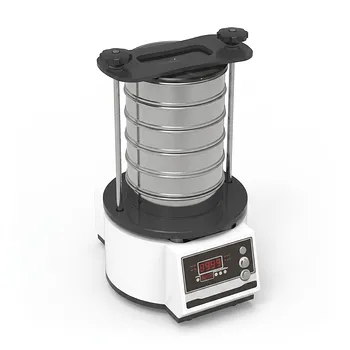
Tapping Oscillating Sieve Shaker for Dry and Wet Particle Size Analysis
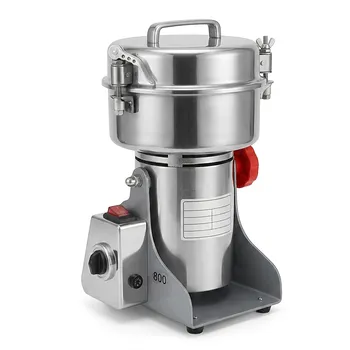
Small High-Speed Laboratory Grinder for Rapid Sample Preparation
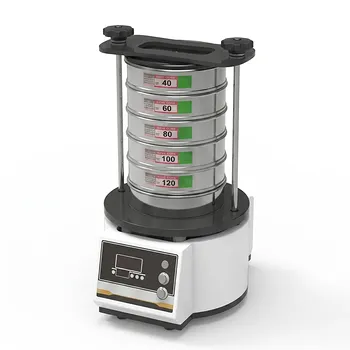
Dry Three Dimensional Vibratory Sieve Shaker
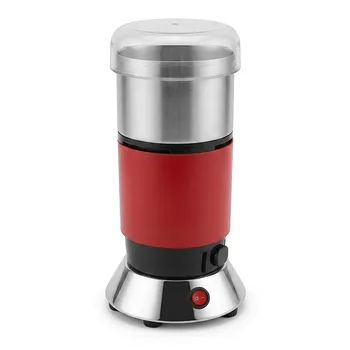
Micro Solid Sample Grinder High Speed Pulverizer for Laboratory Small Batch Grinding
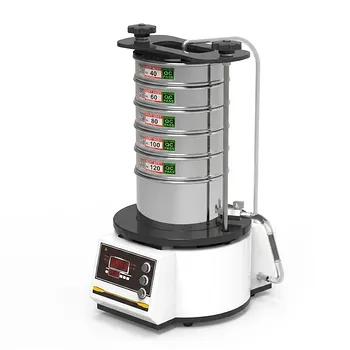
High Frequency Wet Three-Dimensional Vibrating Sieve Shaker for Dry and Wet Particle Size Analysis
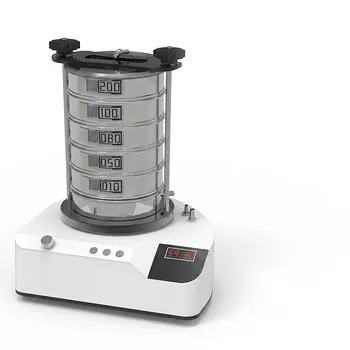
Heavy Duty Dry Three Dimensional Vibratory Sieve Shaker for Particle Separation