The 400-Micron Calibration: What Precision Sieving Reveals About Your Sprouted Grain Powder
Aug 10, 2026
The Unseen Variable That Frustrated Every Batch
A product developer once told me, “The recipe is identical. The mill is the same. But some days the powder floats into the mix, and other days it clumps into stones.” She was describing sprouted mung bean powder, a plant-protein darling that refused to behave. The temperature logs were spotless. The moisture content was within spec. Yet dispersion was a lottery.
The culprit hid in the one place nobody thought to inspect: the particle size distribution.
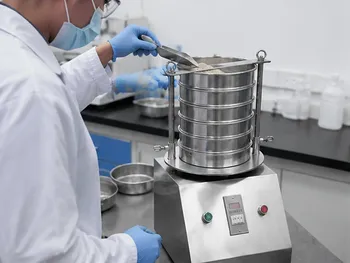
We tend to obsess over variables we can see—roasting time, water ratio, mixer speed. But particle size is a ghost variable. It shifts subtly with every mill blade wear cycle, every ambient humidity spike, every raw bean lot. You don’t notice it until your extrusion line seizes or your nutritional label misses its protein claim. Precision sieving with vibratory sieve shakers doesn’t just measure that ghost—it cages it.
This is not a story about cleaning. It’s a story about calibration.
Why Particle Size Is a Functional Dial, Not a Trivial Number
In sprouted grain and pulse powders, particle diameter is a proxy for almost every functional property you care about. Change the size, and you silently re-engineer the ingredient.
The Absorption Switch
When you pass sprouted sorghum powder through a 425-micron test sieve, you’re not just removing husks. You’re setting the specific surface area that will meet water or oil in a formulation. Too much coarse fraction, and the powder drinks slowly—leaving dry pockets in a dough. Too many fines, and it wicks moisture instantly, creating a paste on the mixer wall while the core stays raw.
Uniform distribution achieved through a vibratory shaker turns absorption from a guessing game into a predictable parameter. The bulk density stabilizes. Package fill weights stop drifting. And the cost accountant stops panicking.
The Texture You Can’t Fake
Sprouted bean powders promise “clean label” creaminess. But a few oversized seed-coat fragments—sharp, flat, indigestible—are enough to shatter that promise. Consumers register grit not as a particle size problem but as a product failure. They won’t buy again, and they won’t write you a polite email explaining the physics.
High-precision sieving removes those tactile landmines. It also drastically improves dispersion stability: uniformly small particles remain suspended longer, resisting sedimentation. That’s the difference between a smooth protein shake and one that separates into sludge and water within three minutes.
The Extruder Doesn’t Forgive
Industrial processing amplifies small particle-size errors into catastrophic stops. In twin-screw extrusion, dough rheology is sacred. The screws work against a very specific viscosity window. Throw in a 20% faction of oversized particles, and you create local dry spots that heat differently, expand unevenly, and sometimes simply jam the barrel.
I’ve seen a production line lose six hours because nobody sieved the “pre-milled” flour. The visible spec for moisture and protein was fine. The invisible spec—the width of the particle size distribution—was a disaster. A vibratory sieve shaker with a carefully chosen mesh would have caught the problem in the laboratory, not on the factory floor.
Extraction Is a Mass Transfer Equation
When sprouted mung bean powder enters a hydrothermal extraction process, every particle is a tiny reservoir of bioactives. Large particles hold their contents hostage; the solvent can’t penetrate fast enough, so the active yield drops. The next batch, milled a touch finer, over-extracts and introduces bitter notes. Without a narrow particle size range, the extract concentration profile wanders, and so does the clinical data.
Sieving doesn’t create the actives. It creates consistency in release kinetics—which is the only thing that makes a functional ingredient claim defensible.
The Nutritional Numbers Are Particle-Size Dependent
Here’s a painful truth for R&D managers: your proximate analysis can be wrong—not because your assay is bad, but because your sample is a physical mess.
Protein, fiber, ash, and fat are not uniformly distributed across particle fractions. The fine fraction drifting into the bag might be mostly starch endosperm. The coarse fraction clinging to the edges might be concentrated bran and germ. If you don’t separate and re-blend with intention, your gold-standard lab will report a nutritional profile that represents no real production batch. Vibratory sieve shakers allow you to classify fractions and understand where your nutrients actually live.
Even more critical is the physiological impact. Researchers have shown that the glycemic index and resistant starch content of legume powders shift measurably across particle size ranges of 150 µm to 500 µm. A powder marketed for blood sugar management cannot afford a bimodal distribution that silently speeds up digestion. The sieve shaker is, in effect, a quality assurance tool for metabolic claims.
The Trade-Offs You Have to Manage
Precision sieving isn’t free. The finer the mesh, the longer the sieving time, and the more your production manager stares at the throughput number. Very fine powders, especially below 45 µm (325 mesh), are notorious for sieve blinding—particles plugging the openings, causing the machine to labor without progress. The art lies in matching amplitude, time, and mesh aperture to your specific powder’s morphology and moisture.
Then there’s the yield question. Removing the bran-heavy coarse fraction elevates quality, but it also removes mass. You need a second stream for that byproduct—perhaps a high-fiber blend—or the economics tilt negative. The best sieving strategy is always a holistic one that views the “coarse tail” as a co-product, not waste.
How to Pick Your Sieving Strategy
Your mesh selection and shaker settings should mirror your end goal:
- For mouthfeel and solubility: Use a high-energy vibratory shaker with 250 µm to 425 µm screens to eliminate grit and seed coat fragments entirely.
- For extrusion and baking: Prioritize a narrow distribution range; this prevents flow blockages and ensures even hydration in high-speed mixers.
- For nutritional profiling and R&D: Separate the powder into distinct fractions using a stack of test sieves, and analyze how nutrient density shifts by size.
In every case, the test sieve isn’t a simple strainer. It’s a calibration dial that sets the functional, nutritional, and economic boundaries of your ingredient.
Beyond the Sieve: The Full Sample Preparation Logic
A sieve shaker works best when the material entering it has already been prepared with the same obsession for consistency. Grit in the final powder often starts with an uneven grind. Irregular particle shapes confuse the sieving process, reducing separation efficiency and accelerating mesh wear.
That’s why high-precision sieving belongs inside a broader sample preparation ecosystem. Uniform grinding—whether from a planetary ball mill, a jet mill, or a cryogenic grinder for heat-sensitive sprouted grains—feeds the shaker a material it can actually classify accurately. When the goal is a perfect XRF pellet or a consistent extraction powder, pairing a press or a mixer with calibrated sieving transforms a workflow from “good enough” to scientifically reproducible.
Our own laboratory solutions for material science are built around this exact principle. We provide complete powder processing and compaction equipment—vibratory and air-jet sieve shakers with full ranges of test sieves, but also the crushers, mills, mixers, and hydraulic presses that sit upstream and downstream.
From liquid nitrogen cryogenic grinders that protect heat-sensitive nutrients in sprouted grains, to cold isostatic presses that form perfectly homogeneous pellets for analysis, the hardware is designed to make batch-to-batch variation a solved problem.
When you see a producer consistently hitting their nutritional targets and never fighting extrusion jams, they’re not lucky. They’ve built a system that treats particle size as a parameter to be engineered, not a property to be endured. Precision sieving is the measurement and enforcement arm of that system—and it pays back in functional performance, label accuracy, and processing peace of mind.
To start mapping your sprouted grain powder process onto this kind of deliberate control, Contact Our Experts.
Quick Links
Suggested Products
Laboratory Vibratory Test Sieve Shaker for Precision Particle Size Analysis and Powder Grading Small Laboratory Vibrating Sieve Shaker for Precise Particle Size Analysis Small Laboratory Vibratory Sieve Shaker for Powder Gradation and Particle Size Analysis 三维电磁微量振动筛分仪 Laboratory Dry and Wet Three Dimensional Vibratory Sieve Shaker for Particle AnalysisFurther Reading
The Sieve Never Lies: How a Simple Stack of Mesh Became the Lab’s Ultimate Truth-Teller The Grain Size That Held Up Cathedrals: A Sieve Analysis Story The Sieve and the Mind: Why Your Soil Test Results Depend on Replacing Human Fatigue with Engineered Consistency The Quiet Gravity of a Perfect Mix: How Sieves and 3D Tumblers Engineer Certainty in Drug Formulation The Experiment That Refused to Repeat: How a Vibratory Sieve Shaker Removes the Physical Noise from Adsorption Science
PowderPreparation
Last updated on May 14, 2026
Related Products
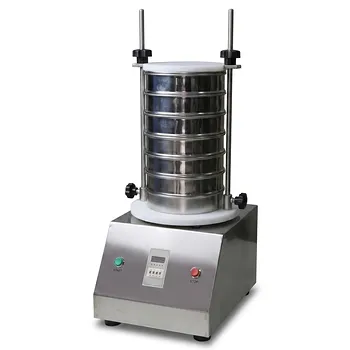
Laboratory Vibratory Test Sieve Shaker for Precision Particle Size Analysis and Powder Grading
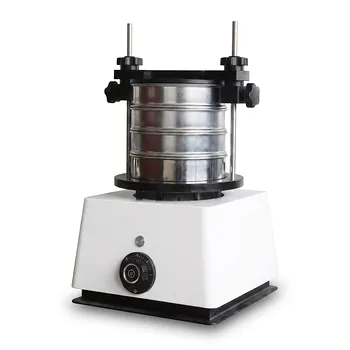
Small Laboratory Vibrating Sieve Shaker for Precise Particle Size Analysis
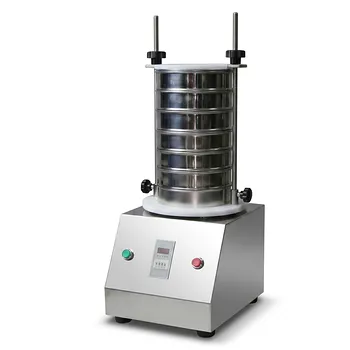
Small Laboratory Vibratory Sieve Shaker for Powder Gradation and Particle Size Analysis
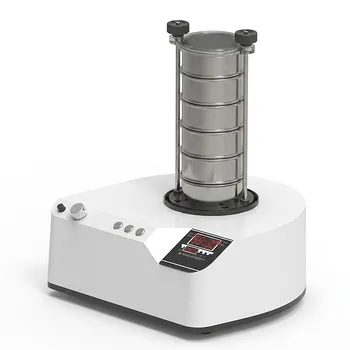
三维电磁微量振动筛分仪
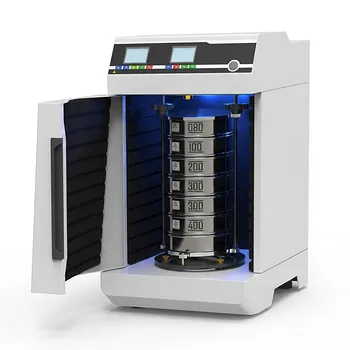
Laboratory Dry and Wet Three Dimensional Vibratory Sieve Shaker for Particle Analysis
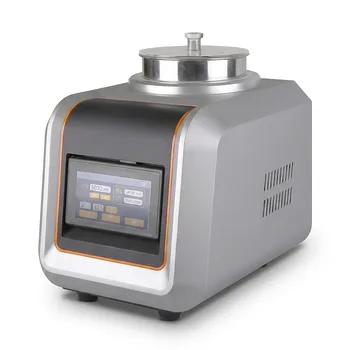
Laboratory Air Jet Sieving Machine for Fine Powder Particle Size Analysis and Deagglomeration
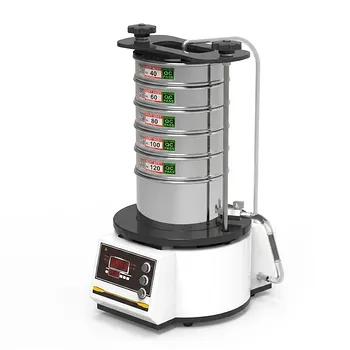
High Frequency Wet Three-Dimensional Vibrating Sieve Shaker for Dry and Wet Particle Size Analysis
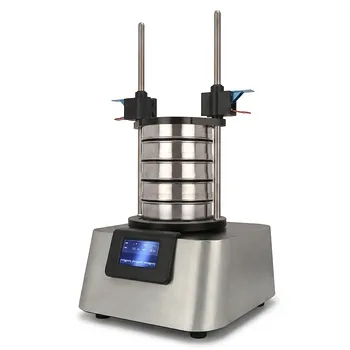
Vibratory Sieve Shaker Electromagnetic 3D Motion Powder Particle Size Analyzer for Dry and Wet Sieving
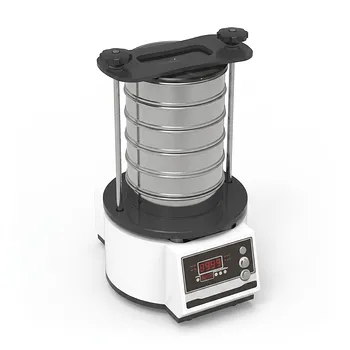
Tapping Oscillating Sieve Shaker for Dry and Wet Particle Size Analysis
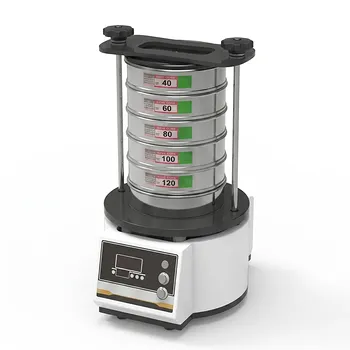
Dry Three Dimensional Vibratory Sieve Shaker
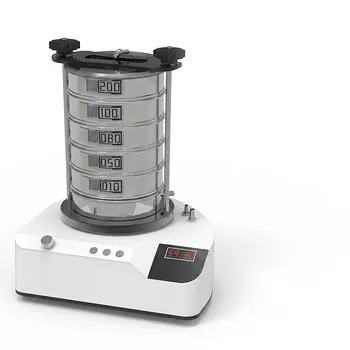
Heavy Duty Dry Three Dimensional Vibratory Sieve Shaker for Particle Separation
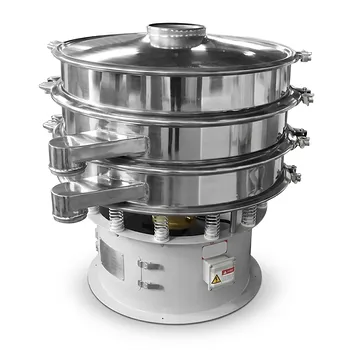
Three Dimensional Rotary Vibrating Sieve
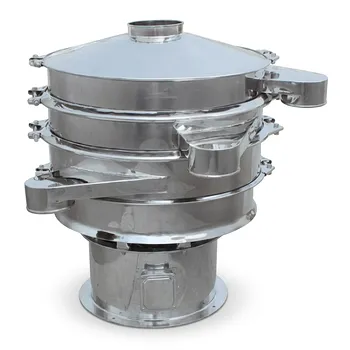
Stainless Steel Rotary Vibrating Sieve High Precision Circular Vibratory Separator Industrial Powder Grading Machine Multi Layer Sifting Equipment
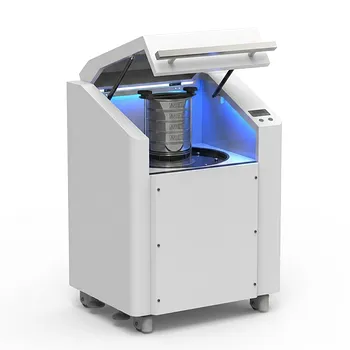
High Frequency Cabinet Type Three-Dimensional Rotary Vibrating Sieve Shaker for Dry Sieving and Particle Classification
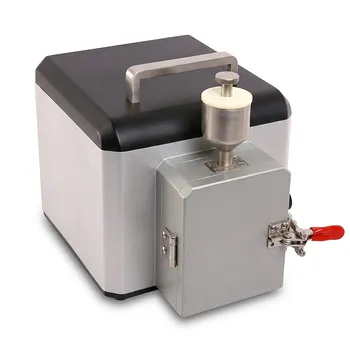
Portable Cutting Mill for Laboratory Sample Preparation and RoHS WEEE Compliance Testing
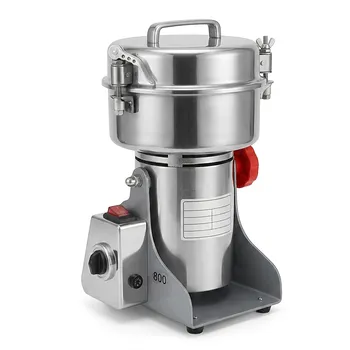
Small High-Speed Laboratory Grinder for Rapid Sample Preparation
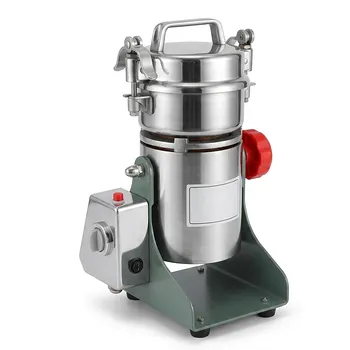
High Speed Swing Type Laboratory Pulverizer for Fine Powder Grinding and Sample Preparation
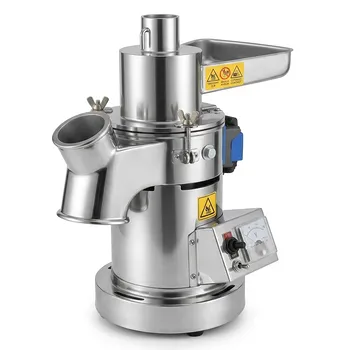
Continuous Feeding Grinder High Efficiency Pulverizer for Lab Sample Preparation
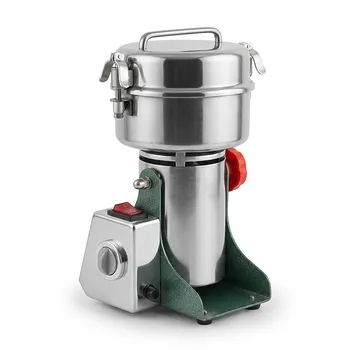
Small High-Speed Swing Grinder for Laboratory Sample Preparation