The 150-Micron Gatekeeper: Why a Single Sieve Defines the Integrity of Advanced Materials
Aug 27, 2026
The Laboratory Error That Starts in a Quarry
There is a quiet moment in every materials laboratory when an engineer stares at a fractured ceramic matrix and asks, "Where did this come from?" The crack pattern suggests a stress concentrator. The thermal data shows an unexplained exothermic drift. The SEM image reveals a landscape of voids.
The search for the culprit often leads back to the very first step. It is not the furnace profile. It is not the pressing pressure. It is a particle. A single, oversized particle that should have been stopped. A grain that bypassed the gatekeeper.
This is the story of why a simple 100-mesh test sieve—a 150-micron stainless steel boundary—holds more power over analytical truth than most multi-million dollar instruments. It is the difference between a representative sample and a random guess.
The Nugget Effect: A Statistical Betrayal
Mineral raw materials are inherently chaotic. They are the fragmented legacy of geological processes, and they do not yield to simplification easily. When a geologist scoops powder from a jar, they are betting that the scoop represents the whole.
This bet is often lost.
The Tyranny of Heterogeneity
Oversized particles create what assayers call the "nugget effect." A single chip of high-grade ore, if it slips into a sample destined for chemical analysis, can spike the reported metal content by an order of magnitude. Conversely, a chunk of barren gangue can dilute a rich deposit into seeming worthlessness.
The consequences are not academic. They are economic.
- A mining operation overestimates its yield, and a feasibility study becomes a liability.
- A ceramicist misjudges impurity levels, and a batch of advanced substrates fails thermal qualification.
- A researcher publishes XRD data that no other lab can replicate.
The 100-mesh sieve is the impartial arbitrator. It declares a simple rule: No particle larger than 150 microns passes through.
Homogeneity as a Precondition for Truth
Analytical instruments assume uniformity. An X-ray fluorescence (XRF) spectrometer shoots photons at a surface and calculates composition based on the return signal. If the surface is a patchwork of large, distinct mineral phases, the instrument is not analyzing the sample. It is analyzing three random spots that happen to be in the beam path.
Sieving to 100 mesh transforms a chaotic pile of geological fragments into a statistical population where the laws of sampling begin to actually work. It forces the material into a state where a few grams can speak for many tons.
The Physics of Better Chemistry
Why 150 microns? The answer is not arbitrary. It sits at a sweet spot where surface area and reactivity begin to change the behavior of a particle fundamentally.
The Surface-to-Volume Threshold
A particle with a diameter of 150 microns has a surface-area-to-volume ratio that ensures near-complete interaction with chemical reagents or thermal environments. When you are running a thermogravimetric analysis (TGA) to understand decomposition temperatures, a large particle can act as a miniature heat sink.
The outside might burn or decompose, while the core remains unchanged. The instrument records a sluggish, drifting mass loss. The data curve becomes a fiction—a story not of material properties, but of particle size artifacts.
Eliminating the "Shadow" in X-Ray Peaks
In X-ray diffraction (XRD), the goal is to see crystal planes. Photons strike the sample, diffract at precise angles, and create a fingerprint of the atomic structure. An oversized grain oriented randomly can block signal from the surrounding matrix, causing preferred orientation effects.
The result is a diffractogram where peaks are suppressed or exaggerated. A novice researcher might chase this ghost, searching for a new mineral phase that does not exist. The experienced hand checks the sieve first. A clean 150-micron pass often makes the "mystery peak" disappear.
The Ceramicist’s Hidden Enemy
Nowhere is the 100-mesh rule more physically consequential than in the sintering furnace. Sintering is a thermodynamic drive toward a lower energy state. Particles bond. Pores shrink. The body densifies.
This process assumes that the driving force is uniform. Large particles introduce a local violation of this assumption.
Stress Concentrators in the Green Body
When you press a powder into a pellet or a crucible, you are packing particles. A distribution that respects the 150-micron upper limit can pack efficiently. The voids between particles are small and evenly distributed.
Introduce an oversized particle into this matrix. It acts like a rock in a bucket of sand. The smaller particles cannot pack densely around it. During sintering, that large particle shrinks at a different rate than its neighbors.
The result is predictable and devastating:
- Differential sintering: Micro-cracks radiate from the inclusion boundary.
- Void formation: The matrix pulls away, leaving a permanent structural defect.
- Mechanical failure: The final part’s strength is defined not by its average microstructure, but by its largest flaw.
The Waste Powder Trap
Recycling is common in powder processing. Green bodies that break are ground and re-pressed. With each cycle, unless you sieve, you introduce hard agglomerates—clusters of particles that have pre-bonded under pressure. These agglomerates behave exactly like oversized ore. They refuse to break down during remixing. The 100-mesh sieve catches them, forcing you to deagglomerate before they become defects in the next generation of parts.
The Hidden Costs of the 150-Micron Standard
This gatekeeping is not free. The 150-micron boundary comes with operational friction that, if ignored, creates its own data corruption.
Sieve Blinding: The Silent Efficiency Killer
Dry sieving fine minerals generates static. Particles with high surface energy adhere to the mesh wires. This is blinding. The effective opening size shrinks. Material that should pass is retained.
The operator sees an ever-growing pile of "oversize" and might conclude the grinder is failing. They waste energy re-grinding already fine material, eventually reducing it to sub-micron sludge that creates its own handling problems. This is not quality control; it is over-processing driven by a blocked mesh.
The Contamination Memory
A 100-mesh sieve can retain residue. Cleaning it between samples of different mineral types is painstaking. A few grains of high-purity alumina left in a sieve before processing a batch of zirconia can permanently dope the zirconia, altering its sintering behavior.
This is cross-contamination. It turns a screening tool into a doping instrument. The integrity of your sample preparation equipment is the integrity of your data. A system designed with easy disassembly and non-reactive contact surfaces transforms this risk into a manageable step.
Building the Sieve Curve: A Lesson in Process Control
The 100-mesh sieve should rarely be used in isolation. Its true value emerges as part of a sieve curve.
Mapping the Grinding Signature
By stacking a 60-mesh sieve above a 100-mesh, above a 200-mesh, you can plot the particle size distribution. This curve tells you not just if the powder is fine enough, but how your crusher or mill is performing.
Is the crusher producing a bimodal distribution? Are the planetary ball mill’s jars wearing unevenly? The sieve curve is the diagnostics dashboard. Without the 100-mesh standard as a fixed reference point, you lose the ability to trend equipment wear and predict failure.
The Payback on Energy
Grinding is energy-intensive. Every minute a mill runs costs money and introduces potential media wear contamination. When you target a specific mesh size, you stop the process the moment the material passes, not when it is "probably fine." This lean approach to sample preparation directly translates to lower operational costs and higher throughput.
Matching the Sieve to the Application
The standard is fixed, but the emphasis shifts depending on your goal.
For the Analytical Chemist
Your priority is digestion completeness. A 150-micron pass ensures your acid attack or fusion flux consumes the entire sample, leaving no refractory core unreacted. Your precision improves. Your duplicates align.
For the Microstructural Engineer
Your priority is image fidelity. A powder that passes 100 mesh creates a uniform surface for SEM analysis. You see grain boundaries, not topographical shadows from plucked-out chunks.
For the Press Operator
Your priority is die fill. Consistent particle size flows like a fluid into the mold cavity. It does not bridge. It does not segregate. The resulting green density is uniform, and warp during sintering disappears.
Instrumentation That Honors the Standard
The best protocol collapses without the right tools. Processing hard minerals to a consistent 150-micron fineness requires equipment engineered for specific failure modes.
The Crushing Stage
Before sieving begins, primary size reduction must be clean. Jaw crushers and roll crushers with hardened manganese steel plates provide a controlled initial breakdown without introducing iron contamination that can skew chemical analysis.
The Milling Precision
For the final grind to sub-150 micron, high-energy planetary ball mills or jet mills become essential. Planetary mills provide the impact energy needed to fracture brittle minerals. Jet mills, which use particle-on-particle collision, eliminate grinding media wear entirely—preserving purity for sensitive XRF or ICP workflows.
When processing temperature-sensitive or volatile materials, liquid nitrogen cryogenic grinders embrittle the sample, allowing it to shatter below 150 microns without thermally degrading.
The Sieving Action
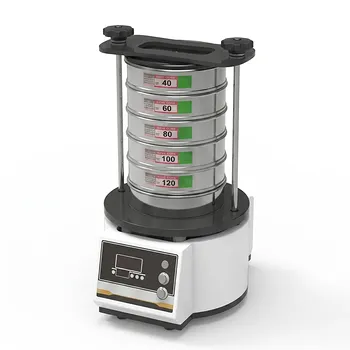
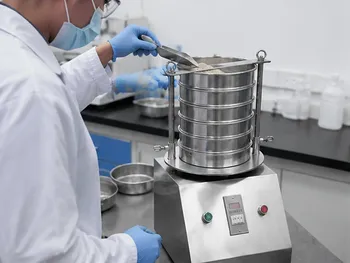
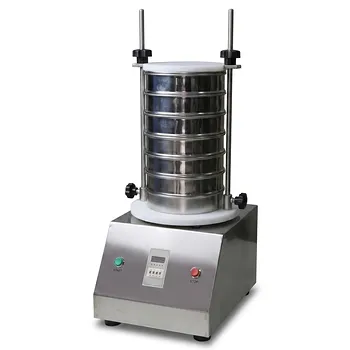
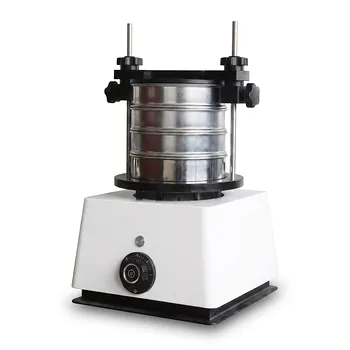
The sieve itself requires mechanical assistance. Vibratory sieve shakers provide three-dimensional motion that prevents blinding, while air-jet sieve shakers use a rotating air stream to sweep the mesh and fluidize the powder bed. These are designed to achieve accurate separations without destroying fragile particles.
The Final Geometry
After classification, the uniform powder must be consolidated. Cold Isostatic Presses (CIP) or vacuum hot presses convert homogenous, 150-micron-restricted powder into green bodies of isotropic density—free from the packing flaws that create sintering defects. For routine elemental analysis, XRF pellet presses produce uniform, flat surfaces that guarantee analytical signal integrity.
The chain is unbroken: crush, grind, sieve, press. Each step depends on the previous one.
Returning to Reliability
There is a reassuring finality to a sieve analysis that reads "100% pass, 100 mesh." It is a declaration of readiness. The powder has been disciplined. It is ready to be weighed, pressed, and tested, with a reasonable assurance that the data it produces will reflect the material and not the preparation artifact.
This is the quiet dignity of sample preparation. It is not glamorous. It happens before the expensive spectrometers power on. But the best instruments in the world cannot fix a sample that was not truly sampled. And the first step to a true sample is passing through a precise, woven boundary of stainless steel—the 150-micron gatekeeper.
Ready to remove the guesswork from your mineral sample preparation? Contact Our Experts
Quick Links
Suggested Products
Laboratory Vibratory Test Sieve Shaker for Precision Particle Size Analysis and Powder Grading Small Laboratory Vibrating Sieve Shaker for Precise Particle Size Analysis Small Laboratory Vibratory Sieve Shaker for Powder Gradation and Particle Size Analysis Small Laboratory Jaw Crusher 125x100mm Feed Opening for Sample Preparation Laboratory Air Jet Sieving Machine for Fine Powder Particle Size Analysis and DeagglomerationFurther Reading
The Sieve Never Lies: How a Simple Stack of Mesh Became the Lab’s Ultimate Truth-Teller The Grain Size That Held Up Cathedrals: A Sieve Analysis Story The 0.15 mm Question: Why Sieve Grading Is the Quiet Foundation of Reliable Lightweight Mortar The Sieve and the Mind: Why Your Soil Test Results Depend on Replacing Human Fatigue with Engineered Consistency The Quiet Gravity of a Perfect Mix: How Sieves and 3D Tumblers Engineer Certainty in Drug Formulation
PowderPreparation
Last updated on May 14, 2026
Related Products
Laboratory Vibratory Test Sieve Shaker for Precision Particle Size Analysis and Powder Grading
Small Laboratory Vibrating Sieve Shaker for Precise Particle Size Analysis
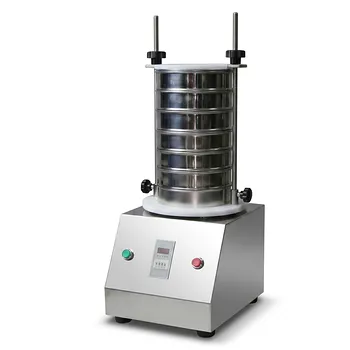
Small Laboratory Vibratory Sieve Shaker for Powder Gradation and Particle Size Analysis
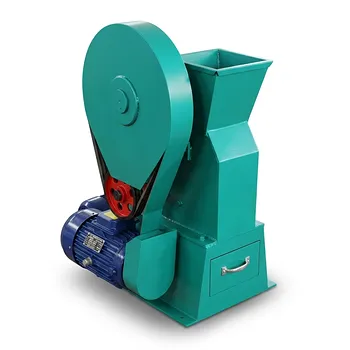
Small Laboratory Jaw Crusher 125x100mm Feed Opening for Sample Preparation
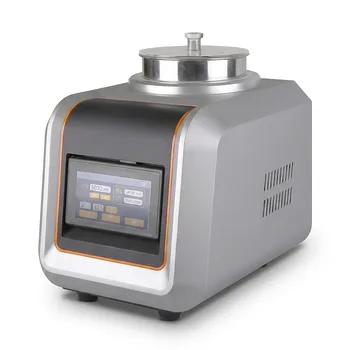
Laboratory Air Jet Sieving Machine for Fine Powder Particle Size Analysis and Deagglomeration
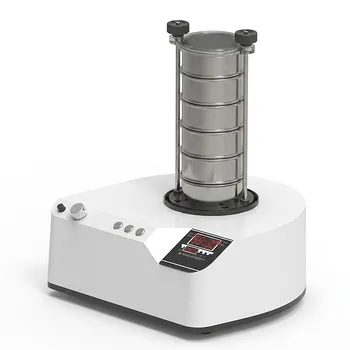
三维电磁微量振动筛分仪
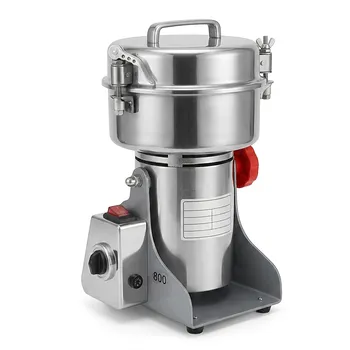
Small High-Speed Laboratory Grinder for Rapid Sample Preparation
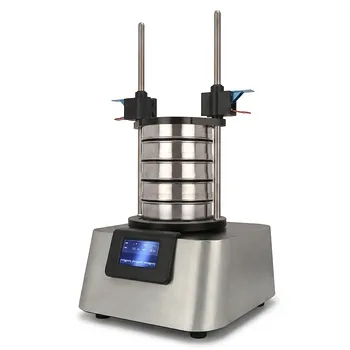
Vibratory Sieve Shaker Electromagnetic 3D Motion Powder Particle Size Analyzer for Dry and Wet Sieving
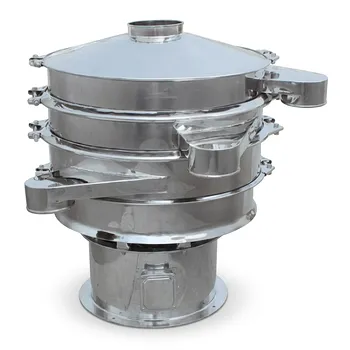
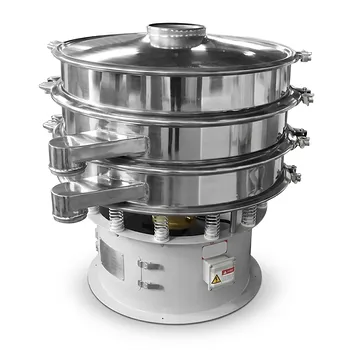
Stainless Steel Rotary Vibrating Sieve High Precision Circular Vibratory Separator Industrial Powder Grading Machine Multi Layer Sifting Equipment
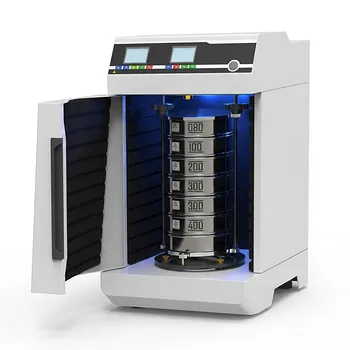
Laboratory Dry and Wet Three Dimensional Vibratory Sieve Shaker for Particle Analysis
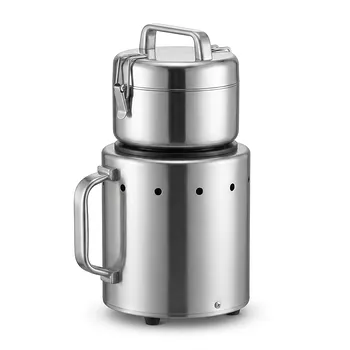
Small High Speed Grinder for Laboratory Sample Preparation
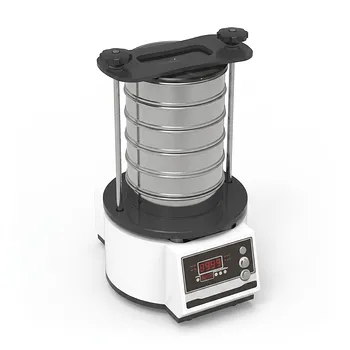
Tapping Oscillating Sieve Shaker for Dry and Wet Particle Size Analysis
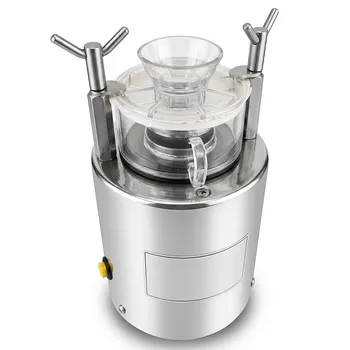
Laboratory Desktop Ultra Fine Powder Grinder High Speed Micronizing Pulverizer
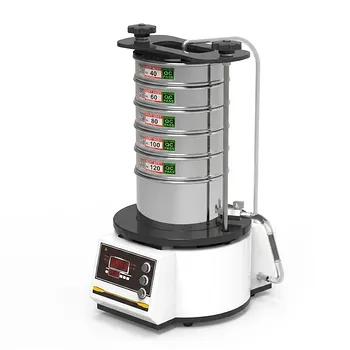
High Frequency Wet Three-Dimensional Vibrating Sieve Shaker for Dry and Wet Particle Size Analysis
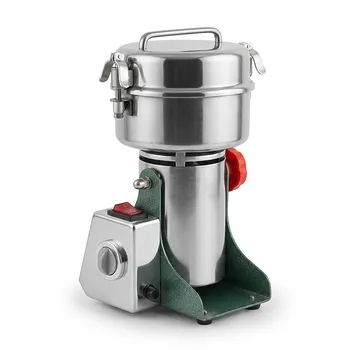
Small High-Speed Swing Grinder for Laboratory Sample Preparation
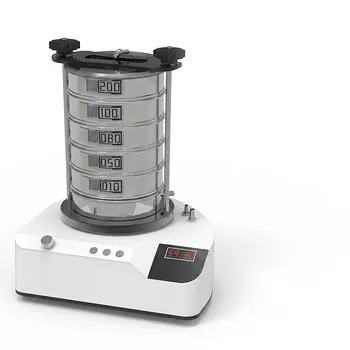
Heavy Duty Dry Three Dimensional Vibratory Sieve Shaker for Particle Separation
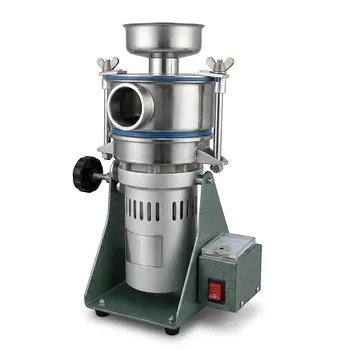
Small Airflow Ultra-Fine Grinder for Laboratory Sample Preparation
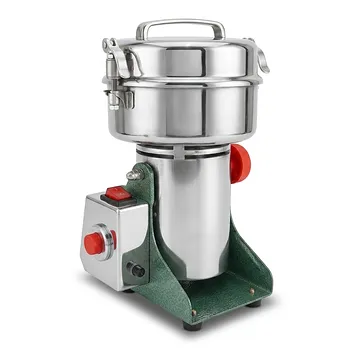
Small High-Speed Laboratory Grinder for Powder Processing
Three Dimensional Rotary Vibrating Sieve