The 11-Micron Truth: Why Your Cement’s Strength Depends on a Sieve and a Shaker
Sep 24, 2026
The Engineer and the Brittle Sidewalk
An engineer I know once spent three months chasing a phantom. His company’s cement passed every chemical assay yet delivered 28-day strengths that wandered as if the material had a mood disorder. Compressive failure was not dramatic; it was a quiet, creeping weakness. He tore apart his XRF data, recalibrated his spectrometers, and slept poorly.
The answer eventually came not from a new analytical instrument but from an old, unglamorous one: a vibratory sieve shaker fitted with a micro‑mesh sieve. A single fraction, isolated at 11 microns, told the real story. The clinker was fine, but the sulfate additive had segregated during storage. The problem was physical, not chemical.
We often believe that precision lives inside the newest instruments. But in materials engineering, the loudest truths are sometimes whispered by the simplest devices.
Why Physical Separation Still Outsmarts Chemical Analysis
Modern laboratories are temples of spectroscopy. Yet cement—this ancient, fire‑born material—hides its performance flaws in physical architecture, not just chemistry. Two particles of identical elemental composition can behave entirely differently because they differ in size, shape, or hardness.
The Hardness Story No Spectrometer Tells
When you grind Portland cement clinker and gypsum together, you create a mixture where one component is significantly harder than the other. Clinker particles are abrasive, resistant, and reluctant to shatter further. Gypsum and other sulfate additives are softer, almost willing to disintegrate under mechanical stress.
A vibratory sieve shaker exploits this difference. It doesn’t read elemental peaks; it simply lets the material fight itself. Under controlled vibration, the softer gypsum is reduced and passes through fine apertures, while the harder clinker stays coarser. This is not separation by chemistry. It is separation by character.
The Poetic Efficiency of an 11-Micron Aperture
Eleven microns is roughly a fifth the diameter of a human hair. At that scale, you stop sorting what something is made of and start sorting how it behaves under stress. Micro‑mesh sieves as fine as 11 μm allow you to isolate the clinker phase from sulfate additives almost purely on the basis of differential hardness. No reagents. No heating. Just vibration and wire cloth.
“Precision is not always about adding complexity. Sometimes it’s about removing everything except the one physical force that matters.”
Packing Density: The Quiet Variable Behind Every Strong Concrete
If you ask a structural engineer what makes concrete strong, they will talk about water‑cement ratios and chemical admixtures. But there’s an older, deeper logic: how tightly the particles nest together.
The Art of Aggressive Grading
Aggregates and sand in a mortar mix are not just filler. They form a skeleton. When you achieve continuous grading—a smooth cascade of particle sizes from coarse to fine—the smaller grains slip into the gaps between larger ones. This raises packing density, reduces porosity, and quietly raises compressive strength.
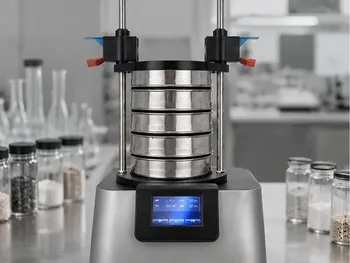
A vibratory sieve shaker with a full stack of test sieves does this grading analysis with a reliability that manual shaking can never match. It’s not glamorous work. But it’s the difference between a sidewalk that survives a freeze‑thaw cycle and one that spalls after its first winter.
The 120‑Mesh Window That Controls Hydration Heat
Cement hydration is an exothermic beast. Release heat too fast, and you crack massive structures from the inside out. The fineness of cement governs this heat evolution, and the magic often lies between 106 and 125 microns—the 120‑ to 150‑mesh range.
A vibratory shaker gives you reproducible control over this narrow band. Miss it, and you either delay setting dangerously or invite thermal stresses that no post‑pour reinforcement can fix.
The Agglomerate Deception That Tricks Your Data
Fine powders lie. Calcium carbide residue, silica fume, and similar supplementary materials form soft agglomerates that look like large particles under a microscope but hold no true structural integrity. If you sieve them gently, they remain intact, and your particle size distribution becomes a work of fiction.
High‑frequency vibratory sieving applies enough mechanical energy to break these false clusters without shattering primary grains. The result is a distribution curve that reflects reality. This is not cruelty to the powder; it’s honesty.
“We fear breaking particles, but sometimes the worst thing you can do is leave an agglomerate whole. The data you get won’t just be wrong—it will be confidently wrong.”
The Hidden Cost of Precision: Blinding, Wear, and Time
Of course, physics exacts a price for every insight.
Blinding: When Sieves Become Walls
At mesh counts this high, particles lodge in apertures and refuse to budge. Vibratory shakers use a throwing action to fight this, but no mechanism is immune. Frequent cleaning isn’t a maintenance afterthought; it is an inseparable part of the measurement ritual. Neglect it, and your sieve becomes a blind sentry, blocking passage and corrupting every result.
The Trade‑Off You Must Accept
High‑frequency vibration speeds separation, but micro‑fine particles still demand patience. You face a fork in the road: accept longer cycle times to achieve representative separation, or rush and sacrifice the very accuracy you bought the equipment for. There is no technological magic that removes this trade‑off, only disciplined acceptance.
Wear, Calibration, and the Standard That Watches Over You
Separating hard clinker eats at the wire cloth. Over time, apertures widen, and your data drifts. ASTM C136 exists to stop this decay. It demands reproducible digital settings, known amplitudes, and regular calibration. When your equipment meets it, your results earn a legal and technical standing that no informal method can provide.
Beyond the Sieve: The Sample Prep Ecosystem That Makes It All Work
Here is where most articles stop. They tell you about the sieving trick and leave you alone with it. But a sieve shaker, no matter how precise, is only as good as the sample fed into it.
From Boulder to 11 Microns Without Losing the Truth
Cement analysis doesn’t start at the sieve. It starts earlier—with crushing and splitting that respect the original heterogeneity. If your jaw crusher contaminates the sample, if your splitting introduces bias, the most exquisite sieve in the world will only give you a precise measurement of a wrong specimen.
This is why a complete sample preparation philosophy matters. You need robust crushing (jaw and roll crushers), cryogenic options for heat‑sensitive or tough materials, fine milling down to the colloidal range (planetary ball mills, jet mills, disc mills), and accurate splitting to maintain representativeness. Then comes the sieve.
And after sieving? If you are pressing pellets for XRF, you need a hydraulic press that applies force evenly. If you are doing phase analysis, you might need a vacuum hot press or an isostatic press to eliminate porosity artifacts. The chain is long, and every link shares the same burden: to never alter what the material wants to tell you.
Choosing Your Configuration Based on What You Care About
If your pain point is phase isolation, reach for a vibratory shaker with micro‑mesh sieves down to 11 μm and gentle amplitude. Let differential hardness do the work.
If strength is your obsession, assemble a full stack of test sieves and grade your aggregates relentlessly toward maximum packing density.
If hydration keeps you awake, lock onto the 120–150 mesh band and monitor fineness modulus across every batch as if it were a patient’s vital signs.
If compliance is non‑negotiable, demand digital, reproducible settings and calibration routines that satisfy ASTM C136. This is paperwork elevated to a moral commitment.
The Engineer’s Romantic Realism
We entered this topic through a brittle sidewalk and a restless engineer. He found his answer in a machine that shook a stack of wire meshes—a device his lab had almost forgotten. But the real insight wasn’t the sieve. It was the recognition that material truth lives in physical processes as much as in chemical fingerprints.
At our core, we provide complete laboratory sample preparation solutions for material science, specializing in high‑performance powder processing and compaction equipment. Our product lines span the whole journey: crushers, liquid nitrogen cryogenic grinders, planetary ball mills, jet mills, sand and bead mills, disc mills, vibratory and air‑jet sieve shakers, powder mixers, defoaming mixers, and a full spectrum of hydraulic presses—from standard lab presses and XRF pellet presses to hot presses, vacuum hot presses, and cold/warm isostatic presses. Every link is designed to respect the physical story your material is trying to tell.
The next time your cement misbehaves, don’t just ask what it is. Ask how it breaks, how it packs, and how it resists a simple shaking. The answer may already be sitting on your shelf, waiting for a little vibration.
Quick Links
Suggested Products
Vibratory Sieve Shaker Electromagnetic 3D Motion Powder Particle Size Analyzer for Dry and Wet Sieving Laboratory Dry and Wet Three Dimensional Vibratory Sieve Shaker for Particle Analysis Stainless Steel Laboratory Vibratory Test Sieve Shaker Heavy Duty Dry Three Dimensional Vibratory Sieve Shaker for Particle Separation Dry Three Dimensional Vibratory Sieve ShakerFurther Reading
The Hidden Economics of Particle Size: Why the Most Overlooked Variable in Material Science Controls Everything The Invisible Architecture of Powder: How a Vibratory Sieve Shaker Decides What Your Amaranth Bread Becomes The Particle-Size Lever: Why the Most Overlooked Step in Catalyst Design Determines Everything Else When Glass Melts Fail, It Was Never the Furnace: The Hidden Economics of Sand Gradation The Quarter-Millimeter Margin: Why Vibratory Sieve Precision Determines Artificial Stone Profitability
PowderPreparation
Last updated on May 14, 2026
Related Products
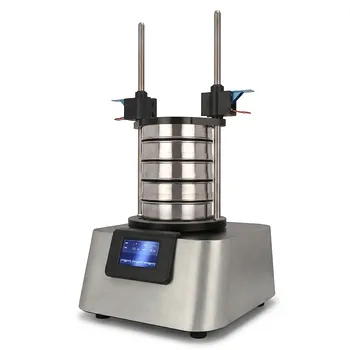
Vibratory Sieve Shaker Electromagnetic 3D Motion Powder Particle Size Analyzer for Dry and Wet Sieving
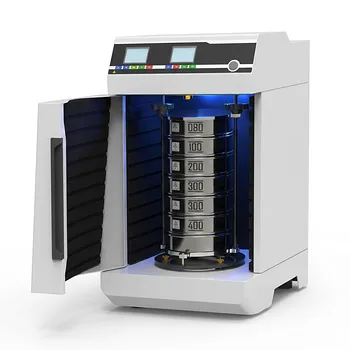
Laboratory Dry and Wet Three Dimensional Vibratory Sieve Shaker for Particle Analysis
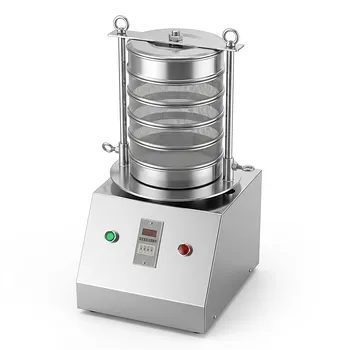
Stainless Steel Laboratory Vibratory Test Sieve Shaker
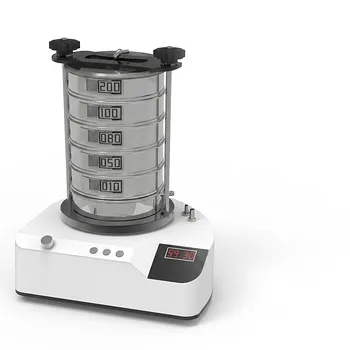
Heavy Duty Dry Three Dimensional Vibratory Sieve Shaker for Particle Separation
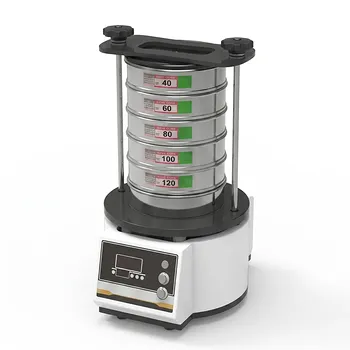
Dry Three Dimensional Vibratory Sieve Shaker
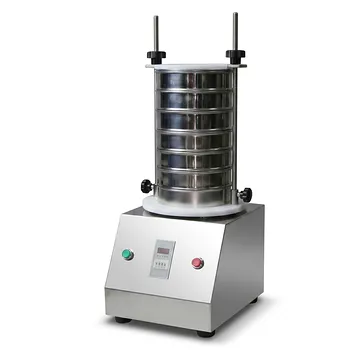
Small Laboratory Vibratory Sieve Shaker for Powder Gradation and Particle Size Analysis
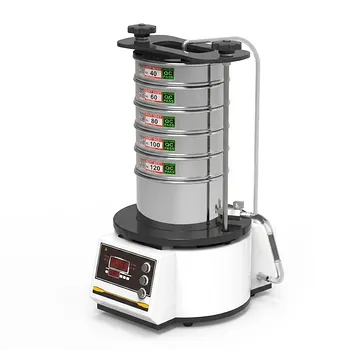
High Frequency Wet Three-Dimensional Vibrating Sieve Shaker for Dry and Wet Particle Size Analysis
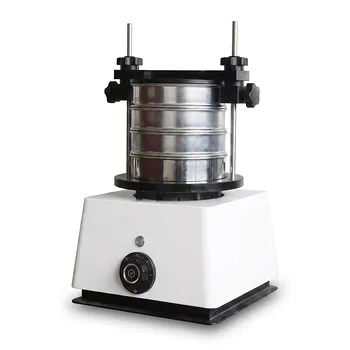
Small Laboratory Vibrating Sieve Shaker for Precise Particle Size Analysis
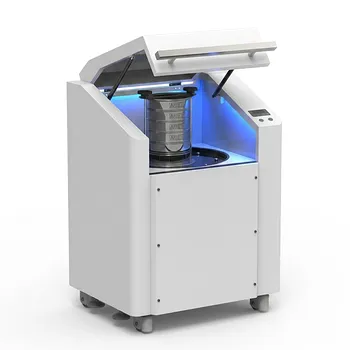
High Frequency Cabinet Type Three-Dimensional Rotary Vibrating Sieve Shaker for Dry Sieving and Particle Classification
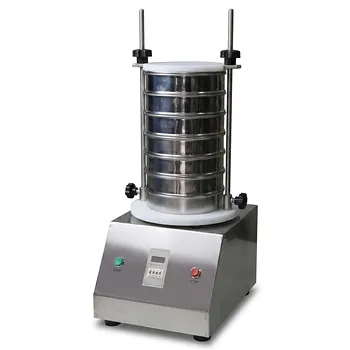
Laboratory Vibratory Test Sieve Shaker for Precision Particle Size Analysis and Powder Grading
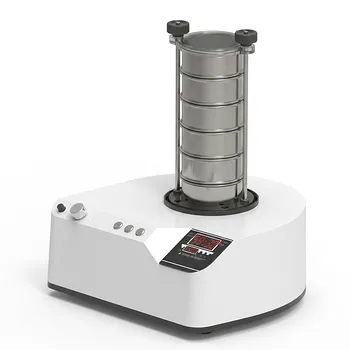
三维电磁微量振动筛分仪
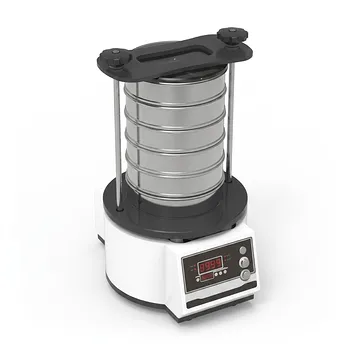
Tapping Oscillating Sieve Shaker for Dry and Wet Particle Size Analysis
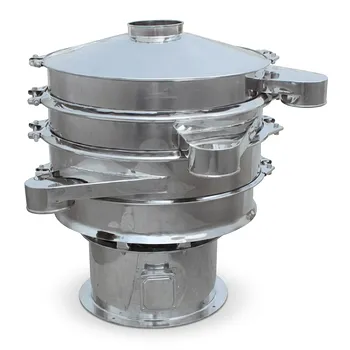
Stainless Steel Rotary Vibrating Sieve High Precision Circular Vibratory Separator Industrial Powder Grading Machine Multi Layer Sifting Equipment
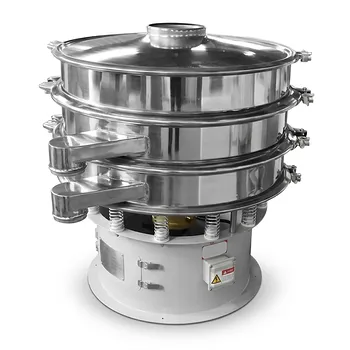
Three Dimensional Rotary Vibrating Sieve
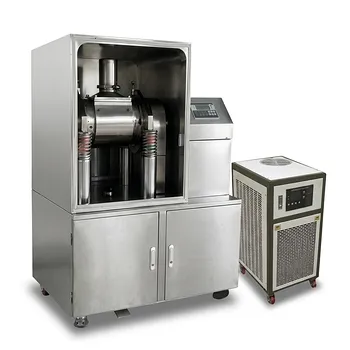
Small Vibrating Ultrafine Grinder for Traditional Chinese Medicine
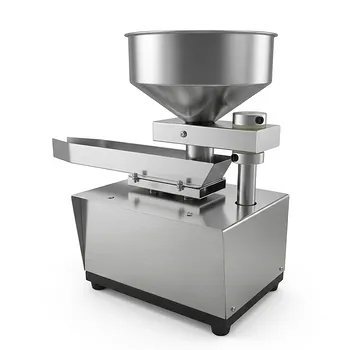
Automatic Vibrating Powder Feeder for Laboratory Material Processing Precision Vibratory Hopper Feeder for Granular and Powder Material Handling Industrial Grade Vibrating Tray Feeder for Consistent Material Sample Preparation
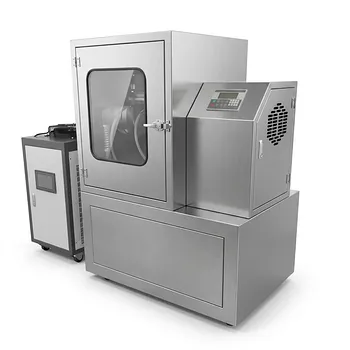
Vibratory Superfine Grinder for Ultra Fine Laboratory Powder Milling
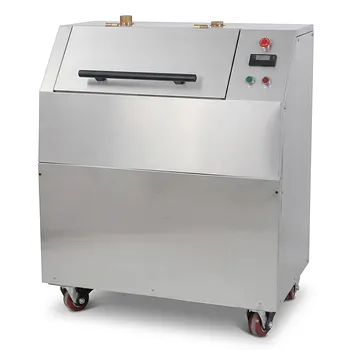
Vibratory Disc Mill for Rapid Fine Grinding and High Throughput Sample Preparation of Hard and Brittle Materials