The 0.033-Inch Gatekeeper: What a Precision Sieve Teaches Us About Life-Saving Powders
Jun 27, 2026
The Particle That Couldn’t Dissolve
Before a drug works, it must become a solution inside the body. For many modern molecules—large, complex, hydrophobic—that step is the entire bottleneck. The raw active ingredient sits in a beaker like wax in water, promising cure but delivering nothing.
Pharmaceutical chemists invented solid dispersions specifically to solve this. They embed the drug in a hydrophilic carrier matrix, locking the molecule in an energetically excited, amorphous state. But that’s only half the battle.
The real miracle begins when that glassy block meets a high-speed blade.
Why Your Tablet Is a Surface-Area Race
The Noyes-Whitney equation tells a brutal truth: dissolution rate scales linearly with surface area. Double the surface area, double the speed at which a drug enters the bloodstream. For a poorly soluble compound, this isn’t a minor optimization—it’s the difference between a therapeutic effect and a failure.
Reduce particle size, and you magnify that surface area exponentially. A single 1 mm particle crushed into 10-micron fragments multiplies available interfaces by orders of magnitude. This is the core engine behind bioavailability enhancement. But physics has a way of punishing extremes.
The finer the powder, the more it resists being a powder at all.
The Violence That Creates Order
Impact Milling as Controlled Catastrophe
An impact mill doesn’t cut or slice—it shatters. High-speed rotor assemblies impart intense, localized mechanical energy into the solid dispersion. Brittle fracture mechanics take over: cracks propagate, cascading through the glassy matrix until the entire structure disintegrates into a cascade of fragments.
It’s not gentle. It’s not supposed to be. The goal is maximum energy delivery in minimum time, converting bulk solid into a cloud of particles before heat or shear forces can trigger molecular relaxation—the dreaded recrystallization.
The Sieve That Doesn’t Negotiate
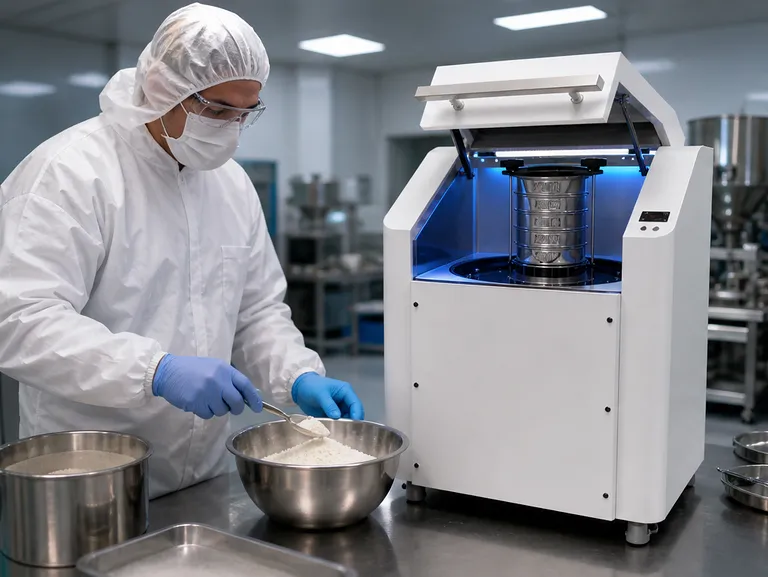
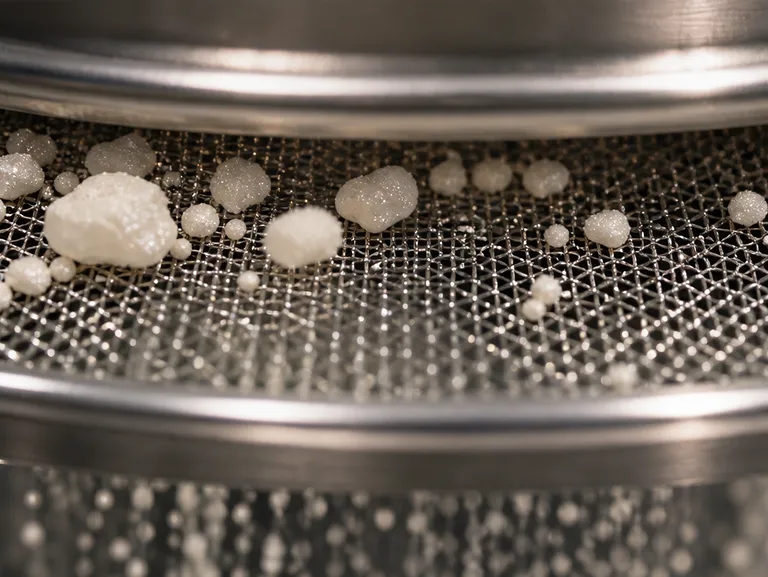
Immediately after fragmentation, the powder stream hits a precision sieve. A specific aperture—often 0.033 inches or smaller—acts as an unforgiving quality gate. Oversized fragments never reach the product batch; they’re recycled into the grinding chamber until their dimensions comply.
This creates something remarkable: a controlled particle size distribution, not just a “fine powder.” Narrow distributions mean predictable dissolution kinetics and, crucially, predictable behavior during tablet compression.
The Psychology of Extremes
Engineers love purity of logic. We dream of a 100% surface-area-maximized powder. But useful formulations live in the messy middle.
The Heat That Erases the Past
Impact milling generates friction. Friction generates heat. And heat is a time machine for amorphous solid dispersions—it pushes them back toward the stable, crystalline state they were designed to escape.
A single processing step can undo months of clever formulation work. The amorphous fraction collapses. Bioavailability vanishes. And the operator, staring at a dissolution test result, blames the chemistry when the true culprit was thermal history.
The “Fines” Paradox
Over-milling creates extremely fine particles—dust. But in powder flow dynamics, ultra-fines act like adhesive mortar, coating larger particles and increasing inter-particle friction. The result? A powder that refuses to feed consistently into a tablet press.
This is the psychological trap: more surface area is the mantra until the processing line jams. The same intuition that drives bioavailability now cripples manufacturability.
The Engineer’s Balancing Table
Every solid dispersion project sits at a crossroads. The right choice depends entirely on your primary objective.
| Processing Goal | Milling Strategy | Sieve Approach | Hidden Risk |
|---|---|---|---|
| Maximum bioavailability | Aggressive size reduction, smaller sieve aperture | Tight cutoff, e.g., <500 µm | Heat-induced recrystallization, excess fines |
| High-speed tableting | Optimize for narrow distribution, flowability first | Slightly larger aperture to reduce ultra-fines | Lower surface area, slower dissolution |
| Heat-sensitive actives | Cryogenic cooling or reduced rotor speed | Retain calibrated aperture | Potentially lower throughput, higher cycle time |
The table reveals an inconvenient truth: no single strategy works for every compound. The powder that flows perfectly might dissolve too slowly. The powder that dissolves instantly might not flow at all.
The Romantic Bridge Between Physics and Pharmacy
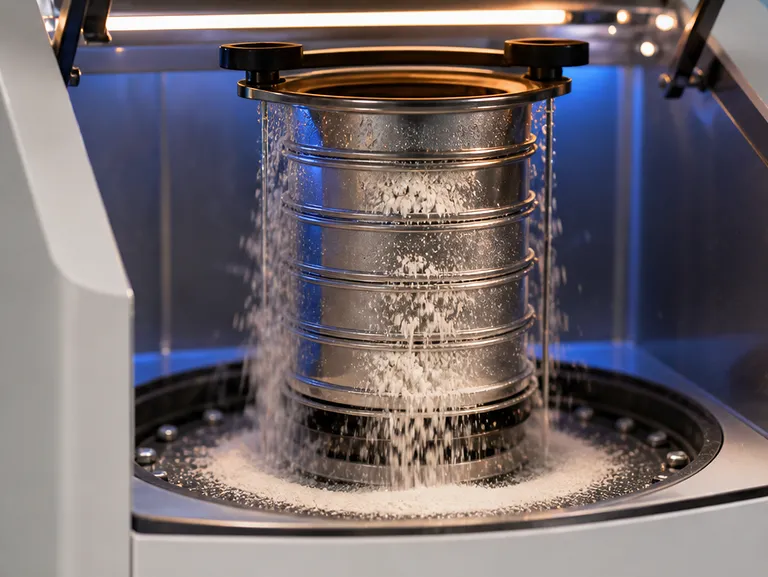
This is where the beauty of sample preparation engineering emerges. It’s not just about mills and sieves—it’s about building an entire processing ecosystem that preserves the fragile, amorphous architecture of a drug while turning it into a reproducible industrial product.
When Cryogenics Enters the Picture
Some solid dispersions contain molecules so thermally sensitive that even frictional heating from impact milling triggers degradation. Liquid nitrogen cryogenic grinders solve this by making the material brittle through deep cooling, allowing fracture with minimal heat input. The amorphous state stays intact.
When Particle Shape Matters
Jet mills use high-speed particle-particle collisions instead of mechanical blades, producing powders with smooth, rounded morphologies. This dramatically improves flowability without sacrificing surface area—a elegant solution when both bioavailability and tableting speed are non-negotiable.
From Powder to Pellet to Performance
Once the optimal particle size is locked in, downstream sample preparation becomes equally critical. Planetary ball mills provide ultra-fine grinding for dissolution studies. Laboratory hydraulic presses, including XRF pellet presses and Cold Isostatic Presses (CIP), compact powders into uniform disks or pellets for physical characterization. Vacuum hot presses eliminate porosity, enabling thermal analysis without oxidation artifacts. The entire chain matters.
A Laboratory Built for the Messy Middle
We design sample preparation solutions that understand these trade-offs intimately. Our equipment lineup isn’t a random catalog—it’s a deliberate toolkit for navigating the physics of powders:
- Precision sieving with vibratory and air-jet sieve shakers replicates the exact separation dynamics needed to validate your particle size distributions, with test sieves down to the finest meshes.
- Jaw and roll crushers handle the initial size reduction of hard, brittle bulk materials before fine grinding.
- Planetary ball mills, jet mills, disc mills, rotor mills, and sand/bead mills give you the full spectrum of impact, shear, and attrition grinding—each suitable for different solid dispersion mechanical properties.
- Cryogenic grinding systems protect heat-sensitive amorphous structures.
- Hydraulic presses—from standard lab presses to Cold/Warm Isostatic Presses (CIP/WIP) and vacuum hot presses—transform your validated powder into testable solid forms without altering the particle characteristics you just engineered.
- Powder mixers and defoaming mixers ensure homogeneity before compaction, eliminating density gradients that could confound dissolution results.
The common thread is technical precision without dogma. We don’t sell “the best mill.” We provide the right mill—and the right sieve, the right press, the right cooling strategy—for your specific solid dispersion challenge.
The 0.033-Inch Philosophy
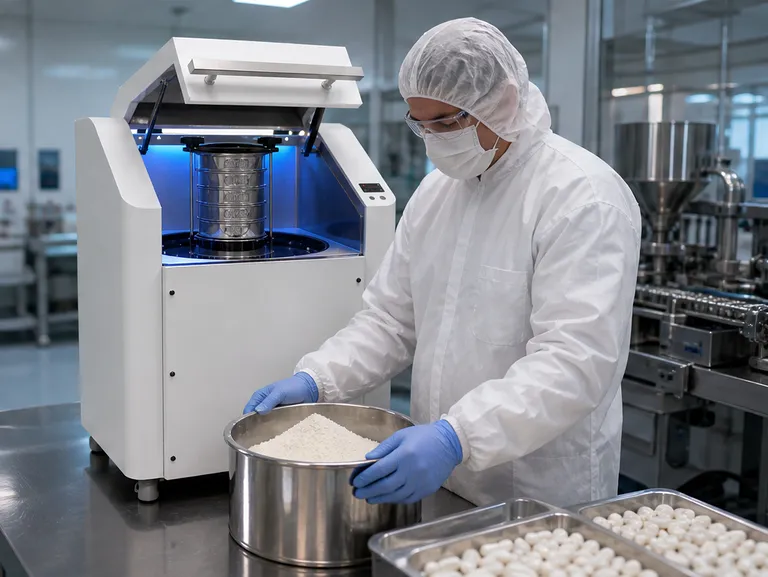
A precision sieve is a statement of intent. It says, “We will not compromise on particle size consistency, because lives depend on reproducible dissolution.” But it also says, “We respect the physical limits of our materials, and we will not destroy them in pursuit of an idealized number.”
That’s the engineer’s romance: solving for constraint, not chasing a single metric. It’s what turns a sticky, heat-sensitive solid dispersion into a reliable, life-saving tablet.
Every powder has a story. We build the instruments that let you write it right.
Quick Links
Suggested Products
High Frequency Cabinet Type Three-Dimensional Rotary Vibrating Sieve Shaker for Dry Sieving and Particle Classification Laboratory Air Jet Sieving Machine for Fine Powder Particle Size Analysis and Deagglomeration Stainless Steel Rotary Vibrating Sieve High Precision Circular Vibratory Separator Industrial Powder Grading Machine Multi Layer Sifting Equipment Laboratory Vibratory Test Sieve Shaker for Precision Particle Size Analysis and Powder Grading High Frequency Wet Three-Dimensional Vibrating Sieve Shaker for Dry and Wet Particle Size AnalysisFurther Reading
The Eggshell Paradox: Why True Material Performance Starts with the Right Shake The Hidden Economics of Particle Size: Why the Most Overlooked Variable in Material Science Controls Everything Precision at 75 Microns: The Hidden Gatekeeper That Decides the Fate of Magnesium Borate Powders The Experiment That Refused to Repeat: How a Vibratory Sieve Shaker Removes the Physical Noise from Adsorption Science How a Sieve Stack Decides the Fate of Crushed Brick: The Science of Particle Characterization
PowderPreparation
Last updated on May 15, 2026
Related Products

High Frequency Cabinet Type Three-Dimensional Rotary Vibrating Sieve Shaker for Dry Sieving and Particle Classification
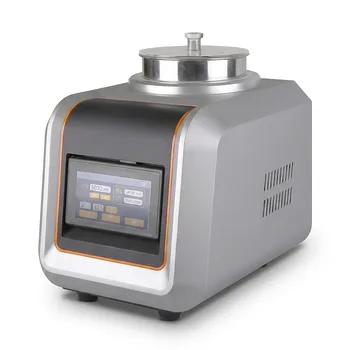
Laboratory Air Jet Sieving Machine for Fine Powder Particle Size Analysis and Deagglomeration

Stainless Steel Rotary Vibrating Sieve High Precision Circular Vibratory Separator Industrial Powder Grading Machine Multi Layer Sifting Equipment

Laboratory Vibratory Test Sieve Shaker for Precision Particle Size Analysis and Powder Grading

High Frequency Wet Three-Dimensional Vibrating Sieve Shaker for Dry and Wet Particle Size Analysis

Dry Three Dimensional Vibratory Sieve Shaker

Heavy Duty Dry Three Dimensional Vibratory Sieve Shaker for Particle Separation

三维电磁微量振动筛分仪

Tapping Oscillating Sieve Shaker for Dry and Wet Particle Size Analysis

Three Dimensional Rotary Vibrating Sieve
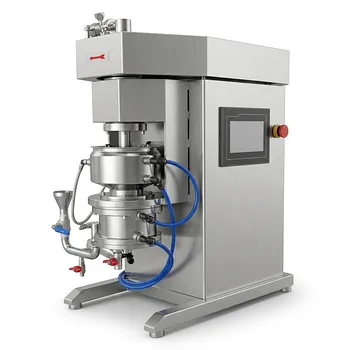
Small Ceramic Structure Laboratory Sand Mill Nanoscale Grinding Dispersion Equipment Seal-less Screen-less Design
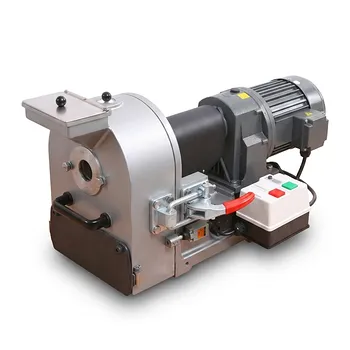
Laboratory Disc Mill for Fine Sample Preparation of Hard and Brittle Materials
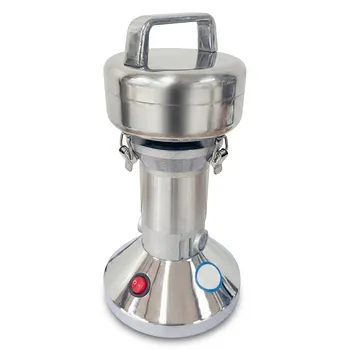
Small Trace Sample High Speed Pulverizer Grinder Laboratory Powder Mill

Automatic Vibrating Powder Feeder for Laboratory Material Processing Precision Vibratory Hopper Feeder for Granular and Powder Material Handling Industrial Grade Vibrating Tray Feeder for Consistent Material Sample Preparation
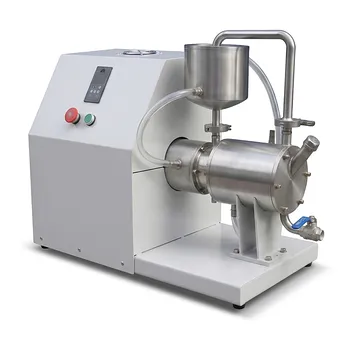
Laboratory Small Horizontal Sand Mill for Nano Materials Wet Grinding
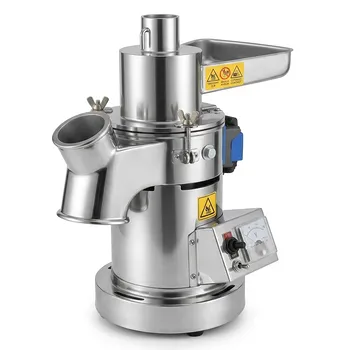
Continuous Feeding Grinder High Efficiency Pulverizer for Lab Sample Preparation