The 0.15 mm Question: Why Sieve Grading Is the Quiet Foundation of Reliable Lightweight Mortar
Oct 23, 2026
Two Batches, One Formula, and a Mystery
The lab technician stared at the two compression test results. Same mix design. Same cement. Same expanded perlite supplier. One sample delivered the targeted thermal resistance and load-bearing capacity. The other crumbled early, its failure pattern a map of invisible weak spots.
The difference was not the chemistry. It was the geometry.
The “identical” perlite aggregate had been sieved on two different shakers with two different vibration protocols. One batch preserved the fragile grain architecture. The other quietly crushed a fraction of the particles into dust. Nobody noticed until the data refused to repeat.
Most construction material failures don’t announce themselves in the mixer. They begin in the sieve.
Perlite Is Not a Material. It Is a Distribution.
Expanded perlite looks like a homogenous white powder. It is anything but. Every grain is a glassy foam filled with microscopic air cells. Its insulating value and mechanical cooperation inside a mortar matrix depend almost entirely on the size of those grains and how they pack together.
A handful of raw perlite spans particles from fine dust to granules approaching 10 mm. Without separation, the mortar inherits that chaos. Fine particles fill the spaces that should remain empty for insulation. Oversized particles create local density gradients that act as crack starters. The result is a material that reliably underperforms.
Standard calibrated sieves solve this by giving engineers a language for size.
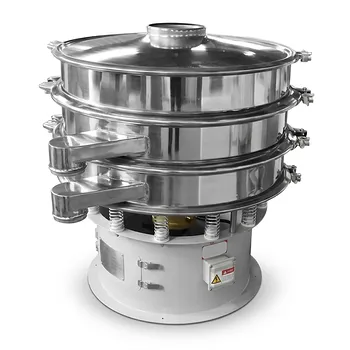
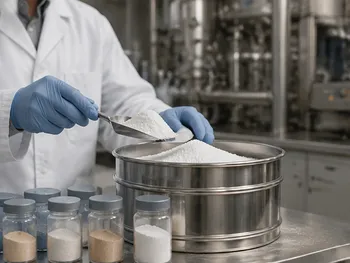
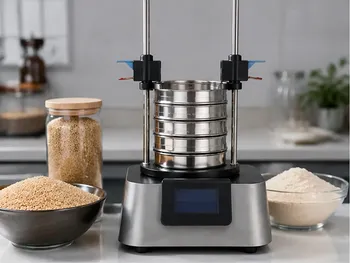
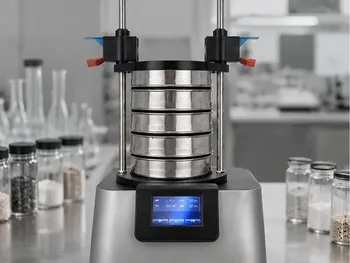
A stack of sieves—typically covering apertures from 0.15 mm to 9.50 mm—turns bulk aggregate into discrete classes: fine, medium, coarse. Each fraction reveals a different trade-off between thermal resistance and mechanical cohesion. The sieve stack doesn’t just measure; it decides what the mortar will become.
The Gradation Curve: A Map of Controlled Porosity
When you weigh what stays on each sieve, you build a gradation curve. This curve is not bureaucracy. It is the single most honest picture of your aggregate’s internal architecture.
- A steep curve dominated by one size range creates lots of inter-particle voids. That’s good for thermal insulation, because still air is a terrible conductor. But it makes the matrix structurally fragile.
- A flat, well-graded curve minimizes voids. Small particles nest between larger ones, creating a denser, stronger skeleton. But it sacrifices insulation because the air pockets disappear.
- A bimodal distribution can offer a compromise, but only if the peaks are exactly where you need them.
The gradation curve tells you in advance whether the mortar will behave as a thermal shield or a load-bearing layer. Without it, you are not engineering. You are hoping.
What the Numbers Actually Mean for Performance
| Particle Fraction | Typical Aperture Range | Primary Role in Mortar |
|---|---|---|
| Fine dust (<0.5 mm) | Too much increases paste demand; fills insulating voids | Often an unintended byproduct of attrition |
| Medium (1 mm – 3 mm) | 1.00 mm – 3.35 mm sieves | Balances air-filled porosity and matrix stability—ideal for insulation |
| Coarse (3 mm – 9.5 mm) | 3.35 mm – 9.50 mm sieves | Improves lightweight bulk but risks strength loss if ungraded |
| Oversized (>9.5 mm) | Rejected for standard mortar | Creates local density anomalies and early cracking |
The table is simple. The discipline it demands is not.
The Attrition Problem: How Sieving Can Lie to You
Expanded perlite is fragile. Its cellular walls shatter under mechanical energy. When a sieve shaker runs too long or at excessive amplitude, grains collide and fracture. This phenomenon—particle attrition—generates fine dust that was never in the original aggregate.
The dust skews the gradation curve toward the fine end. The bulk density increases. The water demand rises. The thermal insulation drops. The engineer looks at perfect sieve data and concludes the aggregate is finer than it should be, not realizing the measurement itself created the problem.
This is a psychological trap built into material testing: we trust the number, but we forget to ask whether the tool changed the sample.
A high-precision vibratory sieve shaker must be programmable. Timed intervals, gentle vertical oscillation, and the right amplitude reduce attrition to a controlled minimum. Some aggregates call for air-jet sieving, which uses a rotating slit nozzle beneath the screen to fluidize particles with air rather than mechanical pounding. For fragile materials, this can be the difference between measuring the true gradation and measuring the crushing damage you just inflicted.
Sieve Blinding: When the Mesh Decides to Quit
Fine perlite particles love to lodge in mesh openings. This is blinding. A blinded sieve stops separating; it just agitates the mass above it. The result is an artificially coarse measurement because nothing can pass through.
Operators often respond by increasing vibration intensity, which only accelerates attrition on the top sieves. The cure for blinding is not brute force. It is a combination of mesh cleaning, anti-static treatment, and in many cases, an air-jet system that continuously clears the apertures during sieving.
Regular calibration checks are non-negotiable. A stretched mesh with apertures 10% larger than nominal will systematically shift your entire gradation curve—and your mortar performance—toward an outcome you cannot explain.
The Hidden Psychology of Aggregate Control
Morgan Housel often writes about the gap between what the data says and what we want to hear. Aggregate gradation sits squarely in that gap.
It is tempting to believe that “average particle size” is enough. It is not. Mortar performance depends on the entire distribution. Two aggregates with identical mean diameters can produce wildly different mortar properties if one is narrowly graded and the other spans three size decades.
Standard sieves force us to confront the full picture. They don’t allow the comfortable simplification of a single number. That is precisely why they are scientifically necessary and psychologically resisted.
The lab that embraces this discomfort is the lab that produces repeatable results. The lab that avoids it spends months troubleshooting inconsistencies that have nothing to do with cement chemistry and everything to do with hidden aggregate drift.
Beyond the Sieve: The Complete Sample Preparation Ecosystem
Sieving separates the aggregate. But the mortar’s final performance depends on every step that comes before and after.
The raw perlite must be crushed or ground to manageable sizes. Supplementary materials like silica fume or fly ash require their own particle size reduction, often demanding advanced milling technology: planetary ball mills for mechanical alloying, jet mills for contamination-free ultra-fine grinding, or liquid nitrogen cryogenic grinders for heat-sensitive additives.
Once the components are correctly sized, they must be uniformly mixed. A powder mixer designed for low-shear homogenization preserves the delicate perlite structure while ensuring the binder coats every grain. Defoaming mixers remove entrapped air that would otherwise add uncontrolled porosity to test specimens.
Then come the test samples themselves. Hydraulic presses—standard lab presses, XRF pellet presses, or even cold and warm isostatic presses—compact the mixture into standardized test specimens. If the pressing conditions vary, the measured mechanical strength will vary too, regardless of how perfect the gradation was.
A discontinuity anywhere in this chain breaks the link between material design and validated performance. The sieve is the analytical gatekeeper, but it works best when it is part of a fully integrated preparation workflow.
The Engineer’s Romance: Repeatability as the Ultimate Rebellion
There is a quiet beauty in preparing a series of mortar samples where the only variable is the one you chose to study. The gradation is consistent. The mixing energy is recorded. The compaction pressure is controlled. The sieves are calibrated.
When the data comes back clean and the thermal-mechanical trade-off behaves exactly as your model predicted, it feels less like science and more like having a conversation with the material on its own terms. That feeling—of having tamed a chaotic, fragile, and beautiful aggregate—is what keeps materials engineers coming back to the lab.
Precision sieving is not glamorous. But it is the foundation on which that conversation is built.
Making the Sieving Strategy Work for Your Goal
- If thermal insulation is your primary goal: Design a gradation curve that peaks between 1 mm and 3 mm. Maintain a narrow distribution to maximize static air pockets. Use gentle sieving with strict time control to preserve grain integrity.
- If high mechanical strength matters most: Aim for a well-graded distribution across the 0.15 mm to 5 mm range to minimize inter-particle voids. Screen out everything above 5 mm rigorously.
- If experimental repeatability is the top priority: Invest in programmable sieve shakers with reproducible amplitude and frequency settings. Calibrate sieves regularly. Document every sieving parameter, because undocumented shaking is undocumented damage.
- If you formulate with sensitive additives: Consider air-jet sieving to avoid attrition and blinding when grading fragile aggregates.
The Laboratory That Controls the Sieve Controls the Mortar
Lightweight mortar performance is built one sieve cut at a time. The difference between a market-leading thermal insulation plaster and a mediocre one often traces back to a gradation curve that was either rigorously enforced or casually assumed.
We provide complete laboratory sample preparation solutions for material science, specializing in powder processing and compaction equipment. Our range includes jaw and roll crushers, liquid nitrogen cryogenic grinders, planetary ball mills, jet mills, disc mills, and rotor mills for every raw material challenge. For sieving, we offer programmable vibratory sieve shakers and air-jet sieve shakers with certified test sieves and meshes. Powder mixers, defoaming mixers, and a full spectrum of hydraulic presses—from XRF pellet presses to cold and warm isostatic presses and vacuum hot presses—ensure that your sample preparation chain never breaks between the sieve and the final measurement.
When your gradation curve is trustworthy, your material model is trustworthy. When your entire preparation workflow is integrated under one standard of precision, the data finally speaks the language of the material—not the noise of the tool.
Quick Links
Suggested Products
Vibratory Sieve Shaker Electromagnetic 3D Motion Powder Particle Size Analyzer for Dry and Wet Sieving 三维电磁微量振动筛分仪 Stainless Steel Laboratory Vibratory Test Sieve Shaker Small Laboratory Vibrating Sieve Shaker for Precise Particle Size Analysis Dry Three Dimensional Vibratory Sieve ShakerFurther Reading
The Hidden Economics of Particle Size: Why the Most Overlooked Variable in Material Science Controls Everything The Invisible Architecture of Powder: How a Vibratory Sieve Shaker Decides What Your Amaranth Bread Becomes The Particle-Size Lever: Why the Most Overlooked Step in Catalyst Design Determines Everything Else When Glass Melts Fail, It Was Never the Furnace: The Hidden Economics of Sand Gradation The Quarter-Millimeter Margin: Why Vibratory Sieve Precision Determines Artificial Stone Profitability
PowderPreparation
Last updated on May 14, 2026
Related Products
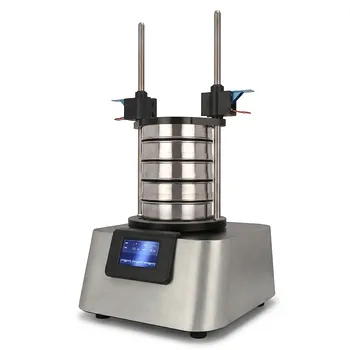
Vibratory Sieve Shaker Electromagnetic 3D Motion Powder Particle Size Analyzer for Dry and Wet Sieving
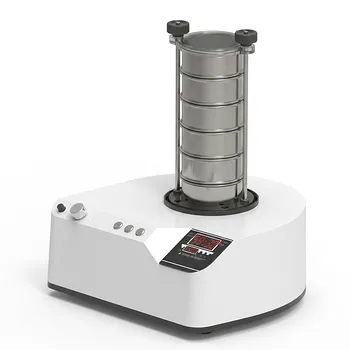
三维电磁微量振动筛分仪
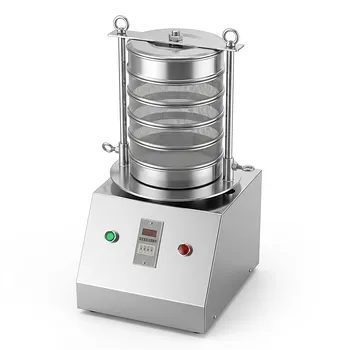
Stainless Steel Laboratory Vibratory Test Sieve Shaker
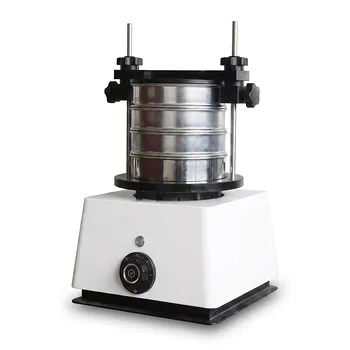
Small Laboratory Vibrating Sieve Shaker for Precise Particle Size Analysis
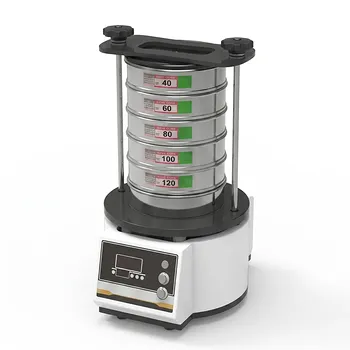
Dry Three Dimensional Vibratory Sieve Shaker
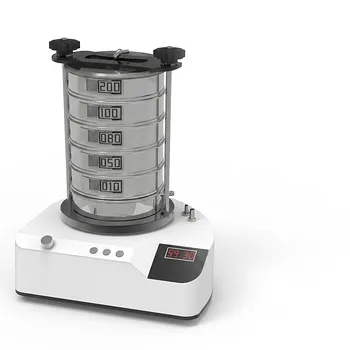
Heavy Duty Dry Three Dimensional Vibratory Sieve Shaker for Particle Separation
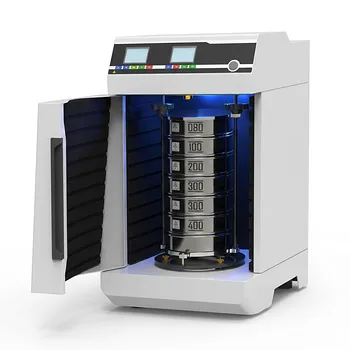
Laboratory Dry and Wet Three Dimensional Vibratory Sieve Shaker for Particle Analysis
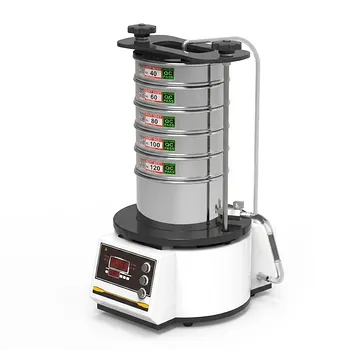
High Frequency Wet Three-Dimensional Vibrating Sieve Shaker for Dry and Wet Particle Size Analysis
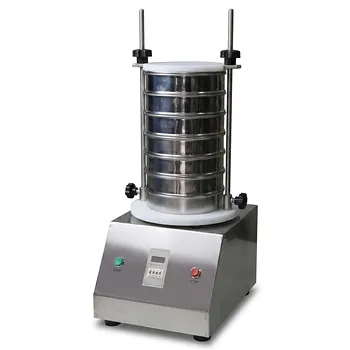
Laboratory Vibratory Test Sieve Shaker for Precision Particle Size Analysis and Powder Grading
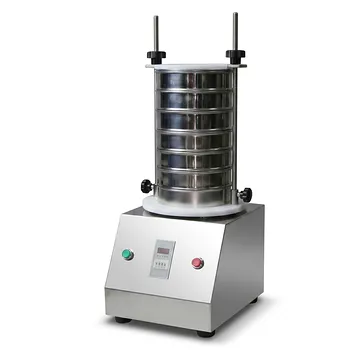
Small Laboratory Vibratory Sieve Shaker for Powder Gradation and Particle Size Analysis
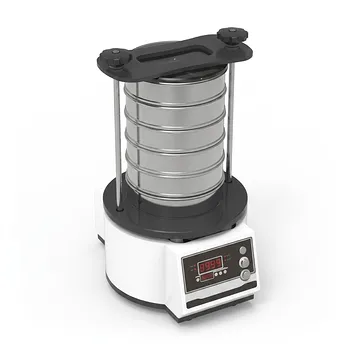
Tapping Oscillating Sieve Shaker for Dry and Wet Particle Size Analysis
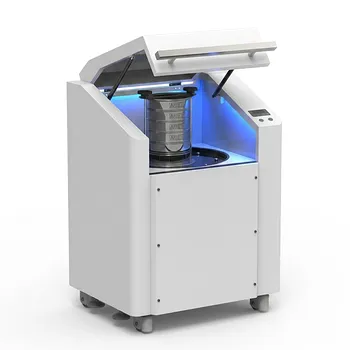
High Frequency Cabinet Type Three-Dimensional Rotary Vibrating Sieve Shaker for Dry Sieving and Particle Classification
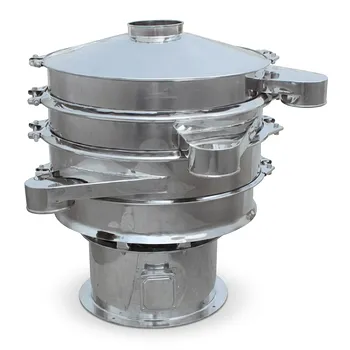
Stainless Steel Rotary Vibrating Sieve High Precision Circular Vibratory Separator Industrial Powder Grading Machine Multi Layer Sifting Equipment
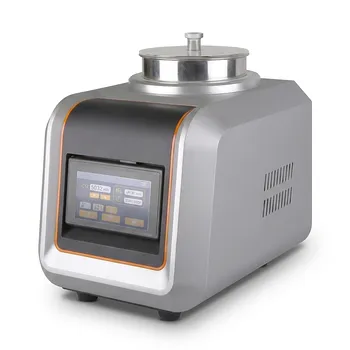
Laboratory Air Jet Sieving Machine for Fine Powder Particle Size Analysis and Deagglomeration