Precision at 75 Microns: The Hidden Gatekeeper That Decides the Fate of Magnesium Borate Powders
Jul 31, 2026
The Particle That Ruined a Batch
The lab bench still smelled faintly of boron. The autoclave had done its job, but the sintered part that came out was worthless. Under the electron microscope, it was a crime scene: a single agglomerate, maybe 200 microns across, had acted like a seed crystal for failure. Voids radiated from it. The phase purity was gone.
The chemist had spent three weeks getting the precursor stoichiometry right. But he hadn’t sieved the milled powder.
We like to believe that chemistry is a story of molecules and energy. But powders speak a different language—one measured in microns—and ignoring it is the most common unforced error in material synthesis. For magnesium‑based borate precursors, that error lives above the 75‑micron line. A vibratory sieve shaker isn’t a glorified strainer; it’s the last quality‑control checkpoint before you hand your work over to physics.
The Invisible Architecture of a Reaction
Maximizing the Interface
A hydrothermal reaction doesn’t see a particle; it sees surface area. When you crush a magnesium borate precursor, every new facet is a handshake waiting to happen. But the high‑energy milling that creates those facets also flattens them together and forms agglomerates.
The sieve shaker severs those unwanted bonds. By forcing the powder through a mesh at a fixed amplitude, it says: below this line, you’re a reactant; above it, you’re a passenger. The specific surface area explodes because the effective particle population shifts toward fines, not because the material changed chemically. The result is a powder that dissolves more aggressively and invites solvent interaction instead of defending against it.
Lowering the Energy Threshold
Chemistry is a negotiation between thermal energy and activation energy. If you can make one side more eager, the other can relax. Smaller particles have higher surface curvature, which means more dangling bonds and more instability at the solid‑liquid interface. In practice, that translates to the same magnesium borate phases forming at temperatures 15–25°C lower than they would with unclassified powder.
That energy gap isn’t trivial. It protects thermally fragile intermediates, keeps grain growth in check, and reduces the chance of burning off the very boron you worked to incorporate. A sieve shaker buys you degrees—literally.
The Purity Paradox
When Structure Fails
Magnesium borates are picky about their crystal habits. Priceite and mcallisterite aren’t just chemical formulas; they’re architectural commitments. Nucleation is competitive, and if a molten or dissolved pool contains a particle that’s 10% coarser than its neighbors, it will dissolve slower, creating a local composition rift that spawns a secondary phase.
Uniform particle size distribution doesn’t just produce purity; it produces phase monotony. Every grain starts the reaction at the same moment, runs the same kinetic trajectory, and arrives at the same crystal structure. The sieve shaker homogenizes the starting line.
Cavitation’s Demand
In sonochemical synthesis, collapsing bubbles generate hotspots measured in thousands of kelvins—but only if the acoustic field can couple to the particles. Mixed‑size powders scatter the pressure waves, leaving some regions under‑treated and some burned. Sieving the precursor to a tight distribution doesn’t just improve sonication; it makes it reproducible. Without it, you’re not doing chemistry; you’re doing lottery.
The Mechanics of Collapse
Packing and the Sintering Crack
A green body doesn’t know it’s supposed to become a ceramic. It only knows how its particles touch. When you press a powder into a die, the packing density determines how much shrinkage will occur and whether that shrinkage will be isotropic. A stray 100‑micron particle in a matrix of 20‑micron fines creates a bridge—a microscopic arch that leaves a void. During sintering, that void becomes a crack.
Sieving removes those bridges before they can form. It also improves powder fluidity, which matters in automated die filling. The result isn’t just a homogeneous part; it’s a part that fails predictably under test, which is the closest thing to safety an engineer can ask for.
The Agglomerate Time Bomb
Grinding produces agglomerates the way conversation produces misunderstanding—constantly, and with the best intentions. These soft clumps contain real fines, but they behave as coarse particles and resist breakup during dry mixing. The sieve shaker’s high‑frequency vibration persuades them to disintegrate. In a sense, it’s a mechanical confession: the powder admits what it truly is, not what it pretended to be after milling.
The Hidden Costs of Precision
Sieve Blinding
The psychology of sieving is one of diminishing visibility. As fines clog the mesh, the mesh becomes a filter paper instead of a screen, and your effective cut‑off silently drifts upward. A process that starts at 75 microns might be rejecting at 90 microns an hour later. The fix is unglamorous: regular inspection and cleaning. But ignoring it transforms precision into placebo.
The Speed Trap
A lab manager will often push for faster throughput—higher amplitude, larger batches, shorter cycles—not realizing that precision is inversely correlated with speed. Oversized particles survive because the residence time on the mesh was too short. No particle ever apologizes for sneaking through; it just ruins your sintering run. Vibratory sieving is a rate‑sensitive gate, and treating it otherwise is a negotiation with failure.
Calibration Drift
Wire mesh stretches. The machine’s spring constant shifts. Amplitude drifts 0.3mm, and suddenly the cut‑off moves. In a research environment where reproducibility is the currency, sieve calibration against NIST‑traceable reference materials isn’t optional—it’s an insurance policy on your career.
Mastering the System
The vibratory sieve shaker is not a stand‑alone hero. It’s a node in a sample‑preparation ecosystem. Upstream, a planetary ball mill or a jet mill generates the initial powder; downstream, a Cold Isostatic Press (CIP) or a vacuum hot press turns that classified powder into a near‑net‑shape part. Leave any link weak, and the chain fails.
Our laboratory systems are designed for this chain of custody over particle quality. We build the crushers and cryogenic grinders that start the process, the vibratory and air‑jet sieve shakers that enforce the 75‑micron rule, and the full spectrum of hydraulic presses—CIP, WIP, hot press, XRF pellet press—that convert powder into predictable compacts. That integration means you don’t just buy equipment; you buy a reproducible material signature.
The table below distills what a properly sieved magnesium borate precursor delivers—and what it prevents.
| Sieving Action | Direct Effect | Systemic Advantage |
|---|---|---|
| Reject particles above 75 μm | Maximizes specific surface area | Higher dissolution rates, lower reaction temperatures |
| Narrow the size distribution | Synchronizes dissolution kinetics | Phase purity (priceite, mcallisterite) and structural uniformity |
| Break soft agglomerates | Restores true particle identity | Eliminates internal defects, improves packing density |
| Remove coarse outliers | Prevents packing bridges | Crack‑free sintering, predictable green‑body shrinkage |
| Calibrate mesh and amplitude | Preserves cut‑point accuracy | Batch‑to‑batch reproducibility, trustworthy research data |
When a magnesium borate part fails, the post‑mortem rarely points back to the sieve shaker. It points to a property, a phase, a void. But the sieve shaker was the moment when that defect could have been stopped, at the cost of only time and discipline. In material science, the most powerful tools are often the simplest ones—and the least respected, until a batch is lost.
A powder is not just a raw material; it’s a probability distribution of outcomes. A sieve shaker narrows that distribution, turning primitive variation into engineered certainty. If your work depends on what happens at 500°C, you can’t afford to ignore what happens at 75 microns.
To design a workflow that turns powder into predictability, Contact Our Experts.
Quick Links
Suggested Products
Vibratory Sieve Shaker Electromagnetic 3D Motion Powder Particle Size Analyzer for Dry and Wet Sieving Laboratory Dry and Wet Three Dimensional Vibratory Sieve Shaker for Particle Analysis Stainless Steel Laboratory Vibratory Test Sieve Shaker Heavy Duty Dry Three Dimensional Vibratory Sieve Shaker for Particle Separation Dry Three Dimensional Vibratory Sieve ShakerFurther Reading
The Invisible Architecture of Powder: How a Vibratory Sieve Shaker Decides What Your Amaranth Bread Becomes The Hidden Economics of Particle Size: Why the Most Overlooked Variable in Material Science Controls Everything The Particle-Size Lever: Why the Most Overlooked Step in Catalyst Design Determines Everything Else The Hidden Geometry of Your Morning Coffee: What Particle Size Reveals About Control and Chaos The Arithmetic of Interlock: Why Sieve Shakers Are the Storytellers of Pavement Strength
PowderPreparation
Last updated on May 14, 2026
Related Products
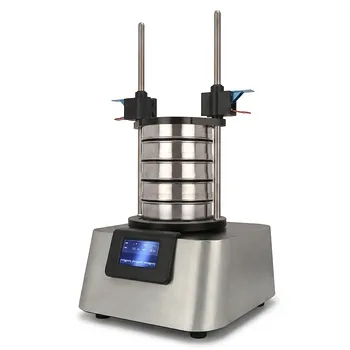
Vibratory Sieve Shaker Electromagnetic 3D Motion Powder Particle Size Analyzer for Dry and Wet Sieving
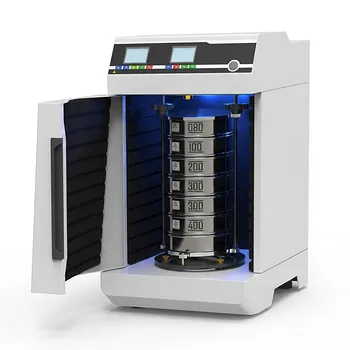
Laboratory Dry and Wet Three Dimensional Vibratory Sieve Shaker for Particle Analysis
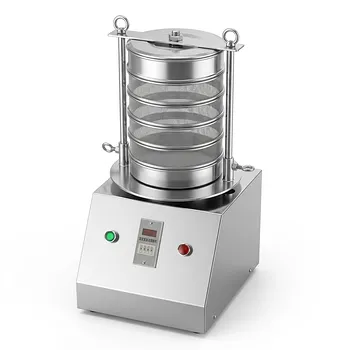
Stainless Steel Laboratory Vibratory Test Sieve Shaker
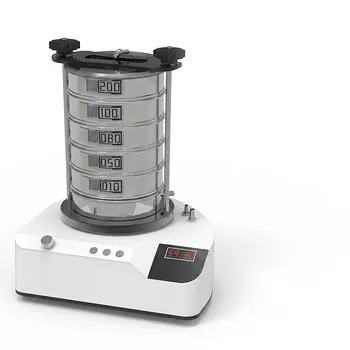
Heavy Duty Dry Three Dimensional Vibratory Sieve Shaker for Particle Separation
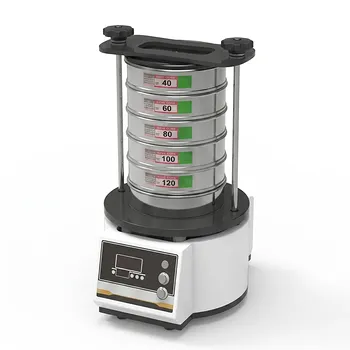
Dry Three Dimensional Vibratory Sieve Shaker
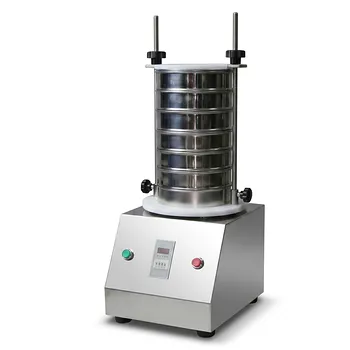
Small Laboratory Vibratory Sieve Shaker for Powder Gradation and Particle Size Analysis
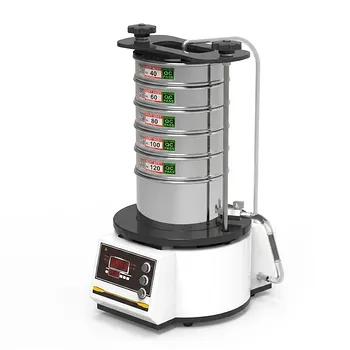
High Frequency Wet Three-Dimensional Vibrating Sieve Shaker for Dry and Wet Particle Size Analysis
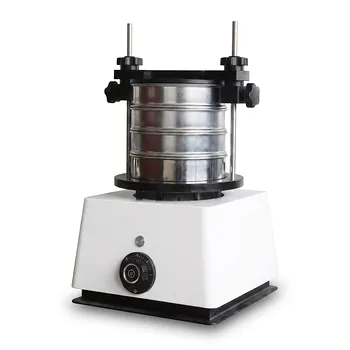
Small Laboratory Vibrating Sieve Shaker for Precise Particle Size Analysis
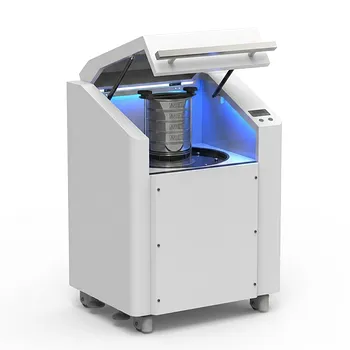
High Frequency Cabinet Type Three-Dimensional Rotary Vibrating Sieve Shaker for Dry Sieving and Particle Classification
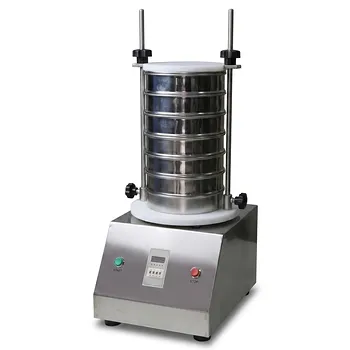
Laboratory Vibratory Test Sieve Shaker for Precision Particle Size Analysis and Powder Grading
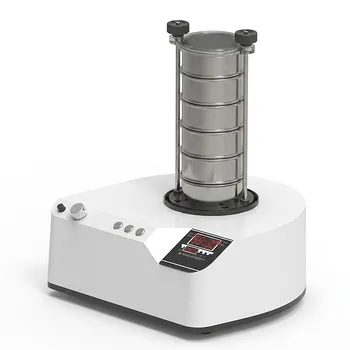
三维电磁微量振动筛分仪
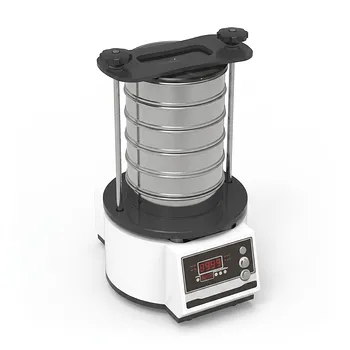
Tapping Oscillating Sieve Shaker for Dry and Wet Particle Size Analysis
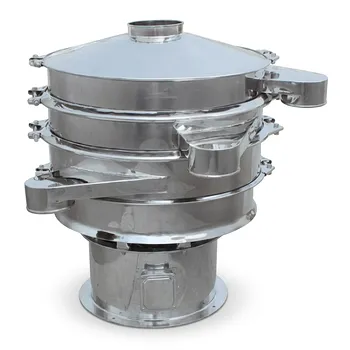
Stainless Steel Rotary Vibrating Sieve High Precision Circular Vibratory Separator Industrial Powder Grading Machine Multi Layer Sifting Equipment
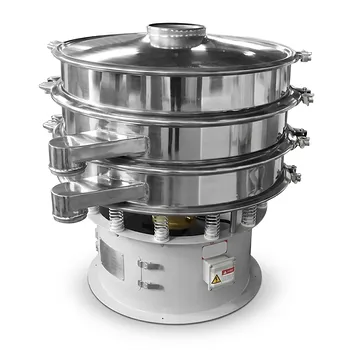
Three Dimensional Rotary Vibrating Sieve
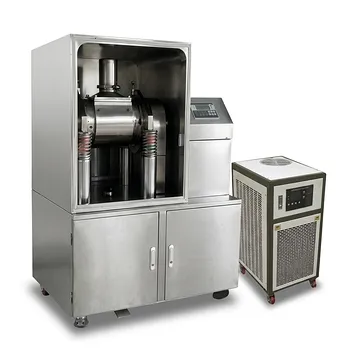
Small Vibrating Ultrafine Grinder for Traditional Chinese Medicine
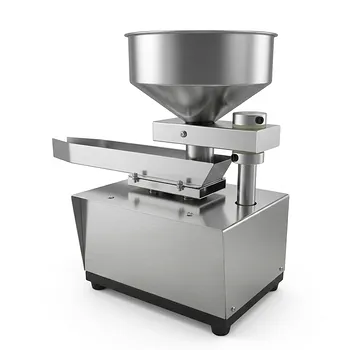
Automatic Vibrating Powder Feeder for Laboratory Material Processing Precision Vibratory Hopper Feeder for Granular and Powder Material Handling Industrial Grade Vibrating Tray Feeder for Consistent Material Sample Preparation
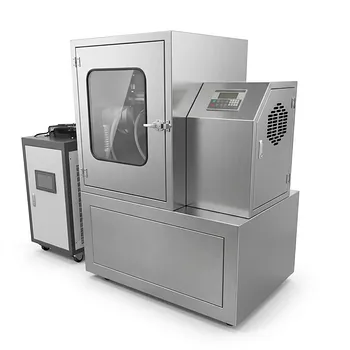
Vibratory Superfine Grinder for Ultra Fine Laboratory Powder Milling
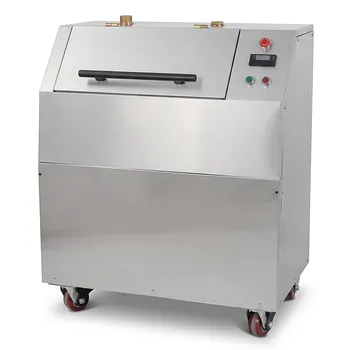
Vibratory Disc Mill for Rapid Fine Grinding and High Throughput Sample Preparation of Hard and Brittle Materials