How a Sieve Stack Decides the Fate of Crushed Brick: The Science of Particle Characterization
Aug 30, 2026
The Pile That Promised Too Much
The sample arrives in a heavy plastic bucket. It’s supposed to be a sustainable substitute for natural sand—crushed clay brick, sourced from demolition waste, ready to become structural fill or a lightweight concrete aggregate. On the surface, it’s just a heap of reddish-brown fragments. The naked eye sees promissory rubble. The engineer sees a question mark.
If you cannot predict how these particles will pack together, you cannot predict how your concrete will cure, how it will bear a load, or whether it will crack sooner than the spec allows. That prediction begins not with a mixing truck or a compression test, but with a stack of metal rings and a vibrating platform.
The most consequential moment for a recycled material is the one when it passes through a sieve.
Why Gradation Is a Psychological Anchor
Construction is an industry of confident numbers. A fineness modulus of 2.6 feels safe. A gradation curve that hugs the ASTM C33 limits feels like a contract fulfilled. We trust sieves because they give us quantitative boundaries in a world of messy geology.
But that trust is fragile.
A single sieving run is not merely a physical process. It’s a negotiation between the material and the machine. If you misunderstand that negotiation, your numbers will lie to you—and you will make decisions based on a comforting fiction.
The trick is to understand what the sieve stack is really measuring, and why the equipment you choose doesn’t just record reality; it shapes it.
The Architecture of a Sieve Stack
High-Frequency Motion as a Sorting Language
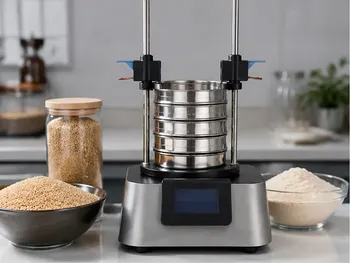
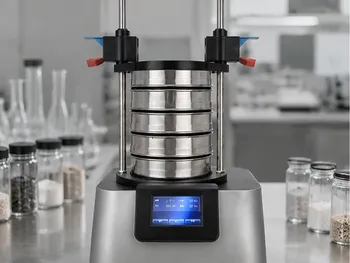
A vibratory sieve shaker doesn’t simply shake. It speaks to the particles in a dialect of controlled acceleration. High-frequency oscillations reorient every grain, breaking temporary bridges and giving each particle multiple opportunities to find an aperture slightly larger than itself. Without this mechanical agitation, angular fragments like crushed brick would lock together and refuse to classify.
The Vertical Logic of Sizes
Standard test sieves are arranged in a descending column—5 mm at the top, perhaps 0.075 mm at the bottom. This vertical stack is a physical algorithm for fractional separation. Each sieve captures a weight of material, and together they construct a curve that describes the aggregate’s soul.
From Weight to Wisdom
You weigh the retained fraction on each sieve. You calculate cumulative percentages. You draw the gradation curve. You compute the fineness modulus.
- Well-graded material means small particles will fill the gaps between large ones, reducing the void ratio and the amount of expensive cement paste required.
- Gap-graded material warns you of permeability nightmares.
- Uniformly graded material suggests a packing problem that might demand a redesign.
These numbers become the foundation of a thousand engineering decisions. But the numbers are only as honest as the sieving conditions that produced them.
Three Ways a Sieve Stack Can Deceive You
1. The Angularity Trap
Crushed clay brick is jagged. Unlike the rounded grains of natural river sand, these particles possess flat faces and sharp edges. They can “bridge” across an aperture, supporting each other like a miniature stone arch. The shaker must supply enough energy and enough time to collapse these bridges without obliterating the particles themselves.
2. The Blinding Phenomenon
The fine fraction—those dusty, sub-75-micron particles—does not always cooperate. Clay fines can cling to the mesh or wedge into the openings. Blinding creates a dam. Suddenly a sieve that should pass 20% of the mass is passing only 8%. Your data shifts, and you might mistakenly reject a material that was actually suitable.
3. Attrition as Silent Damage
Softer particles, such as certain fired clays, are vulnerable to the very force meant to classify them. Over-vibration grinds the aggregate, producing artificial fines. The gradation curve migrates downward. You end up specifying a material that, in a mixer, would behave differently from the sample you measured.
Precision in sieving is not about speed. It’s about controlling the boundary between separation and destruction.
The Laboratory as a Truth-Defining Space
This is where the quality of your sample preparation equipment becomes existential. If your crusher damages the material before sieving even begins, your whole dataset is contaminated. If your mill overheats the sample, you alter its fracture behavior. If your mixer doesn’t homogenize the bulk supply before you split a representative sample, your sieving results describe a ghost rather than the real stockpile.
The sieving step cannot be isolated. It’s the final link in a chain that starts with jaw crushers, planetary ball mills, liquid nitrogen cryogenic grinders for heat-sensitive materials, or disc mills—each chosen to disaggregate without distorting.
That’s why an integrated approach to sample preparation transforms particle characterization from a ritual into a reliable instrument.
How the Right Equipment Changes the Answer
Vibratory Sieve Shakers with Programmable Control
Modern shakers allow you to set vibration amplitude, frequency, and duration with repeatable precision. You remove the human operator’s tendency to “shake a little more just to be sure.” You establish a protocol, and you trust it because it produces the same gradation curve tomorrow that it produced today.
Air-Jet Sieve Shakers for the Fine Fraction
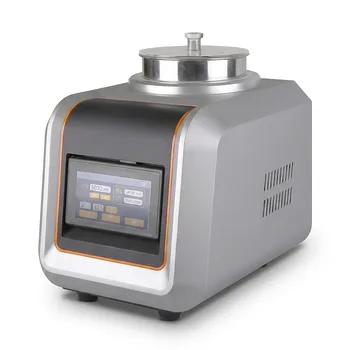
When blinding threatens your analysis, an air-jet sieve shaker uses a rotating jet of air to blow particles off the mesh from below. It breaks the bridges without mechanical grinding. It keeps your sub-75-micron data honest.
Precision Test Sieves with Certified Mesh
Standardization is meaningless without traceability. Sieves with certified openings—and regular recalibration—are the only way to guarantee that a 150 µm aperture in your lab equals a 150 µm aperture in a project specification on another continent.
Sample Preparation That Protects the Truth
Before you ever reach the sieve stack, your material travels through crushers, mills, splitters, or dryers. The right jaw crusher reduces demolition debris to a manageable top size without generating unnecessary fines. A liquid nitrogen cryogenic grinder embrittles soft brick with cold so it fractures cleanly rather than smearing into plastic deformation. Powder mixers and defoaming mixers homogenize the sample so your 100-gram test portion actually represents the tonnage it’s meant to describe.
The entire workflow—from crushing and grinding through pressing and compaction—determines whether your particle size distribution is an accurate map of reality or an artifact of the process that produced it.
The Psychological Shift: From Checking Boxes to Owning the Curve
There’s a moment in every materials engineer’s career when sieving transforms from a procedural chore into a strategic tool. It’s the moment you realize that a gradation curve isn’t just a quality-control checkpoint. It’s a design parameter you can manipulate.
- Want to reduce cement paste demand? Shift the curve toward a denser packing configuration.
- Need permeability in a drainage layer? Dial back the fines.
- Trying to maximize the value of a recycled brick stream? Nail the critical particle size that best represents the deposit’s average characteristics.
When you control the sieving variables—vibration frequency, amplitude, duration, and the choice between vibratory and air-jet methods—you stop being a passive recorder of data. You become an active participant in the material’s engineering biography.
Where This Leaves You
Crushed clay brick will never be a perfect aggregate. It’s angular. It’s absorptive. It’s historically unpredictable. But in a world pushing toward circular construction, it’s too valuable to ignore.
The difference between a pile of demolition waste and a certified structural fill is not just what the material is—it’s what you can prove it is.
And proving it requires a sieving system you can trust, backed by sample preparation equipment that doesn’t betray the powder before the analysis begins. When your crushers, grinders, sieve shakers, and presses work as a single coherent logic, the numbers you generate carry the weight of reality. They aren’t just numbers on a lab report. They’re a foundation.
To explore how integrated sample preparation—including high-performance vibratory sieve shakers, air-jet sieving, precision test sieves, and a full range of size-reduction and pressing equipment—can bring this level of truth to your material characterization, Contact Our Experts.
Quick Links
Suggested Products
Vibratory Sieve Shaker Electromagnetic 3D Motion Powder Particle Size Analyzer for Dry and Wet Sieving Laboratory Dry and Wet Three Dimensional Vibratory Sieve Shaker for Particle Analysis Stainless Steel Laboratory Vibratory Test Sieve Shaker Heavy Duty Dry Three Dimensional Vibratory Sieve Shaker for Particle Separation Dry Three Dimensional Vibratory Sieve ShakerFurther Reading
The Hidden Economics of Particle Size: Why the Most Overlooked Variable in Material Science Controls Everything The Invisible Architecture of Powder: How a Vibratory Sieve Shaker Decides What Your Amaranth Bread Becomes The Particle-Size Lever: Why the Most Overlooked Step in Catalyst Design Determines Everything Else When Glass Melts Fail, It Was Never the Furnace: The Hidden Economics of Sand Gradation The Quarter-Millimeter Margin: Why Vibratory Sieve Precision Determines Artificial Stone Profitability
PowderPreparation
Last updated on May 14, 2026
Related Products
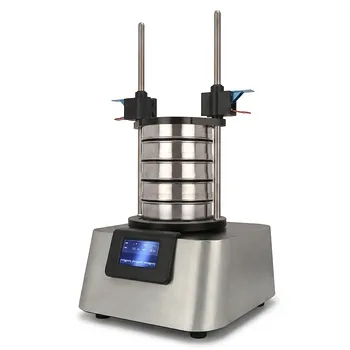
Vibratory Sieve Shaker Electromagnetic 3D Motion Powder Particle Size Analyzer for Dry and Wet Sieving

Laboratory Dry and Wet Three Dimensional Vibratory Sieve Shaker for Particle Analysis
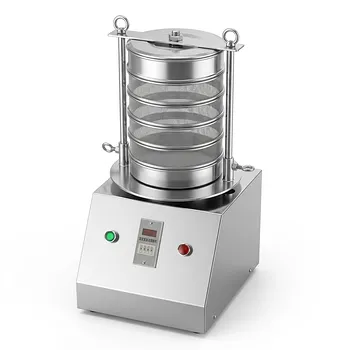
Stainless Steel Laboratory Vibratory Test Sieve Shaker

Heavy Duty Dry Three Dimensional Vibratory Sieve Shaker for Particle Separation

Dry Three Dimensional Vibratory Sieve Shaker

Small Laboratory Vibratory Sieve Shaker for Powder Gradation and Particle Size Analysis
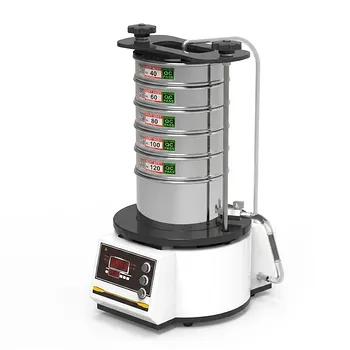
High Frequency Wet Three-Dimensional Vibrating Sieve Shaker for Dry and Wet Particle Size Analysis

Small Laboratory Vibrating Sieve Shaker for Precise Particle Size Analysis
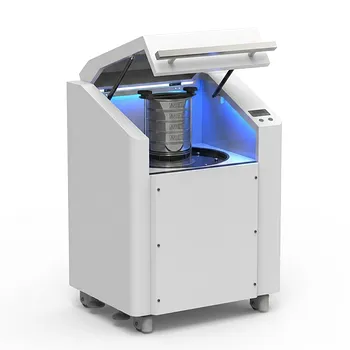
High Frequency Cabinet Type Three-Dimensional Rotary Vibrating Sieve Shaker for Dry Sieving and Particle Classification

Laboratory Vibratory Test Sieve Shaker for Precision Particle Size Analysis and Powder Grading

三维电磁微量振动筛分仪

Tapping Oscillating Sieve Shaker for Dry and Wet Particle Size Analysis

Stainless Steel Rotary Vibrating Sieve High Precision Circular Vibratory Separator Industrial Powder Grading Machine Multi Layer Sifting Equipment

Three Dimensional Rotary Vibrating Sieve
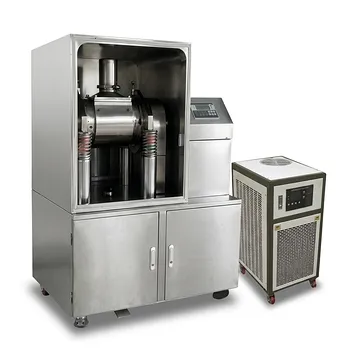
Small Vibrating Ultrafine Grinder for Traditional Chinese Medicine
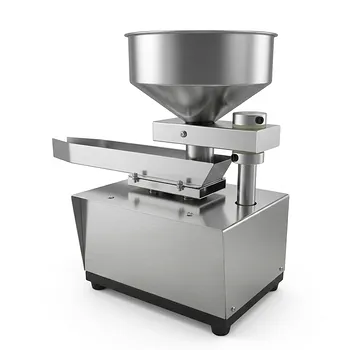
Automatic Vibrating Powder Feeder for Laboratory Material Processing Precision Vibratory Hopper Feeder for Granular and Powder Material Handling Industrial Grade Vibrating Tray Feeder for Consistent Material Sample Preparation
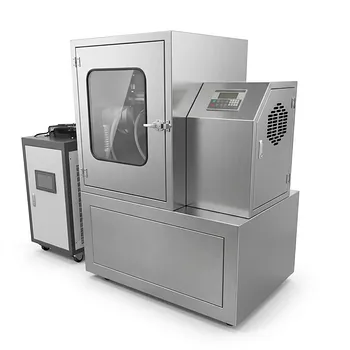
Vibratory Superfine Grinder for Ultra Fine Laboratory Powder Milling
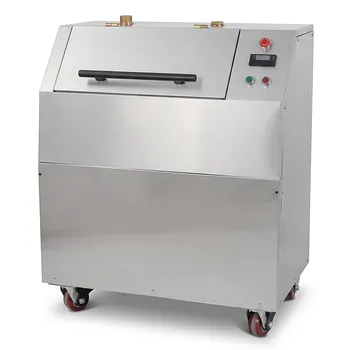
Vibratory Disc Mill for Rapid Fine Grinding and High Throughput Sample Preparation of Hard and Brittle Materials