Fracture Without Fingerprints: The High-Stakes Physics of Refining LSM to Sub-Micron Purity
Oct 16, 2026
The Ceramic That Refuses to Yield
Imagine holding a piece of sintered La0.7Sr0.3MnO3. It is dense, black, and chemically precious. Your task: reduce it to particles roughly one-fiftieth the diameter of a human hair. And you must do this without introducing a single contaminant that could sabotage its electrochemical future.
This is not a routine grinding job.
This is a materials science puzzle where maximum force and surgical restraint must coexist in the same chamber, at the same moment, for hours at a time.
LSM does not surrender easily. It was literally fired into existence through solid-state reactions at temperatures exceeding 1200°C. The ceramic lattice that emerged from that furnace has exactly zero interest in being torn apart by your laboratory equipment.
And yet, tear it apart you must.
Why Size Matters at the Atomic Level
An LSM particle that measures 10 microns across participates in electrochemical reactions only at its surface. The interior atoms? Spectators. They contribute nothing to the oxygen reduction reaction that drives your solid oxide fuel cell.
Shrink that particle to 1 micron, and the story changes entirely. The same mass of material now presents roughly ten times more active surface area to the gas-phase reactants.
This is not a marginal improvement. This is the difference between an electrode that performs and one that simply occupies space.
The Trap Most Researchers Fall Into
Here is where the psychology gets interesting. Most laboratories own some kind of ball mill. It sits on a bench, it turns jars around, it makes powder. Surely, the thinking goes, it can handle LSM.
It cannot.
Standard tumbling mills generate just enough energy to break soft agglomerates. Sintered LSM laughs at these forces. The result: hours of milling that produce nothing but wear debris from the grinding media itself.
The researcher walks away with powder that is simultaneously too coarse and chemically compromised. Both failures compound silently until the final electrode test reveals the truth.
When Standard Mills Hit Their Limit
The failure mode is predictable once you understand the physics involved.
The Energy Deficit
A conventional ball mill relies on gravity. The grinding media rises along the jar wall, then tumbles downward when the rotation angle exceeds the material's angle of repose. The collision energy is proportional to the drop height. That height, in turn, is limited by the jar diameter.
For soft materials, this is sufficient. For LSM, whose Vickers hardness can exceed 9 GPa, it is laughably inadequate.
The ceramic simply absorbs the impact without fracturing. Each collision becomes an exercise in futility—and an opportunity for the media itself to shed microparticles into your precious powder.
The Contamination Cascade
This is the part nobody talks about until it is too late.
When grinding media wears down, it does not disappear. Every abraded particle ends up in your sample. A hardened steel ball leaves iron. An alumina ball leaves aluminum oxide. Both are electrochemically active impurities that will alter the conductivity and catalytic behavior of your LSM electrode.
You started with a pure material. You end with a contaminated one. And the contamination is invisible to the naked eye—uniformly distributed, chemically bonded, impossible to remove.
The Physics Inside a Planetary Mill
A high-energy planetary ball mill solves the energy problem through geometry.
Revolution Plus Rotation
The grinding jar sits on a sun wheel that rotates in one direction. The jar itself rotates in the opposite direction. This dual motion creates Coriolis forces that subject the grinding media to accelerations reaching 100 g or more.
Imagine a zirconia ball inside that jar. It is not simply falling. It is being hurled against the opposite wall with kinetic energy orders of magnitude higher than anything a conventional mill can deliver.
The LSM particle caught between two such balls does not absorb the impact. It fractures.
Impact and Shear: The Two Mechanisms
Fracture happens through two simultaneous processes:
- Impact force creates micro-cracks at the point of contact. These propagate through the ceramic's brittle lattice, splitting particles into fragments.
- Shear force scrapes and abrades the surfaces, wearing down rough edges and producing a tighter particle size distribution.
Both mechanisms are necessary. Impact shatters the large blocks. Shear refines the fragments. Together, they drive the median particle size toward the sub-micron range—typically reaching approximately 1 μm in a properly configured process.
The Frequency Factor
Here is an insight that separates competent milling from exceptional milling.
Using smaller media—2 mm zirconia balls rather than 10 mm ones—radically increases the number of collision points per unit time. A given volume of 2 mm spheres contains 125 times more individual contact points than the same volume of 10 mm spheres.
More contact points mean more fracture events per revolution. More fracture events mean faster size reduction with less total energy input. And less energy input means less heat.
Contamination: The Error That Compounds
If insufficient energy is the first failure mode of standard milling, contamination is the second. And for LSM, contamination is unforgivable.
What Impurities Do to Electrochemical Performance
LSM functions as a cathode material because its perovskite crystal structure enables oxygen reduction at its surface. Strontium doping creates oxygen vacancies that facilitate ionic conductivity. The manganese provides electronic conductivity.
Introduce iron particles from steel media, and you create local short-circuit pathways that alter the electrode's effective resistance.
Introduce alumina particles, and you block active sites where oxygen molecules should adsorb and dissociate.
Neither impurity announces itself during milling. Both reveal themselves only during electrochemical testing—when the electrode underperforms and the root cause is buried under weeks of processing history.
The Psychological Cost of an Avoidable Failure
This is where the Morgan Housel lens matters. Humans are terrible at pricing low-probability, high-consequence events. Contamination during grinding feels improbable, so it gets discounted.
Until it happens.
Then the cost is not just the wasted LSM powder. It is the lost time. The scrapped electrode. The grant deadline missed. The PhD chapter rewritten. The commercial prototype delayed.
The grinding media is the cheapest component in the entire workflow. Making it the cost-cutting variable is irrational—yet laboratories do it constantly.
Why Zirconia Wins
Yttria-stabilized tetragonal zirconia polycrystal—YTZ—is not simply "better" than alumina or steel. It is categorically different.
The Hardness-Density Double Advantage
Zirconia combines two properties that rarely coexist:
| Property | YTZ Zirconia | Alumina (99.5%) | Hardened Steel |
|---|---|---|---|
| Vickers Hardness | ~12.5 GPa | ~15 GPa | ~7 GPa |
| Density | ~6.05 g/cm³ | ~3.9 g/cm³ | ~7.8 g/cm³ |
| Fracture Toughness | ~6-8 MPa·m½ | ~3-4 MPa·m½ | ~20+ MPa·m½ |
| Wear Rate | Exceptionally low | Moderate | High |
Alumina is actually harder than zirconia. But hardness alone is not enough. Zirconia's higher density means each ball carries more kinetic energy at a given velocity. And its superior fracture toughness means it resists chipping and spalling—the primary mechanism by which grinding media contaminates powder.
Steel is denser still but far softer. Against LSM, steel wears rapidly, shedding iron into the sample.
Chemical Inertness Under Extreme Conditions
Zirconia does not react with LSM. Not at the local temperatures generated at impact points. Not over extended milling durations. Not in the presence of the solvents used in wet grinding processes.
This inertness is not a convenience. It is a requirement. LSM's perovskite structure is fragile with respect to cation substitution. If foreign metal ions enter the lattice during processing, they cannot be removed afterward. The damage is permanent and structural.
The Wear That Almost Doesn't Happen
YTZ media wears at rates measured in parts per million over hundreds of hours of operation. In practice, this means a zirconia grinding set can process batch after batch of LSM without measurable composition drift.
This is what "low contamination" actually means. Not zero contamination—nothing in physical reality achieves zero—but contamination so minuscule it falls below the detection limits of the analytical techniques used to characterize the final electrode material.
Life at One Micron
What changes when LSM reaches sub-micron dimensions?
Surface Energy Becomes a Driving Force
Every fracture event creates new surface area. Each square meter of new surface carries excess free energy—the energy penalty of breaking bonds that were satisfied in the bulk crystal but now dangle unsatisfied at the particle boundary.
For coarse powders, this surface energy is negligible relative to the bulk free energy. For sub-micron powders, it becomes thermodynamically significant.
This is precisely what makes fine LSM powders superior for downstream processing. The high surface energy acts as a sintering driving force, pulling particles together during thermal treatment. Lower sintering temperatures become viable. Shorter dwell times become sufficient. The final ceramic achieves higher density with finer grain structure.
The Re-Agglomeration Threat
High surface energy cuts both ways. Fine particles want to stick together. Van der Waals forces, which are weak and ignorable at the 10-micron scale, become dominant at 1 micron and below.
This is why wet grinding matters. A liquid medium—typically isopropanol, ethanol, or water with appropriate dispersants—coats each particle surface, reducing direct particle-to-particle contact. The liquid also acts as a thermal reservoir, absorbing the frictional heat generated during milling.
Without wet grinding, the planetary mill would simply weld your freshly fractured particles back together into agglomerates. You would measure a "fine" primary particle size under SEM but observe coarse agglomerate behavior in slurry processing. The performance gain would vanish.
The Heat Problem Nobody Talks About
Planetary milling is violent. Violence generates heat. Heat, for LSM, is dangerous.
Phase Stability Is Temperature-Sensitive
LSM's desired rhombohedral perovskite phase is stable across a wide temperature range. But local hot spots at impact points can briefly reach temperatures high enough to induce oxygen non-stoichiometry or even partial phase decomposition.
The manganese oxidation state is particularly vulnerable. LSM relies on a mixed Mn³⁺/Mn⁴⁺ valence to maintain electronic conductivity. Excessive local heating can shift this balance, degrading the material's transport properties.
Thermal Management Strategies
Three approaches mitigate this risk:
- Wet grinding — The liquid medium absorbs and distributes heat away from impact zones.
- Intermittent milling cycles — Pausing every 15-30 minutes allows the system to cool passively.
- Moderate rotation speeds — Running at 400-500 RPM rather than maximum speed reduces peak impact temperatures while still delivering sufficient fracture energy.
The optimal protocol typically combines all three, tailored to the specific batch size and target particle size.
From Refined Powder to Functional Electrode
The milling step does not exist in isolation. It sits within a chain of operations that collectively determine the final electrode quality.
The Upstream Prerequisites
Before planetary milling begins, the as-synthesized LSM must often undergo preliminary size reduction. Jaw crushers or roll crushers can break sintered blocks and large agglomerates into millimeter-scale fragments suitable for feeding into the mill.
For thermally sensitive or ductile precursor materials, liquid nitrogen cryogenic grinders offer an alternative. By embrittling the material at cryogenic temperatures, these systems enable fracture-dominated size reduction with minimal thermal or mechanical degradation.
The Downstream Requirements
After milling, the refined LSM powder enters the formulation stage:
- Sieve shakers with precision test sieves classify the powder, ensuring the particle size distribution meets specification. Air-jet sieving is particularly effective for sub-micron powders that tend to blind conventional mesh screens.
- Powder mixers blend LSM with organic binders, plasticizers, and solvents to create homogeneous slurries or pastes for tape casting or screen printing.
- Defoaming mixers remove entrapped air bubbles that would otherwise create defects in the dried green body.
The Compaction Step
For applications requiring dense LSM components—electrolyte-supported fuel cell architectures, for example—hydraulic presses consolidate the refined powder into green compacts:
- Cold/Warm Isostatic Presses (CIP/WIP) apply uniform pressure from all directions, eliminating density gradients that cause warping during sintering.
- Vacuum hot presses combine pressure and temperature in a single step, enabling near-net-shape fabrication of dense ceramic components.
- XRF pellet presses prepare specimens for compositional analysis, ensuring the refined powder meets chemical specifications before it enters production.
Each piece of equipment addresses a specific failure mode. Together, they form a workflow where quality is built in at every stage rather than inspected in at the end.
The Complete Toolkit
Refining LSM to sub-micron purity is not a single-equipment problem. It is a process architecture problem.
What a Coherent Workflow Looks Like
| Stage | Equipment | Purpose | Failure Mode Prevented |
|---|---|---|---|
| Primary Crushing | Jaw/Roll Crusher | Reduce sintered blocks to mill-feed size | Mill overloading, uneven feed |
| Cryogenic Pre-grinding | LN2 Cryogenic Grinder | Embrittle and pre-fracture tough precursors | Thermal degradation, ductile smearing |
| High-Energy Milling | Planetary Ball Mill + YTZ Media | Sub-micron refinement with purity control | Insufficient size reduction, contamination |
| Particle Classification | Air-Jet Sieve Shaker | Verify and narrow particle size distribution | Oversize particles in final product |
| Slurry Formulation | Powder Mixer + Defoaming Mixer | Homogenize LSM with binders and solvents | Inhomogeneous electrode microstructure |
| Compaction | CIP/WIP or Vacuum Hot Press | Consolidate powder into dense green bodies | Density gradients, lamination defects |
Why Integration Matters More Than Any Single Machine
A world-class planetary mill paired with inadequate upstream crushing will still produce inconsistent results. Oversized feed fragments will cause uneven media loading, creating dead zones where particles escape fracture.
A perfectly milled powder left unclassified will still contain outlier particles that disrupt thin-film deposition.
A homogeneous slurry pressed in a poorly aligned die will still produce a green body with density gradients that crack during sintering.
The system, not the component, determines the outcome.
The Economics of Getting It Right
The initial capital cost of a high-energy planetary ball mill with zirconia grinding sets exceeds that of a basic tumbling mill with alumina jars by a factor of three to five. This number scares people. It should not.
The Hidden Cost of Getting It Wrong
Consider the cost cascade of a failed milling run:
- Raw LSM powder: hundreds of dollars per batch, potentially synthesized over days or weeks.
- Electrode fabrication: screen printing or tape casting processes that consume technician time and facility resources.
- Cell assembly and testing: electrochemical characterization that may require days of potentiostat time.
- Diagnosis and troubleshooting: hours of SEM, XRD, and EDS analysis to identify contamination as the root cause.
When one contaminated batch forces you to repeat this entire chain, the "savings" from choosing cheaper grinding media evaporate instantly.
The Reliability Premium
Zirconia media lasts orders of magnitude longer than alumina or steel alternatives in hard ceramic milling applications. The higher upfront cost amortizes over thousands of operating hours. Meanwhile, the elimination of contamination-related batch failures delivers savings that never appear on the equipment purchase order—but show up clearly in project timelines and publication rates.
The Bottom Line
LSM refinement is a problem that does not tolerate compromise.
You need extreme kinetic energy to fracture a ceramic that was born in a furnace. You need zirconia's unique combination of hardness, density, and chemical inertness to transfer that energy without leaving fingerprints on your powder. You need a complete workflow—from crusher to press—that maintains the integrity established at the milling stage.
The researchers who understand this produce electrodes that perform as designed. The ones who don't spend their careers chasing irreproducible results, never quite certain whether the material or the process is to blame.
Choose the process that eliminates the doubt.
We provide complete laboratory sample preparation solutions for material science, specializing in the equipment that makes sub-micron, high-purity processing reproducible: planetary ball mills with YTZ zirconia grinding systems, jaw and roll crushers, cryogenic grinders, jet mills, sieve shakers, powder mixers, and the full range of hydraulic presses including Cold/Warm Isostatic Presses, vacuum hot presses, and XRF pellet presses. Whether you are developing solid oxide fuel cells, high-performance ceramics, or advanced electrode materials, we have the expertise to help you maintain strict chemical integrity from raw material to finished component.
Contact Our Experts to configure the complete milling and compaction workflow for your specific LSM application.
Quick Links
Suggested Products
Vertical Semi Circular Planetary Ball Mill for Laboratory Precision Grinding 360° Rotating Omnidirectional Laboratory Planetary Ball Mill for Homogeneous Ultra-Fine Grinding and Mixing High Energy Laboratory Planetary Ball Mill for Nano Grinding and Material Science Sample Preparation Horizontal Light Duty Planetary Ball Mill for Laboratory Sample Preparation Vertical Square Planetary Ball Mill for Laboratory Sample Preparation and Nanoscale GrindingFurther Reading
The 65-Micron Gate: Unlocking the True Isotopic Fingerprint of Portland Cement The Energy Budget of a Single Impact: How the Ball-to-Powder Ratio Shapes Nanocrystalline Reality The High-Energy Gamble: What SiBCN-rGO Fibers Teach Us About Perfect Homogenization The Gentle Violence of a Planetary Mill: Why the Most Critical Moment in SiC–VC Composites Happens Before Any Heat The Forge at 10,000 g: How a Planetary Ball Mill Designs Self-Lubricating Composites Atom by Atom
PowderPreparation
Last updated on May 14, 2026
Related Products
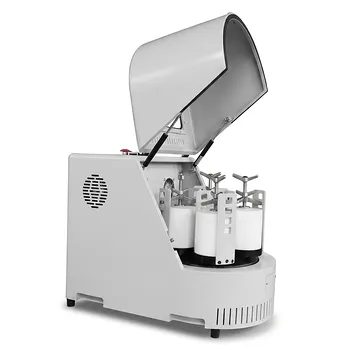
Vertical Semi Circular Planetary Ball Mill for Laboratory Precision Grinding
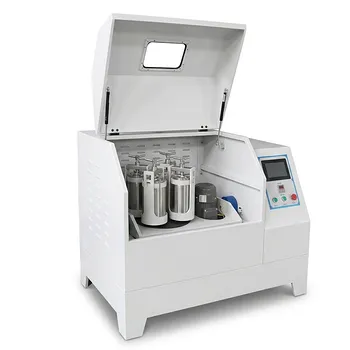
360° Rotating Omnidirectional Laboratory Planetary Ball Mill for Homogeneous Ultra-Fine Grinding and Mixing
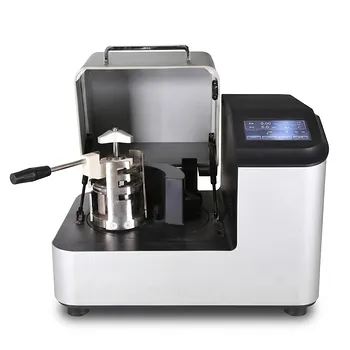
High Energy Laboratory Planetary Ball Mill for Nano Grinding and Material Science Sample Preparation
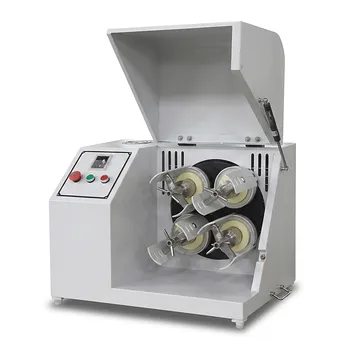
Horizontal Light Duty Planetary Ball Mill for Laboratory Sample Preparation
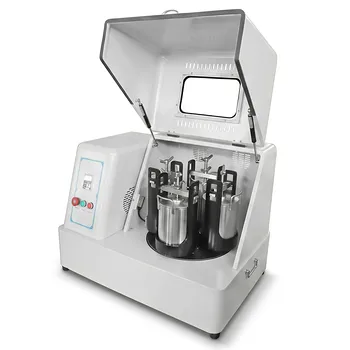
Vertical Square Planetary Ball Mill for Laboratory Sample Preparation and Nanoscale Grinding
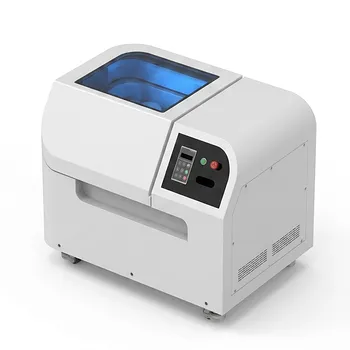
8L Planetary Ball Mill for Laboratory Grinding and Sample Preparation
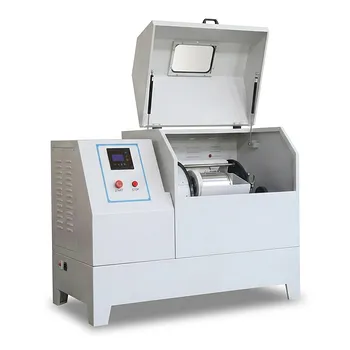
Heavy Duty Horizontal Planetary Ball Mill for Efficient Industrial Grinding and Sample Preparation
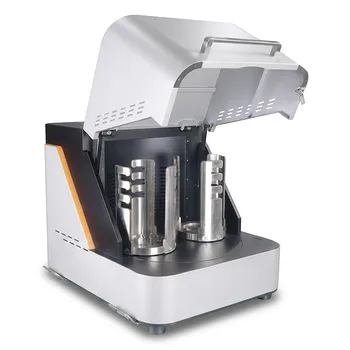
High Energy Laboratory Planetary Ball Mill for Nano Grinding and Colloidal Mixing of Hard and Brittle Materials
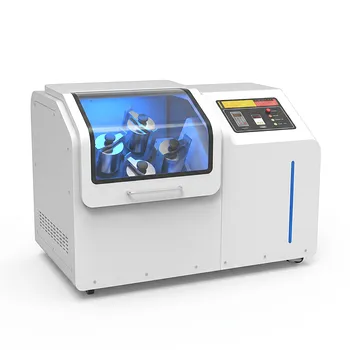
High Energy Omnidirectional Planetary Ball Mill 16L
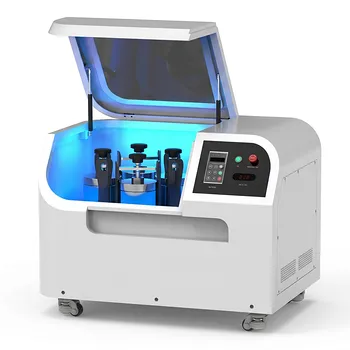
Planetary Ball Mill 12L
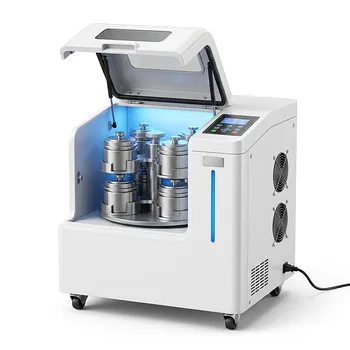
High Energy Omnidirectional Planetary Ball Mill 20L
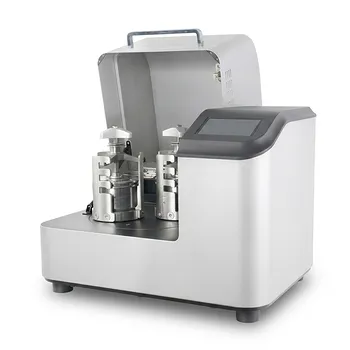
High Energy Planetary Ball Mill for Nano Scale Grinding and Mechanical Alloying
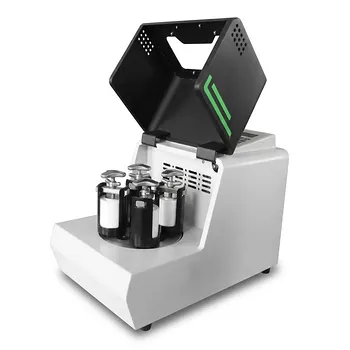
Miniature Planetary Ball Mill with Vacuum Grinding and High Efficiency for Laboratory Sample Preparation
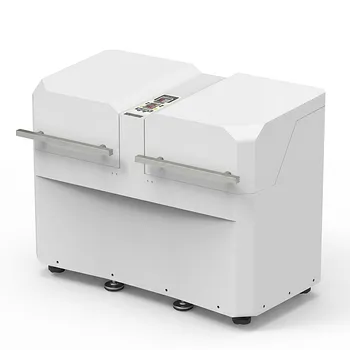
Dual Station Planetary Ball Mill 24L
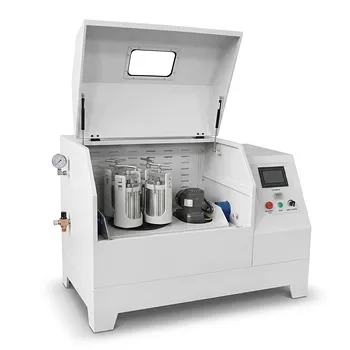
Vertical Production Planetary Ball Mill for High Throughput Powder Processing
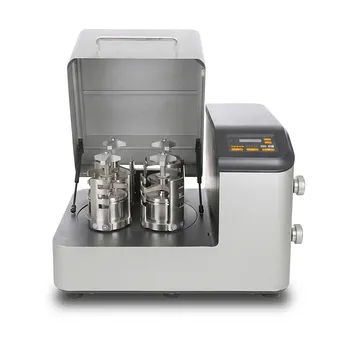
High Energy Planetary Ball Mill for Nano Scale Grinding and Colloidal Mixing in Material Science Research
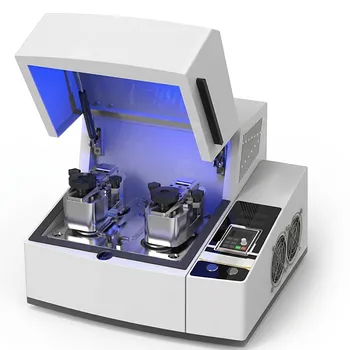
Laboratory Nano High Energy Ball Mill Ultrafine Grinding Mechanical Alloying
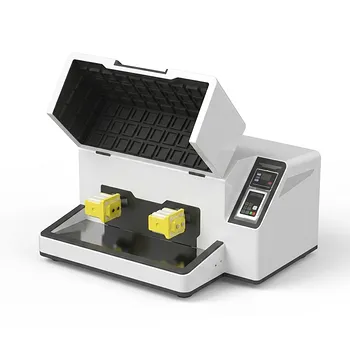
Multi-Platform Nanoscale High-Energy Vibratory Ball Mill
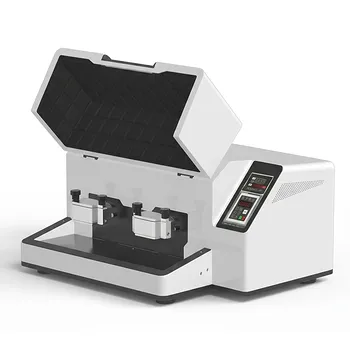
Nanoscale High-Energy Vibratory Ball Mill for Laboratory Sample Preparation, Mechanochemistry, and Mechanical Alloying