Before the Furnace Lights: The Hidden Psychology of Planetary Milling and Why Your Beta-SiAlON Component Decides Its Failure in the Prep Room
Aug 26, 2026
The Sintering Autopsy
You pull the puck of beta‑SiAlON out of the SPS die. Under the lights, it looks perfect—sharp edges, dark grey, solid. Then you cut it, polish the cross‑section, and the microscope reveals a landscape of pinholes, fused but somehow still alone. The density is off by two percent. The flexural strength is down by twenty. Somewhere in the chain, the mass simply refused to migrate.
Most engineers will re‑check the furnace recipe: ramp rate, hold time, pressure. They will twiddle numbers on a PID controller. But the autopsy rarely points at the spark, the plasma, or the heat. It points at a jar spinning quietly on a sun wheel, hours before the furnace ever warmed up.
Planetary ball milling is not a preparatory step. It is the moment the material decides whether it will densify or remain a cluster of stubborn covalent bonds. And the decision is almost always locked in by the time the powder hits the graphite die.
Why Covalent Ceramics Do Not Heal Naturally
Beta‑SiAlON is a solid solution built on Si–N bonds. These bonds are strong, directional, and deeply uninterested in moving around at reasonable temperatures. If you leave the raw powder coarse—say a D50 of five microns—each grain will sinter locally, but the gaps between grains will persist like tiny, permanent scars.
That is a psychological problem for the engineer. It looks like a sintering failure, but it is actually a surface‑area poverty. Without enough broken edges, enough naked, high‑energy planes exposed, the atoms simply have no driving force to leap across porosity.
The Geometry of Contact
Imagine two boulders touching. Their contact patch is a single point. Now imagine those boulders shattered into sand. Their contact patches multiply by orders of magnitude. That is the first gift of planetary milling: a geometric explosion of contact points. When you bring the D50 down to 0.5 µm, the number of particle‑to‑particle diffusion paths jumps astronomically, and the sintering process suddenly has a highway system rather than a footpath.
How the Mill Actually Persuades a Powder to React
The Dual Motion Nobody Sees
A planetary ball mill spins its jars in two contradictory ways: rotation around their own axis and revolution around a central sun wheel. The result is not just grinding. It is a continuous, high‑frequency collision where centrifugal forces alternately pin the balls against the wall and then throw them across the jar like a hammer thrower releasing mid‑spin.
That motion does three things simultaneously:
- It fractures brittle grains through direct impact.
- It shears agglomerates apart through viscous drag in a wet slurry.
- It welds and reforms particles in a cold‑mechanical cycle that stores energy inside the crystal lattice.
The engineer’s goal is not simply small particles. It is particles that remember the violence of the mill. That memory—in the form of lattice distortions, dislocations, and dangling bond sites—is what lowers the activation energy for atomic diffusion during Spark Plasma Sintering.
Wet Milling and the Psychology of Heat
Here is where good engineers get it wrong. They see “planetary ball mill” and think dry, fast, aggressive. But the friction can generate enough heat to pre‑oxidize the powder or trigger a phase transformation before sintering even begins. That turns the mill into a thermal saboteur.
Wet milling with isopropyl alcohol (IPA) is not a gentle option. It is an act of thermal control. The liquid carries heat away, suspends the finest particles, and prevents re‑agglomeration. In a sense, the IPA becomes a temporary scaffold that holds the activated powder in a high‑energy state until the furnace can take over.
A dry‑milled powder can look fine under SEM and still fail during sintering, because the heat of the mill silently annealed out the very defects you were trying to create.
The Hidden Chain Reactions That Determine Density
Surface Energy Is a Currency
When you reduce a particle from 5 µm to 0.5 µm, the specific surface area does not just double—it spikes by an order of magnitude. Each square meter of new surface carries excess Gibbs free energy. That energy is the only currency the sintering process has to pay for neck formation, pore rounding, and final densification.
Without enough surface energy, the furnace must push harder: higher temperature, longer hold, more pressure. But beta‑SiAlON punishes that approach. Over‑sintering grows brittle secondary phases at grain boundaries. The component looks dense, but it shatters under load. The real fix is not more heat; it is more surface energy created upstream in the planetary ball mill.
Lattice Activation as Memory
The impact of hardened balls does more than break particles. It injects strain into the SiAlON crystal lattice. Those strains are metastable—they want to relax. When the temperature rises inside the SPS die, the strained regions become preferred sites for atomic movement. In effect, the mill pre‑programs the powder with “stress memory,” telling individual atoms where to move and how quickly.
This is the psychological twist: a static powder contains a latent dynamic potential. The mill is the storage device. The furnace simply reads the data.
The Trade‑offs That Demand a Strategy
Every high‑energy process carries risk. The same impacts that activate the powder can also contaminate it.
Media Wear and Purity Psychology
Grinding jars and balls wear down. If you use stainless steel media on SiAlON, you seed the powder with iron, and the final component will have metallic inclusions that act as failure initiators. The solution is to match the media chemistry to the target matrix—silicon carbide (SiC) or alumina media preserve purity while still transferring enough kinetic energy.
The Milling‑Duration Trap
Longer is not always better. There is a window: enough time to reach 0.5 µm median size and saturate the powder with lattice defects, but not so long that mechanochemical reactions start consuming your sintering aids. Beyond that point, you are not activating the powder; you are degrading it.
Optimization Logic: A Table for Decision‑Making
| Milling Goal | Recommended Approach | Outcome for Sintering |
|---|---|---|
| Maximize final density | High‑speed planetary milling to D50 0.5 µm, wet mode | Maximum surface energy for low‑temperature densification |
| Preserve chemical purity | SiC or Al₂O₃ grinding media, matched to sintering aids | Zero metallic contamination, clean grain boundaries |
| Accelerate throughput | Wet milling with IPA, optimized ball‑to‑powder ratio | Faster homogenization, less thermal buildup |
| Prevent phase degradation | Moderate speed, short intervals, monitored temperature profile | Retained stoichiometry, no unwanted precursors |
Engineering the Complete Preparation Chain
A planetary ball mill is the heart of the process, but it does not beat alone. The powder arrives as chunks. It must be crushed, often in a jaw or roll crusher, before it ever sees a grinding jar. After milling, it needs to be separated, sometimes with an air‑jet sieve shaker, to verify that the D50 target was actually hit. If sintering aids are added, a high‑efficiency powder mixer ensures microscopic uniformity before compaction. And eventually, the activated powder—this fragile, defect‑rich, high‑energy substance—needs to be formed into a green body, perhaps in a cold isostatic press (CIP) that preserves the particle arrangement without introducing new density gradients.
One broken link in this chain and the beta‑SiAlON part fails, no matter how perfectly the ball mill did its job. That is why complete laboratory sample preparation solutions matter: crushers, liquid nitrogen cryogenic grinders for temperature‑sensitive batches, planetary mills, jet mills for ultra‑fine work, sieve shakers, mixers, and the full spectrum of hydraulic presses from vacuum hot presses to XRF pellet presses. The goal is not just a good mill; it is a system that can carry a powder from raw chunk to sintered solid without ever letting the energy escape.
The Engineer’s Romantic Conclusion
We talk about sintering as if heat and pressure do the work. But the real transformation happens earlier, inside a jar that spins with enough fury to rewrite the future of a ceramic crystal. Every densification success story begins with an invisible act of violence that leaves particles broken, reactive, and full of longing for the moment the furnace will let them heal again.
If you want a beta‑SiAlON component that is dense, strong, and thermally uniform, you do not start by tuning the furnace. You start by giving the powder the right kind of memory in the planetary ball mill—and making sure every step before and after that mill is just as deliberate.
Quick Links
Suggested Products
Vertical Semi Circular Planetary Ball Mill for Laboratory Precision Grinding High Energy Planetary Ball Mill for Nano Scale Grinding and Mechanical Alloying Vertical Production Planetary Ball Mill for High Throughput Powder Processing Heavy Duty Horizontal Planetary Ball Mill for Efficient Industrial Grinding and Sample Preparation 360° Rotating Omnidirectional Laboratory Planetary Ball Mill for Homogeneous Ultra-Fine Grinding and MixingFurther Reading
The 65-Micron Gate: Unlocking the True Isotopic Fingerprint of Portland Cement The Energy Budget of a Single Impact: How the Ball-to-Powder Ratio Shapes Nanocrystalline Reality The High-Energy Gamble: What SiBCN-rGO Fibers Teach Us About Perfect Homogenization The Gentle Violence of a Planetary Mill: Why the Most Critical Moment in SiC–VC Composites Happens Before Any Heat The Forge at 10,000 g: How a Planetary Ball Mill Designs Self-Lubricating Composites Atom by Atom
PowderPreparation
Last updated on May 14, 2026
Related Products
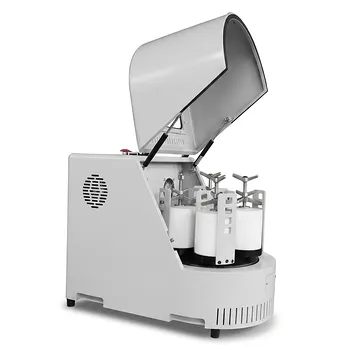
Vertical Semi Circular Planetary Ball Mill for Laboratory Precision Grinding
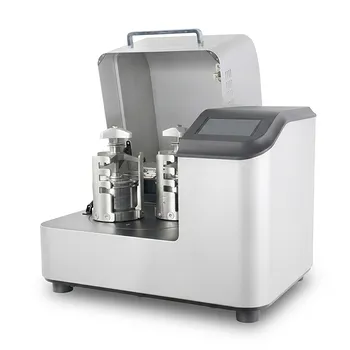
High Energy Planetary Ball Mill for Nano Scale Grinding and Mechanical Alloying
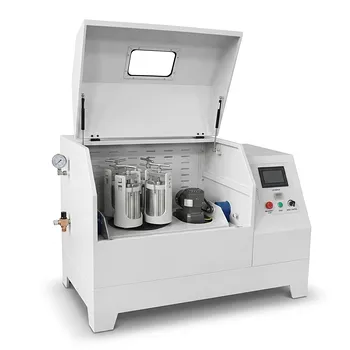
Vertical Production Planetary Ball Mill for High Throughput Powder Processing
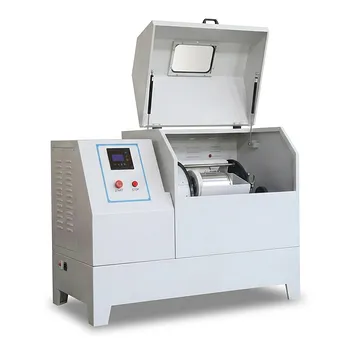
Heavy Duty Horizontal Planetary Ball Mill for Efficient Industrial Grinding and Sample Preparation
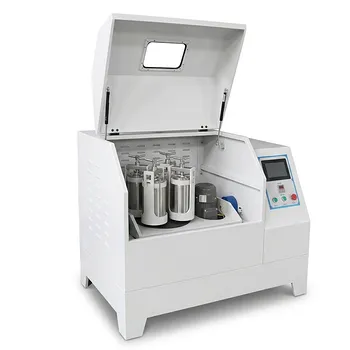
360° Rotating Omnidirectional Laboratory Planetary Ball Mill for Homogeneous Ultra-Fine Grinding and Mixing
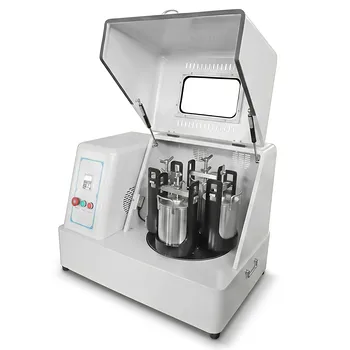
Vertical Square Planetary Ball Mill for Laboratory Sample Preparation and Nanoscale Grinding
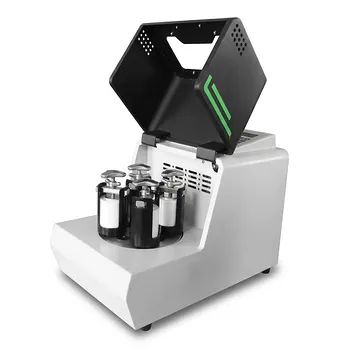
Miniature Planetary Ball Mill with Vacuum Grinding and High Efficiency for Laboratory Sample Preparation
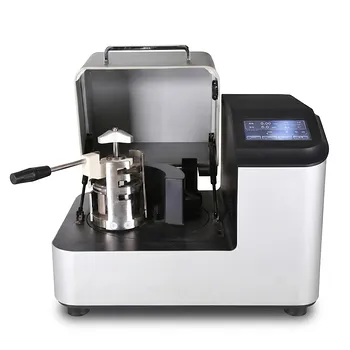
High Energy Laboratory Planetary Ball Mill for Nano Grinding and Material Science Sample Preparation
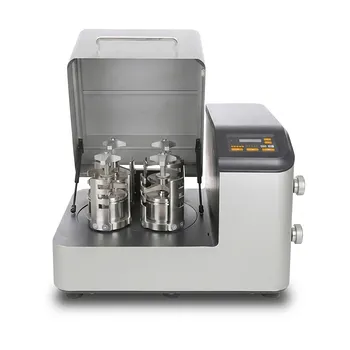
High Energy Planetary Ball Mill for Nano Scale Grinding and Colloidal Mixing in Material Science Research
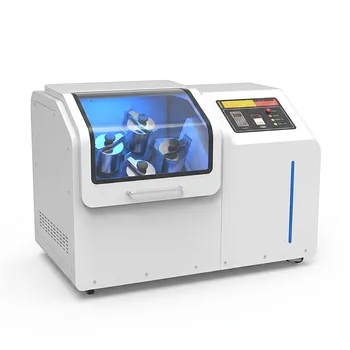
High Energy Omnidirectional Planetary Ball Mill 16L
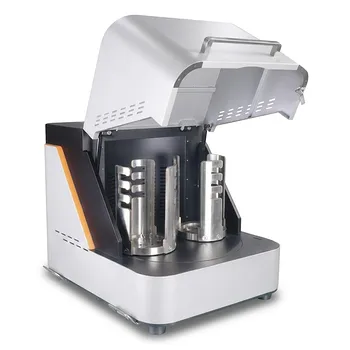
High Energy Laboratory Planetary Ball Mill for Nano Grinding and Colloidal Mixing of Hard and Brittle Materials
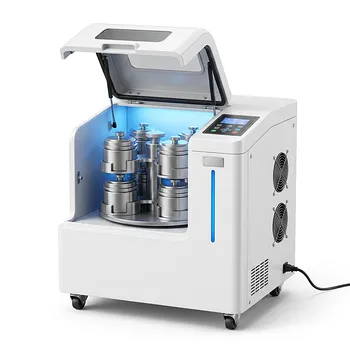
High Energy Omnidirectional Planetary Ball Mill 20L
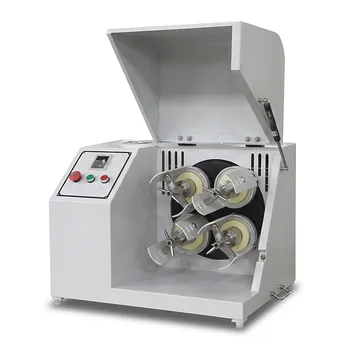
Horizontal Light Duty Planetary Ball Mill for Laboratory Sample Preparation

8L Planetary Ball Mill for Laboratory Grinding and Sample Preparation
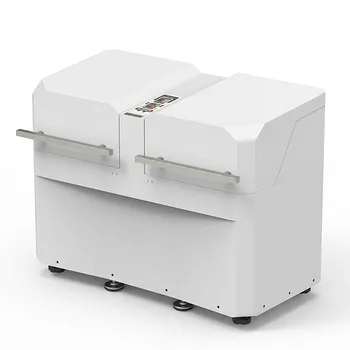
Dual Station Planetary Ball Mill 24L
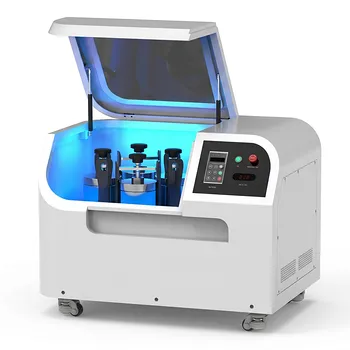
Planetary Ball Mill 12L

Nano High Energy Vibratory Ball Mill for Laboratory Sample Preparation
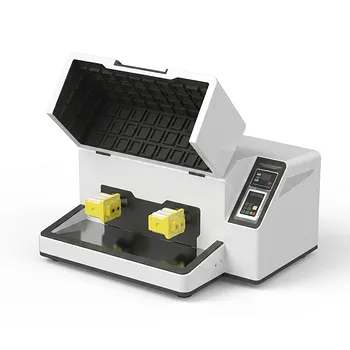
Multi-Platform Nanoscale High-Energy Vibratory Ball Mill
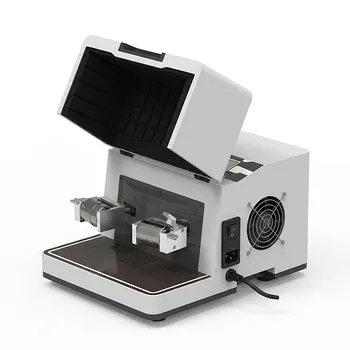
High Energy Hybrid Vibratory Ball Mill for Grinding Mixing and Cell Disruption