Why must test sieves be ultrasonic cleaned for HDPE powders? Ensure Accurate Particle Size Analysis
Updated 4 months ago
Ultrasonic cleaning is a prerequisite for HDPE powder testing because it restores the sieve’s mesh apertures to their exact factory specifications. HDPE micro-particles often become wedged in the fine mesh of test sieves, causing a phenomenon known as "blinding" that manual cleaning cannot resolve. By using high-frequency vibrations to clear these deep-seated blockages, you guarantee that the sieve's capacity and accuracy are fully restored for every test.
To achieve precise particle size distribution (PSD) data for High-Density Polyethylene, sieves must be completely free of residual polymer that restricts the mesh. Ultrasonic cleaning uses cavitation to safely remove trapped particles, ensuring the integrity of the mesh without the risk of mechanical damage associated with traditional brushing.
The Mechanics of Mesh Blinding in HDPE Testing
The Problem of Micro-Particle Entrapment
HDPE powders often contain fine particles that are highly susceptible to becoming wedged within the micro-pores of a sieve. This phenomenon, known as blinding or clogging, effectively reduces the open area of the mesh and alters the effective aperture size.
Impact on Particle Size Distribution (PSD) Accuracy
When apertures are blocked, the sieve no longer separates particles according to its rated size, leading to distorted results. This compromises the calculation of the Average Particle Size (APS) and the PSD span, which are critical for evaluating polymer growth kinetics.
Maintaining Product Quality Standards
Reliable characterization is essential because particle size directly impacts the product bulk density and subsequent processing stages. Without ultrasonic cleaning, the cumulative error from clogged sieves can lead to incorrect conclusions about the polymerization process.
How Ultrasonic Cleaning Restores Sieve Integrity
The Science of Cavitation
Ultrasonic cleaners generate high-frequency vibrations that produce cavitation, creating millions of microscopic bubbles in the cleaning fluid. These bubbles implode, generating micro-shockwaves that effectively peel away and clear polymer residues trapped deep within the mesh.
Protecting Fragile Mesh Structures
Standard test sieves, particularly those with apertures as fine as 0.01 μm, have fragile wire structures that are easily damaged by mechanical force. Ultrasonic cleaning is a non-contact method that clears blockages without deforming the wires or widening the apertures through friction.
Restoring Sieving Capacity
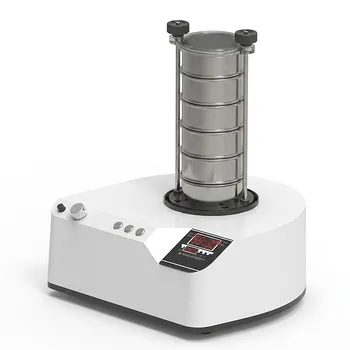
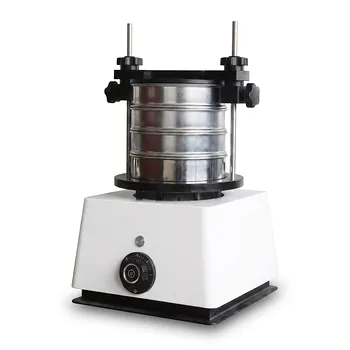
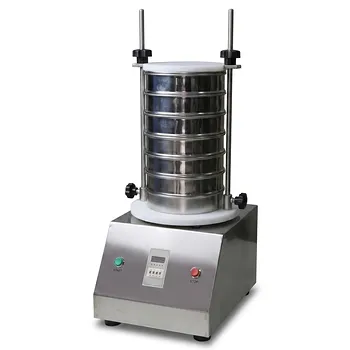
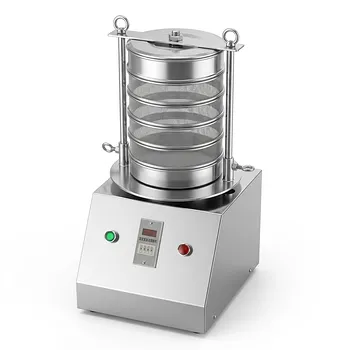
By removing every trace of HDPE residue, the ultrasonic process restores the sieving capacity of the mesh. This ensures that the mechanical separation performed by a vibratory sieve shaker remains consistent and repeatable across multiple samples.
Understanding the Trade-offs and Pitfalls
Risk of Material Fatigue
While highly effective, excessive exposure to high-intensity ultrasonic energy can eventually lead to fatigue in the solder joints or the wire mesh. It is critical to monitor cleaning durations to prevent structural failure of the sieve over time.
Limitations of Manual Cleaning
Relying solely on conventional brushing is often insufficient for HDPE powders and can actually push particles deeper into the mesh. Furthermore, aggressive brushing is a leading cause of sieve graduation errors and physical mesh distortion.
How to Apply This to Your Testing Workflow
Integrating a standardized cleaning protocol is the only way to ensure the long-term reliability of your HDPE particle analysis.
- If your primary focus is maximizing data accuracy: Always perform a dedicated ultrasonic cleaning cycle before every test to ensure the mesh starts at a zero-residue baseline.
- If your primary focus is equipment longevity: Use ultrasonic cleaning as your primary maintenance tool to avoid the abrasive wear and tear caused by manual brushes.
- If your primary focus is process optimization: Use the restored accuracy of your sieves to precisely calculate the PSD span, allowing for better control over polymer growth kinetics.
The integration of ultrasonic cleaning is the definitive step in transforming raw sieving data into a reliable metric for HDPE quality control.
Summary Table:
| Feature | Manual Brushing | Ultrasonic Cleaning |
|---|---|---|
| Cleaning Mechanism | Mechanical friction/contact | Ultrasonic cavitation (non-contact) |
| HDPE Particle Removal | Often pushes fines deeper | Effectively peels away trapped residues |
| Mesh Integrity | Risk of wire deformation/widening | Protects fragile wire structures |
| Data Accuracy | High risk of cumulative error | Restores sieve to factory specifications |
| Sieving Capacity | Partially restored | Fully restored for consistent repeatability |
Optimize Your Particle Analysis with Precision Equipment
Achieving reliable High-Density Polyethylene (HDPE) characterization requires more than just a standard sieve; it demands a complete maintenance and preparation strategy. At [Company Name], we provide complete laboratory sample preparation solutions for material science, specializing in high-performance powder processing and compaction equipment.
Our extensive product line is designed to ensure the integrity of your testing workflow:
- Sieving Excellence: Vibratory and air-jet sieve shakers paired with high-precision test sieves and meshes.
- Advanced Milling: Planetary ball mills, jet mills, and cryogenic grinders for superior particle size reduction.
- Sample Compaction: A full spectrum of hydraulic presses, including Cold/Warm Isostatic Presses (CIP/WIP), XRF pellet presses, and vacuum hot presses.
- Material Processing: Reliable jaw/roll crushers, powder mixers, and defoaming mixers.
Whether you are refining polymer growth kinetics or ensuring product bulk density standards, our expert-grade equipment delivers the accuracy and durability your lab needs.
Ready to upgrade your laboratory capabilities? Contact us today to find the perfect solution for your application!
References
- M. A. Nikoohemmat, E. Joudaki. Investigation on Physical and Mechanical Properties of High Density Polyethylene (PE100) Using Novel Catalyst. DOI: 10.5829/ije.2022.35.11b.15
Mentioned Products
- 三维电磁微量振动筛分仪
- Small Laboratory Vibrating Sieve Shaker for Precise Particle Size Analysis
- Laboratory Vibratory Test Sieve Shaker for Precision Particle Size Analysis and Powder Grading
- Stainless Steel Laboratory Vibratory Test Sieve Shaker
People Also Ask
- Why is a standard sieve shaker essential for CBA powders in geopolymers? Enhance Reactivity & Material Strength
- Why are standard metal sieves and sieve shakers necessary for 5-aminotetrazole mixtures? Optimize Thermal & Kinetic Data
- Why Use Sieve Shakers for Gangue Slurry Experiments? Optimize Particle Grading for Superior Results
- What are the advantages of mechanical vs. manual sieving for road dust analysis? Achieve Superior Data Standardization.
- How do high-precision sieve shakers and powder mixers facilitate material circularity in metal PBF? Optimize AM Cycles

Tech Team · PowderPreparation
Last updated on Jun 03, 2026