Why must physical properties such as shear modulus and density be considered when designing plowshare mixers for plastic granules? Design Guide
Updated 3 months ago
Designing an effective plowshare mixer requires a deep understanding of the material's physical DNA. Considering properties like shear modulus and density is critical because they dictate how plastic granules react to mechanical forces and collide within the chamber. Neglecting these factors leads to inefficient energy conversion, excessive frictional heat, and the formation of stagnant "dead zones."
The Core Takeaway: Effective plowshare design bridges the gap between mechanical force and material response. By aligning the mixer's geometry with a material's specific density and shear modulus, you ensure maximum fluidity while minimizing energy waste and material degradation.
The Influence of Material Physics on Flow Dynamics
Shear Modulus and Particle Collision
The shear modulus defines how a plastic granule deforms when subjected to lateral stress during the mixing process. This property determines how much mechanical energy is absorbed during particle-to-particle collisions versus how much is converted into useful relative motion.
Density and Momentum Transfer
Material density dictates the mass-to-volume ratio, which directly influences the momentum of the granules as they are tossed by the plowshares. Heavier granules, such as certain grades of HDPE, require different lift dynamics and rotor speeds than lighter resins to maintain a consistent fluidization zone.
The Role of the Poisson Ratio
Often overlooked, the Poisson ratio affects how a material expands in one direction when compressed in another. In the high-pressure environment of a plowshare mixer, this property influences how granules pack together and flow around the mixing elements.
Maximizing Energy Efficiency and Mixing Quality
Converting Energy into Motion
The primary goal of a plowshare mixer is to convert mechanical drive power into kinetic energy for the particles. When the plowshare structure is optimized for specific material characteristics like Polypropylene (PP), energy is used for mixing rather than being lost to internal friction.
Eliminating Dead Zones
Poor alignment between the mixer design and material fluidity creates dead zones where granules remain stationary. Accounting for density and flow characteristics allows engineers to adjust the plowshare angle and spacing to ensure every part of the batch remains in motion.
Controlling Frictional Heat
If the mixer design does not account for the shear modulus of the plastic, the blades may generate excessive friction. This results in wasted electricity and, more importantly, can lead to localized melting or "clumping" of the plastic granules.
Understanding the Trade-offs
High-Speed Efficiency vs. Material Sensitivity
Increasing the rotor speed can improve mixing uniformity, but it also increases the energy of impacts. If the material has a low threshold for shear, high speeds may cause physical degradation of the granules or unwanted heat buildup.
Universal vs. Specialized Design
A "one-size-fits-all" plowshare design may be able to process a wide range of densities but will rarely achieve peak efficiency for any single material. Choosing a specialized design increases performance and throughput but limits the machine's flexibility for future, different product lines.
How to Apply This to Your Project
When selecting or designing a plowshare mixer, your technical specifications should be driven by the specific plastic resin you intend to process.
- If your primary focus is Maximum Throughput: Optimize the plowshare geometry and rotor speed specifically for the material's density to achieve the fastest fluidization possible.
- If your primary focus is Material Integrity: Prioritize the shear modulus and frictional characteristics to ensure the mixer provides a gentle enough action to prevent granule deformation or melting.
- If your primary focus is Energy Reduction: Align the internal structure to minimize internal friction, ensuring that the motor's power is converted directly into particle motion rather than heat.
Mastering the interplay between material physics and mechanical design is the only way to achieve a truly optimized, industrial-scale mixing environment.
Summary Table:
| Property | Impact on Mixing Process | Engineering Benefit |
|---|---|---|
| Shear Modulus | Dictates granule deformation and collision energy. | Reduces frictional heat & prevents melting. |
| Density | Influences momentum and fluidization dynamics. | Optimizes rotor speed & eliminates dead zones. |
| Poisson Ratio | Affects particle packing and lateral flow. | Ensures uniform flow and better energy transfer. |
Elevate Your Material Processing with Precision Engineering
At our core, we understand that effective material science begins with the right preparation. Whether you are working with complex polymers or advanced resins, your equipment should be as specialized as your research.
Providing complete laboratory sample preparation solutions for material science, we specialize in powder processing and compaction equipment. Our extensive lines include:
- Advanced Mixing: High-performance powder mixers and defoaming mixers tailored to your material's physical DNA.
- Size Reduction: Precision crushers (jaw/roll) and grinders, including liquid nitrogen cryogenic grinders and various mills (planetary ball, jet, sand/bead, disc, rotor).
- Particle Analysis: Vibratory and air-jet sieve shakers with a full range of test sieves.
- Compaction Systems: A full spectrum of hydraulic presses, including Cold/Warm Isostatic Presses (CIP/WIP), standard lab presses, XRF pellet presses, hot presses, and vacuum hot presses.
Don't let inefficient equipment compromise your results. Our solutions are designed to minimize energy waste and maximize material integrity.
Contact our technical experts today to discuss your specific material requirements and find the perfect equipment configuration for your lab!
References
- Yaohua Zhu, Xinbo Chen. Structure optimization of <i>mixer ploughshare</i> through orthogonal experiment based on DEM simulation. DOI: 10.1051/itmconf/20224702048
Mentioned Products
- V-Type Powder Mixer for Uniform Blending of Dry Powders and Granules
- Three-Dimensional Motion Mixer for Laboratory Powder and Granule Blending
- Industrial Double Cone Mixer for Powder Blending and Homogeneous Mixing
- Stainless Steel Coarse Crusher for Pharmaceutical Food and Plastic Material Processing
- Inclined Mixer for Homogeneous Powder Blending and Grinding
People Also Ask
- Why is a media-free and ball-free V-type powder mixer used for Al2O3/Inconel 718? Preserve Purity & Shape
- How does a V-type powder mixer facilitate the blending of oxidizers and catalysts? Safe & Uniform Mixing Solutions
- Why is it necessary to consider the influence of static walls in powder mixing experiment design? Optimize Uniformity.
- What role does powder mixing play in Al2O3-Er3Al5O12 ceramics? Achieve Precise Homogeneity and Phase Control
- How do powder mixers and additives influence ZTA ceramics? Optimize microstructure for superior toughness and density

Tech Team · PowderPreparation
Last updated on Jun 03, 2026
Related Products
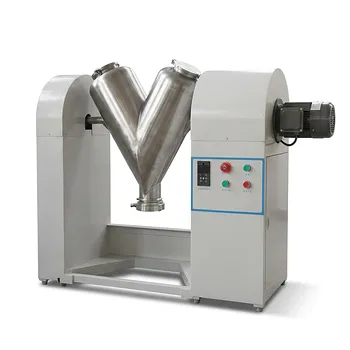
V-Type Powder Mixer for Uniform Blending of Dry Powders and Granules
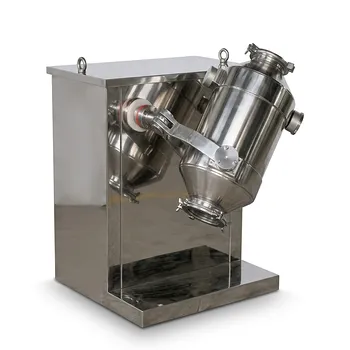
Three-Dimensional Motion Mixer for Laboratory Powder and Granule Blending
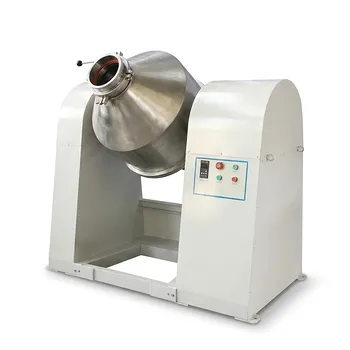
Industrial Double Cone Mixer for Powder Blending and Homogeneous Mixing
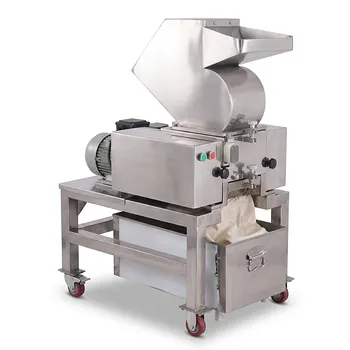
Stainless Steel Coarse Crusher for Pharmaceutical Food and Plastic Material Processing
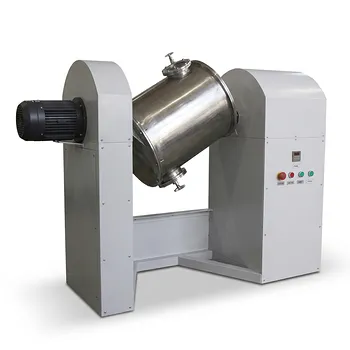
Inclined Mixer for Homogeneous Powder Blending and Grinding
