Why must feldspar concentrate samples be pressed into pellets for XRF? Optimize Accuracy & Trace Element Detection
Updated 5 months ago
Standardizing feldspar preparation is critical for analytical accuracy. Feldspar concentrate must be pressed into high-density pellets to eliminate "particle size effects," voids, and surface irregularities that inherently distort X-ray readings. This process ensures a flat, uniform surface, allowing for the precise quantitative detection of elements, particularly trace components like iron.
Creating high-density pellets transforms a heterogeneous powder into a standardized solid, which is essential for minimizing physical interference and ensuring that X-ray intensity reflects true elemental concentration rather than sample texture.
Overcoming Physical Matrix Effects
Eliminating Particle Size Variance
In its raw state, feldspar powder consists of grains of varying sizes that scatter X-rays inconsistently. Pressing these grains into a dense pellet creates a homogeneous surface that ensures stable X-ray excitation across the entire sample.
Minimizing Voids and Air Gaps
Loose powder contains significant air gaps or "voids" between particles that attenuate (weaken) low-energy fluorescence lines. Compaction removes these gaps, ensuring the characteristic X-rays reach the detector without being absorbed by air trapped within the sample structure.
Reducing Surface Irregularities
XRF analysis requires a perfectly flat plane to maintain a constant distance between the X-ray source and the sample. Surface irregularities in loose powder cause shadowing effects and height variations that lead to significant measurement errors.
Enhancing Measurement Precision and Reproducibility
Standardizing Sample Geometry
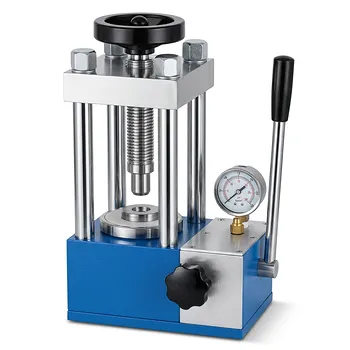
Quantitative results in XRF depend on the specimen presenting a reproducible geometric shape to the beam. High-pressure pelletization (often reaching 25 tons or more) ensures that every sample is identical in density and thickness, making data comparable across different batches.
Improving Signal Intensity for Trace Elements
For feldspar, detecting trace iron components requires high sensitivity and a high signal-to-noise ratio. A dense pellet maximizes the volume of material interacting with the X-rays, providing the accurate intensity data needed for precise trace element quantification.
Stabilizing the Sample Environment
Many modern XRF spectrometers operate under a vacuum to improve the detection of light elements. Pressed pellets are structurally sound and do not "pouf" or contaminate the vacuum chamber, unlike loose powders which can be drawn into the instrumentation.
Understanding the Trade-offs
The Role of Binders
While pressing improves accuracy, the addition of binders (like wax or cellulose) is often necessary to ensure the pellet does not crumble. You must account for the dilution effect of the binder in your final calculations to avoid underreporting the mineral concentrations.
Pelletization vs. Fusion
Pressed pellets are faster and more cost-effective than lithium borate fusion, but they do not entirely eliminate mineralogical effects. If the feldspar has a complex or highly varied mineral matrix, fusion may be required for the highest possible level of accuracy, albeit at a higher cost.
How to Apply This to Your Project
Recommendations for Sample Preparation
- If your primary focus is routine quality control: Utilize a high-pressure hydraulic press (20-30 tons) with a dedicated binder to produce pellets quickly and consistently.
- If your primary focus is trace element detection (e.g., Iron): Ensure the sample is ground to an extremely fine powder (under 75 microns) before pressing to maximize surface homogeneity.
- If your primary focus is absolute accuracy in complex matrices: Consider comparing pressed pellet results against fused bead standards to calibrate for any remaining mineralogical interference.
By transforming loose feldspar powder into a high-density pellet, you ensure that your XRF data is a reflection of chemical reality rather than physical inconsistency.
Summary Table:
| Challenge in Raw Powder | How Pelletizing Solves It | Impact on XRF Results |
|---|---|---|
| Particle Size Variance | Creates a homogeneous surface | Ensures stable and consistent X-ray excitation |
| Voids and Air Gaps | Eliminates internal gas pockets | Prevents attenuation of low-energy fluorescence |
| Surface Irregularities | Provides a perfectly flat plane | Eliminates shadowing and height-related errors |
| Trace Element Noise | Maximizes material density | Improves signal-to-noise ratio for iron detection |
| Vacuum Instability | Solidifies sample structure | Prevents powder contamination of vacuum chambers |
Elevate Your Analytical Precision with Professional Sample Preparation
Are you looking to eliminate measurement errors and achieve superior trace element detection in your mineral analysis? Achieving the perfect high-density pellet starts with the right equipment.
At Our Company, we provide complete laboratory sample preparation solutions for material science. We specialize in the entire workflow of powder processing and compaction, including:
- Size Reduction: High-efficiency crushers (jaw/roll) and precision mills (planetary ball, jet, sand, and rotor mills) to reach sub-75 micron powders.
- Sample Homogenization: Advanced powder mixers and defoaming mixers.
- High-Pressure Pelletization: A full spectrum of hydraulic presses, including dedicated XRF pellet presses, Cold/Warm Isostatic Presses (CIP/WIP), and vacuum hot presses.
- Classification: Sieve shakers (vibratory/air-jet) for consistent particle size distribution.
Our equipment is designed to ensure your samples meet the rigorous geometric and density standards required for world-class XRF analysis.
Ready to optimize your lab's efficiency? Contact us today to find the perfect solution for your application!
References
- S. Tinesha, C. H. Voon. BENEFICIATION METHOD AND IRON REMOVAL FROM FELDSPAR ORE. DOI: 10.54554/jet.2025.16.1.016
Mentioned Products
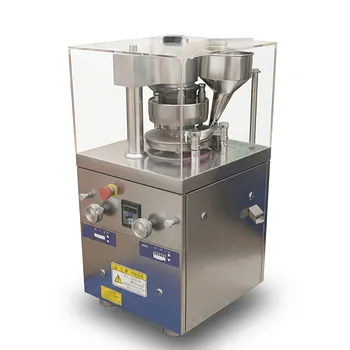
- 实验室旋转式压片机 多冲模单压式自动连续压片
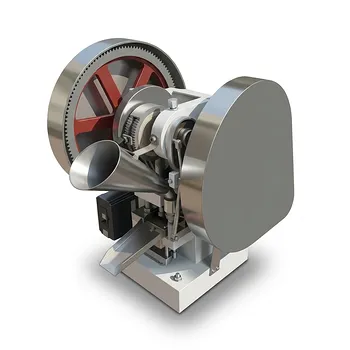
- 6 Ton Variable Frequency Single Punch Tablet Press
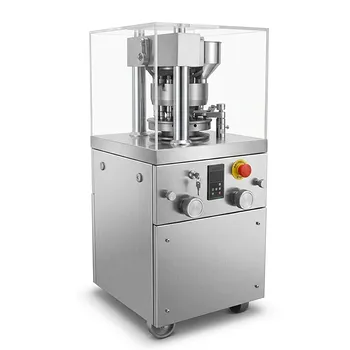
- Ordinary Type Rotary Tablet Press for Pharmaceutical Chemical Food Electronic Industries
- Enhanced 9 Punch Rotary Tablet Press for Powder Compaction
- 6-Ton Small Single-Punch Tablet Press — Laboratory Powder & Granule Tableting Equipment / Tablet Forming Machine
People Also Ask
- What is the role of a laboratory uniaxial hydraulic press in the preparation of alumina ceramic samples? Key Benefits
- What are the advantages of double-action pressing equipment? Master Uniform Density in High-Aspect-Ratio Ceramics
- What is the function of a laboratory hydraulic forming press in CRSS rubber prep? Ensure Superior Material Integrity
- What role does a laboratory hydraulic press play in the forming of Ce-TZP/Al2O3 green bodies? Maximize Density & Strength
- How does a laboratory hydraulic press ensure the quality of high-entropy cathode H-SOFC single cells? Optimize Performance

Tech Team · PowderPreparation
Last updated on May 14, 2026
Related Products
实验室旋转式压片机 多冲模单压式自动连续压片
6 Ton Variable Frequency Single Punch Tablet Press
Ordinary Type Rotary Tablet Press for Pharmaceutical Chemical Food Electronic Industries
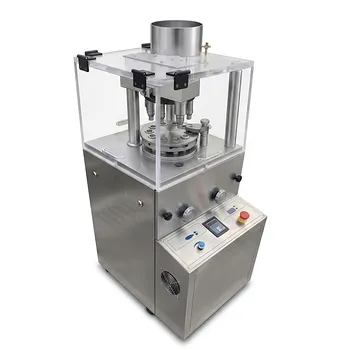
Enhanced 9 Punch Rotary Tablet Press for Powder Compaction
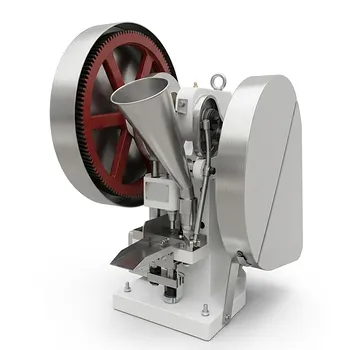
6-Ton Small Single-Punch Tablet Press — Laboratory Powder & Granule Tableting Equipment / Tablet Forming Machine