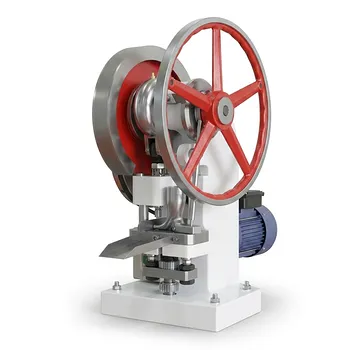
How does an XRF pellet press contribute to the chemical composition analysis of bamboo leaf ash? Optimize Your XRF Results
Updated 5 months ago
An XRF pellet press is the critical link between raw bamboo leaf ash and accurate analytical data. It transforms loose, irregular powder into a high-density, standardized solid with a perfectly flat surface. This preparation is essential because it eliminates physical variables—such as grain size discrepancies and internal air pockets—that would otherwise distort the X-ray signals needed to quantify elements like silica and calcium.
Core Takeaway: The XRF pellet press ensures chemical analysis accuracy by converting bamboo leaf ash into a uniform, high-density medium. This process eliminates "matrix effects" and surface scattering, allowing the spectrometer to capture the precise fluorescence intensity of active components like SiO2 and CaO.
Overcoming the Physical Barriers of Raw Powder
Eliminating Grain Size and Void Interference
Raw bamboo leaf ash is naturally porous and inconsistent in its loose form. The pellet press applies high pressure to collapse these internal voids, ensuring the X-ray beam interacts with a solid mass rather than air gaps. This removal of the "particle size effect" is vital for obtaining a stable signal during the excitation process.
Establishing Surface Planarity
XRF sensors require a perfectly flat surface to ensure the angle of incidence and reflection remains constant. The press creates a smooth, disc-shaped pellet that prevents X-ray scattering caused by surface roughness. This standardization allows for a clear path for fluorescence signals to reach the detector without interference.
Enhancing Signal Accuracy and Repeatability
Standardizing Sample Density
Variability in how a powder is packed leads to "density gradients," which cause fluctuating results between different batches. A hydraulic press applies constant, high-tonnage pressure (typically between 10 to 15 tons per square inch) to ensure every sample has an identical internal structure. This consistency is the foundation of repeatable quantitative data.
Precise Quantification of Major Oxides
By stabilizing the sample's physical state, the press allows the X-ray spectrometer to accurately measure mass fractions of specific elements. This is particularly important for identifying the percentage of silica (SiO2) and calcium oxide (CaO) in bamboo leaf ash. Accurate detection of these components determines the ash’s suitability for industrial applications, such as concrete additives or soil stabilizers.
Understanding the Trade-offs and Pitfalls
The Necessity of Chemical Binders
Some bamboo leaf ash samples may lack the natural cohesiveness required to stay in a solid pellet form. In these cases, a binder such as boric acid or cellulose must be added to provide structural integrity. While effective, these binders dilute the sample slightly, requiring the analyst to compensate for the binder-to-ash ratio in the final calculations.
Risks of Pellet Fracturing and Contamination
If the pressure is released too rapidly or the ash is not ground finely enough, the pellet may "cap" or fracture. Furthermore, the specialized dies used in the press must be meticulously cleaned between samples. Cross-contamination from a previous sample can lead to false readings of trace elements, undermining the entire analysis.
How to Apply This to Your Analysis
To achieve the best results when analyzing bamboo leaf ash, your preparation strategy should align with your specific research or industrial goals.
- If your primary focus is Maximum Analytical Precision: Utilize a high-pressure automatic press and ensure the bamboo leaf ash is ground to a particle size of less than 75 microns before pressing.
- If your primary focus is High-Throughput Screening: Implement a standardized manual press routine with a fixed binder ratio to ensure rapid, repeatable results across multiple samples.
- If your primary focus is Trace Element Detection: Use high-purity binders and specialized tungsten carbide dies to minimize any background noise or elemental contamination during the pressing phase.
By mastering the pelletizing process, you transform raw agricultural waste into a high-precision geological sample ready for definitive chemical characterization.
Summary Table:
| Feature | Benefit for XRF Analysis | Key Metric/Requirement |
|---|---|---|
| Density Standardization | Ensures repeatable quantitative data | 10–15 tons per square inch |
| Surface Planarity | Prevents X-ray scattering and interference | Perfectly smooth, flat disc surface |
| Void Elimination | Removes "particle size effect" | Homogeneous internal solid structure |
| Particle Size Control | Maximizes analytical signal precision | Ash ground to < 75 microns |
| Binder Integration | Maintains pellet structural integrity | Use of boric acid or cellulose |
Maximize Your Analytical Precision with Professional Sample Preparation
To achieve definitive chemical characterization of materials like bamboo leaf ash, high-quality sample preparation is non-negotiable. We provide complete laboratory sample preparation solutions tailored for material science. Our expertise spans the entire workflow to ensure your analytical data is accurate and repeatable:
- Size Reduction: Advanced crushers (jaw/roll), liquid nitrogen cryogenic grinders, and high-energy mills (planetary ball, jet, sand, disc, rotor).
- Classification & Mixing: Vibratory/air-jet sieve shakers and high-efficiency powder or defoaming mixers.
- Advanced Compaction: A full spectrum of hydraulic presses, including specialized XRF pellet presses, standard lab presses, and Cold/Warm Isostatic Presses (CIP/WIP), as well as vacuum hot presses.
Whether you are focusing on agricultural waste characterization or advanced geological research, our equipment is designed to eliminate physical variables and boost your lab's efficiency. Contact our experts today to find the perfect solution for your lab!
References
- Olufunmilola Adetayo Obakin, J.B. Taiwo. Geotechnical Properties of Cement-Stabilized Lateritic Soil with Bamboo Leaf Ash in the Takie Area of Ogbomoso. DOI: 10.22624/aims/v9n4p2
Mentioned Products
- 6 Ton Variable Frequency Single Punch Tablet Press
- Ordinary Type Rotary Tablet Press for Pharmaceutical Chemical Food Electronic Industries
- Enhanced 9 Punch Rotary Tablet Press for Powder Compaction
- 6-Ton Small Single-Punch Tablet Press — Laboratory Powder & Granule Tableting Equipment / Tablet Forming Machine
- 实验室旋转式压片机 多冲模单压式自动连续压片
People Also Ask
- Why is a laboratory hydraulic press required for FT-IR KBr pellets? Achieve Precise Sample Clarity for ZrC–SiC Analysis
- Why is vacuum sealing and flexible packaging necessary for Aluminum Titanate powders during CIP? Ensure Peak Density
- What are the advantages of using hardened steel molds and graphite spray for titanium powder? Ensure structural integrity
- Why is a laboratory hydraulic press required to compress oyster shell powder before XRF analysis? Improve Data Accuracy.
- What role does a high-strength stainless steel mold kit play in the uniaxial die compaction process? Ensuring Precision

Tech Team · PowderPreparation
Last updated on May 14, 2026
Related Products
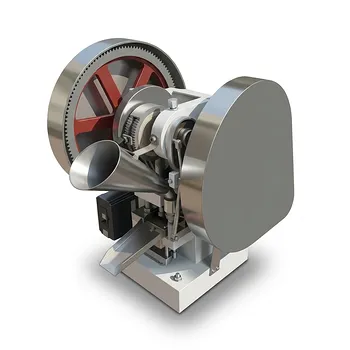
6 Ton Variable Frequency Single Punch Tablet Press
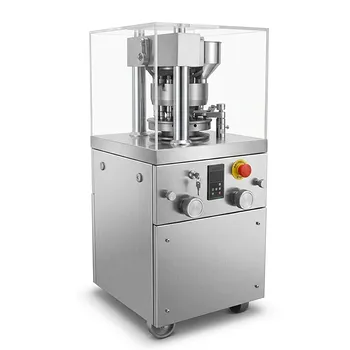
Ordinary Type Rotary Tablet Press for Pharmaceutical Chemical Food Electronic Industries
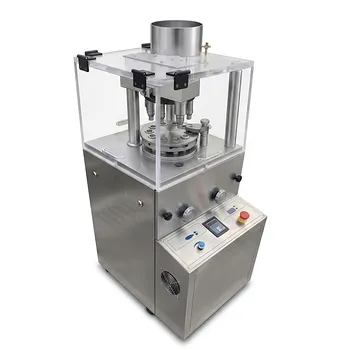
Enhanced 9 Punch Rotary Tablet Press for Powder Compaction
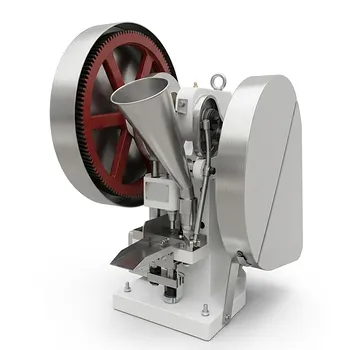
6-Ton Small Single-Punch Tablet Press — Laboratory Powder & Granule Tableting Equipment / Tablet Forming Machine
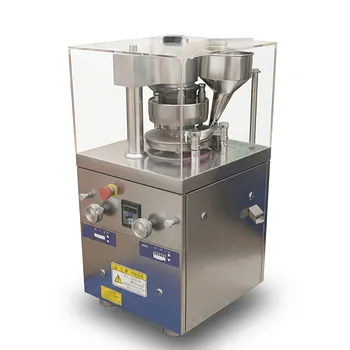
实验室旋转式压片机 多冲模单压式自动连续压片
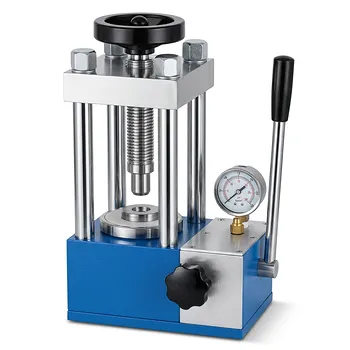
Manual Tablet Press with Dual Scale Pressure Gauge for Pharmaceutical Food Chemical Laboratory Sample Preparation