Why is isostatic pressing used for silicon carbide armor? Achieve uniform density for maximum ballistic protection.
Updated 5 months ago
Isostatic pressing technology is used for silicon carbide armor because it ensures perfect structural uniformity by applying pressure equally from all directions. This process eliminates internal density gradients and "weak spots" that typically occur with traditional one-way pressing methods. By creating a homogenous material, manufacturers can produce armor plates that resist cracking and warping during high-temperature manufacturing, ultimately providing reliable protection against high-velocity ballistic impacts.
Core Takeaway: Isostatic pressing is essential for transforming silicon carbide powder into a high-performance ceramic that is free from internal structural flaws. This uniform density is the foundation of the material's ability to absorb and dissipate extreme kinetic energy.
Eliminating Internal Density Gradients
The Limitation of Uniaxial Pressing
Traditional mechanical pressing applies force from a single direction, which often leads to uneven compaction within the silicon carbide powder. This results in "density gradients," where some parts of the ceramic are more packed than others.
The Isotropic Pressure Solution
Cold Isostatic Pressing (CIP) uses a liquid medium to apply equal pressure—often exceeding 300 MPa—across the entire surface of the mold. This ensures that every millimeter of the "green body" (the unsintered plate) reaches the same level of densification.
Structural Homogeneity
Because the pressure is omnidirectional, the internal particles are forced into a dense, consistent arrangement. This uniformity is critical for silicon carbide, as even a minor density variation can become a point of failure under stress.
Integrity During High-Temperature Sintering
Preventing Micro-Cracks
Silicon carbide requires sintering temperatures often exceeding 1900°C to harden into a ceramic. If the initial green body has uneven density, the material will shrink at different rates, leading to internal stresses and micro-cracks.
Reducing Deformation Rates
Isostatic pressing ensures that shrinkage occurs uniformly across the entire plate during the heating process. This significantly reduces the risk of warping or deformation, allowing for the production of large-scale or complex-shaped armor components.
Eliminating Processing Gaps
In modern manufacturing like Selective Laser Sintering (SLS), isostatic pressing is often used as a secondary step. It effectively "heals" micro-gaps and density inconsistencies left behind by laser scanning paths before final hardening.
Maximizing Ballistic Protection
Consistent Mechanical Strength
The primary goal of armor is to stop a projectile by shattering it upon impact. Isostatic pressing ensures the silicon carbide has the structural consistency necessary to provide the same level of resistance across every square inch of the plate.
Energy Dissipation
Uniform density allows the shockwave from a high-velocity impact to radiate evenly through the ceramic. This prevents the energy from following a path of least resistance through structural flaws, which would otherwise cause the armor to shatter prematurely.
Reliability Against Multiple Hits
Ceramic armor that is free of internal stress concentrations is more likely to maintain its integrity after the first hit. This "multi-hit" capability is directly tied to the absence of pre-existing micro-cracks formed during the pressing and sintering stages.
Understanding the Trade-offs
Cost and Complexity
Isostatic pressing is generally more expensive and slower than high-speed uniaxial die pressing. The equipment requires high-pressure specialized vessels and a liquid medium, which increases the initial capital investment and operational overhead.
Shape and Size Limitations
While isostatic pressing is excellent for uniform density, the use of flexible rubber molds can make it difficult to maintain extremely tight dimensional tolerances. Some plates may require secondary machining or grinding after sintering to reach final specifications.
Cycle Times
The process involves loading, sealing, pressurizing, and decompressing the vessel, which creates a longer production cycle. This makes it less suitable for low-cost, high-volume commodity ceramics compared to armor-grade components.
How to Apply This to Your Project
Making the Right Choice for Your Goal
- If your primary focus is maximum ballistic reliability: Utilize Cold Isostatic Pressing to ensure the elimination of internal micro-cracks and density gradients.
- If your primary focus is producing large or curved plates: Specify isostatic pressing to prevent warping and deformation during the 1900°C sintering phase.
- If your primary focus is high-volume, low-cost production: Consider traditional uniaxial pressing if the ballistic requirements are lower and dimensional tolerances are the priority.
By prioritizing isostatic pressing, you ensure that silicon carbide's inherent hardness is backed by a flawless internal structure capable of surviving the most extreme combat conditions.
Summary Table:
| Feature | Uniaxial Pressing | Isostatic Pressing (CIP) |
|---|---|---|
| Pressure Direction | Single direction (top/bottom) | Omnidirectional (equal from all sides) |
| Density Distribution | Uneven (density gradients) | High structural uniformity |
| Sintering Behavior | Prone to warping and micro-cracks | Uniform shrinkage; minimal deformation |
| Ballistic Integrity | Higher risk of weak spots | Consistent resistance across the plate |
| Complexity | Simple, high-speed | Advanced, requires specialized vessels |
Elevate Your Material Science with Precision Engineering
Are you looking to eliminate structural flaws in your advanced ceramics? At our facility, we provide complete laboratory sample preparation solutions specifically designed for material science and ballistic research.
Whether you are producing silicon carbide armor or high-purity powder components, our specialized equipment ensures the highest standards of structural integrity. Our extensive product line includes:
- Advanced Pressing Solutions: Cold/Warm Isostatic Presses (CIP/WIP), standard lab presses, and vacuum hot presses.
- Powder Processing: High-efficiency mills (planetary ball, jet, rotor), jaw/roll crushers, and cryogenic grinders.
- Sizing & Mixing: Vibratory/air-jet sieve shakers and high-performance powder or defoaming mixers.
Maximize your product reliability and manufacturing yield today. Contact our experts now to find the perfect equipment solution for your laboratory or production line!
References
- Halil Burak Mutu. Ballistic Performance Analysis of Silicon Carbide Ceramic Body Armor Using Finite Element Method and Machine Learning Algorithms. DOI: 10.17134/khosbd.1731217
Mentioned Products
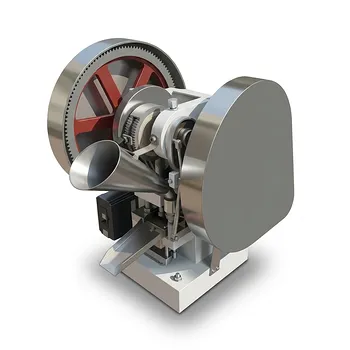
- 实验室旋转式压片机 多冲模单压式自动连续压片
- 6-Ton Small Single-Punch Tablet Press — Laboratory Powder & Granule Tableting Equipment / Tablet Forming Machine
- Manual Tablet Press with Dual Scale Pressure Gauge for Pharmaceutical Food Chemical Laboratory Sample Preparation
- Ordinary Type Rotary Tablet Press for Pharmaceutical Chemical Food Electronic Industries
- Enhanced 9 Punch Rotary Tablet Press for Powder Compaction
People Also Ask
- What is the role of a laboratory uniaxial hydraulic press in the preparation of alumina ceramic samples? Key Benefits
- What are the advantages of double-action pressing equipment? Master Uniform Density in High-Aspect-Ratio Ceramics
- What is the function of a laboratory hydraulic forming press in CRSS rubber prep? Ensure Superior Material Integrity
- What role does a laboratory hydraulic press play in the forming of Ce-TZP/Al2O3 green bodies? Maximize Density & Strength
- How does a laboratory hydraulic press ensure the quality of high-entropy cathode H-SOFC single cells? Optimize Performance

Tech Team · PowderPreparation
Last updated on May 14, 2026
Related Products
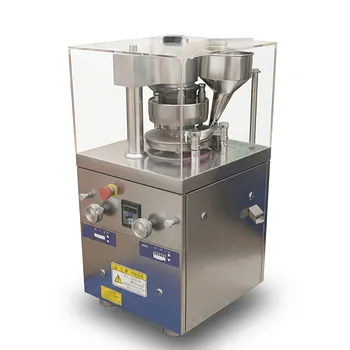
实验室旋转式压片机 多冲模单压式自动连续压片
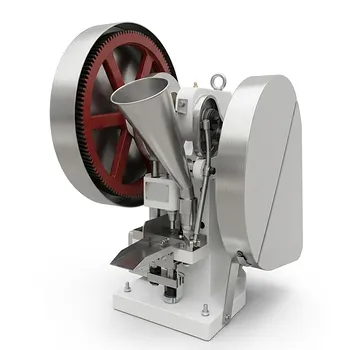
6-Ton Small Single-Punch Tablet Press — Laboratory Powder & Granule Tableting Equipment / Tablet Forming Machine
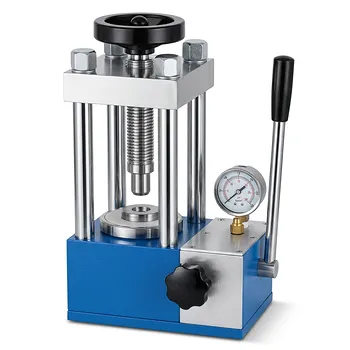
Manual Tablet Press with Dual Scale Pressure Gauge for Pharmaceutical Food Chemical Laboratory Sample Preparation
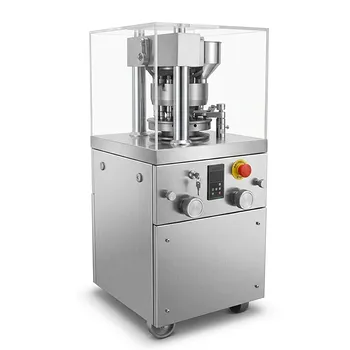
Ordinary Type Rotary Tablet Press for Pharmaceutical Chemical Food Electronic Industries
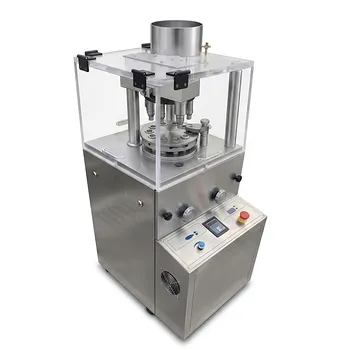
Enhanced 9 Punch Rotary Tablet Press for Powder Compaction
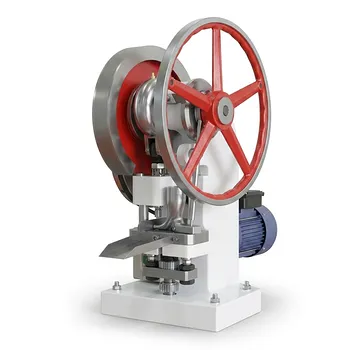
5 Ton Single Punch Tablet Press Laboratory Small Batch Production