What is the purpose of using a benchtop hydraulic press for LSiPSCl preparation? Optimize Density & Ionic Conductivity
Updated 5 months ago
The primary purpose of using a benchtop hydraulic press for LSiPSCl precursors is to transform loose powder into a "green body" with controlled density and geometry. This densification is a prerequisite for effective heat treatment, as it facilitates the solid-state reactions and crystal growth necessary to achieve high ionic conductivity and mechanical structural integrity.
Uniaxial pressing acts as the bridge between raw chemical synthesis and the final functional ceramic. By minimizing internal porosity and maximizing particle-to-particle contact, the press establishes the physical foundation required for efficient chemical transformation and low-resistance electrical paths.
Facilitating Solid-State Reactions and Crystal Growth
The Role of Particle Packing Density
LSiPSCl precursors require high-temperature heat treatment in a tube furnace to achieve their final crystalline form. A benchtop hydraulic press forces particle rearrangement, bringing reactive chemical species into intimate contact.
This dense packing is critical because solid-state reactions depend on the diffusion of ions across particle boundaries. Without sufficient contact area, the reaction kinetics are slowed, leading to incomplete phases or poor crystal growth.
Minimizing Internal Porosity
The press effectively excludes air trapped between powder particles during the compression process. Reducing internal voids is essential to prevent the material from becoming fragile or "foamy" during the sintering process.
Low porosity ensures that the heat is distributed uniformly throughout the sample. This uniformity prevents localized hotspots or cold zones that could lead to structural defects or inconsistent chemical phases.
Enhancing Electrical and Mechanical Performance
Reducing Grain Boundary Resistance
In solid electrolytes, the movement of lithium ions is often hindered by high contact resistance between individual particles. High-pressure uniaxial pressing (often ranging from 100 to 200 MPa) crushes these boundaries together.
By reducing the voids, the press lowers the overall impedance of the electrolyte. This is a fundamental requirement for obtaining accurate and repeatable results during ionic conductivity and critical current density (CCD) testing.
Improving Mechanical Strength
The "green body" produced by the press must have enough mechanical strength to be handled and placed into a furnace without crumbling. The press ensures the sample maintains a specific geometric shape, such as a planar pellet.
Superior mechanical strength also helps the material resist the stresses of sintering shrinkage. This minimizes the risk of the final solid electrolyte developing cracks or warping during the cooling phase.
Establishing a Research Baseline
Consistency in Comparative Studies
A benchtop hydraulic press allows researchers to apply precise and repeatable pressure (e.g., 5 tons or 100 MPa). This precision is vital for establishing a standardized reference baseline across different batches.
When comparing new manufacturing methods like 3D printing to traditional methods, the pressed pellet serves as the gold standard. It allows for a direct comparison of how different processing techniques affect final density and microstructure.
Understanding the Trade-offs and Pitfalls
Density Non-Uniformity
While uniaxial pressing is effective, it can lead to non-uniform density distributions within the pellet. Friction between the powder and the mold walls often results in the center of the pellet being denser than the edges.
The Risk of Delamination
Applying pressure too quickly or releasing it abruptly can cause capping or delamination. This occurs when internal stresses cause the pellet to split into thin layers, potentially ruining the sample before it even reaches the furnace.
Mold Contamination
Repeated use of steel molds can introduce trace metallic impurities into the LSiPSCl precursor. Researchers must ensure molds are meticulously cleaned or lined to prevent these impurities from altering the electrochemical properties of the sulfur-based electrolyte.
How to Apply This to Your Research Project
Recommendations Based on Project Goals
- If your primary focus is maximizing ionic conductivity: Use high-precision pressure (above 150 MPa) to minimize grain boundary resistance and ensure the highest possible particle contact area.
- If your primary focus is developing a standardized baseline: Carefully document the exact tonnage and dwell time on the press to ensure every reference sample has a consistent initial green density.
- If your primary focus is preventing structural cracks: Implement a slow pressure-release cycle (depressurization) to allow internal stresses to equalize, preventing delamination of the LSiPSCl pellet.
By mastering the uniaxial pressing stage, you ensure that the subsequent chemical and thermal processing of your LSiPSCl electrolyte yields a high-performance, structurally sound material.
Summary Table:
| Key Benefit | Impact on LSiPSCl Electrolyte | Critical Process Parameter |
|---|---|---|
| Particle Packing | Facilitates solid-state reactions and crystal growth | Applied pressure (100–200 MPa) |
| Porosity Reduction | Minimizes internal voids and ensures uniform heating | Dwell time and air exclusion |
| Boundary Control | Lowers grain boundary resistance; boosts conductivity | Pressure precision and repeatability |
| Mechanical Strength | Prevents crumbling and resists sintering shrinkage | Controlled decompression speed |
Elevate Your Material Science Research with Precision Equipment
Achieving the perfect LSiPSCl "green body" requires more than just pressure—it requires precision. At [Your Brand Name], we provide complete laboratory sample preparation solutions designed for high-performance materials.
Our extensive product line supports every stage of your workflow:
- Powder Processing: High-energy planetary ball mills, jet mills, and rotor mills for achieving ideal precursor particle sizes.
- Material Mixing: Advanced powder mixers and defoaming mixers for chemical homogeneity.
- Precision Compaction: A full spectrum of hydraulic presses, including Cold/Warm Isostatic Presses (CIP/WIP), vacuum hot presses, and standard lab presses specifically designed for pellet preparation.
- Sizing & Analysis: Vibratory and air-jet sieve shakers for strict particle size control.
Ready to minimize grain boundary resistance and maximize your electrolyte performance?
Contact our technical team today for a customized solution!
References
- Kazuhiro Hikima, Atsunori Matsuda. Rapid Synthesis of Li<sub>10</sub>GeP<sub>2</sub>S<sub>12</sub>-type Li-Si-P-S-Cl Solid Electrolytes via a Solution Method. DOI: 10.5796/electrochemistry.25-71029
Mentioned Products
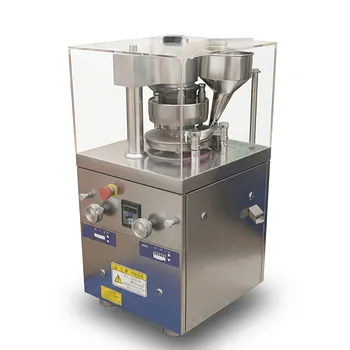
- 实验室旋转式压片机 多冲模单压式自动连续压片
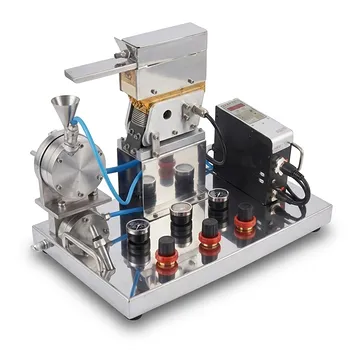
- Benchtop Micro Air Jet Mill for Ultrafine Grinding of High Value Powders
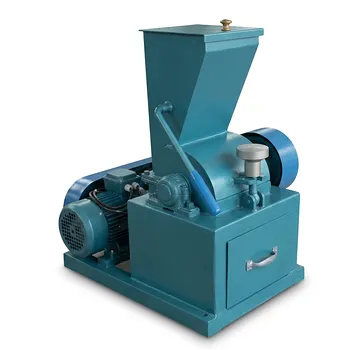
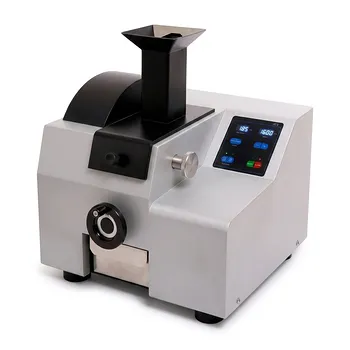
- Laboratory Benchtop Jaw Crusher for Hard Brittle Materials Primary Size Reduction and Sample Preparation
- Ordinary Type Rotary Tablet Press for Pharmaceutical Chemical Food Electronic Industries
- Enhanced 9 Punch Rotary Tablet Press for Powder Compaction
People Also Ask
- What is the role of a laboratory uniaxial hydraulic press in the preparation of alumina ceramic samples? Key Benefits
- What are the advantages of double-action pressing equipment? Master Uniform Density in High-Aspect-Ratio Ceramics
- What is the function of a laboratory hydraulic forming press in CRSS rubber prep? Ensure Superior Material Integrity
- What role does a laboratory hydraulic press play in the forming of Ce-TZP/Al2O3 green bodies? Maximize Density & Strength
- How does a laboratory hydraulic press ensure the quality of high-entropy cathode H-SOFC single cells? Optimize Performance

Tech Team · PowderPreparation
Last updated on May 14, 2026
Related Products
实验室旋转式压片机 多冲模单压式自动连续压片
Benchtop Micro Air Jet Mill for Ultrafine Grinding of High Value Powders
Laboratory Benchtop Jaw Crusher for Hard Brittle Materials Primary Size Reduction and Sample Preparation
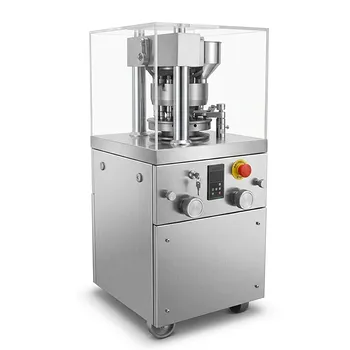
Ordinary Type Rotary Tablet Press for Pharmaceutical Chemical Food Electronic Industries
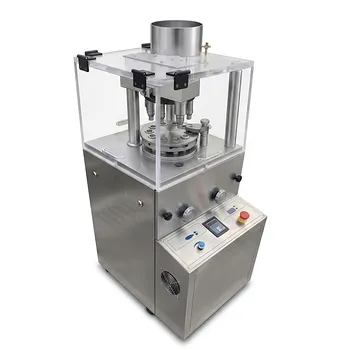
Enhanced 9 Punch Rotary Tablet Press for Powder Compaction
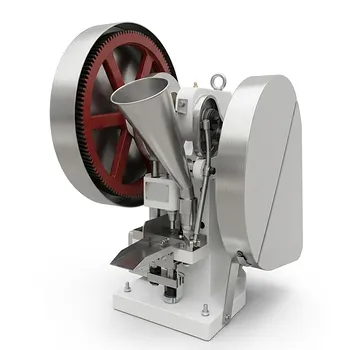
6-Ton Small Single-Punch Tablet Press — Laboratory Powder & Granule Tableting Equipment / Tablet Forming Machine