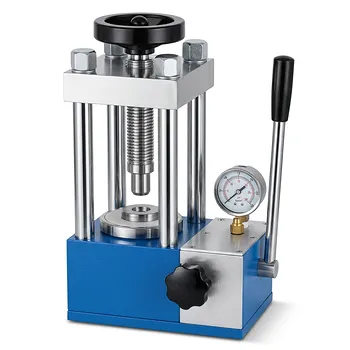
How do industrial-grade hot presses function during O-CMC prepreg consolidation? Optimize Density and Fiber Performance
Updated 4 months ago
Industrial-grade hot presses consolidate Oxide Ceramic Matrix Composite (O-CMC) prepregs by simultaneously applying controlled axial pressure and thermal cycles. This dual-action environment cures the matrix precursor slurry, forces the rearrangement of fiber particles for maximum density, and expels trapped air and volatile gases to create a structurally sound "green body."
Core Takeaway: The hot press acts as a precision consolidation tool that transforms loose laminate stacks into a dense, unified green body by coupling mechanical force with heat to eliminate porosity and maximize fiber-to-matrix bonding.
The Synergistic Role of Pressure and Heat
Eliminating Voids and Volatiles
During the consolidation of O-CMC prepregs, the matrix precursor often releases volatiles as it cures. Industrial hot presses use high-pressure cycles to suppress the formation of pores, forcing these gases out of the laminate stack before they can become permanent defects.
Optimizing Fiber Volume Content (FVC)
The application of axial mechanical pressure promotes the rearrangement of oxide fibers and ensures they are in close contact. This compaction is essential for achieving a high Fiber Volume Content (FVC), which provides the structural foundation for the composite’s final mechanical properties.
Facilitating Particle Diffusion
At the interface of the prepreg layers, the combination of heat and pressure promotes the diffusion and rearrangement of the ceramic powder particles within the slurry. This ensures that the individual fabric laminates bond into a single, cohesive unit rather than remaining as distinct, weak layers.
Precision Control and Preform Geometry
Maintaining Dimensional Accuracy
Industrial hydraulic presses provide a highly stable environment that maintains dimensional accuracy during the curing process. By locking the prepregs into a specific mold under pressure, the equipment prevents warping and ensures the green body matches the intended geometric shape.
Establishing the Polymer Skeleton
For prepregs using organic precursors like PCS, temperatures ranging from 150°C to 400°C are applied to form a stable polymer skeleton. This "thermal compaction" is a critical precursor step that establishes the density and structural integrity required for subsequent high-temperature sintering.
Uniform Density Distribution
A primary function of the heated press is to ensure uniform density throughout the entire component, regardless of its thickness. By applying heat and pressure evenly, the press prevents "soft spots" or internal delamination that could lead to catastrophic failure in the final ceramic product.
Understanding the Trade-offs and Constraints
Pressure vs. Fiber Integrity
While high pressure is necessary to eliminate pores and reach relative densities near 99%, excessive force can physically damage fragile oxide fibers. Engineers must balance the need for compaction with the risk of crushing the reinforcement fibers, which would compromise the material's fracture toughness.
Thermal Cycle Management
Rapid heating can cause the matrix to cure unevenly or trap volatiles before they can escape, leading to internal cracking. Conversely, cycles that are too slow reduce manufacturing throughput and may lead to undesirable grain growth in certain oxide ceramic systems.
Equipment Limitations
Industrial hot presses capable of exceeding 1700°C offer superior density but represent a significant capital investment and higher operational complexity. For O-CMC prepregs, the equipment must be finely calibrated to handle the specific chemistry of the oxide matrix without causing high-temperature damage to the fiber properties.
How to Apply This to Your Project
Making the Right Choice for Your Goal
- If your primary focus is Maximum Density: Utilize a high-pressure cycle that reaches the upper limits of the material's tolerance to eliminate residual internal pores and reach near-theoretical density.
- If your primary focus is Complex Geometry: Prioritize the use of precision-machined molds within the hot press to ensure the prepreg conforms exactly to the required dimensions during the green body stage.
- If your primary focus is Fiber Protection: Implement a staged pressure cycle that gradually increases force as the matrix softens, preventing the sudden mechanical loading of dry or brittle fibers.
Effective consolidation in a hot press is the bridge between raw prepreg stacks and a high-performance ceramic component, requiring a meticulous balance of mechanical force and thermal energy.
Summary Table:
| Consolidation Factor | Function in Hot Pressing | Key Outcome for O-CMC |
|---|---|---|
| Axial Pressure | Suppresses volatiles and eliminates pores | High relative density (up to 99%) |
| Thermal Cycles | Cures matrix precursors and promotes diffusion | Strong fiber-to-matrix bonding |
| Mechanical Mold | Locks prepregs into specific geometries | Dimensional accuracy & zero warping |
| Staged Loading | Balances force with material softening | Preserves fragile oxide fiber integrity |
| Thermal Uniformity | Distributes heat evenly across laminates | Prevention of internal delamination |
Elevate Your Material Synthesis with Precision Compaction
Optimizing Oxide Ceramic Matrix Composites requires a delicate balance of mechanical force and thermal precision. We provide complete laboratory sample preparation solutions tailored for material science, specializing in high-performance powder processing and compaction equipment.
Our extensive range of solutions is designed to handle the most demanding consolidation tasks:
- Advanced Hydraulic Presses: We manufacture a full spectrum including standard lab presses, XRF pellet presses, Cold/Warm Isostatic Presses (CIP/WIP), and specialized Hot Presses and Vacuum Hot Presses perfect for O-CMC research.
- Sample Preparation: High-efficiency crushers (jaw/roll), liquid nitrogen cryogenic grinders, and diverse mills (planetary ball, jet, sand/bead, disc, rotor).
- Material Refinement: Sieve shakers (vibratory/air-jet), powder mixers, and defoaming mixers to ensure matrix homogeneity.
Whether you are aiming for near-theoretical density or complex geometric accuracy, our equipment provides the control you need. Contact our technical experts today to find the ideal pressing solution for your laboratory!
References
- Tobias Lehnert, Britta Panthen. Effect of coupon geometry and preload on flexural properties of oxide ceramic matrix composites. DOI: 10.1111/ijac.14307
Mentioned Products
- 6-Ton Small Single-Punch Tablet Press — Laboratory Powder & Granule Tableting Equipment / Tablet Forming Machine
- Ordinary Type Rotary Tablet Press for Pharmaceutical Chemical Food Electronic Industries
- 实验室旋转式压片机 多冲模单压式自动连续压片
- 5 Ton Single Punch Tablet Press Laboratory Small Batch Production
- Enhanced 9 Punch Rotary Tablet Press for Powder Compaction
People Also Ask
- What is the function of a laboratory press in Cr-Ti alloy evaluation? Quantify Fracture Stress & Strength
- What is the function of a laboratory press in assessing the hydrophobic performance of modified vermiculite fillers?
- What is the core function of a laboratory press in the forming of ceramic filter element green bodies? Maximize Density.
- What is the function of a laboratory press in the preparation of ceramic feed rods? Master Density and Precision
- Why is vacuum sealing and flexible packaging necessary for Aluminum Titanate powders during CIP? Ensure Peak Density

Tech Team · PowderPreparation
Last updated on Jun 03, 2026
Related Products
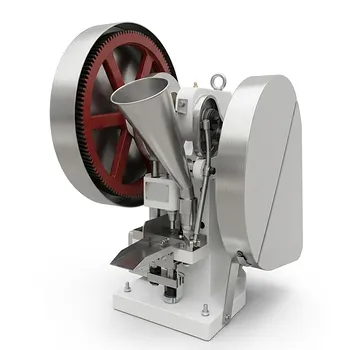
6-Ton Small Single-Punch Tablet Press — Laboratory Powder & Granule Tableting Equipment / Tablet Forming Machine
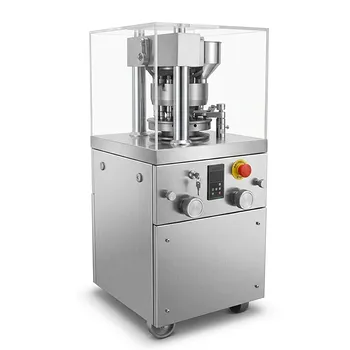
Ordinary Type Rotary Tablet Press for Pharmaceutical Chemical Food Electronic Industries
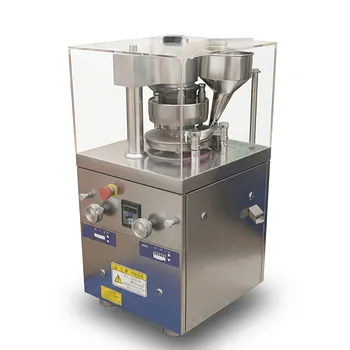
实验室旋转式压片机 多冲模单压式自动连续压片
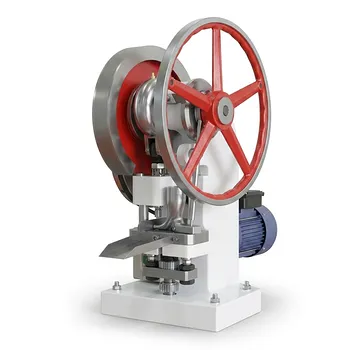
5 Ton Single Punch Tablet Press Laboratory Small Batch Production
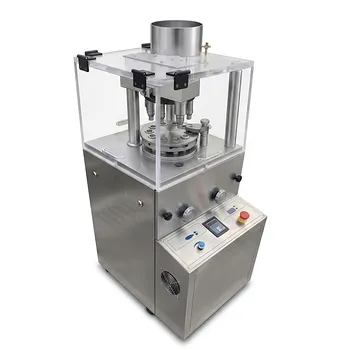
Enhanced 9 Punch Rotary Tablet Press for Powder Compaction
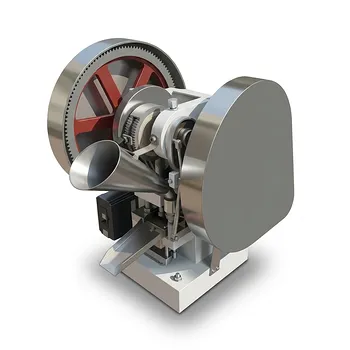
6 Ton Variable Frequency Single Punch Tablet Press