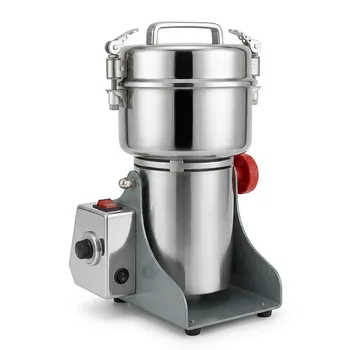
Why is the use of industrial sieve shakers necessary before incorporating waste gypsum into ceramic production? Optimize Quality.
Updated 5 months ago
The necessity of industrial sieve shakers in ceramic production stems from the technical requirement to transform irregular waste gypsum into a standardized raw material. By strictly controlling particle size and removing oversized impurities, these machines ensure the waste gypsum can be uniformly integrated into ceramic green bodies, preventing structural failures and localized thermal expansion differences during the firing process.
Core Takeaway: Industrial sieve shakers are the essential link between raw waste material and high-performance ceramics, providing the particle size distribution (PSD) control necessary to ensure microstructural consistency, mechanical strength, and predictable material behavior.
Achieving Microstructural Consistency
Preventing Localized Thermal Stress
Waste construction gypsum often contains clumps or oversized particles that do not react uniformly during the firing process. If these large particles remain, they create localized thermal expansion differences within the ceramic body, leading to internal stresses or visible cracks. Utilizing a vibratory sieve ensures that every gypsum particle falls within a specific size range, promoting a synchronized thermal response across the entire piece.
Ensuring Uniform Dispersion in Wet Mixes
For waste gypsum to contribute effectively to the ceramic matrix, it must be uniformly distributed within the wet mix. Industrial shakers facilitate this by breaking down agglomerates and filtering out particles that are too large to remain suspended. This uniformity is the foundation for a stable ceramic green body, which is critical for maintaining the shape and integrity of the product before it is fired.
Enhancing Mechanical Reliability
The consistency of a ceramic's microstructure directly influences its inherent reliability and strength. By precisely controlling the particle size distribution, manufacturers can reduce the dispersion of material strength. This allows engineering models, such as the Weibull distribution, to more accurately predict how the material will perform under stress in real-world applications.
Validating Material Grade and Purity
Removal of Construction Debris
Waste gypsum sourced from construction sites is frequently contaminated with large-particle impurities that can compromise the final product. Precision screening acts as a primary quality control gate, physically removing these contaminants before they enter the production line. This process ensures that only materials meeting the rigorous technical specifications of ceramic production are utilized.
Precision Grading for Specialized Applications
Different ceramic products require specific particle sizes, often ranging from 1 μm to 10 μm for high-density components. Industrial sieve shakers allow for the strict grading of crushed materials through standardized meshes to achieve these targets. This level of precision is impossible to achieve through manual sieving and is necessary for guaranteeing the repeatability of acoustic or filtration performance.
Standardizing Feed for Subsequent Processes
Industrial shakers provide a uniform feed size for downstream equipment, such as hydraulic classification systems or molding machinery. Eliminating the inconsistencies of manual operation ensures that subsequent forming and sintering stages function at peak efficiency. This standardization is critical for producing ceramics with high density and low moisture content.
Understanding the Trade-offs and Limitations
Throughput vs. Precision
While finer meshes provide greater control over the microstructure, they significantly reduce material throughput. Production managers must balance the need for extreme particle fineness against the time requirements of the sieving process. Over-sieving can lead to bottlenecks, while under-sieving risks introducing structural defects into the ceramic line.
Equipment Wear and Maintenance
Gypsum can be abrasive or, if slightly damp, prone to sieve blinding, where particles clog the mesh openings. Regular maintenance and the use of high-quality, industrial-grade vibratory shakers are required to maintain accuracy over time. Failure to monitor mesh integrity can lead to "oversize leakage," where large particles pass through damaged sections of the screen.
How to Apply This to Your Production
Strategic Recommendations for Implementation
- If your primary focus is structural high-strength ceramics: Utilize vibratory shakers to achieve a tight particle size distribution (1–10 μm) to minimize microstructural voids and maximize density.
- If your primary focus is cost-effective waste recycling: Implement a multi-stage sieving process to quickly remove large debris while ensuring the bulk of the waste gypsum meets the minimum technical specifications for green bodies.
- If your primary focus is filtration or porous ceramics: Use precision meshes to control the size of pore-forming agents, ensuring that the resulting ceramic has a uniform and predictable filtration efficiency.
By integrating industrial sieve shakers into the pre-processing phase, manufacturers can successfully upcycle waste gypsum into high-value ceramic products with uncompromising structural integrity.
Summary Table:
| Key Benefit | Impact on Ceramic Production | Technical Objective |
|---|---|---|
| PSD Control | Prevents localized thermal stress and internal cracking | Tight particle range (1–10 μm) |
| Impurity Removal | Eliminates construction debris and contaminants | Ensures high material purity |
| Uniform Dispersion | Stabilizes green bodies for consistent wet mixes | Breaks down large agglomerates |
| Feed Standardization | Enhances efficiency of downstream sintering/molding | High-density material output |
Transform Waste into High-Value Materials
Achieving microstructural consistency in ceramics starts with precise material preparation. At Our Company, we provide comprehensive laboratory sample preparation solutions specifically designed for material science and advanced powder processing.
Our industrial vibratory and air-jet sieve shakers offer the precise particle size distribution (PSD) control necessary to turn irregular waste gypsum into high-performance raw materials. Beyond sieving, we support your entire workflow with:
- Size Reduction: Jaw/roll crushers and planetary ball or jet mills.
- Mixing: High-efficiency powder and defoaming mixers.
- Compaction: A full spectrum of hydraulic presses, including Cold/Warm Isostatic Presses (CIP/WIP) and vacuum hot presses.
Ready to optimize your ceramic production or recycling process? Contact our technical team today to find the perfect equipment solution for your laboratory.
References
- Kelson Silva de Almeida, José Milton Elias de Matos. Efeito de resíduos de gesso e de granito em produtos da indústria de cerâmica vermelha: revisão bibliográfica. DOI: 10.1590/s1517-707620200001.0893
Mentioned Products
- Stainless Steel Laboratory Vibratory Test Sieve Shaker
- Vibratory Sieve Shaker Electromagnetic 3D Motion Powder Particle Size Analyzer for Dry and Wet Sieving
- Laboratory Dry and Wet Three Dimensional Vibratory Sieve Shaker for Particle Analysis
- Heavy Duty Dry Three Dimensional Vibratory Sieve Shaker for Particle Separation
- 三维电磁微量振动筛分仪
People Also Ask
- What function does a laboratory vibratory sieve shaker serve in the production process of metakaolin? Optimize Reactivity
- Why is a precision laboratory vibratory sieve shaker necessary for particle size control? Optimize Biomass Carbonization
- What is the function of a laboratory vibratory sieve shaker? Enhance Coal Particle Size Distribution (PSD) Analysis
- What role do laboratory vibratory sieve shakers and test sieves play before the molding of Nb-Cu composite powders?
- What is the primary function of a laboratory vibratory sieve shaker in the evaluation of sand liquefaction potential?

Tech Team · PowderPreparation
Last updated on May 14, 2026
Related Products
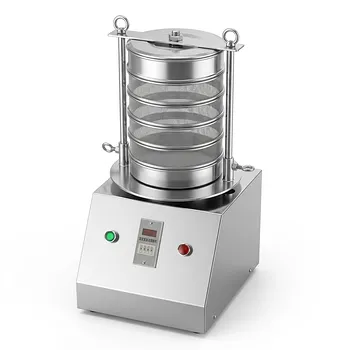
Stainless Steel Laboratory Vibratory Test Sieve Shaker
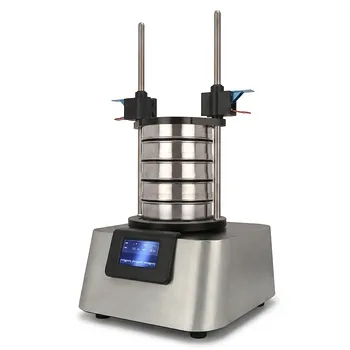
Vibratory Sieve Shaker Electromagnetic 3D Motion Powder Particle Size Analyzer for Dry and Wet Sieving
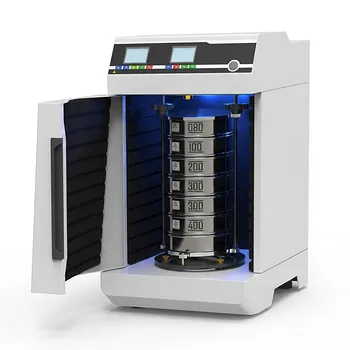
Laboratory Dry and Wet Three Dimensional Vibratory Sieve Shaker for Particle Analysis
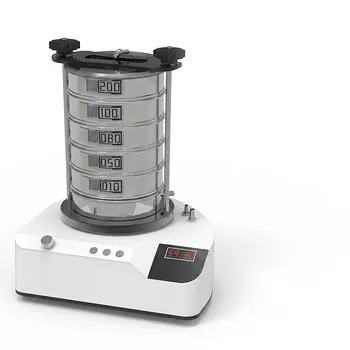
Heavy Duty Dry Three Dimensional Vibratory Sieve Shaker for Particle Separation
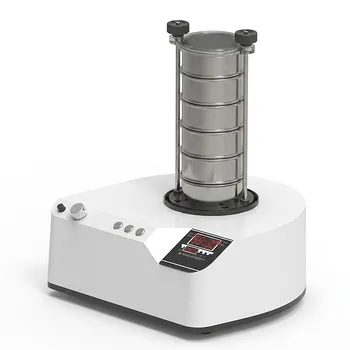
三维电磁微量振动筛分仪
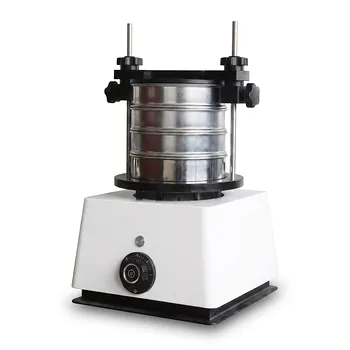
Small Laboratory Vibrating Sieve Shaker for Precise Particle Size Analysis
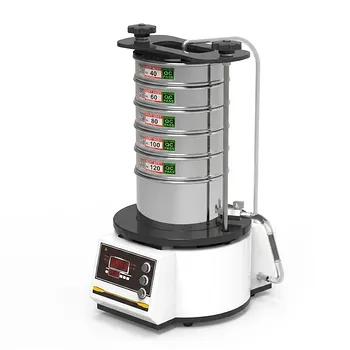
High Frequency Wet Three-Dimensional Vibrating Sieve Shaker for Dry and Wet Particle Size Analysis
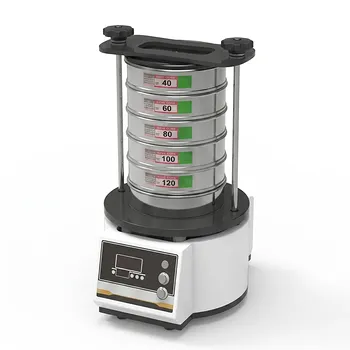
Dry Three Dimensional Vibratory Sieve Shaker
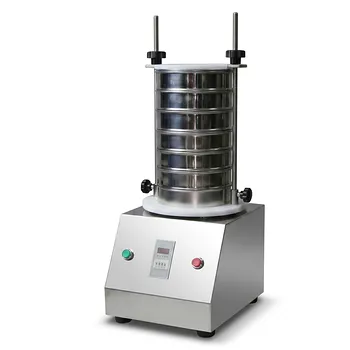
Small Laboratory Vibratory Sieve Shaker for Powder Gradation and Particle Size Analysis
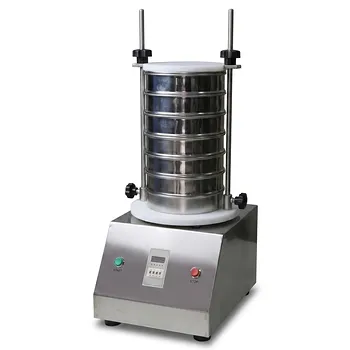
Laboratory Vibratory Test Sieve Shaker for Precision Particle Size Analysis and Powder Grading
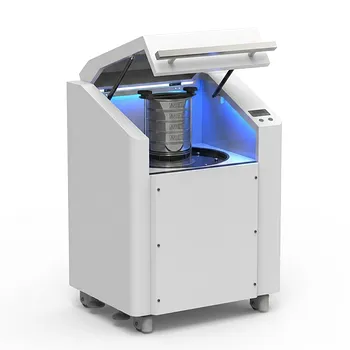
High Frequency Cabinet Type Three-Dimensional Rotary Vibrating Sieve Shaker for Dry Sieving and Particle Classification
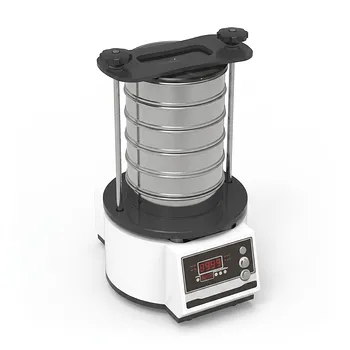
Tapping Oscillating Sieve Shaker for Dry and Wet Particle Size Analysis
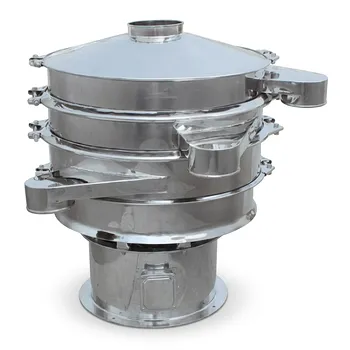
Stainless Steel Rotary Vibrating Sieve High Precision Circular Vibratory Separator Industrial Powder Grading Machine Multi Layer Sifting Equipment
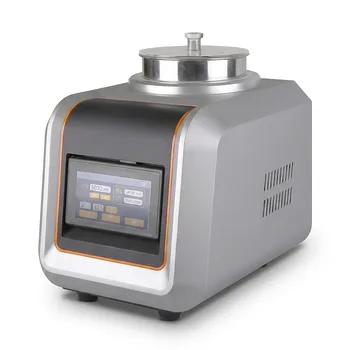
Laboratory Air Jet Sieving Machine for Fine Powder Particle Size Analysis and Deagglomeration
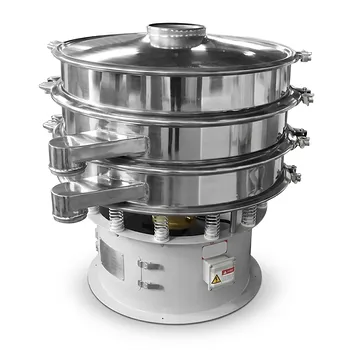
Three Dimensional Rotary Vibrating Sieve