Why is the movement trajectory of grinding balls critical for optimizing the ball milling process? Master Efficiency
Updated 4 months ago
The movement trajectory of grinding balls is the fundamental driver of energy distribution within a ball mill. It dictates how kinetic and potential energy are converted into the specific forces—impact crushing and shear grinding—required to reduce material size. Precise control over this trajectory ensures that the grinding media accurately strikes the ore accumulation zone, maximizing the efficiency of every rotation.
Optimization of the ball milling process depends on guiding the grinding media into a cataracting motion to maximize impact force. Without a controlled trajectory, energy is wasted through heat generation or ineffective sliding, leading to poor throughput and excessive equipment wear.
The Mechanics of Energy Conversion
The path a grinding ball takes determines whether it performs useful work or simply consumes power.
Converting Potential Energy to Impact
As the mill rotates, grinding balls are lifted along the inner wall, gaining potential energy. The trajectory determines the point at which the balls detach from the wall and fall; a well-calculated path ensures they strike the "toe" of the charge where the material is concentrated. This converts potential energy into a crushing force capable of breaking large particles.
The Role of Cataracting vs. Cascading
A cataracting motion involves the balls being thrown into a parabolic flight path, leading to high-energy impacts. In contrast, cascading motion occurs when balls roll down the surface of the charge, providing primarily frictional shear and attrition. Optimization requires balancing these two motions based on whether the goal is primary crushing or fine grinding.
Critical Factors Influencing Trajectory
Several mechanical and operational variables dictate how the media moves within the jar.
Rotational Speed and Critical Limits
The critical speed is the threshold where centrifugal force pins the balls to the mill wall, stopping the grinding action entirely. Most efficient processes operate at 60% to 80% of the critical speed. This range provides enough lift for a productive cataracting trajectory while avoiding the loss of efficiency associated with "centrifuging."
Liner Structure and Media Guidance
The internal liner structure is not just a protective layer; it acts as a lifter that prevents balls from sliding. By adjusting the shape and height of the liners, engineers can "aim" the trajectory of the falling balls. This ensures the media strikes the material bed rather than hitting the opposite liner, which would cause unnecessary damage.
Jar Geometry and Collision Frequency
The internal dimensions of the grinding jar define the boundaries of the trajectory. A jar's diameter determines the fall height and, consequently, the velocity and stress energy of the balls upon impact. These dimensions directly influence the frequency of collisions, which dictates the overall rate of refinement.
Media Dynamics and Kinetic Optimization
The physical characteristics of the balls themselves interact with the trajectory to influence results.
Ball Size and Impact Momentum
The diameter and weight of the media determine the momentum at the end of the trajectory. Larger balls (typically 20–30 mm) are necessary to provide the impact energy required for coarse feedstocks. Smaller balls increase the total surface area, enhancing the attrition forces during the sliding phases of the trajectory.
Mixing Diameters for Kinetic Balance
Using a mix of ball sizes (e.g., 20 mm and 40 mm) optimizes the filling rate and grinding kinetics. This combination allows larger balls to handle the primary impacts at the end of the flight path, while smaller balls fill the gaps to provide secondary grinding. This results in a more uniform particle size distribution.
Understanding the Trade-offs
Optimizing trajectory involves navigating significant technical trade-offs.
- Impact vs. Heat: Increasing stirring or rotational speed enhances impact intensity but can convert surplus energy into excessive heat. This heat can alter the chemical properties of the sample or reduce the lifespan of the equipment.
- Throughput vs. Wear: A more aggressive cataracting trajectory increases crushing efficiency but also accelerates the mechanical wear on the liners and jars.
- Feed Rate Stability: Overloading the mill with material can "dampen" the trajectory, turning an efficient cataracting motion into an ineffective sliding motion, often referred to as "plugging."
How to Apply This to Your Project
To optimize your milling process, you must align the media trajectory with your specific material requirements.
- If your primary focus is coarse particle reduction: Increase the rotational speed toward 80% of critical speed and use larger grinding balls to maximize impact momentum.
- If your primary focus is fine powder refinement: Use a mix of smaller ball diameters and prioritize a cascading trajectory to increase the surface area available for shear and attrition.
- If your primary focus is sample purity: Select jar and media materials with high wear resistance and monitor speeds closely to minimize heat-induced contamination.
By masterfully controlling the movement trajectory, you transform the ball mill from a simple rotating drum into a precision instrument for energy-efficient material refinement.
Summary Table:
| Motion Type | Mechanism | Primary Force | Ideal Use Case |
|---|---|---|---|
| Cataracting | Parabolic flight & impact | Impact/Crushing | Coarse particle reduction |
| Cascading | Rolling & sliding | Shear/Attrition | Fine powder refinement |
| Centrifuging | Pinned to the wall | None (Wasted energy) | Avoid (Above critical speed) |
Elevate Your Material Research with Precision Engineering
Precision in ball milling is just the beginning. To achieve consistent, high-quality results, you need equipment designed for accuracy and durability. We provide complete laboratory sample preparation solutions for material science, specializing in advanced powder processing and compaction equipment.
Our extensive product lines are engineered to meet the rigorous demands of modern labs:
- Size Reduction: High-performance crushers (jaw/roll), liquid nitrogen cryogenic grinders, and specialized mills (planetary ball, jet, sand/bead, disc, rotor).
- Classification & Mixing: Precision sieve shakers (vibratory/air-jet) and high-efficiency powder or defoaming mixers.
- Compaction & Sintering: A full spectrum of hydraulic presses, including Cold/Warm Isostatic Presses (CIP/WIP), standard lab presses, XRF pellet presses, and advanced vacuum hot presses.
Whether you are optimizing media trajectories or pressing high-density pellets, our experts are here to help you select the right tools for your specific application.
Ready to optimize your lab's performance? Contact our technical team today to find your solution!
References
- Jun Shen, Mingrong Huang. Discrete element simulation analysis of ball mill ball trajectory and liner plate structure based on EDEM. DOI: 10.55214/25768484.v9i4.6037
Mentioned Products
- Heavy Duty Horizontal Planetary Ball Mill for Efficient Industrial Grinding and Sample Preparation
- Vertical Semi Circular Planetary Ball Mill for Laboratory Precision Grinding
- Vertical Production Planetary Ball Mill for High Throughput Powder Processing
- Vertical Square Planetary Ball Mill for Laboratory Sample Preparation and Nanoscale Grinding
- High Energy Planetary Ball Mill for Nano Scale Grinding and Mechanical Alloying
People Also Ask
- Why grind lime-pozzolan specimens for TG/DTA for 3 mins? Master sample prep for high-precision thermal analysis.
- What is the role of a planetary ball mill in the mechanical activation of ZTA powder? Boost Sintering Performance
- What is the function of a planetary ball mill in wollastonite ceramic prep? Achieve Molecular Homogenization & Reactivity
- How does a planetary ball mill contribute to the homogenization of trace elements? Achieve Sub-Micron Uniformity
- What is the function of a high-performance planetary ball mill in AMZ laminates? Master Ceramic Homogenization.

Tech Team · PowderPreparation
Last updated on Jun 03, 2026
Related Products
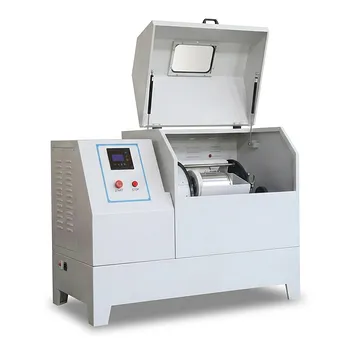
Heavy Duty Horizontal Planetary Ball Mill for Efficient Industrial Grinding and Sample Preparation
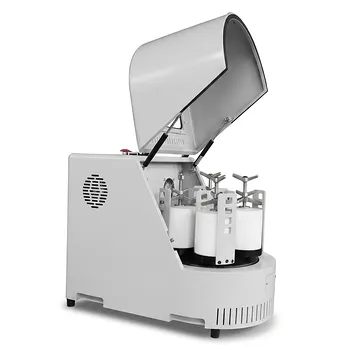
Vertical Semi Circular Planetary Ball Mill for Laboratory Precision Grinding
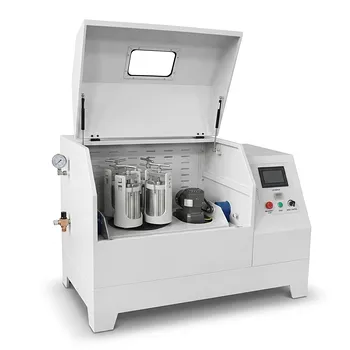
Vertical Production Planetary Ball Mill for High Throughput Powder Processing
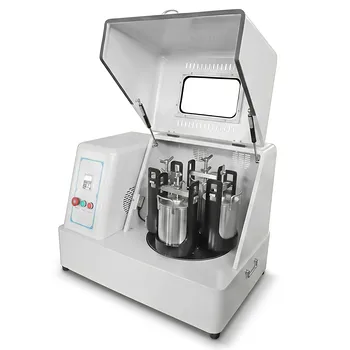
Vertical Square Planetary Ball Mill for Laboratory Sample Preparation and Nanoscale Grinding
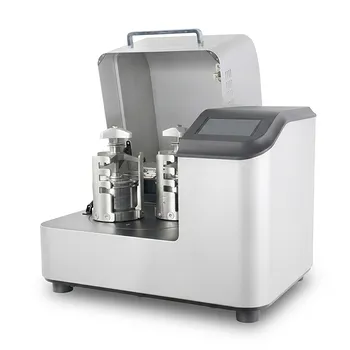
High Energy Planetary Ball Mill for Nano Scale Grinding and Mechanical Alloying
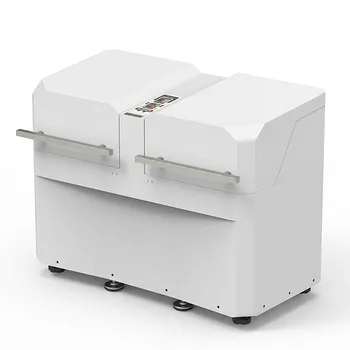
Dual Station Planetary Ball Mill 24L
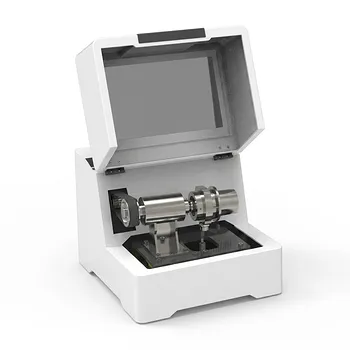
Single Tank High Energy Vibratory Ball Mill for Laboratory Grinding and Mixing
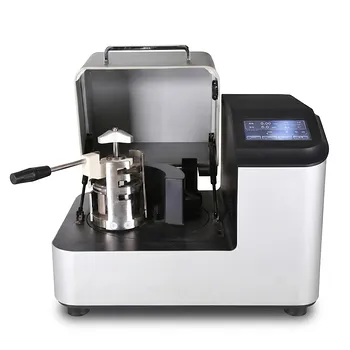
High Energy Laboratory Planetary Ball Mill for Nano Grinding and Material Science Sample Preparation
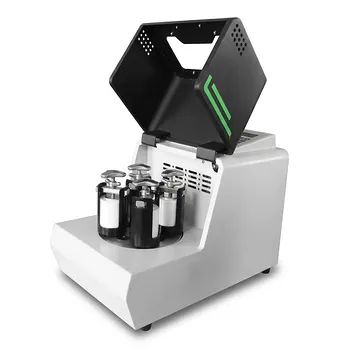
Miniature Planetary Ball Mill with Vacuum Grinding and High Efficiency for Laboratory Sample Preparation
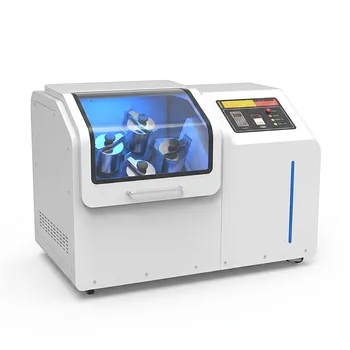
High Energy Omnidirectional Planetary Ball Mill 16L
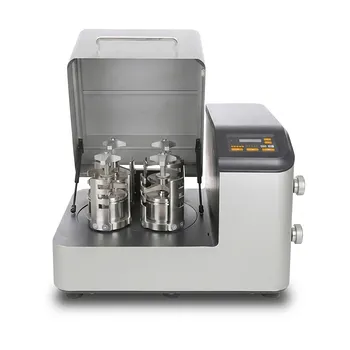
High Energy Planetary Ball Mill for Nano Scale Grinding and Colloidal Mixing in Material Science Research
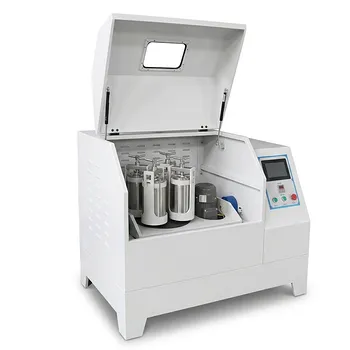
360° Rotating Omnidirectional Laboratory Planetary Ball Mill for Homogeneous Ultra-Fine Grinding and Mixing
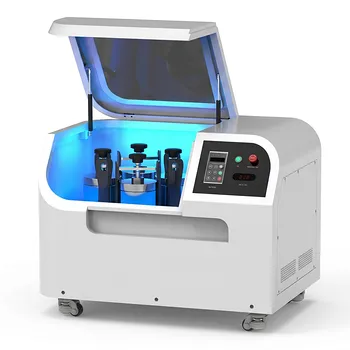
Planetary Ball Mill 12L
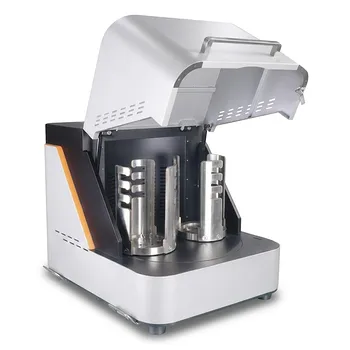
High Energy Laboratory Planetary Ball Mill for Nano Grinding and Colloidal Mixing of Hard and Brittle Materials
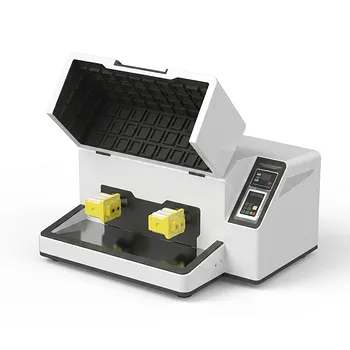
Multi-Platform Nanoscale High-Energy Vibratory Ball Mill
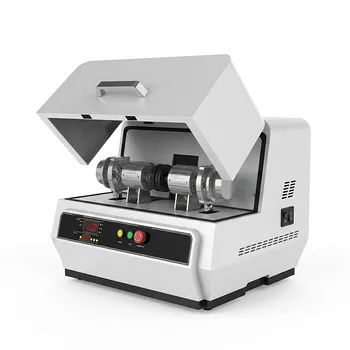
Dual Jar High Energy Vibratory Ball Mill
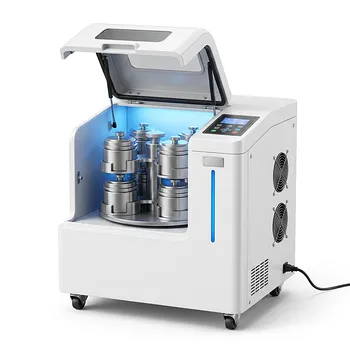
High Energy Omnidirectional Planetary Ball Mill 20L
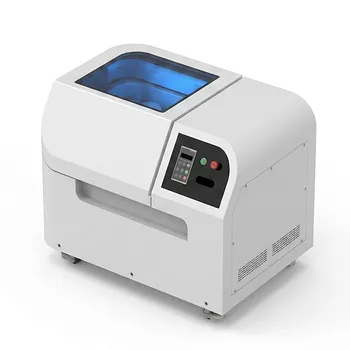
8L Planetary Ball Mill for Laboratory Grinding and Sample Preparation
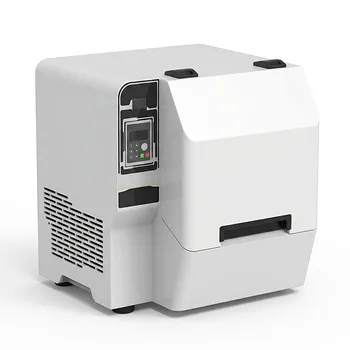
Nano High Energy Vibratory Ball Mill for Laboratory Sample Preparation