Why is stable pressure control necessary for molding sandpaper composites? Achieve Superior Bond Strength & Durability
Updated 5 months ago
Stable pressure control is the fundamental requirement for ensuring the resin binder fully encapsulates abrasive grains while eliminating structural voids. By maintaining a constant force—typically around 15 MPa—the hydraulic press forces the binder into the microscopic gaps between grains, creating a high-strength interfacial bond that directly prevents sandpaper delamination and grain shedding.
Stable pressure control is necessary to eliminate residual air and internal pores, ensuring the resin binder achieves maximum contact with abrasive grains. This precise regulation of force establishes the structural integrity and peel resistance required for high-performance sandpaper composites.
Eliminating Microscopic Voids and Porosity
The Role of Resin Infiltration
The primary challenge in sandpaper molding is ensuring the viscous resin binder moves into the irregular spaces between abrasive grains. Stable, constant pressure provides the necessary driving force to overcome surface tension and flow resistance within the mold.
Without this sustained pressure, residual air pockets remain trapped within the composite matrix. These air gaps act as stress concentrators, which can lead to premature structural failure during the high-friction environment of sanding.
Achieving Interfacial Bond Strength
The strength of sandpaper depends on the quality of the "bridge" between the grain and the matrix. Precise pressure control ensures that the interfacial bonding is dense and continuous across the entire surface of each grain.
This intimate contact is critical for peel resistance. When the pressure is held steady during the curing or forming phase, it prevents the grains from shifting, ensuring the final product can withstand significant lateral forces without shedding abrasive material.
Regulating Structural Density and Uniformity
Controlling the Compaction Ratio
A laboratory hydraulic press allows for the exact regulation of the compaction ratio between the abrasive particles and the binder. By providing a directional, predictable force, the press ensures the mixture achieves a uniform green density before the binder fully sets.
Uniform density is vital because it ensures the sandpaper performs consistently across its entire surface. Density gradients—areas where the material is tighter or looser—can cause uneven wear patterns and reduce the lifespan of the composite.
Managing Internal Stress and Deformation
Maintaining a specific holding time at a constant pressure helps to stabilize the internal arrangement of the particles. This process allows the internal components to rearrange and reach a state of equilibrium.
Proper pressure holding is essential for eliminating internal residual stresses. If these stresses are not managed during molding, the sandpaper may warp, curl, or undergo dimensional deformation once it is removed from the mold or subjected to heat.
Understanding the Trade-offs and Pitfalls
The Risk of Excessive Pressure
While high pressure is necessary for density, exceeding the mechanical limits of the materials can be destructive. Excessive forming pressure can cause the abrasive reinforcement particles to fracture, effectively ruining the grit size and sharpness of the sandpaper.
The Consequences of Inadequate Pressure
Insufficient pressure results in a high degree of initial porosity, where the binder fails to "wet" the grains properly. This leads to a weak mechanical bond, causing the abrasive grains to break away from the backing (shedding) almost immediately upon use.
The Importance of Pressure Stability
Fluctuations in pressure during the molding cycle can lead to uneven microstructure. If the pressure drops prematurely, the internal expansion forces or air pockets may re-expand, creating "weak links" in the composite that are not visible to the naked eye but fail under load.
Making the Right Choice for Your Goal
To achieve the best results when molding sandpaper composites, your pressure strategy should align with your specific performance requirements:
- If your primary focus is maximum grain retention: Prioritize a stable, high-pressure holding time (e.g., 15 MPa) to ensure the resin binder achieves total interfacial wetting of the abrasive grains.
- If your primary focus is dimensional stability and flatness: Focus on controlled pressure dissipation and extended holding times to eliminate internal residual stresses that cause curling.
- If your primary focus is specialized porosity for heat dissipation: Use precise, lower-range pressure settings to intentionally preserve a network of fine air gaps without compromising the binder’s bridging efficiency.
By mastering the stability of the hydraulic press, you ensure that every square inch of the composite meets the rigorous mechanical standards required for industrial abrasive applications.
Summary Table:
| Key Factor | Impact on Material Quality | Benefit for Sandpaper |
|---|---|---|
| Resin Infiltration | Eliminates microscopic air pockets/voids | Prevents delamination and structural failure |
| Interfacial Bonding | Ensures dense contact between grain and matrix | Maximizes grain retention and peel resistance |
| Density Regulation | Achieves uniform green density across surface | Ensures consistent wear patterns and longer life |
| Stress Management | Stabilizes internal particle arrangement | Prevents warping, curling, and deformation |
| Force Stability | Prevents grain fracturing from pressure spikes | Maintains abrasive sharpness and grit integrity |
Optimize Your Composite Development with Precision Compaction Solutions
Achieving the perfect bond in sandpaper composites requires more than just force—it requires absolute stability. [Your Brand Name] specializes in providing complete laboratory sample preparation solutions for material science. We offer a full spectrum of high-precision equipment designed to ensure your research translates into high-performance industrial products.
Our specialized compaction and processing lines include:
- Advanced Hydraulic Presses: From standard Lab Presses and XRF Pellet Presses to Hot Presses and Vacuum Hot Presses for demanding thermal environments.
- Isostatic Pressing: Cold Isostatic Presses (CIP) and Warm Isostatic Presses (WIP) for achieving ultimate material density and uniformity.
- Powder Processing: High-efficiency Planetary Ball Mills, jet mills, and cryogenic grinders to prepare your abrasive mixtures.
- Auxiliary Equipment: Sieve shakers, powder mixers, and defoaming mixers to ensure a perfect, void-free matrix.
Whether you are a researcher refining resin formulas or a manufacturer scaling production, our equipment provides the stability and repeatability your project demands.
Ready to elevate your material testing? Contact our technical team today to find the ideal solution for your laboratory workflow.
References
- H. A. Ajimotokan, I. O. Alabi. Morphology and Physico-Mechanical Properties of Resin-bonded Palm Kernel Shell and Coconut Shell Grain-based Sandpaper Composites. DOI: 10.4314/njtd.v19i4.11
Mentioned Products
- 6-Ton Small Single-Punch Tablet Press — Laboratory Powder & Granule Tableting Equipment / Tablet Forming Machine
- Laboratory Small Horizontal Sand Mill for Nano Materials Wet Grinding
- Enhanced 9 Punch Rotary Tablet Press for Powder Compaction
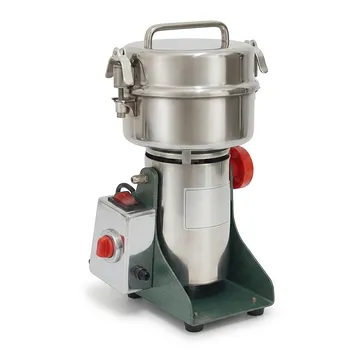
- High Speed Swing Type Laboratory Pulverizer for Fine Powder Grinding and Sample Preparation
- 5 Ton Single Punch Tablet Press Laboratory Small Batch Production
People Also Ask
- What is the function of a laboratory press in Cr-Ti alloy evaluation? Quantify Fracture Stress & Strength
- What is the function of a laboratory press in assessing the hydrophobic performance of modified vermiculite fillers?
- What is the core function of a laboratory press in the forming of ceramic filter element green bodies? Maximize Density.
- What is the function of a laboratory press in the preparation of ceramic feed rods? Master Density and Precision
- Why is vacuum sealing and flexible packaging necessary for Aluminum Titanate powders during CIP? Ensure Peak Density

Tech Team · PowderPreparation
Last updated on May 14, 2026
Related Products
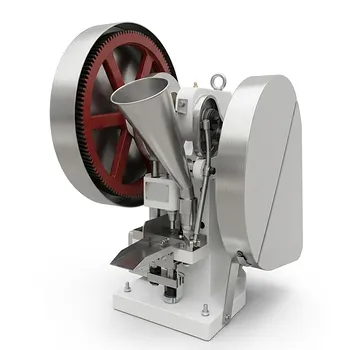
6-Ton Small Single-Punch Tablet Press — Laboratory Powder & Granule Tableting Equipment / Tablet Forming Machine
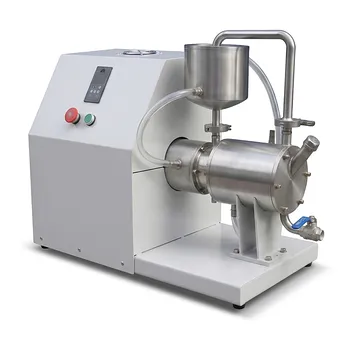
Laboratory Small Horizontal Sand Mill for Nano Materials Wet Grinding
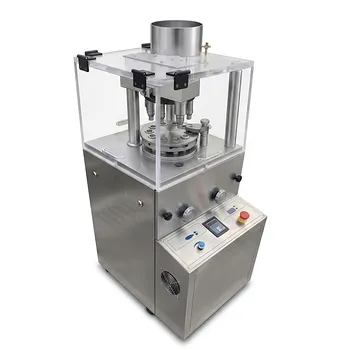
Enhanced 9 Punch Rotary Tablet Press for Powder Compaction
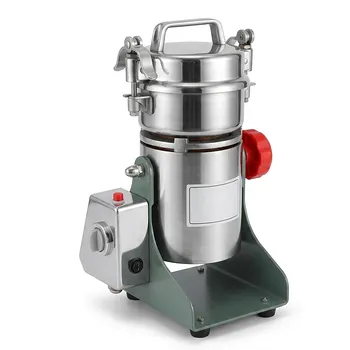
High Speed Swing Type Laboratory Pulverizer for Fine Powder Grinding and Sample Preparation
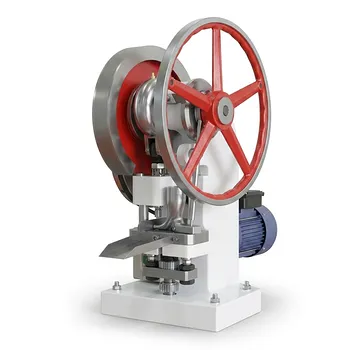
5 Ton Single Punch Tablet Press Laboratory Small Batch Production
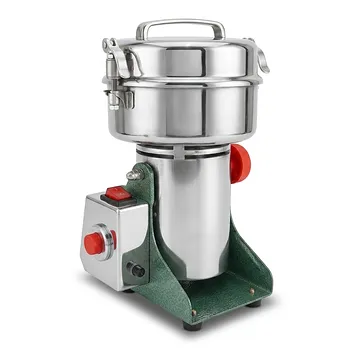
Small High-Speed Laboratory Grinder for Powder Processing
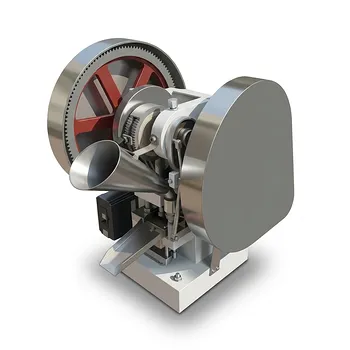
6 Ton Variable Frequency Single Punch Tablet Press
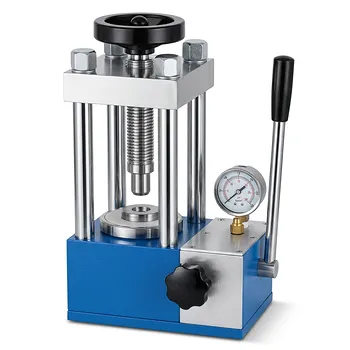
Manual Tablet Press with Dual Scale Pressure Gauge for Pharmaceutical Food Chemical Laboratory Sample Preparation
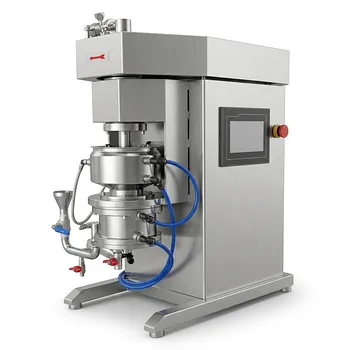
Small Ceramic Structure Laboratory Sand Mill Nanoscale Grinding Dispersion Equipment Seal-less Screen-less Design