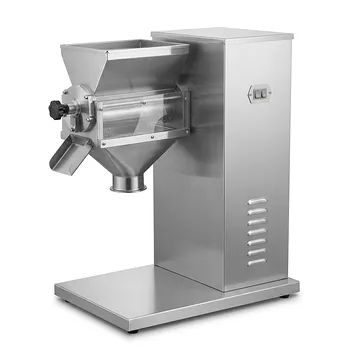
Why is precision powder mixing equipment necessary for the production of bimodal nanostructured copper? Key to Homogeneity
Updated 4 months ago
Achieving the optimal mechanical properties in bimodal copper requires absolute control over microscopic phase distribution. Precision powder mixing equipment is essential because it uniformly blends nanocrystalline powders with coarse-grained powders at a level that standard mixing cannot achieve. This uniform distribution ensures that the ductile coarse-grained phase is properly integrated into the high-strength nanocrystalline matrix, preventing localized structural weaknesses and ensuring the material performs reliably under stress.
The necessity of precision mixing lies in its ability to eliminate phase segregation, ensuring that bimodal nanostructured copper achieves a synergistic balance between the extreme yield strength of nanomaterials and the elongation capabilities of traditional metals.
The Mechanics of Bimodal Strengthening
Integrating Disparate Grain Sizes
Bimodal copper consists of two distinct grain populations: ultra-strong nanocrystalline grains (often produced via cryomilling) and ductile coarse grains. Precision equipment ensures these vastly different sizes are interspersed rather than clustered, which is fundamental to the material's integrity.
Optimizing the Matrix-Inclusion Interface
The mechanical response of the final copper component depends entirely on the spatial distribution of these phases. High-efficiency mixing allows the coarse-grained "inclusions" to act as a ductile phase that arrests cracks within the hard nanocrystalline matrix, preventing brittle failure.
Creating a Stable Bimodal Structure
Without high-precision blending, the material would suffer from inconsistent zones of high and low density. A stable bimodal structure requires a uniform matrix where the coarse grains are distributed evenly enough to provide ductility throughout the entire volume of the part.
Why Precision Equipment is Mandatory
Overcoming Powder Agglomeration
Nanocrystalline powders have high surface energy and a natural tendency to clump together. Precision mixers provide the specific mechanical forces needed to break these agglomerates, ensuring each nano-sized particle is available to bond correctly with the coarse-grained phase.
Maintaining Chemical and Physical Isotropy
To achieve predictable performance, the material must be chemically isotropic, meaning its properties are identical in all directions. Precision mixing eliminates component segregation, ensuring that the ratio of nano-to-coarse grains is consistent at every microscopic point in the blend.
Supporting Accurate Quality Control
Precision mixing is also vital for analytical verification, such as X-ray fluorescence (XRF) testing. Because copper is susceptible to "matrix effects," a uniform mix is required to establish accurate calibration curves and ensure the final composition meets strict engineering specifications.
Understanding the Trade-offs
Processing Intensity vs. Grain Growth
While intensive mixing is required for uniformity, excessive mechanical energy can generate heat. If not carefully controlled, this heat can trigger premature grain growth, effectively destroying the nanocrystalline properties you are trying to preserve.
Equipment Cost vs. Performance Gains
Precision powder mixers represent a significantly higher capital investment than standard industrial blenders. This cost is only justifiable when the application demands the extreme strength-to-weight ratios that only a perfectly homogeneous bimodal structure can provide.
Contamination Risks
High-efficiency mixing often involves high-wear environments within the mixing chamber. There is an inherent risk of introducing trace impurities from the mixing media or chamber walls, which can negatively impact the high-purity requirements of advanced copper alloys.
How to Apply This to Your Project
Recommendations for Material Development
- If your primary focus is Maximum Yield Strength: Prioritize high-energy precision mixing to ensure the nanocrystalline matrix is continuous and free of large voids.
- If your primary focus is Enhanced Ductility: Focus on the uniform dispersion of coarse-grained powders to ensure they act as discrete "islands" that prevent crack propagation.
- If your primary focus is Quality Assurance and Testing: Standardize your mixing protocols to stabilize XRF readings, ensuring consistent batch-to-batch monitoring of the copper-nickel or copper-alloy ratios.
By mastering the precision mixing process, you transform a simple powder blend into a sophisticated, high-performance nanostructured material ready for the most demanding engineering challenges.
Summary Table:
| Key Factor | Impact on Bimodal Copper | Role of Precision Equipment |
|---|---|---|
| Phase Distribution | Balances strength and elongation | Eliminates segregation between nano and coarse grains |
| Agglomeration | Prevents localized structural weakness | Breaks high-energy nano-clumps for a uniform matrix |
| Isotropy | Ensures predictable mechanical performance | Guarantees consistent chemical and physical properties |
| Quality Control | Stabilizes XRF and analytical testing | Provides a homogeneous blend for accurate calibration |
Elevate Your Advanced Material Research
Achieving the perfect bimodal structure requires more than just mixing; it requires precision. At our core, we provide complete laboratory sample preparation solutions tailored for material science and powder processing.
Whether you are developing high-strength copper alloys or advanced ceramics, our extensive line of equipment ensures your materials meet the most rigorous standards:
- Powder Processing: High-efficiency powder mixers, defoaming mixers, and specialized mills (planetary ball, jet, and cryogenic).
- Compaction & Sintering: A full spectrum of hydraulic presses, including Cold/Warm Isostatic Presses (CIP/WIP), hot presses, and vacuum hot presses.
- Analysis Prep: Jaw/roll crushers and sieve shakers to ensure particle size consistency.
Ready to optimize your material performance? Contact our experts today to find the ideal equipment for your laboratory and experience the benefits of precision engineering.
References
- Xiang Guo, George J. Weng. Ballistic Performance of Nanostructured Metals Toughened by Elliptical Coarse-Grained Inclusions: A Finite Element Study with Failure Analysis. DOI: 10.3390/ma11060977
Mentioned Products
- Multi Dimensional Universal Mixer for High Uniformity Powder Blending
- V-Type Powder Mixer for Uniform Blending of Dry Powders and Granules
- Inclined Mixer for Homogeneous Powder Blending and Grinding
- Horizontal Trough Mixer for Uniform Powder and Paste Blending
- Horizontal Ribbon Mixer for Uniform Powder and Slurry Mixing
People Also Ask
- What is the role of a multi-dimensional powder mixer in the preparation of Ce-TZP ceramics? Optimize Homogenization
- What is the importance of using a high-efficiency powder mixer when preparing sand and soil mixtures? Accurate Results.
- What is the role of a powder mixer in SiC mechanical seal ring production? Ensure Homogeneity and Structural Integrity
- Why is high-uniformity powder mixing essential for antibacterial ceramic glazes? Ensure Consistent Bioactive Protection
- How do powder mixers and additives influence ZTA ceramics? Optimize microstructure for superior toughness and density

Tech Team · PowderPreparation
Last updated on Jun 03, 2026
Related Products
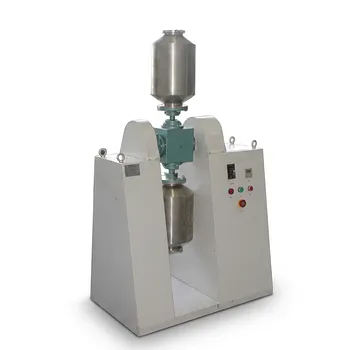
Multi Dimensional Universal Mixer for High Uniformity Powder Blending
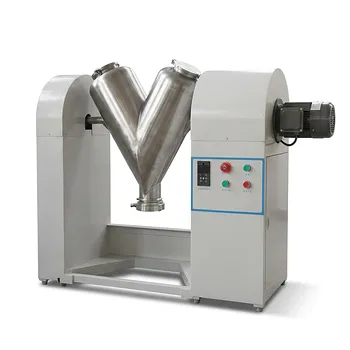
V-Type Powder Mixer for Uniform Blending of Dry Powders and Granules
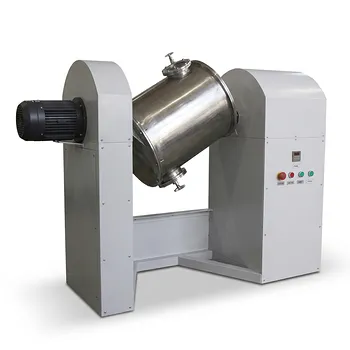
Inclined Mixer for Homogeneous Powder Blending and Grinding
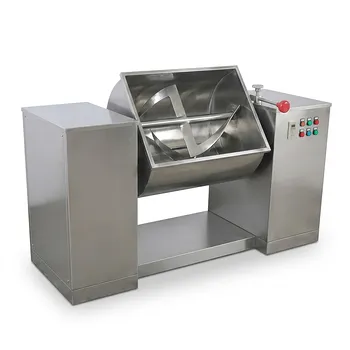
Horizontal Trough Mixer for Uniform Powder and Paste Blending
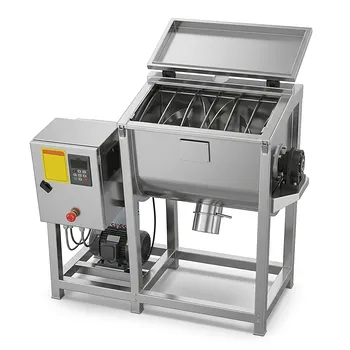
Horizontal Ribbon Mixer for Uniform Powder and Slurry Mixing
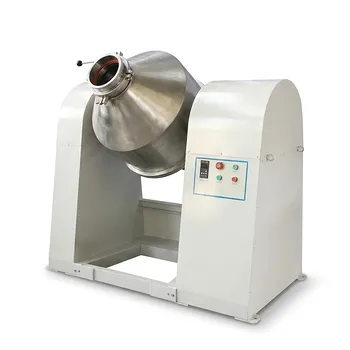
Industrial Double Cone Mixer for Powder Blending and Homogeneous Mixing
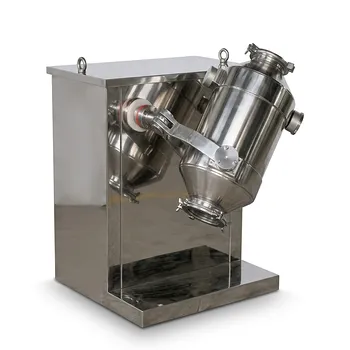
Three-Dimensional Motion Mixer for Laboratory Powder and Granule Blending
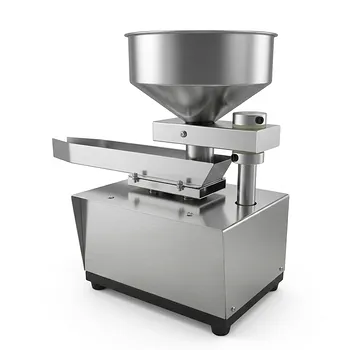
Automatic Vibrating Powder Feeder for Laboratory Material Processing Precision Vibratory Hopper Feeder for Granular and Powder Material Handling Industrial Grade Vibrating Tray Feeder for Consistent Material Sample Preparation
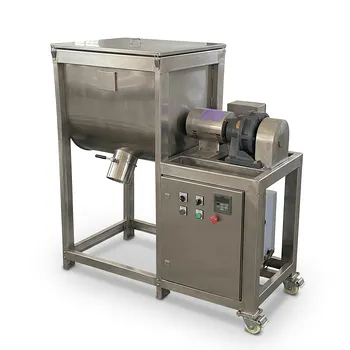
Horizontal Ribbon Mixer for Dry Powder and Slurry Blending
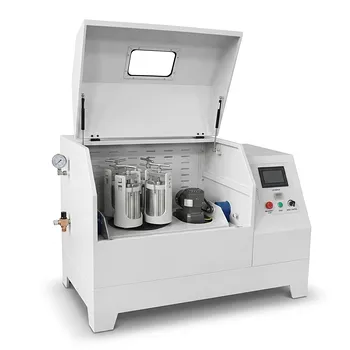
Vertical Production Planetary Ball Mill for High Throughput Powder Processing
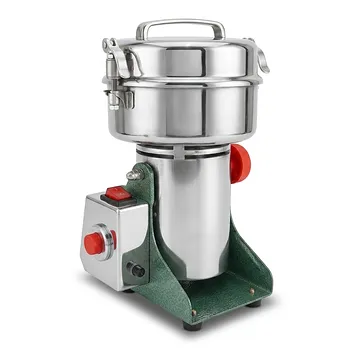
Small High-Speed Laboratory Grinder for Powder Processing
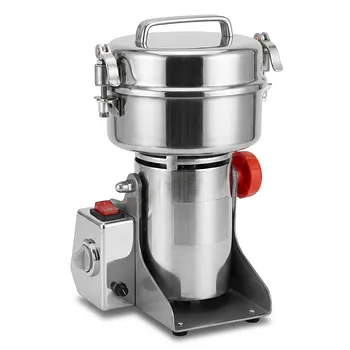
High Speed Laboratory Powder Grinder Small Batch Sample Preparation Mill
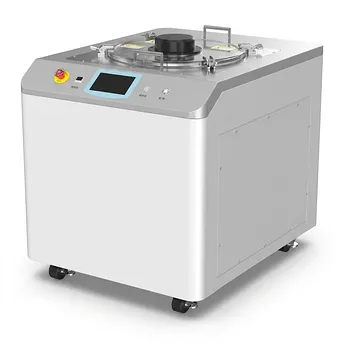
Industrial Planetary Centrifugal Vacuum Defoaming Mixer for High Viscosity Paste and Powder Homogenization
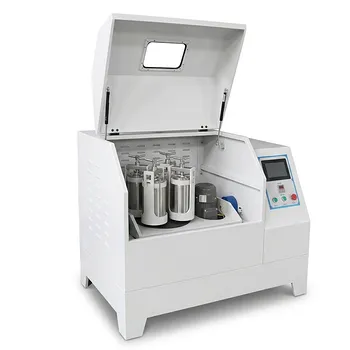
360° Rotating Omnidirectional Laboratory Planetary Ball Mill for Homogeneous Ultra-Fine Grinding and Mixing
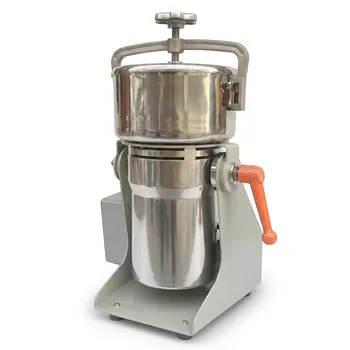
High Speed Laboratory Grinder Efficient Stainless Steel Powder Pulverizer Universal Material Science Mill for Sample Preparation
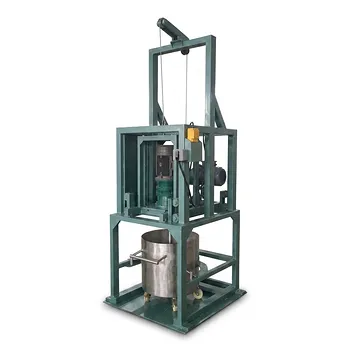
High-Speed Simple Disperser for Efficient Mixing, Dispersion, and Emulsification
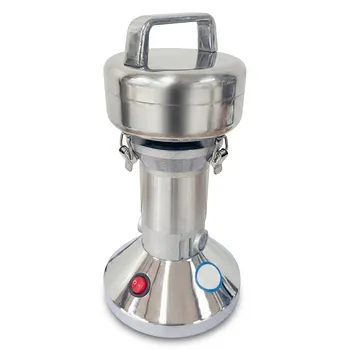
Small Trace Sample High Speed Pulverizer Grinder Laboratory Powder Mill
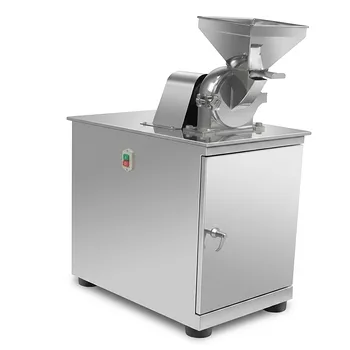
Universal Laboratory Pulverizer Grinder for Small Batch Powder Processing and Material Science Research
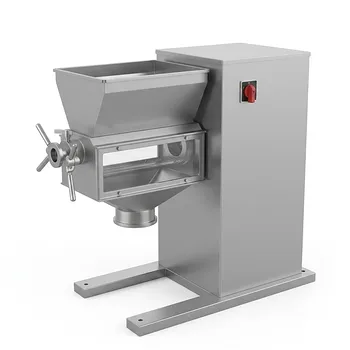
Industrial Swing Granulator for Powder Processing in Pharma Food and Chemical Industries