Why is precise pressure control (230–275 MPa) critical for XRF pellet presses? Unlock Superior Analytical Accuracy
Updated 4 months ago
Precise pressure control between 230 and 275 MPa is the foundation of X-ray Fluorescence (XRF) accuracy. This specific range ensures that powder particles are tightly packed, internal voids are eliminated, and the resulting pellet possesses a perfectly flat, smooth surface. By achieving a consistent bulk density, the pellet minimizes physical interference and matrix effects, allowing for repeatable and highly accurate quantitative chemical analysis.
The central goal of using a laboratory pellet press at 230–275 MPa is to transform loose powder into a standardized solid medium. This ensures that X-ray excitation and reception are dictated by the sample's chemical composition rather than its physical irregularities.
Eliminating Physical Interference and Matrix Effects
Standardizing Bulk Density
Precise pressure ensures that the resulting pellet has a consistent bulk density throughout its structure. This uniformity is vital because variations in density can cause X-rays to penetrate the sample differently, leading to inconsistent fluorescent yields.
Removing Internal Voids
Applying high pressure (up to 275 MPa) forces air out of the sample and eliminates internal voids between powder particles. These microscopic gaps otherwise cause X-ray scattering, which interferes with the excitation and reception of the signal.
Ensuring Uniform Element Distribution
A stabilized pressure load facilitates the rearrangement of particles into a dense, cylindrical form. This leads to a uniform distribution of elements across the sample surface, which is essential for obtaining reproducible data during spectral analysis.
Optimizing the Optical Path for X-ray Spectrometry
Achieving Surface Smoothness
Precise control results in a flat, smooth surface that is free of roughness. Any surface texture or irregularity can deflect X-rays or cast microscopic shadows, significantly distorting the quantitative detection of major and minor elements.
Maintaining Geometric Consistency
The use of a laboratory press ensures a constant geometric relationship between the X-ray source and the sample surface. By producing pellets of uniform thickness and flatness, you minimize "light path errors" that would otherwise occur if the sample distance varied.
Minimizing Signal Attenuation
A densely packed pellet reduces the distance between particles, optimizing the path of the X-rays. This helps in overcoming physical matrix effects, ensuring that the detector receives a clear and strong signal from the target atoms within the ore or material.
Understanding the Trade-offs
The Risk of Over-Compression
Applying pressure significantly beyond the 275 MPa range can lead to "capping" or laminating, where the pellet cracks or layers upon release from the die. This structural failure destroys the geometric integrity required for a valid XRF measurement.
The Problem of Under-Compression
If pressure falls below the 230 MPa threshold, the pellet may remain porous or fragile. Insufficient density leads to inaccurate readings and risks the pellet crumbling inside the spectrometer, which can cause expensive damage to the X-ray tube or detector.
Binder-Sample Dynamics
When using binders to aid pelletization, precise pressure is required to lock the fillers into the matrix effectively. Incorrect pressure can lead to an imbalance between the binder and the sample, creating a non-homogeneous surface that skews chemical results.
Applying This to Your Analytical Workflow
Recommendations for Sample Preparation
- If your primary focus is quantitative accuracy: Maintain pressure strictly within the 230–275 MPa range to ensure maximum density and the elimination of all physical matrix effects.
- If your primary focus is high-throughput repeatability: Use a programmable hydraulic press to guarantee that every sample is subjected to the exact same pressure and dwell time, ensuring a constant optical path.
- If your primary focus is fragile or "difficult" powders: Start at the lower end of the range (230 MPa) and utilize a binder to achieve a smooth surface without risking structural delamination.
Mastering the precision of your pellet press is the most effective way to eliminate physical variables and isolate the true chemical signature of your samples.
Summary Table:
| Factor | Role at 230–275 MPa | Impact on XRF Analysis |
|---|---|---|
| Bulk Density | Standardizes particle packing | Eliminates physical interference |
| Surface Quality | Creates a flat, smooth finish | Minimizes X-ray scattering & shadows |
| Void Reduction | Removes internal air gaps | Optimizes signal excitation & reception |
| Structural Integrity | Prevents capping or crumbling | Protects X-ray tubes & ensures geometry |
| Element Distribution | Ensures uniform distribution | Enhances quantitative repeatability |
Elevate Your Analytical Precision with Professional Sample Preparation
At our core, we provide complete laboratory sample preparation solutions tailored for material science and chemical analysis. Specializing in high-performance powder processing and compaction equipment, we help labs achieve the exact 230–275 MPa precision required for flawless XRF pellets.
Our extensive product lines include:
- Hydraulic Presses: A full spectrum of lab presses, including dedicated XRF pellet presses, standard lab presses, and advanced Hot/Vacuum Hot Presses.
- Isostatic Pressing: Cold/Warm Isostatic Presses (CIP/WIP) for uniform material density.
- Milling & Grinding: Planetary ball mills, jet mills, and liquid nitrogen cryogenic grinders.
- Sizing & Mixing: Sieve shakers, powder mixers, and defoaming mixers.
Whether you are analyzing ores, ceramics, or polymers, our equipment ensures your samples meet the highest geometric and structural standards. Contact us today to discuss how our specialized XRF pellet presses can optimize your laboratory’s workflow and accuracy.
References
- Philip Robinson. <scp>GGR</scp> Handbook of Rock and Mineral Analysis Chapter 2 (Part 1) Analysis of Geological Materials – 1: Sample Preparation Methods. DOI: 10.1111/ggr.12555
Mentioned Products
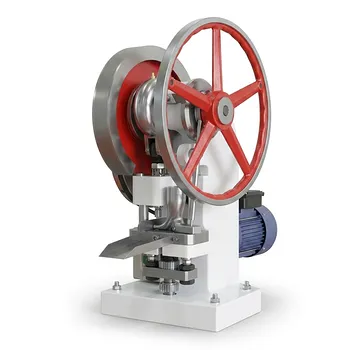
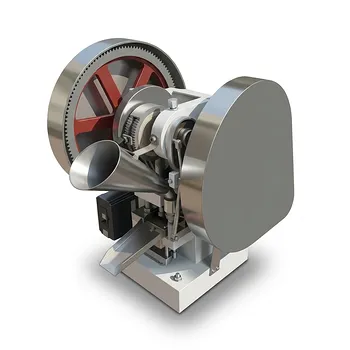
- 6 Ton Variable Frequency Single Punch Tablet Press
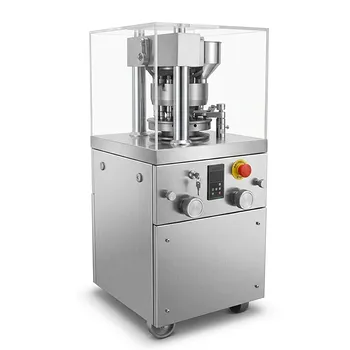
- Ordinary Type Rotary Tablet Press for Pharmaceutical Chemical Food Electronic Industries
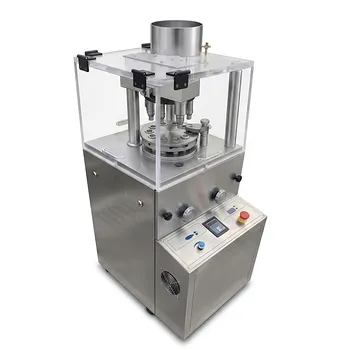
- Enhanced 9 Punch Rotary Tablet Press for Powder Compaction
- 6-Ton Small Single-Punch Tablet Press — Laboratory Powder & Granule Tableting Equipment / Tablet Forming Machine
- 实验室旋转式压片机 多冲模单压式自动连续压片
People Also Ask
- Why is a laboratory hydraulic press required for FT-IR KBr pellets? Achieve Precise Sample Clarity for ZrC–SiC Analysis
- Why is vacuum sealing and flexible packaging necessary for Aluminum Titanate powders during CIP? Ensure Peak Density
- What are the advantages of using hardened steel molds and graphite spray for titanium powder? Ensure structural integrity
- Why is a laboratory hydraulic press required to compress oyster shell powder before XRF analysis? Improve Data Accuracy.
- What role does a high-strength stainless steel mold kit play in the uniaxial die compaction process? Ensuring Precision

Tech Team · PowderPreparation
Last updated on Jun 03, 2026
Related Products
6 Ton Variable Frequency Single Punch Tablet Press
Ordinary Type Rotary Tablet Press for Pharmaceutical Chemical Food Electronic Industries
Enhanced 9 Punch Rotary Tablet Press for Powder Compaction
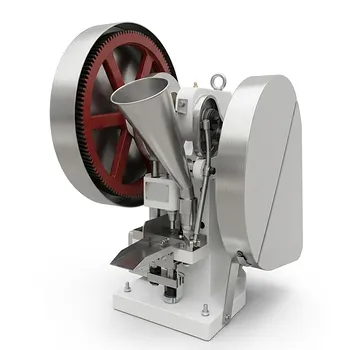
6-Ton Small Single-Punch Tablet Press — Laboratory Powder & Granule Tableting Equipment / Tablet Forming Machine
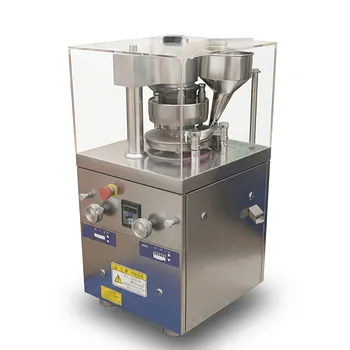
实验室旋转式压片机 多冲模单压式自动连续压片
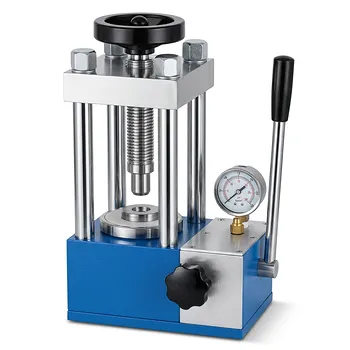
Manual Tablet Press with Dual Scale Pressure Gauge for Pharmaceutical Food Chemical Laboratory Sample Preparation