Why is pre-sieving soil samples through a 2mm test sieve considered the first step in laboratory standardization? Essential Soil Prep
Updated 4 months ago
Pre-sieving soil through a 2mm test sieve is the foundational step in laboratory standardization because it establishes a uniform "fine earth fraction" for analysis. By removing gravel, organic debris, and large stones, researchers ensure that subsequent chemical and physical tests are performed on a consistent matrix. This process eliminates inert materials that would otherwise skew data regarding soil fertility, carbon content, and particle size distribution.
The 2mm sieve acts as a critical boundary that separates chemically active soil particles from inactive skeletal materials. This standardization ensures that analytical results are homogeneous, comparable across different studies, and reflective of the soil's true physicochemical potential.
Defining the "Fine Earth" Fraction
Isolating Active Soil Components
A 2mm stainless steel test sieve is used to define the specific object of analysis by isolating sand, silt, and clay. Materials larger than 2mm, such as gravel and stones, are considered non-active aggregates that do not directly contribute to the soil's biochemical properties.
Removing Non-Soil Contaminants
The pre-sieving process effectively removes plant debris, coarse roots, and other non-soil foreign matter. This ensures that parameters like Total Organic Carbon (TOC) and Soil Organic Carbon (SOC) are measured specifically within the soil matrix rather than being inflated by raw organic litter.
Ensuring Sample Homogeneity
Passing air-dried soil through a 2.00 mm sieve creates a highly representative and uniform sample. This homogeneity is vital for ensuring that the small sub-samples used in chemical digestion or mercury adsorption experiments accurately reflect the entire bulk sample.
Protecting Laboratory Infrastructure and Accuracy
Safeguarding Sensitive Equipment
Removing coarse stones and gravel protects sensitive laboratory equipment from premature wear and mechanical damage. Many analytical instruments are designed to process fine powders; large, abrasive particles can cause significant maintenance issues or blockages.
Facilitating Particle Size Analysis
Pre-sieving is a prerequisite for accurate mechanical sieving and hydrometer analysis. By establishing a 2mm upper limit, researchers can accurately calculate the relative proportions of sand, silt, and clay without interference from the coarse skeletal fraction.
Meeting International Regulatory Standards
Using a 2mm sieve ensures that experimental data meets the specifications of international standards, such as those set by the EPA. This compliance allows for the seamless comparison of soil data across regional, national, and international scales.
Understanding the Trade-offs
Loss of Whole-Soil Context
While sieving provides a standardized "fine earth" sample, it intentionally ignores the coarse fraction (stones and gravel). In some ecological or engineering contexts, the presence of these large particles significantly affects water drainage and heat capacity, meaning the sieved results may not fully represent field conditions.
Risk of Sample Alteration
The process of air-drying and crushing soil to pass through the sieve can sometimes alter the natural structure of soil aggregates. Over-processing during the sieving stage can lead to an artificial increase in surface area, which might slightly impact the results of rapid chemical reaction tests.
Applying This to Your Laboratory Workflow
How to Apply This to Your Project
- If your primary focus is Nutrient Analysis (CEC/SOC): Use the 2mm sieve to ensure that inert gravel does not dilute your results, allowing for a precise measurement of the soil's fertility potential.
- If your primary focus is Particle Size Distribution: Ensure all samples are sieved to the 2mm limit to maintain the mathematical integrity of sand, silt, and clay ratios.
- If your primary focus is Regulatory Compliance: Adhere strictly to the 2mm standardization to ensure your data is defensible and comparable to international EPA-recognized studies.
- If your primary focus is Equipment Longevity: Always pre-sieve prior to grinding or chemical digestion to prevent damage to expensive analytical sensors and mechanical components.
Standardizing soil through a 2mm sieve is the essential bridge between a raw field sample and highly accurate, comparable laboratory data.
Summary Table:
| Aspect | Function of 2mm Sieving | Impact on Soil Analysis |
|---|---|---|
| Sample Matrix | Defines the "Fine Earth" fraction | Eliminates inert gravel and organic debris |
| Data Integrity | Ensures sample homogeneity | Improves reproducibility and accuracy of results |
| Equipment Safety | Removes abrasive stones/stones | Prevents damage to sensitive analytical sensors |
| Regulatory | Standardizes particle size limits | Enables comparison with international EPA standards |
| Chemical Analysis | Isolates active soil components | Ensures precise TOC and nutrient measurements |
Achieve Superior Accuracy in Your Material Science Laboratory
Precise sample preparation is the foundation of reliable data. At our core, we provide complete laboratory sample preparation solutions tailored for material science and soil analysis. We specialize in high-performance powder processing and compaction equipment designed to meet the most rigorous research standards.
Our extensive product line supports every stage of your workflow:
- Particle Size Control: Vibratory and air-jet sieve shakers with a full range of precision test sieves and meshes.
- Size Reduction: High-efficiency crushers (jaw/roll), liquid nitrogen cryogenic grinders, and advanced mills (planetary ball, jet, sand/bead, disc, rotor).
- Sample Preparation: Powder mixers, defoaming mixers, and a full spectrum of hydraulic presses, including Cold/Warm Isostatic Presses (CIP/WIP), hot presses, and XRF pellet presses.
Whether you are isolating the "fine earth fraction" or preparing advanced material samples, our equipment ensures consistency and longevity. Contact our technical experts today to find the perfect solution for your lab!
References
- Abiodun Ojo Olakayode, Fatai Oladapo Tijani. Agricultural Land-Use Effects on Soil Cation Exchange Capacity, Organic Carbon and Total Nitrogen in Soil Aggregate Sized Fractions in Ile-Ife, Nigeria. DOI: 10.5281/zenodo.4738482
Mentioned Products
- Stainless Steel Laboratory Vibratory Test Sieve Shaker
- Laboratory Vibratory Test Sieve Shaker for Precision Particle Size Analysis and Powder Grading
- Small Laboratory Vibrating Sieve Shaker for Precise Particle Size Analysis
- 三维电磁微量振动筛分仪
- Small Laboratory Vibratory Sieve Shaker for Powder Gradation and Particle Size Analysis
People Also Ask
- What function does a laboratory vibratory sieve shaker serve in the production process of metakaolin? Optimize Reactivity
- Why is a precision laboratory vibratory sieve shaker necessary for particle size control? Optimize Biomass Carbonization
- What is the function of a laboratory vibratory sieve shaker? Enhance Coal Particle Size Distribution (PSD) Analysis
- What role do laboratory vibratory sieve shakers and test sieves play before the molding of Nb-Cu composite powders?
- What is the primary function of a laboratory vibratory sieve shaker in the evaluation of sand liquefaction potential?

Tech Team · PowderPreparation
Last updated on Jun 03, 2026
Related Products
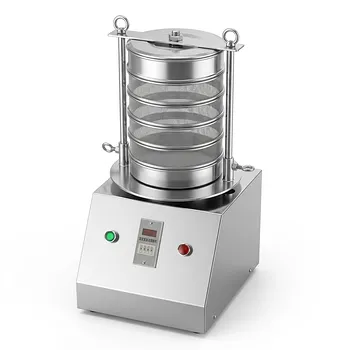
Stainless Steel Laboratory Vibratory Test Sieve Shaker

Laboratory Vibratory Test Sieve Shaker for Precision Particle Size Analysis and Powder Grading

Small Laboratory Vibrating Sieve Shaker for Precise Particle Size Analysis

三维电磁微量振动筛分仪

Small Laboratory Vibratory Sieve Shaker for Powder Gradation and Particle Size Analysis
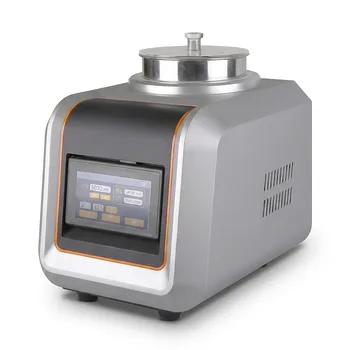
Laboratory Air Jet Sieving Machine for Fine Powder Particle Size Analysis and Deagglomeration

Stainless Steel Rotary Vibrating Sieve High Precision Circular Vibratory Separator Industrial Powder Grading Machine Multi Layer Sifting Equipment
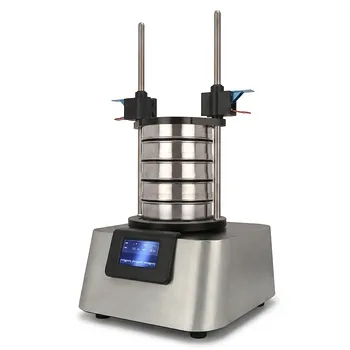
Vibratory Sieve Shaker Electromagnetic 3D Motion Powder Particle Size Analyzer for Dry and Wet Sieving
