Why is high vacuum essential for BiFe2(PO4)3 ceramics? Achieve 95% density and purity with vacuum hot pressing.
Updated 5 months ago
Maintaining a high vacuum environment below 10 Pa is the critical factor for success when processing BiFe2(PO4)3 (BFP) ceramics. This level of vacuum serves three primary functions: it prevents the oxidative destruction of graphite tooling, shields the ceramic powder from reactive atmospheric impurities, and eliminates trapped gases to ensure the final product reaches a target density of 92% to 95%.
Core Takeaway: High vacuum is a mechanical and chemical necessity in hot pressing BiFe2(PO4)3; it simultaneously protects the equipment from degradation and ensures the ceramic achieves the density and phase purity required for high-performance applications.
Preserving Material Purity and Tooling integrity
Preventing Graphite Mold Oxidation
At the high temperatures required for hot pressing, graphite molds are extremely susceptible to oxidative loss. A high vacuum environment removes the oxygen that would otherwise cause the graphite to react and "burn off" during the cycle.
Shielding Against Atmospheric Contaminants
Ambient gases such as oxygen, nitrogen, and water vapor can react with BiFe2(PO4)3 powder during the heating phase. By maintaining a vacuum below 10 Pa, you prevent unwanted chemical reactions that could alter the stoichiometry or introduce impurities into the ceramic.
Ensuring Phase Purity
Bi-based ceramics often require precise environments to remain stable as a single phase. The vacuum environment eliminates interference from external gases, ensuring the consolidated ceramic block maintains its intended chemical characteristics.
Maximizing Structural Density and Performance
Elimination of Internal Porosity
Residual gases trapped between powder particles are a leading cause of internal porosity in finished ceramics. A high vacuum effectively "pulls" these gases out of the powder compact before and during the application of axial pressure.
Promoting Diffusion and Bonding
Vacuum hot pressing facilitates the rearrangement and diffusion of particles more effectively than atmospheric sintering. This is essential for overcoming the sintering resistance inherent in complex phosphate structures, leading to a nearly fully dense component.
Enhancing Mechanical Strength
By reducing closed porosity and promoting tight interfacial contact between particles, the vacuum environment directly contributes to higher flexural strength. This ensures the BiFe2(PO4)3 ceramic can withstand the mechanical stresses of its intended application.
Understanding the Trade-offs
Equipment Complexity and Cost
Maintaining a consistent vacuum below 10 Pa requires high-end pumping systems and meticulous seal maintenance. This increases the operational cost and complexity compared to standard atmospheric or inert gas furnaces.
Volatility of Elements
At very high temperatures and high vacuum levels, certain elements within a composite may become volatile. While BiFe2(PO4)3 requires a vacuum for density, operators must carefully balance temperature and pressure to ensure that bismuth—which can be sensitive—does not undergo excessive sublimation.
Cycle Time Considerations
Achieving a deep vacuum adds time to the initial stages of the manufacturing cycle. However, this is usually offset by the significantly improved material properties and the prevention of mold failure.
Making the Right Choice for Your Goal
- If your primary focus is Maximum Density: Ensure the vacuum is established early in the heating cycle to remove all interstitial gases before significant particle bonding begins.
- If your primary focus is Chemical Purity: Use the high vacuum environment to prevent any interaction with ambient oxygen or moisture, which is critical for sensitive phosphate-based materials.
- If your primary focus is Tooling Longevity: Maintaining a high vacuum is the most effective way to prevent the erosion of expensive graphite molds at temperatures exceeding 1000°C.
By strictly controlling the vacuum environment, you transform a porous powder into a high-density, high-performance ceramic with predictable mechanical and chemical properties.
Summary Table:
| Key Factor | Function in BFP Processing | Benefit to Final Product |
|---|---|---|
| Oxidation Control | Removes oxygen from graphite tooling | Increases mold life & maintains purity |
| Gas Elimination | Pulls trapped gases from powder compact | Reaches high density (92%–95%) |
| Atmospheric Shield | Prevents reaction with O2, N2, and H2O | Ensures phase stability & stoichiometry |
| Pressure Synergy | Facilitates particle diffusion/bonding | Enhances mechanical & flexural strength |
Optimize Your Advanced Ceramic Processing with Precision Hot Pressing
Achieving peak performance in materials like BiFe2(PO4)3 requires more than just heat—it requires a perfectly controlled environment. At our core, we provide complete laboratory sample preparation solutions specifically for material science and powder processing.
Our extensive equipment line includes:
- Advanced Hot Presses: Vacuum Hot Presses, Standard Lab Presses, and Vacuum Hot Presses for high-density sintering.
- Isostatic Pressing: Cold/Warm Isostatic Presses (CIP/WIP) for uniform compaction.
- Powder Processing: Planetary ball mills, jet mills, and cryogenic grinders for perfect particle sizing.
- Pellet Preparation: XRF pellet presses and high-precision hydraulic presses.
Whether you are aiming for maximum density or protecting sensitive chemical phases, our expertise ensures your research is backed by reliable, industrial-grade technology.
Enhance your lab's efficiency and material quality today. Contact Our Technical Experts for a Custom Solution
References
- В. И. Петьков, Д. А. Пермин. Получение методами горячего прессования и электроимпульсного плазменного спекания керамики BiFe<sub>2</sub>(PO<sub>4</sub>)<sub>3</sub>, ее тепло- и температуропроводность. DOI: 10.31857/s0002337x23070138
Mentioned Products
- Dual Cup Vacuum Centrifugal Mixer Planetary Paste Defoaming Machine Industrial Material Processor
- 非介入式材料均质机真空脱泡行星搅拌高粘度混合设备
- High Efficiency Vacuum Planetary Centrifugal Mixer and Defoaming Machine for Industrial Material Research and Precise Laboratory Powder Dispersion
- High Speed Vacuum Planetary Centrifugal Mixer and Defoamer for Industrial Paste Processing
- Industrial Vacuum Kneader for High-Viscosity Silicone, Rubber, and Compound Mixing
People Also Ask
- Why is a vacuum centrifugal defoaming mixer required to process ceramic slurry before 3D printing? Ensure High Density
- Why is a vacuum centrifugal de-foaming mixer required before DIW of PZT ink? Achieve Dense, Bubble-Free Piezo Ceramics
- What are the advantages of centrifugal defoaming mixers for recycled slurries? Achieve Superior Electrode Quality
- Why is centrifugal defoaming necessary for magnetic composite inks? Ensure Void-Free Extrusion for 3D Printing
- Why is vacuum defoaming necessary for PDMS mixtures before microwave irradiation curing? Key to Structural Integrity

Tech Team · PowderPreparation
Last updated on May 14, 2026
Related Products
Dual Cup Vacuum Centrifugal Mixer Planetary Paste Defoaming Machine Industrial Material Processor
非介入式材料均质机真空脱泡行星搅拌高粘度混合设备
High Efficiency Vacuum Planetary Centrifugal Mixer and Defoaming Machine for Industrial Material Research and Precise Laboratory Powder Dispersion
High Speed Vacuum Planetary Centrifugal Mixer and Defoamer for Industrial Paste Processing
Industrial Vacuum Kneader for High-Viscosity Silicone, Rubber, and Compound Mixing
5 Ton Single Punch Tablet Press Laboratory Small Batch Production
6-Ton Small Single-Punch Tablet Press — Laboratory Powder & Granule Tableting Equipment / Tablet Forming Machine
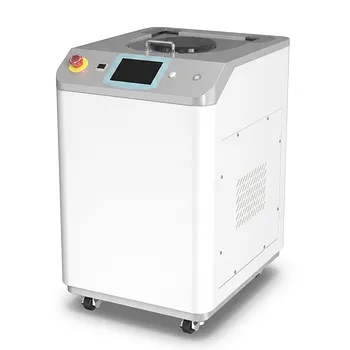
High Viscosity Planetary Centrifugal Mixing and Vacuum Defoaming Machine for Laboratory Material Preparation
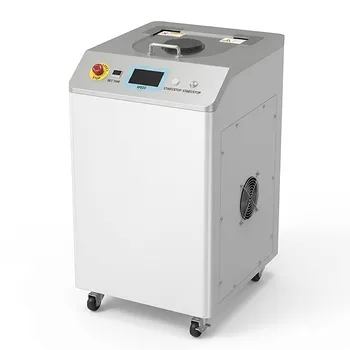
High Viscosity Planetary Centrifugal Vacuum Mixer for Material Defoaming and Uniform Mixing
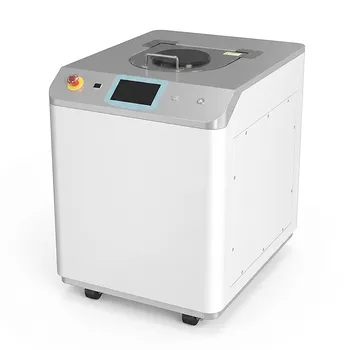
Industrial Planetary Centrifugal Vacuum Defoaming Mixer for High Viscosity Paste and Advanced Material Science
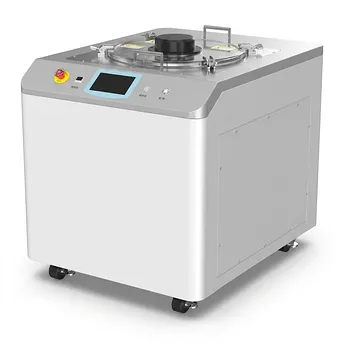
Industrial Planetary Centrifugal Vacuum Defoaming Mixer for High Viscosity Paste and Powder Homogenization
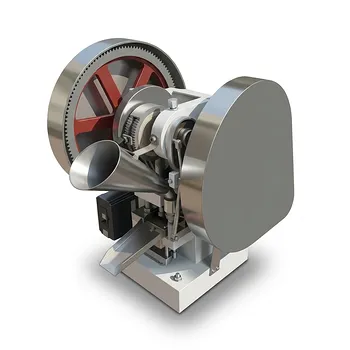
6 Ton Variable Frequency Single Punch Tablet Press