Why dry road dust samples for XRF testing? Preserve integrity and ensure accurate environmental analysis.
Updated 5 months ago
Preserving the environmental integrity of road dust is the primary reason for choosing drying over grinding during sample preparation. While grinding is a standard procedure for many XRF applications to achieve homogeneity, road dust analysis specifically requires maintaining the natural particle size distribution and surface chemistry found in the field. This method prevents the introduction of external contaminants from milling equipment and eliminates moisture that would otherwise attenuate X-ray signals and skew concentration data.
Drying road dust ensures that the sample reflects its real-world physical state while removing moisture-related interference. This approach prioritizes environmental representativeness and prevents the chemical contamination often caused by mechanical grinding.
Preserving Environmental Representativeness
Maintaining Real-World Particle Size
Road dust research often aims to evaluate the behavior of particles as they exist in the urban environment. Grinding these samples would destroy the natural size characteristics, making it impossible to study how specific particle fractions interact with the atmosphere or human health.
Protecting Original Surface Chemistry
The chemical composition of the particle surface is critical for understanding environmental impact and source apportionment. By avoiding the high-energy environment of a ball mill, researchers ensure that the chemical state of the surface-deposited particles remains unaltered.
The Technical Risks of Mechanical Grinding
Avoiding Media Contamination
Mechanical grinding introduces a significant risk of cross-contamination from the grinding bowls and balls. Even hardened steel or tungsten carbide media can shed microscopic fragments, which can lead to false positives for heavy metals during XRF analysis.
Preventing Surface Area Alteration
Grinding significantly increases the total surface area of the sample by breaking down larger aggregates. This physical change can lead to inconsistencies when comparing results to other environmental studies that rely on the original physical structure of the dust.
The Necessity of Pre-Drying for XRF
Eliminating Moisture Interference
Moisture acts as a physical barrier that absorbs and scatters X-rays, directly affecting the fluorescence intensity of the elements being measured. Using an oven to pre-dry the sample removes this variable, ensuring that the X-ray beam interacts only with the mineral and organic matter.
Ensuring Analytical Accuracy
Accurate elemental concentration calculations depend on a stable sample mass and consistent X-ray penetration. Drying the sample provides a uniform baseline, allowing for more precise quantitative results and better reproducibility across different batches.
Understanding the Trade-offs
The Challenge of Homogeneity
The most significant trade-off in skipping the grinding process is the potential for sample heterogeneity. Because the particles are not pulverized into a fine, uniform powder, different spots on the same sample pellet may yield slightly different elemental readings.
Balancing Representativeness and Precision
While grinding yields a more uniform pellet for the XRF instrument, it sacrifices the contextual truth of the road dust. In environmental forensics, the priority is typically the representativeness of the sample rather than the extreme precision afforded by a homogenized powder.
How to Apply This to Your Project
Recommendations Based on Your Research Goals
- If your primary focus is environmental source apportionment: Use low-temperature oven drying to preserve the original particle characteristics and avoid any risk of external metal contamination.
- If your primary focus is total bulk elemental analysis: Consider grinding only if the physical size of the particles is irrelevant and you require the highest possible level of analytical precision through homogeneity.
- If your primary focus is regulatory compliance: Follow established protocols that prioritize drying, as this ensures your data is comparable to existing environmental safety standards and datasets.
By prioritizing drying over grinding, you ensure that your XRF data accurately reflects the chemical reality of the environment you are studying.
Summary Table:
| Feature | Drying Method | Grinding Method |
|---|---|---|
| Particle Size | Preserves original distribution | Destroys natural structure |
| Chemical Integrity | Maintains surface chemistry | Risk of mechanical alteration |
| Contamination Risk | Minimal (Non-contact) | High (From grinding media) |
| Homogeneity | Lower (Requires spot checking) | Higher (Uniform powder) |
| XRF Performance | Removes moisture interference | Optimizes signal consistency |
| Primary Goal | Environmental representativeness | Total bulk elemental analysis |
Optimize Your Sample Prep Workflow Today
Achieving the perfect balance between sample representativeness and analytical precision requires the right tools. We provide complete laboratory sample preparation solutions for material science, specializing in high-performance powder processing and compaction equipment.
Our extensive product lines include:
- Size Reduction: Jaw and roll crushers, liquid nitrogen cryogenic grinders, and high-energy mills (planetary ball, jet, sand/bead, disc, and rotor).
- Classification: Vibratory and air-jet sieve shakers with a full range of test sieves.
- Mixing: Precision powder mixers and specialized defoaming mixers.
- Compaction & Pelleting: A full spectrum of hydraulic presses, including Cold/Warm Isostatic Presses (CIP/WIP), standard lab presses, XRF pellet presses, and vacuum hot presses.
Whether you are conducting environmental forensics or bulk material analysis, our experts can help you select the ideal equipment to ensure your XRF data is both accurate and reproducible.
Ready to enhance your lab's efficiency? Contact us today to discuss your application!
References
- Wioletta Rogula–Kozłowska, Barbara Błaszczak. Assessment of differences in elemental concentrations in particulate matter from road surfaces near and outside noise barriers in Poland. DOI: 10.24425/aep.2025.153753
Mentioned Products
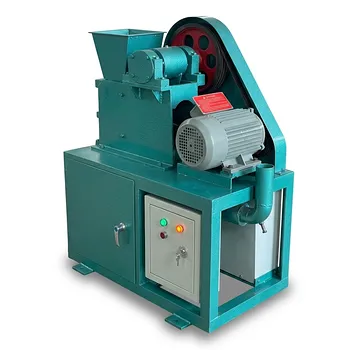
- EP-B Type Sealed Jaw Crusher for Laboratory Sample Preparation
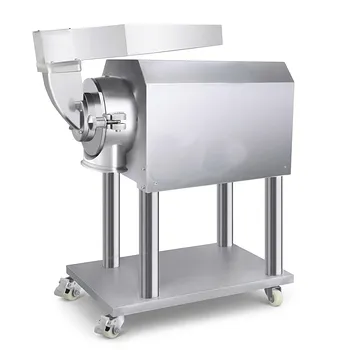
- High Speed Small Laboratory Crusher for Dry Material Sample Preparation
People Also Ask
- What is the primary function of a laboratory jaw crusher? Master Initial Hard Rock Ore Preparation & Feed Sizing
- What is the primary role of a laboratory jaw crusher in the initial stages of tin and tantalum ore reprocessing? Explained
- What is the role of a laboratory jaw crusher in the initial preparation of silicate-type low-grade copper ore?
- What is the primary function of a laboratory jaw crusher in the pretreatment process of galena ore? Initial Prep Guide
- What is the primary function of a laboratory jaw crusher when processing low-grade copper ore? Expert Guide

Tech Team · PowderPreparation
Last updated on May 14, 2026