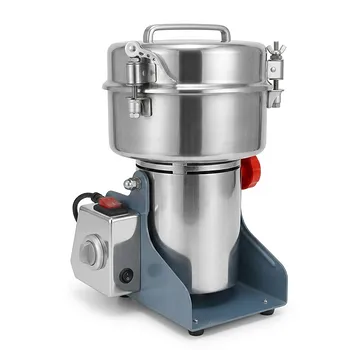
Why is it necessary to use an automated sample preparation unit for XRF? Ensure Precise TTP Composite Analysis
Updated 4 months ago
Precision sample preparation is the prerequisite for accurate XRF analysis. Using an automated unit for grinding and pressing Titanium Phosphate (TTP) composites is necessary to eliminate granularity effects and matrix interference. This process ensures the sample is chemically homogenized and physically stabilized, allowing the XRF spectrometer to provide a definitive measurement of $TiO_2$ and $P_2O_5$ concentrations.
To achieve reliable XRF results for TTP composites, the sample must be transformed into a high-density pellet with a perfectly flat surface. Automated preparation guarantees the uniformity and repeatability required to move from qualitative estimation to precise quantitative analysis.
Overcoming Physical Barriers to XRF Precision
Eliminating Granularity and Particle Size Effects
X-ray beams interact with the surface layer of a sample, and variations in grain size can cause inconsistent X-ray absorption and scattering. Automated high-energy grinding reduces TTP particles to an ultra-fine, uniform size (often below 38 microns). This homogenization ensures that the X-rays penetrate the material evenly, preventing "shadowing" where larger particles hide smaller ones from the detector.
Mitigating Matrix Interference
In TTP composites, the interaction between Titanium and Phosphorus can create complex matrix effects where one element influences the signal intensity of another. Precision grinding ensures a uniform component distribution throughout the sample volume. By creating a homogeneous mixture, the automated unit allows the spectrometer to apply mathematical corrections more accurately, ensuring the mass percentages of $TiO_2$ and $P_2O_5$ are correct.
Increasing Specific Surface Area
Reducing the particle size significantly increases the specific surface area of the TTP powder. This increased surface area allows for better contact between particles during the pressing phase. A higher surface-to-volume ratio contributes to a more representative signal from the sample during X-ray excitation.
The Role of High-Pressure Pelletizing
Achieving Essential Surface Flatness
XRF spectrometers require a perfectly flat and smooth surface to maintain a constant distance between the sample and the X-ray tube. Automated pressing units apply precision force to create pellets that eliminate surface roughness. This flatness prevents signal "noise" caused by X-ray scattering, which is a common issue with loose or manually pressed powders.
Maximizing Sample Density
Loose powder contains voids and air pockets that dilute the elemental signal and lead to unstable excitation. High-pressure pressing (utilizing a hydraulic press) creates a high-density structure that minimizes these voids. This density is critical for ensuring that the XRF results are repeatable across different batches of TTP composites.
Enhancing Structural Stability
TTP pellets must be robust enough to withstand the vacuum or helium environments inside the spectrometer without crumbling. Automated units provide the consistent pressure necessary to bond the powder particles—often with the help of a binder—into a stable disk. This prevents contamination of the instrument's internal components and ensures the sample remains intact during the entire measurement cycle.
Understanding the Trade-offs
Manual vs. Automated Preparation
While manual grinding and pressing are lower-cost alternatives, they introduce significant human error and variability. Inconsistent grinding times or uneven pressure application lead to "drift" in analytical results, making it impossible to compare TTP samples accurately over time.
Contamination Risks
High-energy grinding involves contact with grinding media (such as tungsten carbide or chrome steel). While necessary for achieving fine particle sizes, this can introduce trace element contamination. Experts must carefully select grinding materials that do not contain elements relevant to the TTP analysis, such as Titanium or Phosphorus.
The Binder Balance
Using binders to help form a pellet can stabilize the sample but also introduces a dilution effect. If the ratio of binder to TTP composite is not perfectly controlled by the automated unit, the reported percentages of $TiO_2$ and $P_2O_5$ will be artificially low.
How to Apply This to Your Project
Making the Right Choice for Your Goal
- If your primary focus is high-throughput quality control: Use an integrated automated grinding and pressing station to ensure maximum repeatability and minimal operator intervention.
- If your primary focus is R&D and material characterization: Prioritize ultra-fine grinding (sub-38 micron) to ensure the chemical homogeneity of new TTP formulations before XRF or XRD analysis.
- If your primary focus is cost-sensitive routine testing: Utilize a standalone hydraulic press with a dedicated pellet die to ensure surface flatness, even if grinding is performed separately.
Proper automated preparation transforms a raw TTP composite into a standardized analytical specimen, ensuring that your XRF data is a true reflection of the material's chemical composition.
Summary Table:
| Feature | Impact on XRF Analysis | Key Benefit for TTP |
|---|---|---|
| High-Energy Grinding | Reduces particles to <38µm | Eliminates granularity & shadowing |
| Automated Pressing | Creates high-density pellets | Maximizes signal stability & repeatability |
| Precision Flatness | Maintains constant X-ray distance | Reduces signal noise & scattering |
| Homogenization | Uniform component distribution | Mitigates complex matrix interference |
Optimize Your XRF Precision with Professional Sample Preparation
Achieve unparalleled analytical accuracy for your Titanium Phosphate composites with our complete laboratory sample preparation solutions. Specialized in material science, we provide the high-performance equipment necessary to transform raw powders into standardized specimens.
Our extensive range includes high-energy grinding mills (planetary ball, jet, and disc mills) for ultra-fine homogenization, alongside a full spectrum of hydraulic presses. Whether you need dedicated XRF pellet presses, standard lab presses, or advanced Cold/Warm Isostatic Presses (CIP/WIP), our solutions ensure the structural stability and surface flatness required for definitive elemental analysis.
Ready to eliminate human error and enhance your lab's repeatability? Contact our experts today to find the perfect powder processing and compaction solution for your project!
References
- Doaa M. EL-Mekkawi, M.M. Selim. Easily Prepared Titanium Phosphate-Based Composites for the Remediation of Synthetic and Real Wastewaters. DOI: 10.1007/s11270-023-06256-1
Mentioned Products
- 6-Ton Small Single-Punch Tablet Press — Laboratory Powder & Granule Tableting Equipment / Tablet Forming Machine
- Inclined Mixer for Homogeneous Powder Blending and Grinding
- Water Cooled Continuous Feed Pulverizer Laboratory Grade Herb and Material Grinding System
- Manual Tablet Press with Dual Scale Pressure Gauge for Pharmaceutical Food Chemical Laboratory Sample Preparation
- Miniature Planetary Ball Mill with Vacuum Grinding and High Efficiency for Laboratory Sample Preparation
People Also Ask
- What is the function of a laboratory press in Cr-Ti alloy evaluation? Quantify Fracture Stress & Strength
- What is the function of a laboratory press in assessing the hydrophobic performance of modified vermiculite fillers?
- What is the core function of a laboratory press in the forming of ceramic filter element green bodies? Maximize Density.
- What is the function of a laboratory press in the preparation of ceramic feed rods? Master Density and Precision
- Why is vacuum sealing and flexible packaging necessary for Aluminum Titanate powders during CIP? Ensure Peak Density

Tech Team · PowderPreparation
Last updated on Jun 03, 2026
Related Products
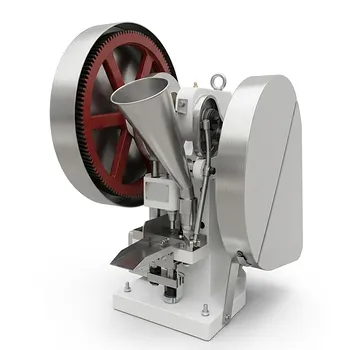
6-Ton Small Single-Punch Tablet Press — Laboratory Powder & Granule Tableting Equipment / Tablet Forming Machine
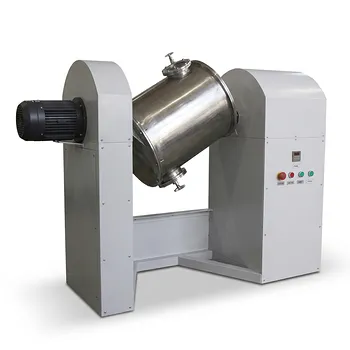
Inclined Mixer for Homogeneous Powder Blending and Grinding
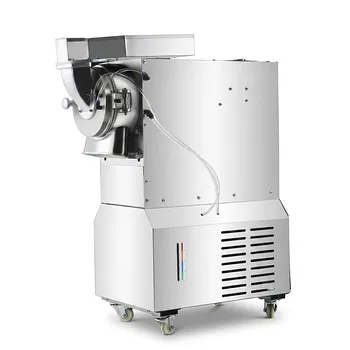
Water Cooled Continuous Feed Pulverizer Laboratory Grade Herb and Material Grinding System
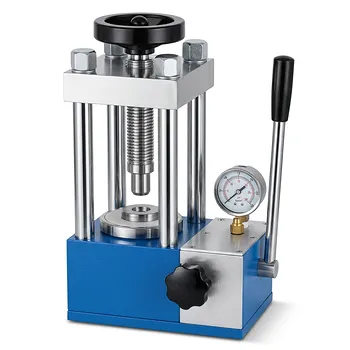
Manual Tablet Press with Dual Scale Pressure Gauge for Pharmaceutical Food Chemical Laboratory Sample Preparation
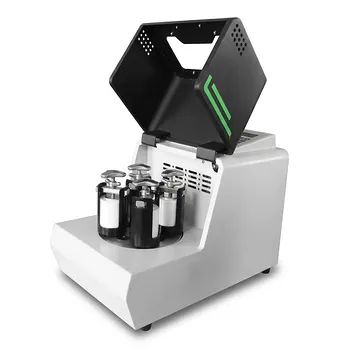
Miniature Planetary Ball Mill with Vacuum Grinding and High Efficiency for Laboratory Sample Preparation
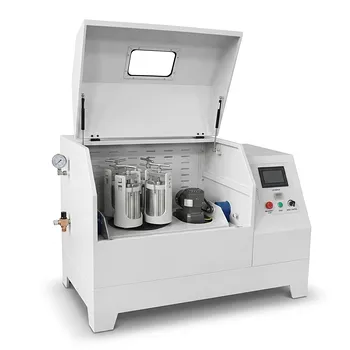
Vertical Production Planetary Ball Mill for High Throughput Powder Processing
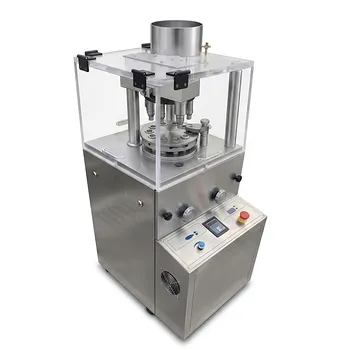
Enhanced 9 Punch Rotary Tablet Press for Powder Compaction
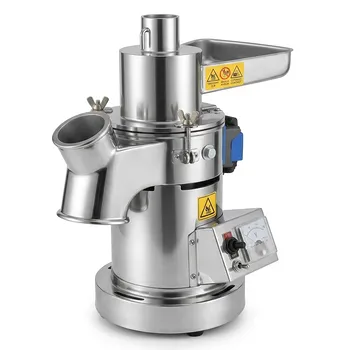
Continuous Feeding Grinder High Efficiency Pulverizer for Lab Sample Preparation
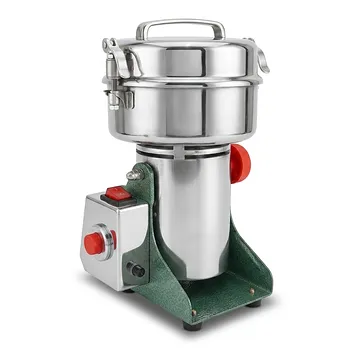
Small High-Speed Laboratory Grinder for Powder Processing

High Energy Planetary Ball Mill for Nano Scale Grinding and Mechanical Alloying
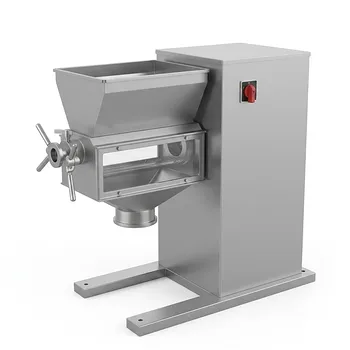
Industrial Swing Granulator for Powder Processing in Pharma Food and Chemical Industries
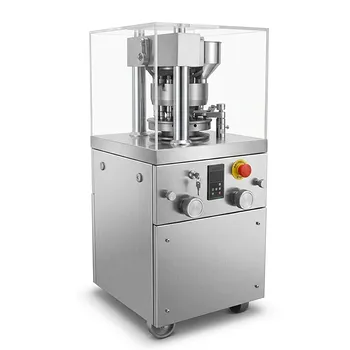
Ordinary Type Rotary Tablet Press for Pharmaceutical Chemical Food Electronic Industries
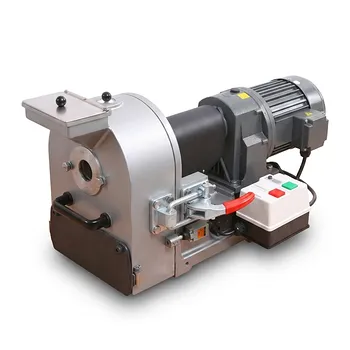
Laboratory Disc Mill for Fine Sample Preparation of Hard and Brittle Materials
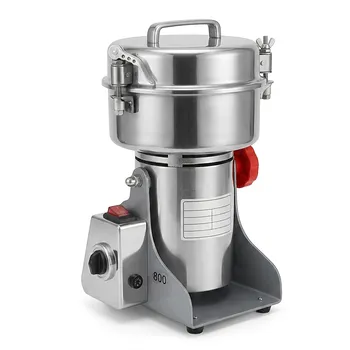
Small High-Speed Laboratory Grinder for Rapid Sample Preparation
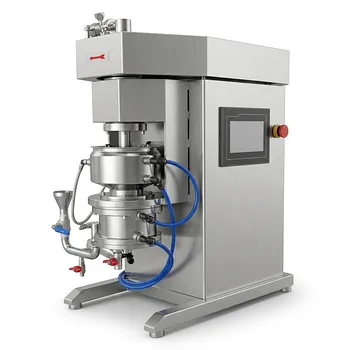
Small Ceramic Structure Laboratory Sand Mill Nanoscale Grinding Dispersion Equipment Seal-less Screen-less Design
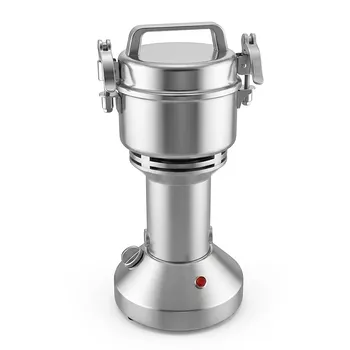
Small High Speed Upright Grinder for Laboratory Sample Preparation