Why use a 0.16 mm sieve for hydroxyapatite? Ensure Precise Adsorption Kinetics & Particle Uniformity
Updated 3 months ago
Standardizing hydroxyapatite powder through a 0.16 mm precision sieve is essential for achieving particle size uniformity. By screening the ground powder, you ensure that every particle is smaller than 0.16 mm, which eliminates surface area fluctuations that would otherwise skew experimental results. This level of control is mandatory for obtaining accurate and comparable data in adsorption kinetic studies where the surface interaction of the powder is the primary variable.
Precise particle size classification transforms a heterogeneous ground material into a standardized technical medium. By strictly controlling the upper size limit, you isolate chemical behavior from physical size variations, ensuring that surface area remains consistent across all samples.
The Role of Surface Area in Kinetic Accuracy
Eliminating Fluctuations in Surface Area
The primary reason for using a 0.16 mm sieve is to standardize the available surface area for chemical interactions. In adsorption studies, the rate at which monomers interact with hydroxyapatite depends heavily on the surface-area-to-volume ratio of the powder. Using a precision sieve ensures that the powder consists of particles within a narrow, predictable range, preventing random size variations from corrupting the data.
Ensuring Data Comparability
Without a 0.16 mm aperture limit, different batches of ground powder would exhibit different adsorption kinetic profiles simply due to their physical dimensions. Standardizing the particle size allows researchers to compare results across different experiments or laboratories with confidence. This ensures that observed changes in behavior are due to the chemical properties of the material rather than physical inconsistencies in the grinding process.
Impact on Chemical and Physical Processing
Optimizing Reaction Kinetics
Uniform particle size is critical for maintaining stable reaction kinetics during subsequent chemical processes. When hydroxyapatite or its precursors are used in wet chemical precipitation or dissolution, a consistent particle size ensures a predictable reaction rate. This prevents the formation of heterogeneous phases and helps in producing a final product with a controlled morphology, such as nanorods or spherical shapes.
Preventing Agglomeration and Structural Defects
Sieving out coarse particles helps to reduce agglomeration in the final powder product. In ceramic applications, a uniform grain size distribution minimizes density gradients within the "green body" (the unfired material). This uniformity is vital for maintaining dimensional stability and structural integrity during the drying and firing stages of production.
Understanding the Trade-offs
Process Efficiency vs. Precision
While precision sieving is necessary for accuracy, it introduces a bottleneck in the production workflow. Blinding or clogging of the fine 0.16 mm mesh can occur, especially if the powder is slightly damp or electrostatic, requiring specialized cleaning or ultrasonic assistance.
Material Loss and Yield
Strictly limiting the particle size to 0.16 mm means that any material exceeding this threshold must be re-ground or discarded. This can lead to a lower initial yield per grinding cycle. However, the trade-off is necessary because including oversized particles would compromise the scientific validity of the adsorption data and the mechanical reliability of the final material.
How to Apply This to Your Project
Making the Right Choice for Your Goal
- If your primary focus is Adsorption Kinetic Studies: You must use the 0.16 mm sieve to ensure that surface area fluctuations do not interfere with the accuracy and comparability of your adsorption data.
- If your primary focus is Chemical Synthesis (Precipitation): Standardize your particle size to achieve a uniform reaction rate and to produce a consistent final morphology, such as nanorods.
- If your primary focus is Ceramic Fabrication: Utilize precise sieving to minimize density gradients, which prevents warping or cracking during the drying and firing processes.
- If your primary focus is Preventing Equipment Damage: Use even finer sieves (such as 25 microns) if the powder is intended for high-pressure processes like electrospinning to avoid nozzle clogging.
Strict adherence to particle size standards is the foundation of reproducible research and high-performance material manufacturing.
Summary Table:
| Application Area | Role of 0.16 mm Sieving | Key Benefit |
|---|---|---|
| Adsorption Kinetics | Standardizes surface-area-to-volume ratio | Eliminates data fluctuations & ensures comparability |
| Chemical Synthesis | Maintains stable reaction kinetics | Produces consistent morphology (e.g., nanorods) |
| Ceramic Fabrication | Minimizes density gradients in green bodies | Prevents warping, cracking, and structural defects |
| Powder Processing | Removes coarse particles and agglomerates | Enhances flowability and ensures material purity |
Elevate Your Material Research with Precision Powder Solutions
Achieving consistent results in hydroxyapatite studies starts with superior sample preparation. At [Company Name], we provide complete laboratory sample preparation solutions for material science, specializing in high-performance powder processing and compaction equipment.
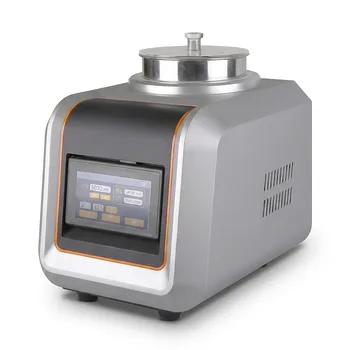
From achieving the perfect grind with our planetary ball mills and jet mills to ensuring strict particle size control with our vibratory and air-jet sieve shakers, we offer the tools you need for reproducible data. Our expertise extends to the final stages of production with a full spectrum of hydraulic presses, including Cold/Warm Isostatic Presses (CIP/WIP), hot presses, and vacuum hot presses for advanced ceramic fabrication.
Ready to eliminate surface area fluctuations and optimize your workflow? Contact our technical experts today to find the ideal sieve and milling configuration for your specific application.
References
- Vasil Kalchinov, Diana Rabadjieva. Studies on the Interaction Between the Functional Monomer 4-Methacryloxyethyl Trimellitic Anhydride and Hydroxyapatite and Stability of the Obtained Hybrids. DOI: 10.3390/ma18081689
Mentioned Products
- Laboratory Vibratory Test Sieve Shaker for Precision Particle Size Analysis and Powder Grading
- Small Laboratory Vibrating Sieve Shaker for Precise Particle Size Analysis
- Stainless Steel Rotary Vibrating Sieve High Precision Circular Vibratory Separator Industrial Powder Grading Machine Multi Layer Sifting Equipment
- Small Laboratory Vibratory Sieve Shaker for Powder Gradation and Particle Size Analysis
- Laboratory Air Jet Sieving Machine for Fine Powder Particle Size Analysis and Deagglomeration
People Also Ask
- What role does a laboratory sieve shaker play in determining PDI? Achieve Precision in Biomass Quality Testing
- What are the functions of sieve shakers for coconut shell powder? Achieve Precise Particle Size & Quality Control.
- What function does a laboratory sieve shaker perform in the PSD analysis of residual soil? Ensure Precise Grading
- What is the role of a laboratory sieve shaker in the preparation of plantain peel adsorbents? Standardize Particle Size
- What is the function of a laboratory vibratory sieve shaker? Enhance Coal Particle Size Distribution (PSD) Analysis

Tech Team · PowderPreparation
Last updated on Jun 03, 2026
Related Products

Laboratory Vibratory Test Sieve Shaker for Precision Particle Size Analysis and Powder Grading

Small Laboratory Vibrating Sieve Shaker for Precise Particle Size Analysis

Stainless Steel Rotary Vibrating Sieve High Precision Circular Vibratory Separator Industrial Powder Grading Machine Multi Layer Sifting Equipment
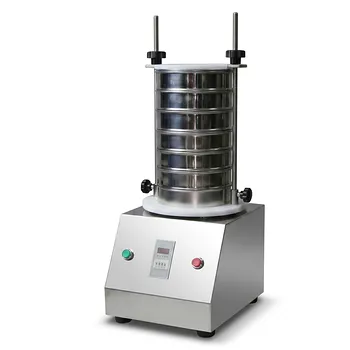
Small Laboratory Vibratory Sieve Shaker for Powder Gradation and Particle Size Analysis