Why is it necessary to use a micro-mill for sample micronization? Achieve Precise XRD Quantitative Phase Analysis
Updated 5 months ago
Micronization is the essential prerequisite for reliable X-ray diffraction (XRD) results. Using a micro-mill to refine carbonation products to the micron level (typically <10 μm) ensures that the sample possesses the randomness and uniformity required for accurate Rietveld refinement. Without this step, effects like preferred orientation and poor particle statistics will lead to significant errors when quantifying complex phases like calcite, calcium silicates, and amorphous silica.
The necessity of micro-milling stems from the requirement to eliminate "preferred orientation" and improve particle statistics. By achieving an ultra-fine, uniform powder, researchers can distinguish between chemically similar crystalline phases and accurately quantify the amorphous content critical to understanding carbonation depth and efficiency.
Eliminating the Preferred Orientation Effect
Breaking Down Non-Random Alignment
In its natural state, many carbonation products—particularly calcite—exhibit a specific crystal habit that causes them to settle in a non-random orientation. This preferred orientation (PO) leads to certain diffraction peaks being artificially inflated while others are suppressed.
Achieving Geometric Randomness
A micro-mill breaks these particles down into a micron-level fineness, typically between 5 and 30 micrometers. This reduction in size ensures that crystals are oriented randomly in the sample holder, which is a fundamental assumption of the Bragg-Brentano geometry used in XRD.
Validating Rietveld Refinement
For Rietveld refinement to be mathematically sound, the peak intensities must reflect the true crystal structure. Micronization aligns the experimental data with theoretical models, allowing for the precise quantification of mineral phases.
Optimizing Quantitative Accuracy for Complex Phases
Distinguishing Calcium Silicates and Calcite
Carbonation products often consist of a complex mixture of unreacted calcium silicates and newly formed calcite. Overlapping peaks and similar densities make these difficult to distinguish unless the powder is perfectly homogeneous.
Quantifying the Amorphous Content
A major challenge in carbonation analysis is measuring amorphous silica and Calcium Silicate Hydrate (C-S-H). Micro-milling, when used with an internal standard, allows for the accurate determination of this "non-crystalline" fraction by ensuring the crystalline peaks are sharp and well-defined.
Improving Particle Statistics
By increasing the number of individual crystallites that contribute to the diffraction pattern, a micro-mill improves particle size statistics. This reduces the "noise" in the data, leading to higher repeatability and lower detection limits for minor phases.
The Role of Wet Grinding in Micro-Milling
Using Ethanol as a Grinding Medium
Micro-milling is frequently performed as a wet grinding process using ethanol. This medium acts as a coolant and a dispersant, preventing the sample from caking or sticking to the grinding elements.
Protecting Mineral Integrity
Unlike dry grinding, which can generate excessive heat and cause decarbonation or phase transitions, wet grinding is gentle. It reduces the particle size without damaging the underlying crystal structure of sensitive carbonation products.
Preventing Contamination
High-quality micro-mills often use agate linings and grinding media. Agate is chemically inert and highly wear-resistant, ensuring that no metallic impurities are introduced into the sample that could interfere with the chemical signature of the carbonation products.
Understanding the Trade-offs
The Risk of Over-Grinding
While fineness is necessary, excessive grinding can lead to amorphization, where the energy of the mill destroys the crystal lattice. This creates "artificial" amorphous content, leading to an overestimation of the amorphous phase in the final report.
Sample Preparation Time
Micro-milling adds a significant step to the laboratory workflow. However, skipping this step usually results in data that is statistically invalid, making the time investment a requirement for any peer-reviewed or industrial quality control standard.
Cleaning and Cross-Contamination
Because the goal is extreme fineness, micro-mills must be meticulously cleaned between samples. Residual powder from a previous run can easily skew the quantitative results of the current sample, especially when measuring trace carbonation products.
Making the Right Choice for Your Goal
Achieving the correct particle size is a balance between reaching the necessary fineness and maintaining the structural integrity of the minerals.
- If your primary focus is quantifying amorphous silica: Use wet grinding with ethanol for exactly 5–10 minutes to reach a 5 μm size without inducing lattice strain.
- If your primary focus is distinguishing calcite polymorphs: Prioritize using agate grinding media to ensure no impurities interfere with the subtle peak shifts of the carbonate phases.
- If your primary focus is rapid phase identification: Standard dry grinding may suffice for qualitative "fingerprinting," but it will lack the precision required for formal Rietveld quantification.
Properly executed micronization transforms a raw sample into a high-precision analytical tool, ensuring your carbonation analysis is both accurate and reproducible.
Summary Table:
| Key Parameter | Requirement for XRD | Benefit of Micro-Milling |
|---|---|---|
| Particle Size | <10 μm (typically) | Ensures geometric randomness and sample uniformity |
| Orientation | Random alignment | Eliminates the "Preferred Orientation" effect |
| Phase Accuracy | Sharp, defined peaks | Improves particle statistics for Rietveld refinement |
| Process Safety | Low heat generation | Wet grinding prevents decarbonation and lattice strain |
Elevate Your Material Analysis Precision
Achieving the perfect micron-level fineness is critical for reliable analytical results. [Your Brand Name] provides complete laboratory sample preparation solutions for material science, specializing in high-performance powder processing and compaction equipment.
Our comprehensive product range includes:
- Advanced Milling: Planetary ball mills, jet mills, liquid nitrogen cryogenic grinders, and disc/rotor mills.
- Sieve Analysis: Vibratory and air-jet sieve shakers with a wide range of test sieves and meshes.
- Compaction & Pressing: A full spectrum of hydraulic presses, including Cold/Warm Isostatic Presses (CIP/WIP), standard lab presses, XRF pellet presses, and vacuum hot presses.
- Mixing Solutions: Powder mixers and specialized defoaming mixers for homogeneous results.
Ready to improve your Rietveld refinement and sample repeatability? Contact us today to explore how our specialized solutions can enhance your laboratory’s efficiency and accuracy!
References
- Anthony de Schutter, Tom Van Gerven. Improving the Carbonation of Steel Slags Through Concurrent Wet Milling. DOI: 10.1007/s40831-024-00895-2
Mentioned Products
- Laboratory Micro Vibration Grinding Mill for Trace Sample Preparation
- High Throughput Micro Ball Mill for Cryogenic Grinding and Laboratory Cell Disruption
- Benchtop Micro Air Jet Mill for Ultrafine Grinding of High Value Powders
- Nano Laboratory Bead Mill Desktop Sub Micron Sand Mill Screenless Seal Less Powder Grinder
- Micro Solid Sample Grinder High Speed Pulverizer for Laboratory Small Batch Grinding
People Also Ask
- What is the function of a laboratory vibratory mill? Master StPh/MMT Nanocomposite Preparation via Mechanochemistry
- What function does a laboratory mill serve in corn starch saccharification experiments? Optimize Surface Area & Reactions
- What is the primary function of a vibration mill in processing beta-SiAlON after SHS? Powder Refinement Guide.
- How does the size of grinding media influence the vibratory milling efficiency? Achieve Optimal Pharmaceutical Fineness
- What is the role of a micro-vibratory ball mill in bio-glass prep? Optimize Ion Release & Surface Area Analysis

Tech Team · PowderPreparation
Last updated on May 14, 2026
Related Products
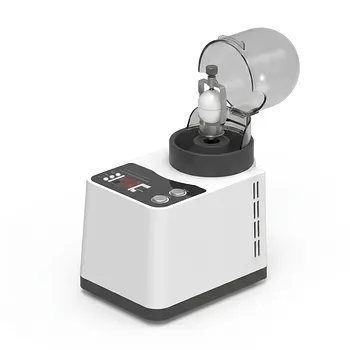
Laboratory Micro Vibration Grinding Mill for Trace Sample Preparation
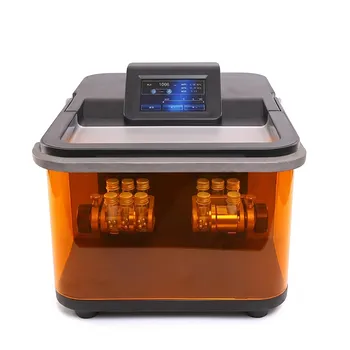
High Throughput Micro Ball Mill for Cryogenic Grinding and Laboratory Cell Disruption
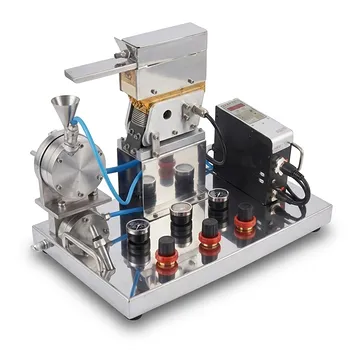
Benchtop Micro Air Jet Mill for Ultrafine Grinding of High Value Powders
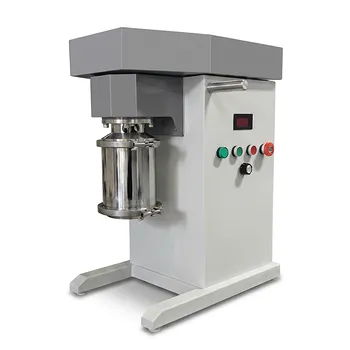
Nano Laboratory Bead Mill Desktop Sub Micron Sand Mill Screenless Seal Less Powder Grinder
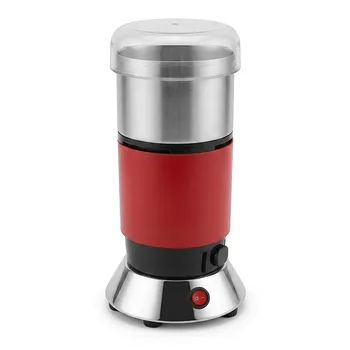
Micro Solid Sample Grinder High Speed Pulverizer for Laboratory Small Batch Grinding
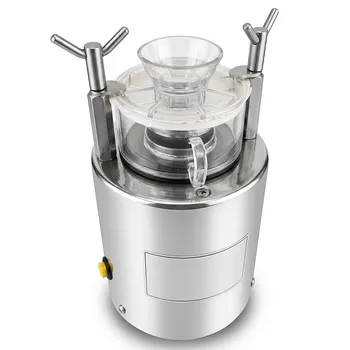
Laboratory Desktop Ultra Fine Powder Grinder High Speed Micronizing Pulverizer

Miniature Planetary Ball Mill with Vacuum Grinding and High Efficiency for Laboratory Sample Preparation
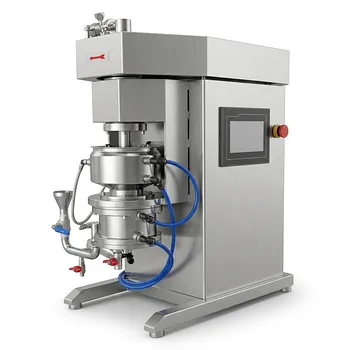
Small Ceramic Structure Laboratory Sand Mill Nanoscale Grinding Dispersion Equipment Seal-less Screen-less Design
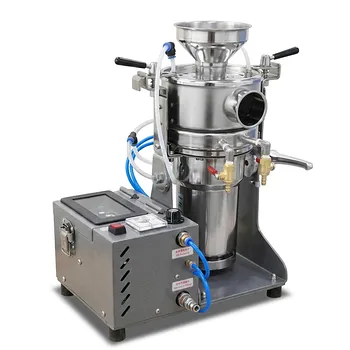
Water Cooled Pulse Jet Ultrafine Grinder
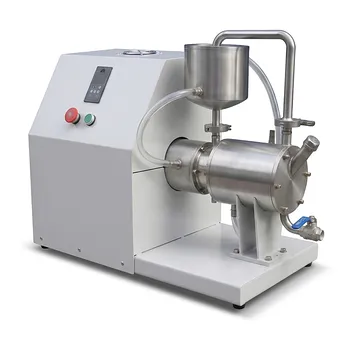
Laboratory Small Horizontal Sand Mill for Nano Materials Wet Grinding
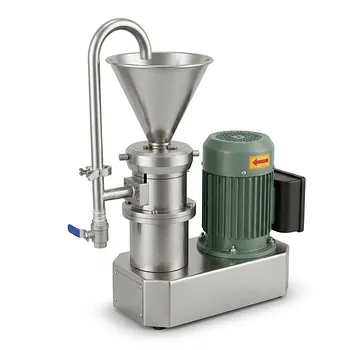
Small Laboratory Colloid Mill for Ultra-Fine Wet Grinding and Emulsification
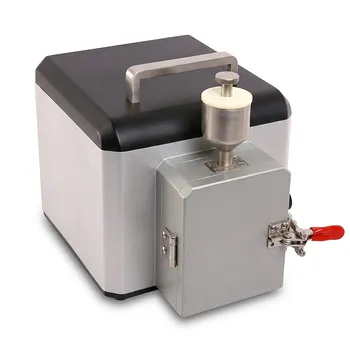
Portable Cutting Mill for Laboratory Sample Preparation and RoHS WEEE Compliance Testing
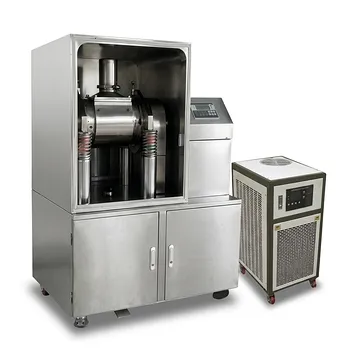
Small Vibrating Ultrafine Grinder for Traditional Chinese Medicine
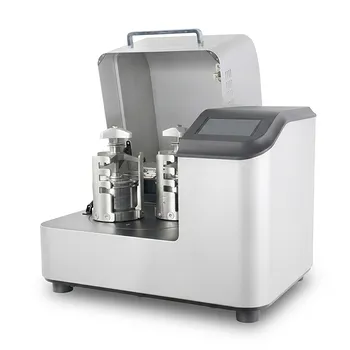
High Energy Planetary Ball Mill for Nano Scale Grinding and Mechanical Alloying
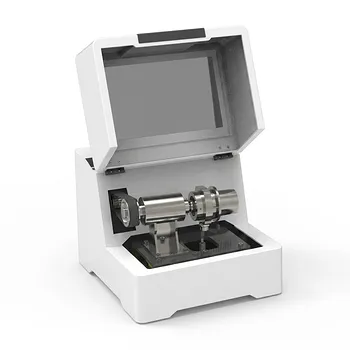
Single Tank High Energy Vibratory Ball Mill for Laboratory Grinding and Mixing
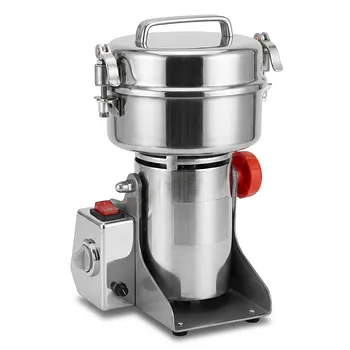
High Speed Laboratory Powder Grinder Small Batch Sample Preparation Mill
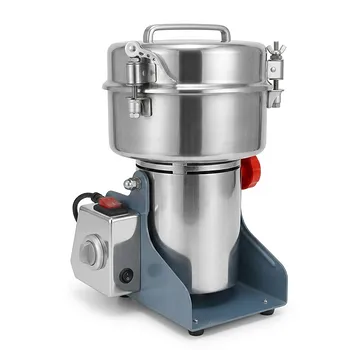
Small High-Speed Grinder for Efficient Laboratory Sample Preparation
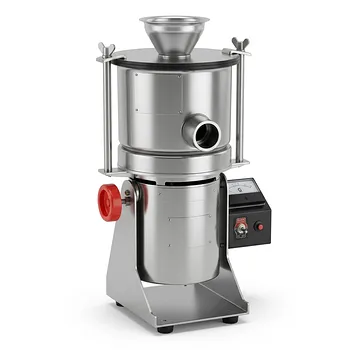
Laboratory Ultrafine Impact and Airflow Grinder for Precise Particle Size Control
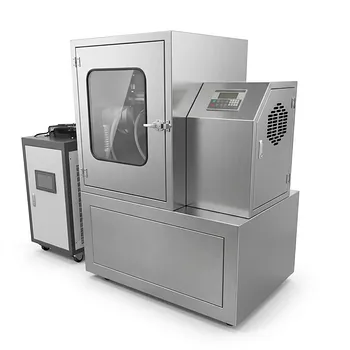
Vibratory Superfine Grinder for Ultra Fine Laboratory Powder Milling