Why is it necessary to use a laboratory hydraulic press for XRF powder pelletizing? Ensure High-Precision Geopolymer Data
Updated 4 months ago
A laboratory hydraulic press is essential for geopolymer raw material analysis because it transforms loose powder into a dense, flat pellet. This process eliminates physical inconsistencies like porosity and surface roughness that would otherwise distort X-ray excitation. By creating a standardized sample form, the press ensures that quantitative chemical results are accurate, repeatable, and free from "particle effects."
Pelletizing geopolymer precursors creates a homogeneous, high-density surface that minimizes X-ray scattering and matrix effects. This preparation is the fundamental step required to achieve high-precision quantitative data in XRF spectroscopy.
Overcoming Physical Interferences
The Impact of Porosity and Voids
Geopolymer raw materials, such as metakaolin or fly ash, are typically fine powders that contain significant air gaps. A hydraulic press removes these voids, ensuring the X-ray beam interacts with a consistent mass of material rather than pockets of air. This elimination of matrix effects is critical for calculating the true concentration of major elements.
Minimizing Surface Roughness
Raw powders have irregular topography that scatters incident X-rays in unpredictable directions. The high axial pressure of a hydraulic press produces a smooth, mirror-like surface that optimizes X-ray excitation and reception. This standardization reduces scattering errors and significantly improves the signal-to-noise ratio of the spectral data.
Eliminating the Particle Effect
In loose powder, larger grains can "shadow" smaller particles, leading to an unrepresentative reading of the chemical composition. Pelletizing ensures that all particles are compressed into a uniform plane. This prevents the "particle effect" from biasing the analysis toward specific grain sizes.
Optimizing Quantitative Accuracy
Achieving Uniform Density
Consistent pressure from a hydraulic press ensures that the internal density of the sample is uniform throughout. This physical consistency allows for predictable X-ray penetration and emission. Without uniform density, the XRF equipment cannot accurately quantify the mass fraction of the elements present.
Enhancing Detection of Major and Minor Elements
By creating a compact structure, the press allows the XRF spectrometer to capture a more intense and stable signal. This is particularly important for identifying major elements like Silicon and Aluminum in geopolymers. It also improves the detection limits for minor or trace elements, such as heavy metals (Cr, Pb), which might otherwise be lost in the background noise of a loose powder sample.
Ensuring Repeatability
Scientific analysis requires that the same sample yields the same result across multiple tests. The use of specialized dies and high pressure creates a standardized sample geometry. This repeatability is essential for comparing different batches of geopolymer raw materials or verifying the quality of the final product.
Understanding the Trade-offs
Pressure Limits and Sample Integrity
While high pressure is necessary, excessive force can cause certain minerals to undergo physical deformation or cause the pellet to crack upon decompression. Finding the optimal pressure—typically involving a specific dwell time—is a balancing act to ensure the pellet remains structurally sound.
The Role of Chemical Binders
Some geopolymer precursors lack the natural cohesion to form a stable pellet under pressure. In these cases, a binder like cellulose or boric acid must be added to the mixture. While binders improve pellet stability, they also act as a diluent that must be meticulously accounted for during the quantitative calculation phase.
Grain Size Requirements
For a hydraulic press to produce a truly homogeneous pellet, the raw material must often be ground to a fineness of less than 75 micrometers. If the initial grinding is insufficient, even high pressure may fail to eliminate the "particle effect," leading to lingering inaccuracies in the XRF data.
Applying Pelletizing to Your Workflow
How to Apply This to Your Project
To achieve the highest data integrity for your geopolymer research, your sample preparation should be tailored to your specific analytical goals.
- If your primary focus is major element quantification (Si, Al, Ca): Use high axial pressure to ensure maximum density and a perfectly flat surface to minimize matrix interferences.
- If your primary focus is trace element or heavy metal detection: Ensure the sample is ground to a very fine powder and use a binder to create a dense, structurally stable pellet that maximizes the signal-to-noise ratio.
- If your primary focus is repeatability across large batches: Standardize your press settings—specifically the PSI and dwell time—to ensure every pellet has identical physical characteristics.
Proper sample preparation through hydraulic pelletizing is the only way to ensure that your XRF data reflects the true chemical nature of your geopolymer materials rather than the physical flaws of the powder.
Summary Table:
| Challenge of Loose Powder | Solution: Hydraulic Pelletizing | Benefit for XRF Analysis |
|---|---|---|
| Porosity & Air Gaps | High-Density Compression | Eliminates matrix effects and voids |
| Surface Roughness | Mirror-like Smooth Surface | Minimizes X-ray scattering errors |
| Particle Effect | Uniform Particle Plane | Prevents bias toward specific grain sizes |
| Irregular Signal | Standardized Sample Geometry | Ensures high repeatability and accuracy |
Elevate Your Geopolymer Research Accuracy
Precise XRF analysis starts with perfect sample preparation. Contact our experts today to find the ideal compaction solution for your laboratory.
As specialists in material science sample preparation, we provide a complete range of powder processing and compaction equipment designed to eliminate "particle effects" and maximize data integrity. Our solutions include:
- High-Precision Hydraulic Presses: Specialized XRF pellet presses, standard lab presses, and Cold/Warm Isostatic Presses (CIP/WIP) for uniform density.
- Advanced Milling & Grinding: Achieve the required <75μm fineness with our planetary ball mills, jet mills, and cryogenic grinders.
- Thermal Synthesis: A full spectrum of hot presses and vacuum hot presses for advanced material development.
Let us help you achieve repeatable, high-precision quantitative results. Click here to request a quote or technical consultation.
References
- Kyungwon Kim, Hyunseok Ko. Accentuating the ambient curing behavior of geopolymers: metamodel-guided optimization for fast-curing geopolymers with high flexural strength. DOI: 10.1039/d4dd00217b
Mentioned Products
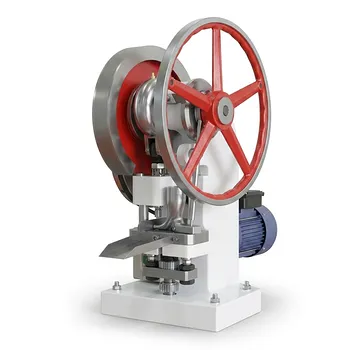
- 6 Ton Variable Frequency Single Punch Tablet Press
- Ordinary Type Rotary Tablet Press for Pharmaceutical Chemical Food Electronic Industries
- Enhanced 9 Punch Rotary Tablet Press for Powder Compaction
- 6-Ton Small Single-Punch Tablet Press — Laboratory Powder & Granule Tableting Equipment / Tablet Forming Machine
- 实验室旋转式压片机 多冲模单压式自动连续压片
People Also Ask
- Why is a laboratory hydraulic press required for FT-IR KBr pellets? Achieve Precise Sample Clarity for ZrC–SiC Analysis
- Why is vacuum sealing and flexible packaging necessary for Aluminum Titanate powders during CIP? Ensure Peak Density
- What are the advantages of using hardened steel molds and graphite spray for titanium powder? Ensure structural integrity
- Why is a laboratory hydraulic press required to compress oyster shell powder before XRF analysis? Improve Data Accuracy.
- What role does a high-strength stainless steel mold kit play in the uniaxial die compaction process? Ensuring Precision

Tech Team · PowderPreparation
Last updated on Jun 03, 2026
Related Products
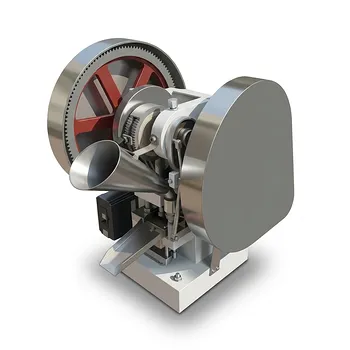
6 Ton Variable Frequency Single Punch Tablet Press
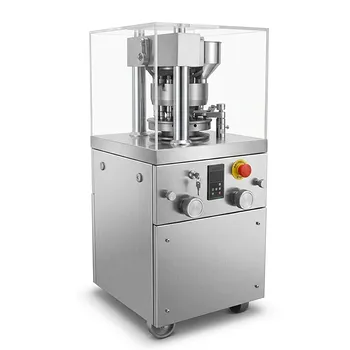
Ordinary Type Rotary Tablet Press for Pharmaceutical Chemical Food Electronic Industries
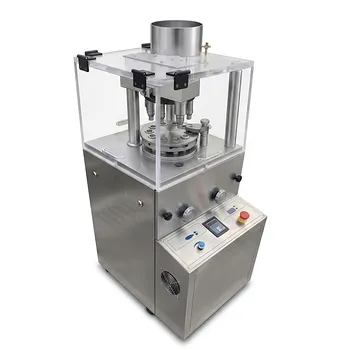
Enhanced 9 Punch Rotary Tablet Press for Powder Compaction
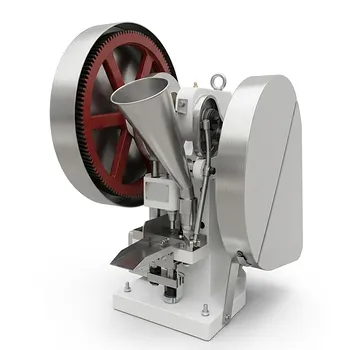
6-Ton Small Single-Punch Tablet Press — Laboratory Powder & Granule Tableting Equipment / Tablet Forming Machine
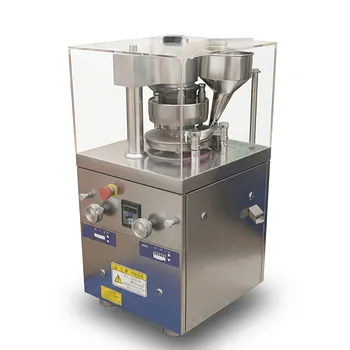
实验室旋转式压片机 多冲模单压式自动连续压片
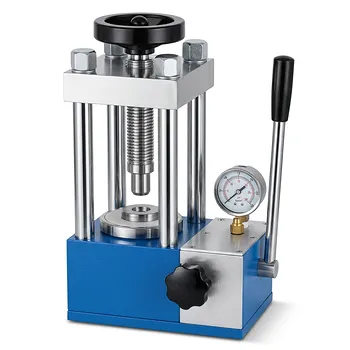
Manual Tablet Press with Dual Scale Pressure Gauge for Pharmaceutical Food Chemical Laboratory Sample Preparation